Shellfish Stock / Compound Butter

Fresh shellfish can be pricey so I like to get as much bang for my buck as possible.  One of the easiest ways to extend the value of shellfish is to make a stock from the heads and shells.  Once the stock has been made, it can be stored for later use and can be used in many different dishes.  The unique flavor of shellfish can turn a mediocre dish into something exotic. 

Making stock can be as simple as boiling the heads and shells in water and then straining the solids and reserving the liquid.  Spices, herbs or vegetables can be added to give the stock extra depth of flavor. 

I plan on making some seafood pasta dishes so I made stock from shrimp and crawfish shells.  I bought one pound each of crawfish and shrimp.  One pound of crawfish results in a paltry amount of crawfish meat and the majority is shells and heads.  Shrimp produces a little more meat but you’d be lucky to get half a pound of cooked shrimp from a pound of whole, raw shrimp.

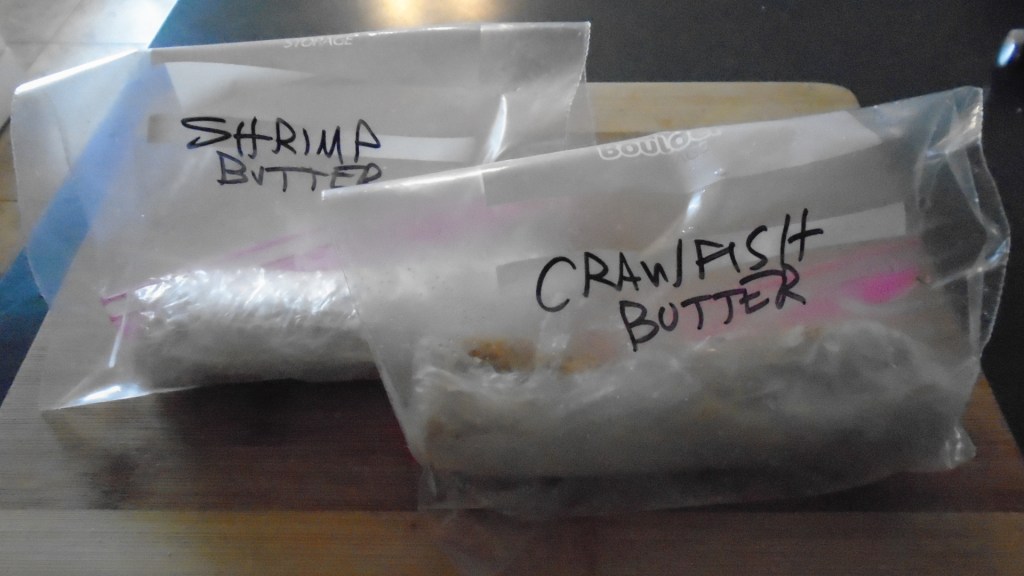
So, with that in mind, I made crawfish butter and shrimp butter.  The flavorful compound butter can be stored in the refrigerator for several days, or in the freezer for months. 

Ingredients:

1 lb fresh shrimp (these were Gulf shrimp)

1 lb steamed crawfish (crayfish, crawdads, mudbugs…whatever you wish to call them)

½ cup unsalted butter, divided in half

Directions for the shrimp:

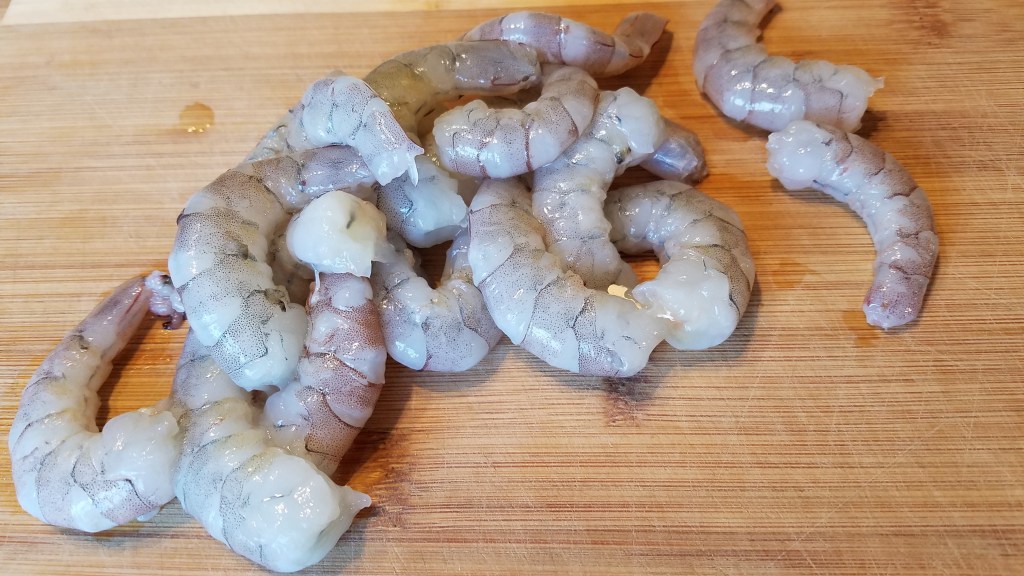
Remove the heads from the shrimp.  This can be done by gripping the head and pulling away from the rest of the body.  If you are squeamish about this sort of thing, get over it.  It becomes an automatic process after a few decapitations.  Toss the heads into a bowl and set aside.

Peel and devein the shrimp.  Rinse the shrimp under cold water and store in an airtight container.  Add the shells to the bowl containing the heads.
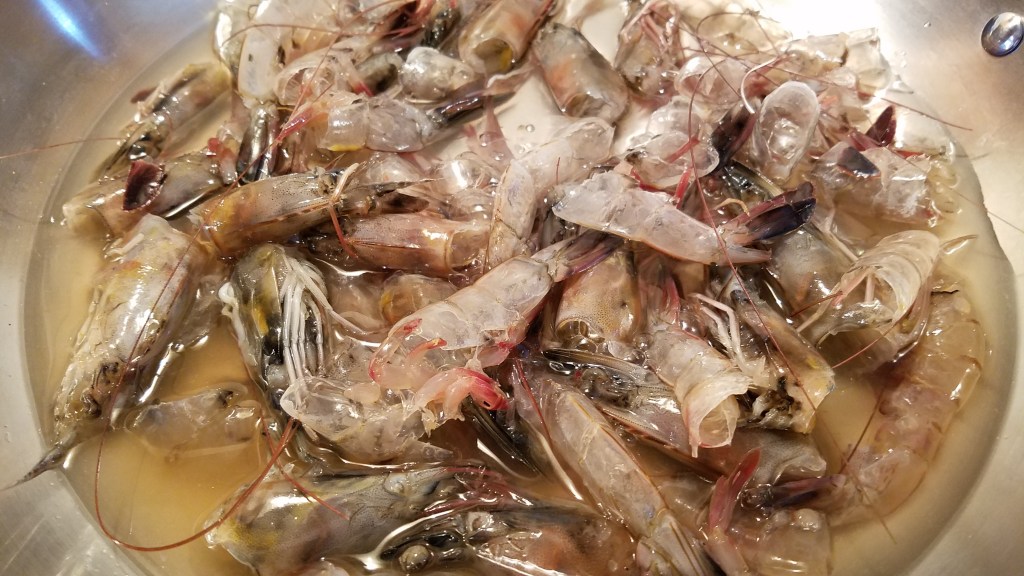
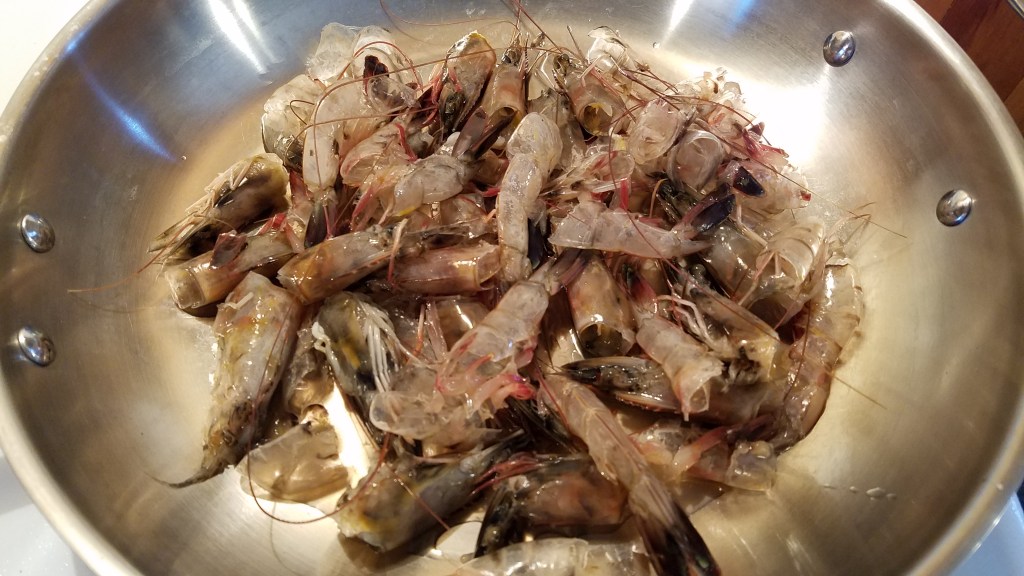
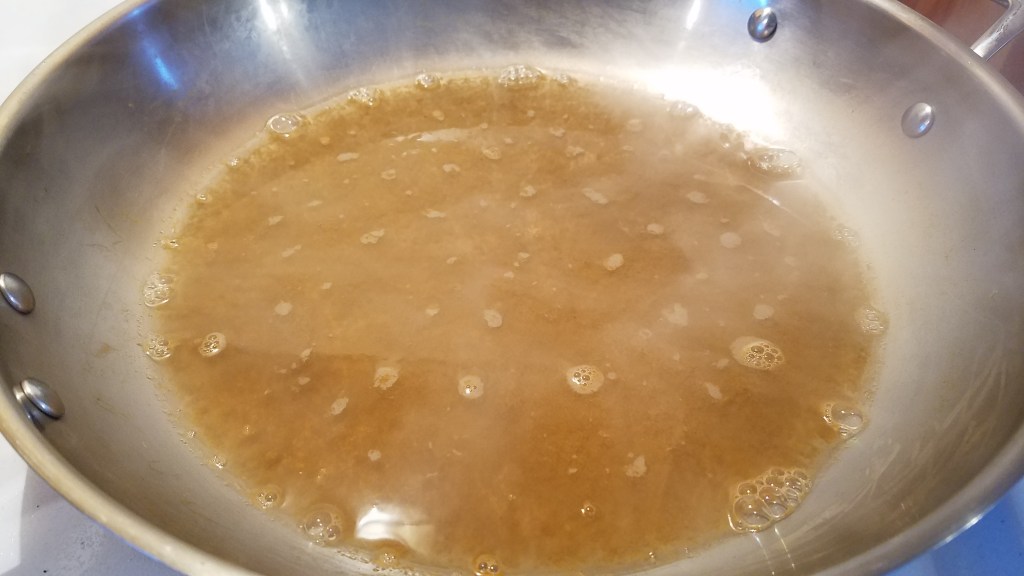
Put the heads and shells into a skillet.  Cover with water and simmer for about 30 minutes, stirring and pressing the shells occasionally.   
Strain the solids and discard. Pour the stock into a container and refrigerate or freeze, if desired.
Directions for the crawfish:

Unless you go gigging for crawfish, which is to say, catching your own live crawfish, you will either get them freshly steamed and seasoned or refrigerated, after they were seasoned.  Either way, they are probably going to be seasoned with Cajun spices, and that’s a very good thing.

I prefer to eat steamed crawfish while they are still hot, but this time I only snacked on one and used the rest for an Etouffee. 

Remove the heads from the crawfish and peel the shells.  Reserve the meat. 
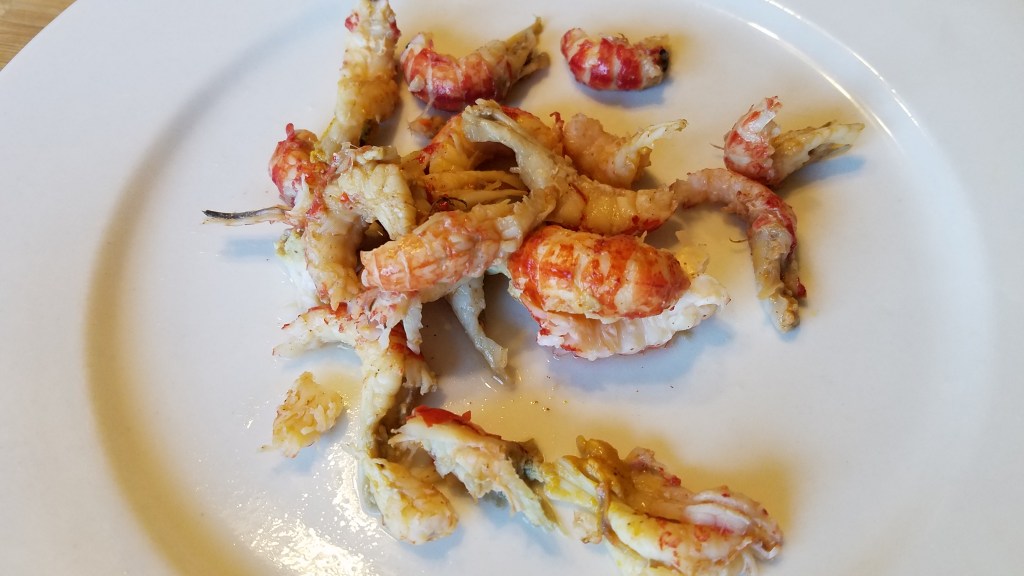
Not a lot of meat, but ohhh, it’s so good!

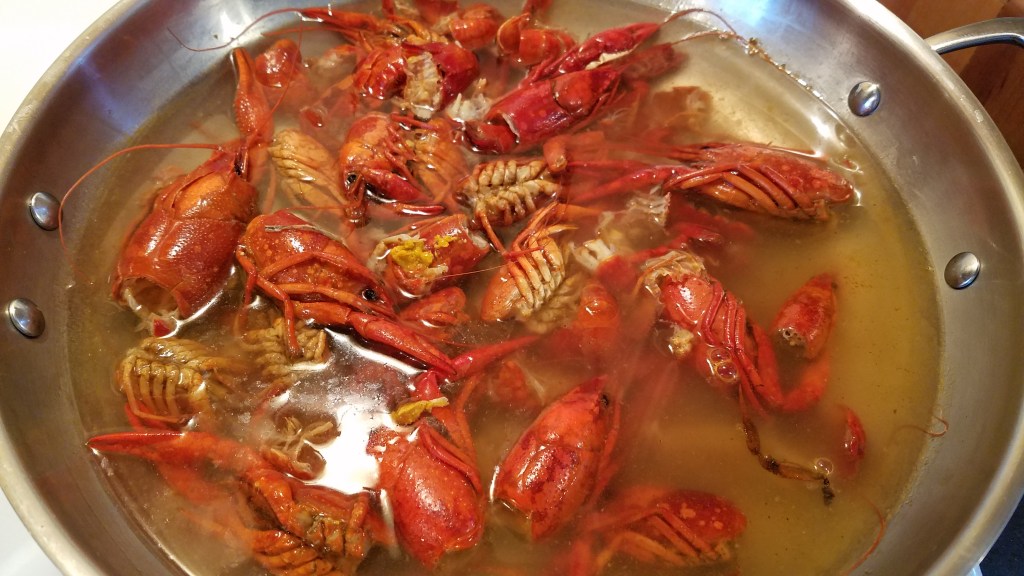
Add the heads and shells to a skillet and cover with water.  Simmer for 30 minutes and strain the solids.  Discard the solids. 
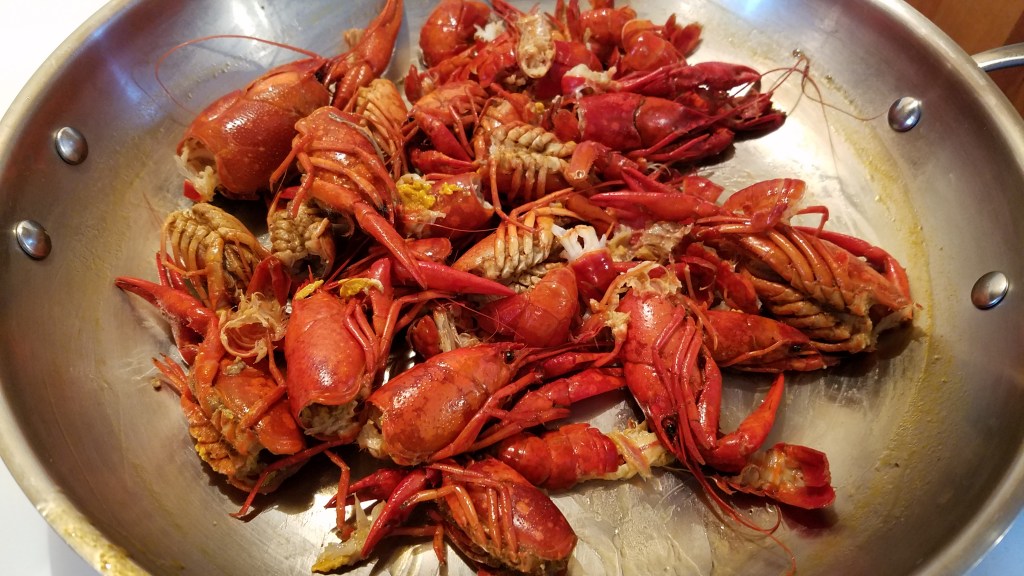
Save the stock in the refrigerator, or freeze.
Making compound Butter

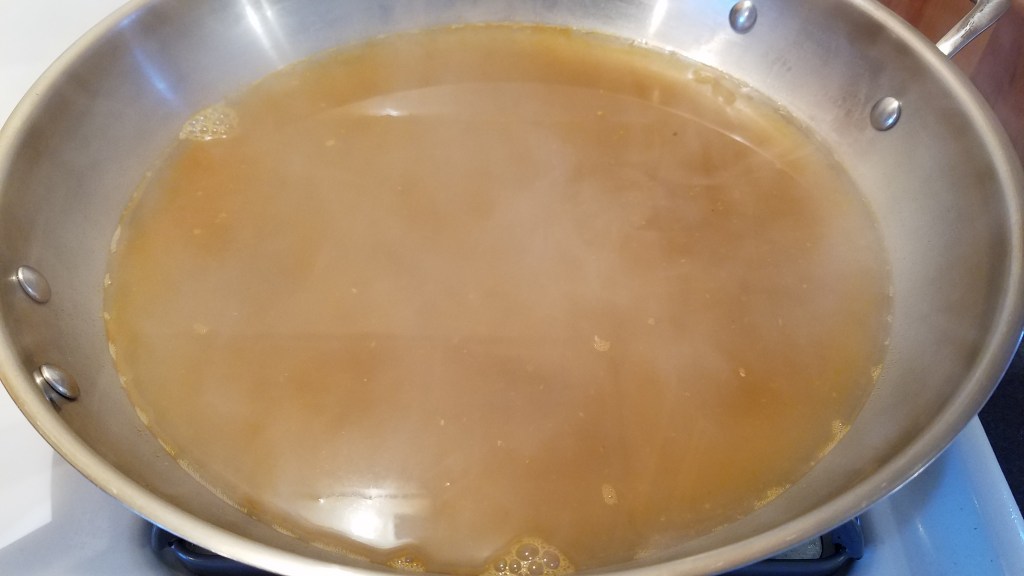
If you want to make compound butter with shrimp stock or crawfish stock, simmer the sauces further.  Simmer at high heat and whisk constantly. Reduce the sauce until nearly all of the moisture is gone. 
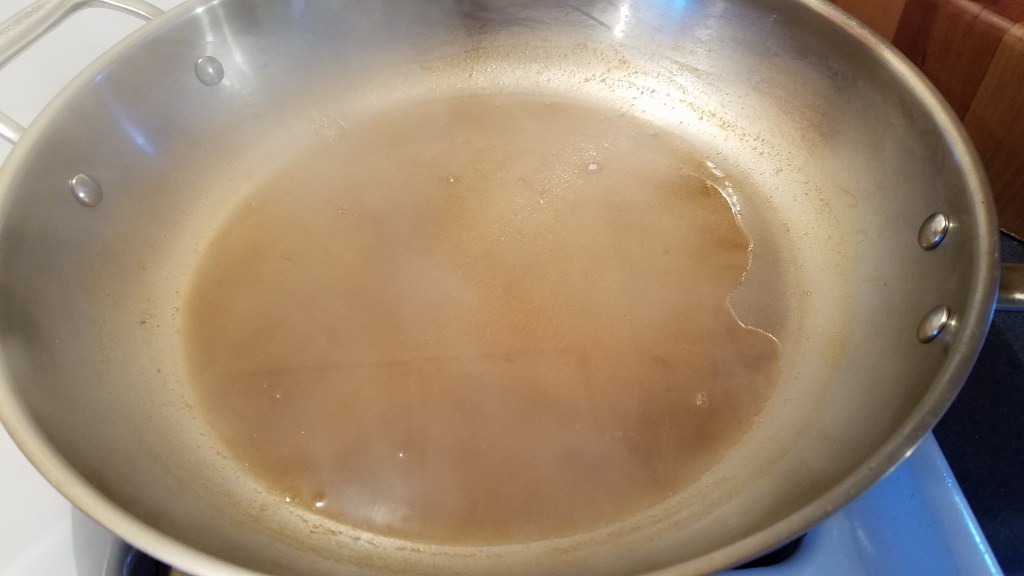
I reduced the shrimp stock down to about 3 tablespoons and I reduced the crawfish stock down to about ¼ cup.
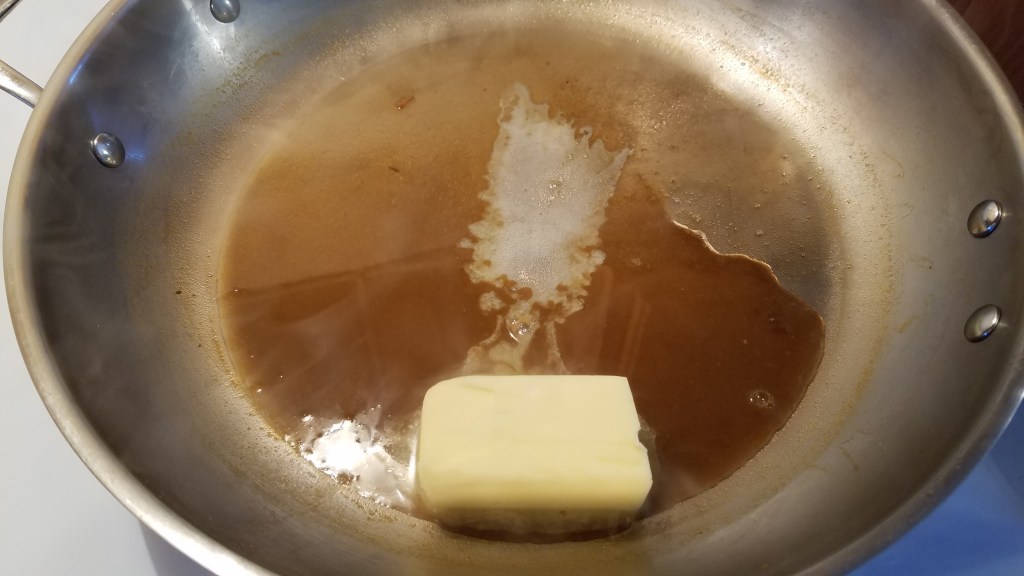
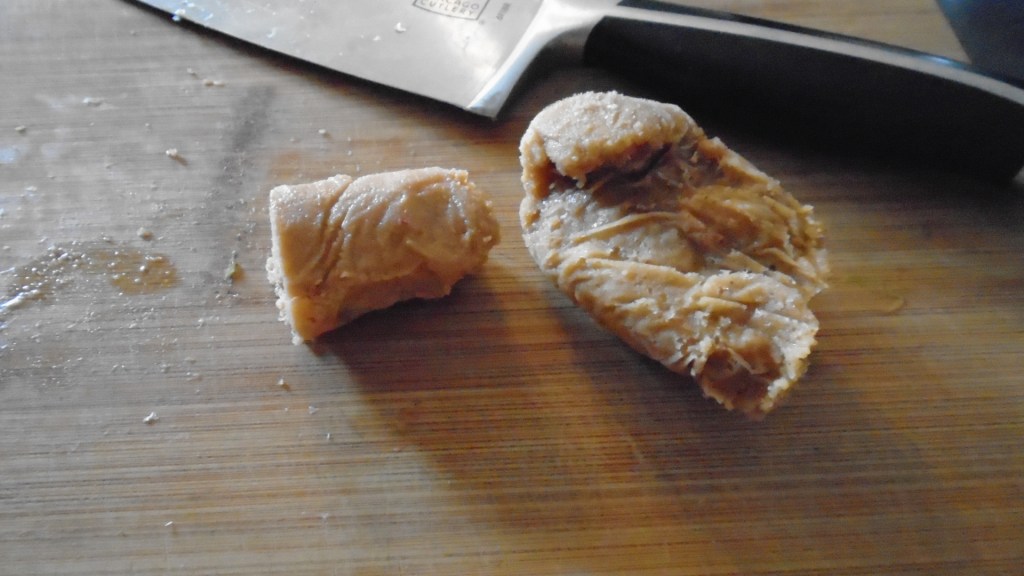
Turn the heat off and add ¼ cup butter.  Whisk to incorporate.  Pour the butter into a small bowl, cover and refrigerate.  Once the compound butter solidifies, turn it out on some plastic wrap.  Fold the wrap over the butter.  I like to add extra layer of plastic wrap to get a good seal.  Refrigerate or freeze until needed.
Rockin’ the Kitchen!

As I mentioned recently, my wife and I are working for “essential” industries.  We are still putting in regular hours at our respective companies.  Working in an environment that involves close human contact at a time like this can be nerve racking.  Sure, when we are at work, we focus on the jobs that need to be done.  But, when we come home we think of the risks we take each day we go to work.

We are not exceptional.  Many people are experiencing similar types of anxiety.  We all deal with it in our own ways.   

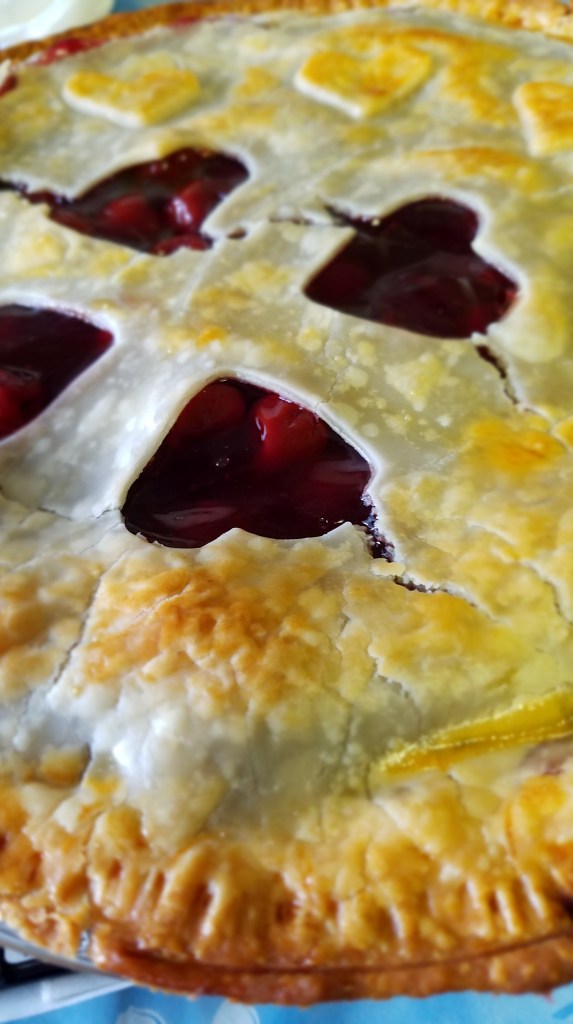
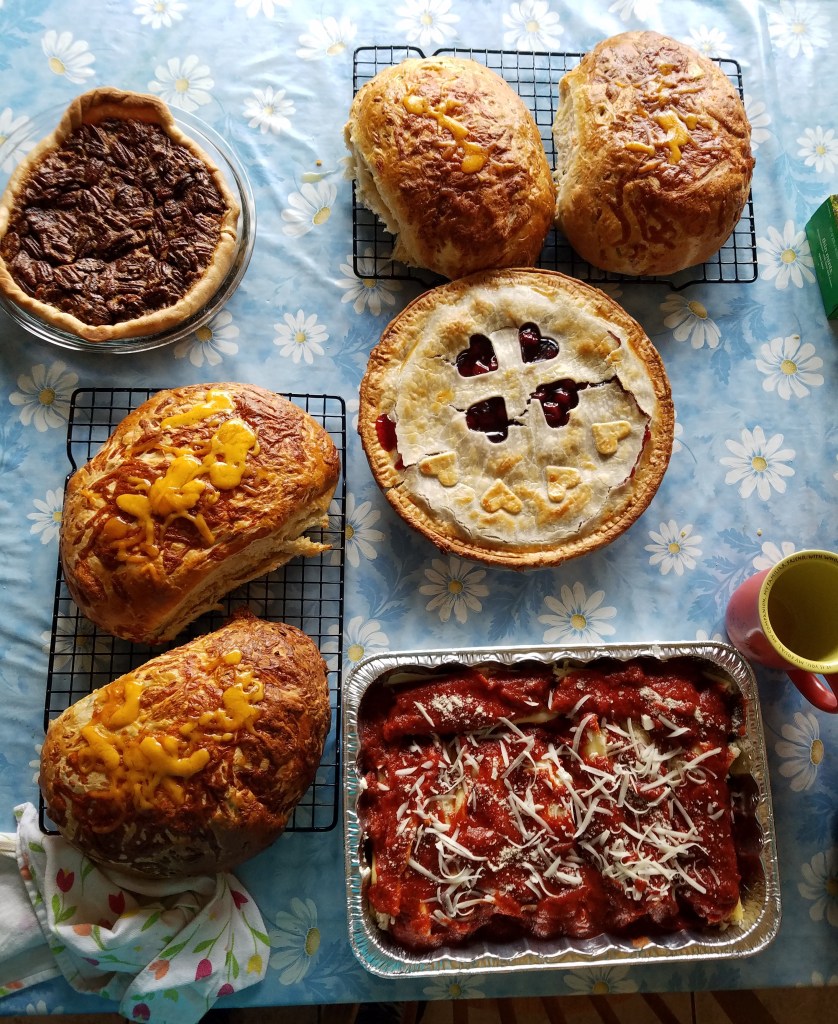
A few days ago, after a mere 4 hours of sleep, my wife awoke at the crack of dawn and went straight to the kitchen.  She spent the next 10 hours baking.  When my wife bakes, or cooks for that matter, the result is always impressive.  This particular baking marathon was fueled by her love of our family and her need to occupy herself with something meaningful.  It surely wasn’t fueled by a good night’s sleep!

It was therapy.  It was determination.  It was well-honed skill mixed with passion and promise.

The results were remarkable and very tasty!

* A deep dish cherry pie

* A pecan pie

* 4 loaves of jalapeño and cheddar cheese bread

* 2 casserole dishes of manicotti

Weekend Leftovers (and the Daily News)

I hate to say it but, it’s the weekend and I have too many leftovers in the refrigerator.  That’s a great thing for a weekday, when time is precious for us working folks, like us.  Yes, my wife and I have been deemed “essential” by the powers that be, but it drives me nuts when the weekend arrives and I discover that leftovers have overtaken the fridge .  This is my weekend crisis, along with worrying about the ever-expanding, impending virus.

A good weekend, for me, is when I get to play in the kitchen and make some food that can turn into leftovers for the upcoming week. 

But, today, it’s necessary to scoop together a meal from all of the leftovers.

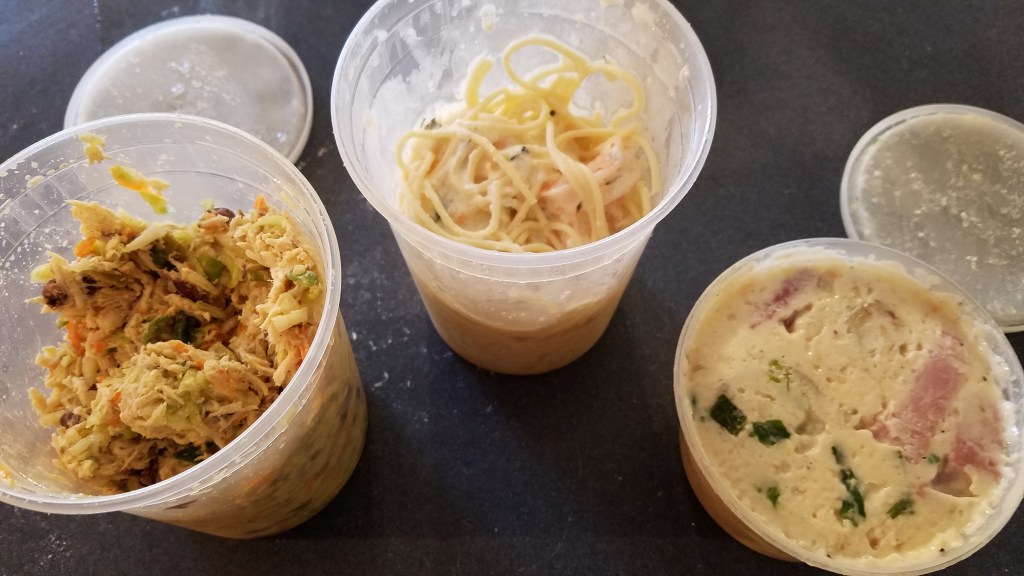
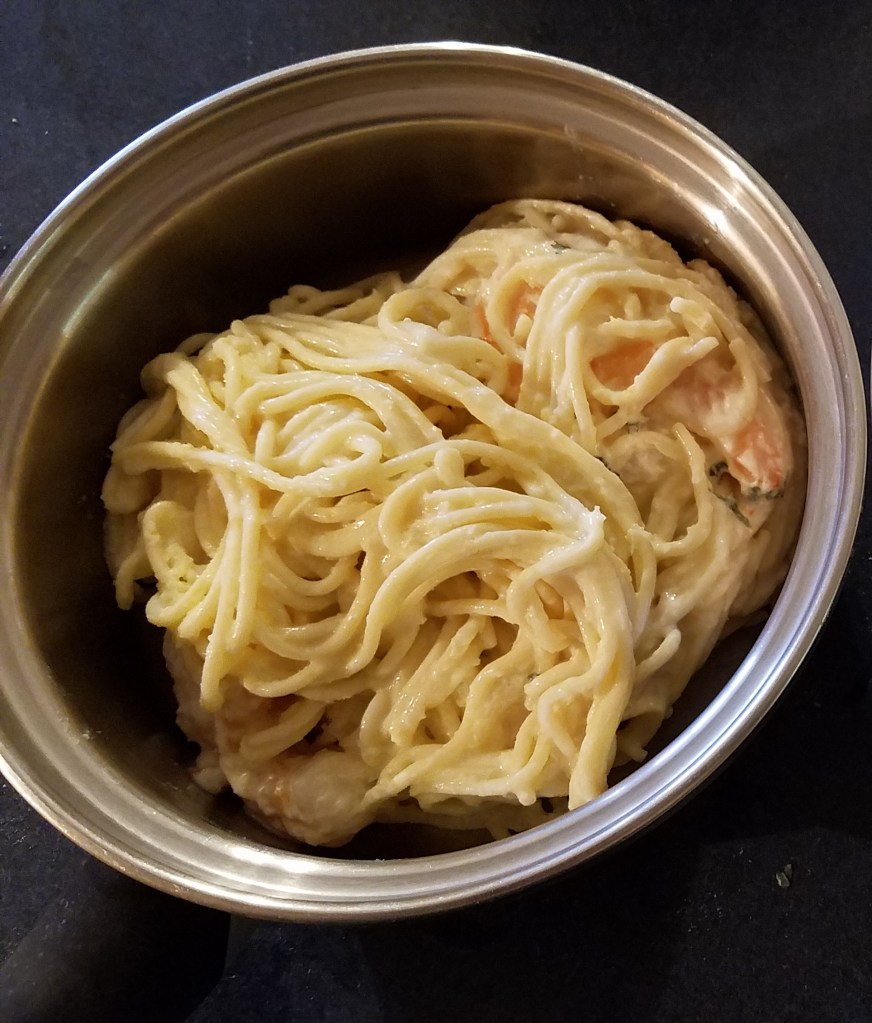
How could I possibly tie all of these leftovers together to make a single, cohesive meal?  There’s shrimp in a garlic butter sauce with noodles, scalloped potatoes with ham and a chicken salad, intended for sandwiches.  Three mish-mash leftovers with only one or two servings each, among them.

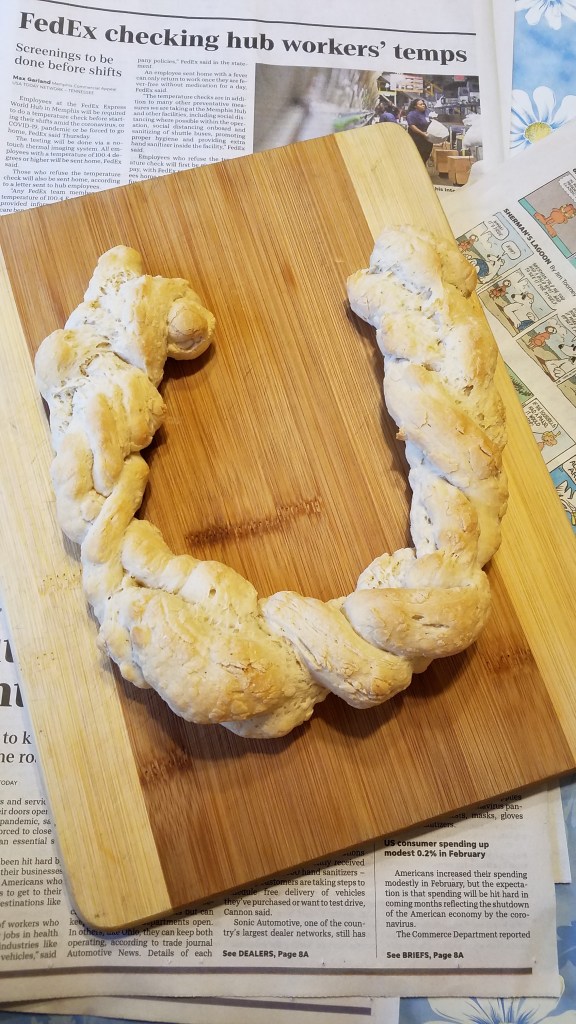
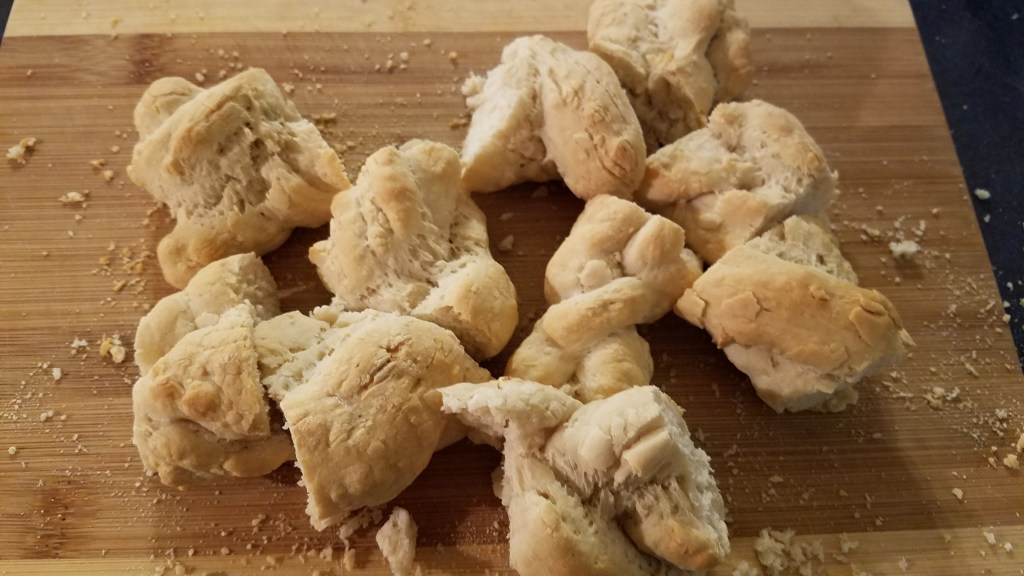
I say, tie them together with some fresh bread.  Garlic bread should work.  Half of the bread for a small bread loaf and the other half for garlic knots, or in this case, a braided garlic loaf.  Add some fresh lettuce and we have a brand new meal!  Leftovers can always be boosted by adding a splash of something fresh.

Garlic Bread / Garlic Braid

Ingredients:

1 cup warm water

2 Tbs yeast

1 tsp olive oil

3 cups flour

2 Tbs garlic powder

Pinch of salt

1 quart prepared shrimp with pasta, with garlic butter sauce

1 pint prepared ham and scalloped potatoes

1 pint prepared chicken salad

Fresh lettuce, (any kind will do)

¼ cup olive oil

5 garlic cloves

Directions:

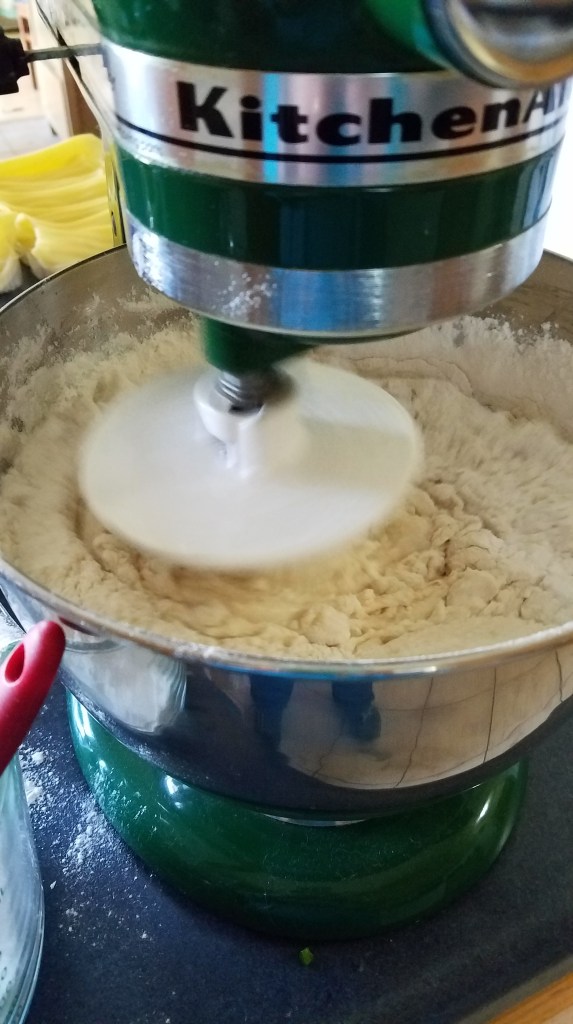
Prepare the bread dough by warming a cup of water and adding yeast and olive oil.  Set in a warm place to allow the yeast to activate for 20 minutes. Add water and yeast to a large mixing bowl and add the flour and salt.

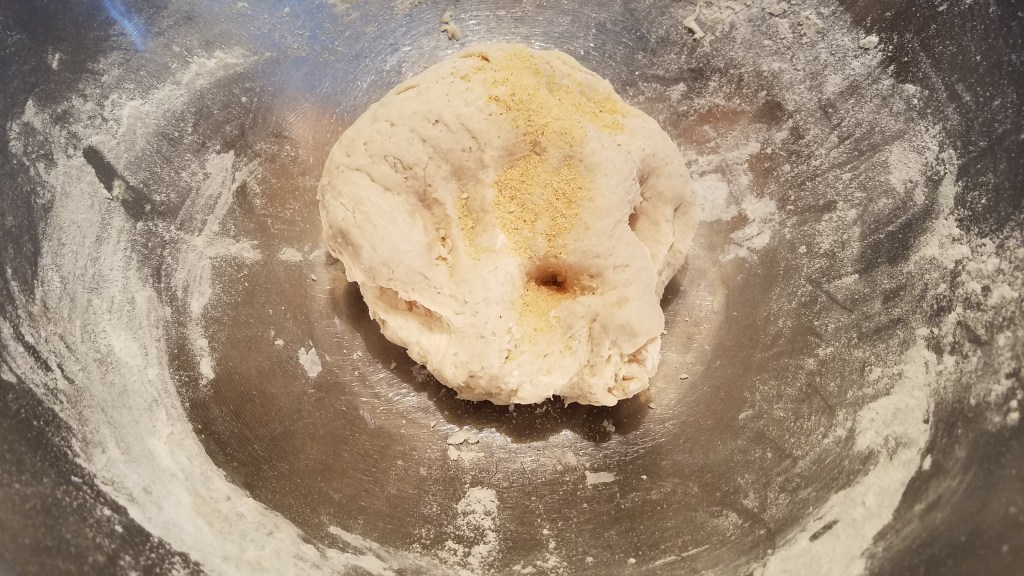
Mix and knead for a minute.  Sprinkle garlic powder over the dough ball, cover with a towel and allow the dough to rise for 15 minutes in a warm place.

Knead dough again to incorporated the garlic powder.  Cover and keep warm for 30 minutes.

Heat an oven to 400°.

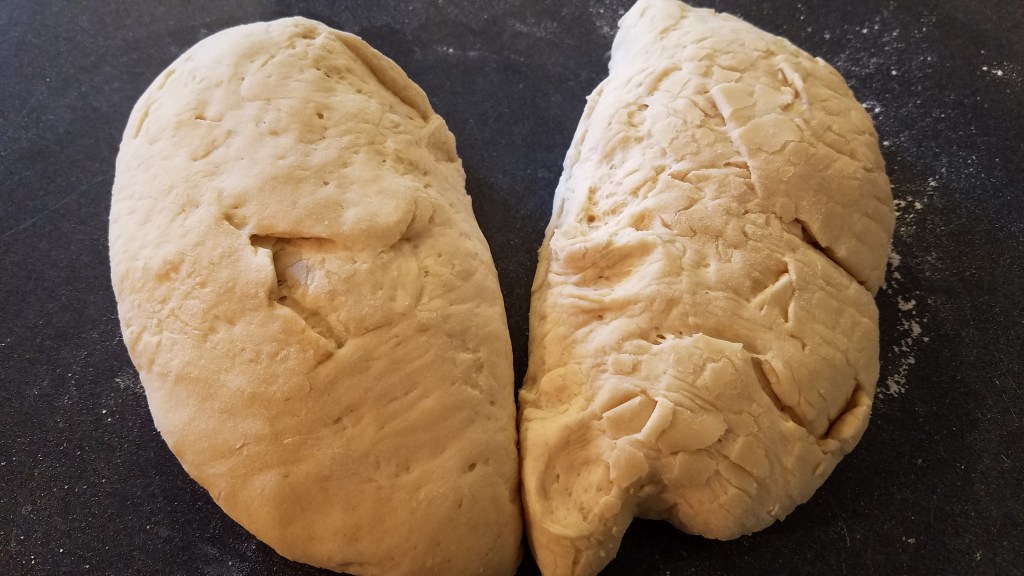
Knead the dough and divide in half.  Set one half aside.

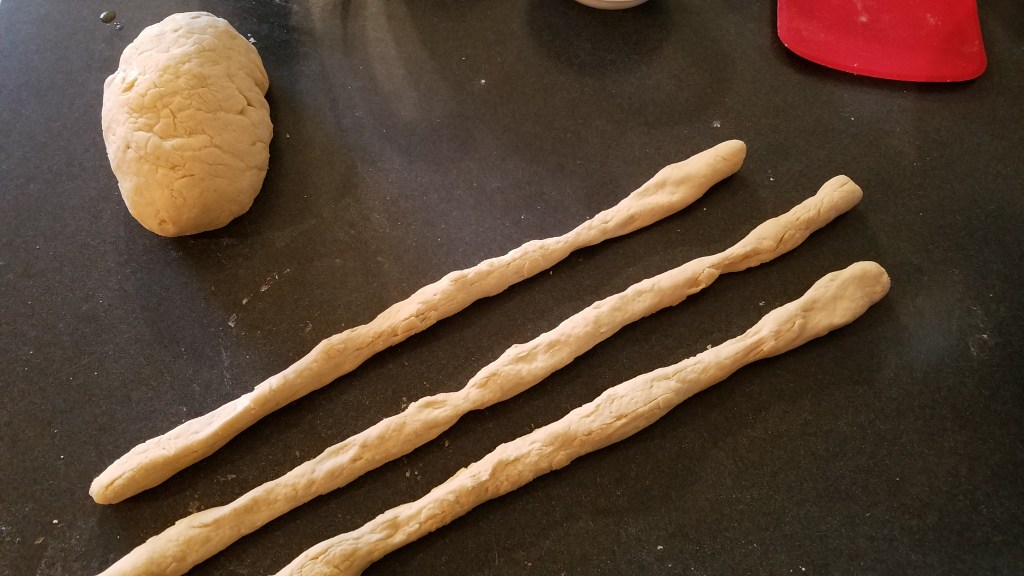
Take one half and divide into thirds.  Roll each third into ropes, making one rope slightly larger than the other two.

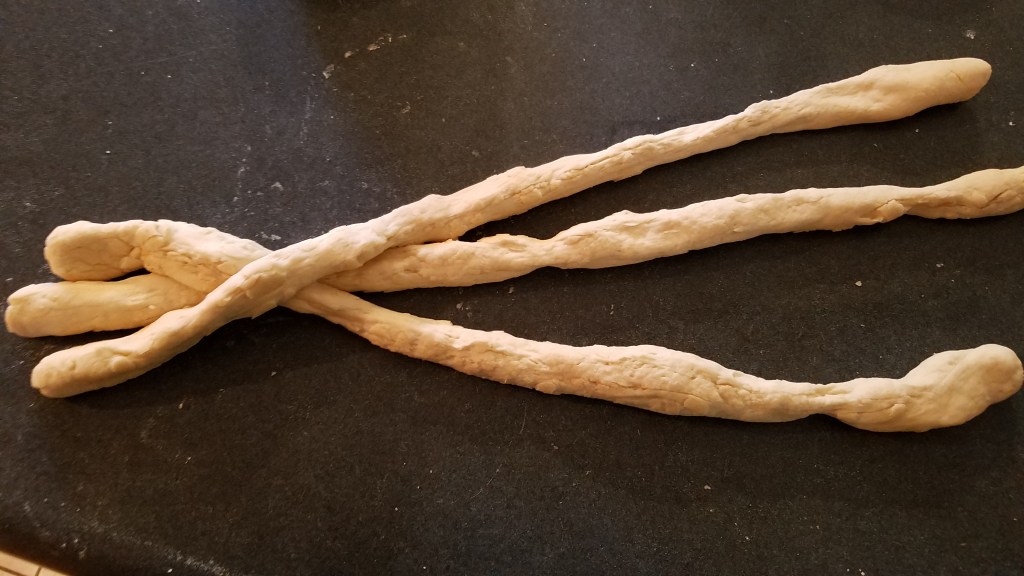
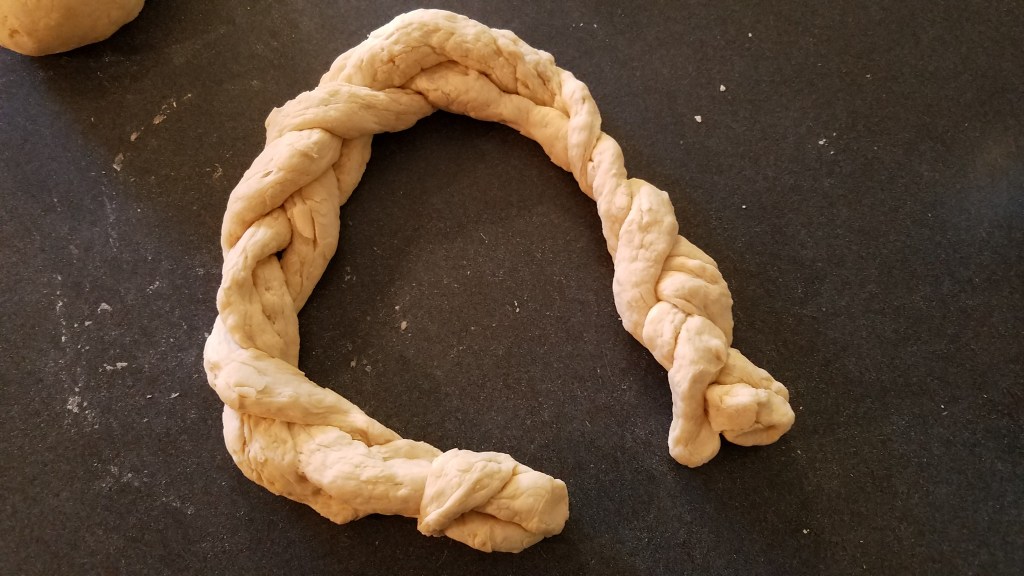
Lay the ropes of dough on a clean surface, with the longest rope in the middle.  Braid the dough in a French braid. 

Lay the braided dough on a baking sheet and bake in the oven.

Take the remaining dough and form into an oblong loaf.  Place on a baking sheet and place it in the oven.

Bake for 20 minutes.

While the bread bakes, add chopped garlic to the olive oil and heat in the microwave for about 1 minute.  Carefully remove the olive oil and set aside.

Pull the braided loaf out of the oven and leave the other loaf in the oven for another 5 minutes.

Heat the shrimp and pasta in a covered pan, with a little splash of water.

Heat the scalloped potatoes and ham in a microwave oven for a few minutes.

Add the chopped lettuce to individual serving bowls.  Top the lettuce with the chicken salad.

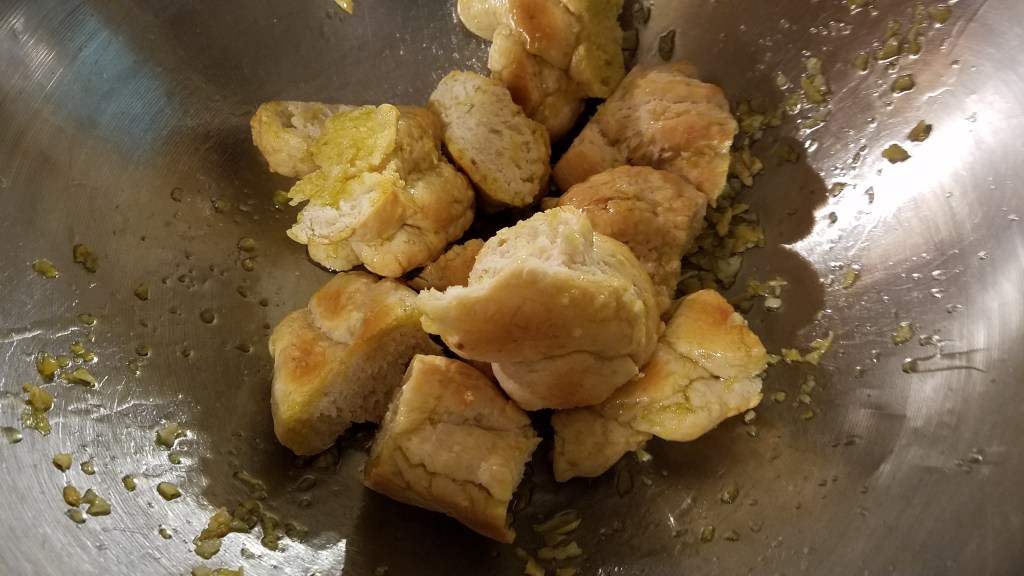
Cut the braided loaf into bite sized portions and put the pieces in a mixing bowl. 

Pour the garlic and olive oil over the bread pieces and toss.

Place the braided garlic bread pieces in a serving bowl.

Slice the bread loaf into 1” slices.

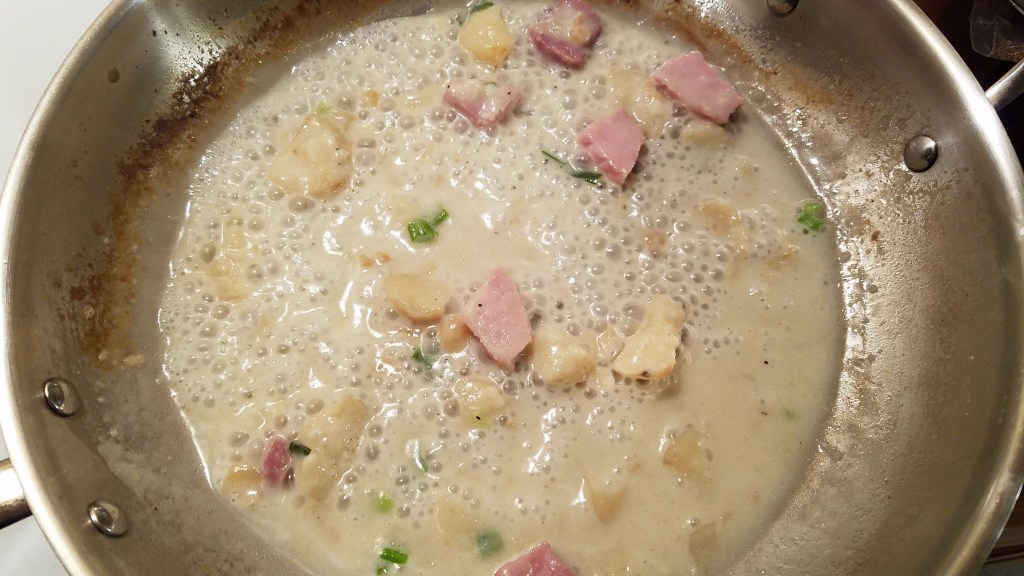
In a large pan, heat about 1/3 of the scalloped potatoes and ham, with a little water.

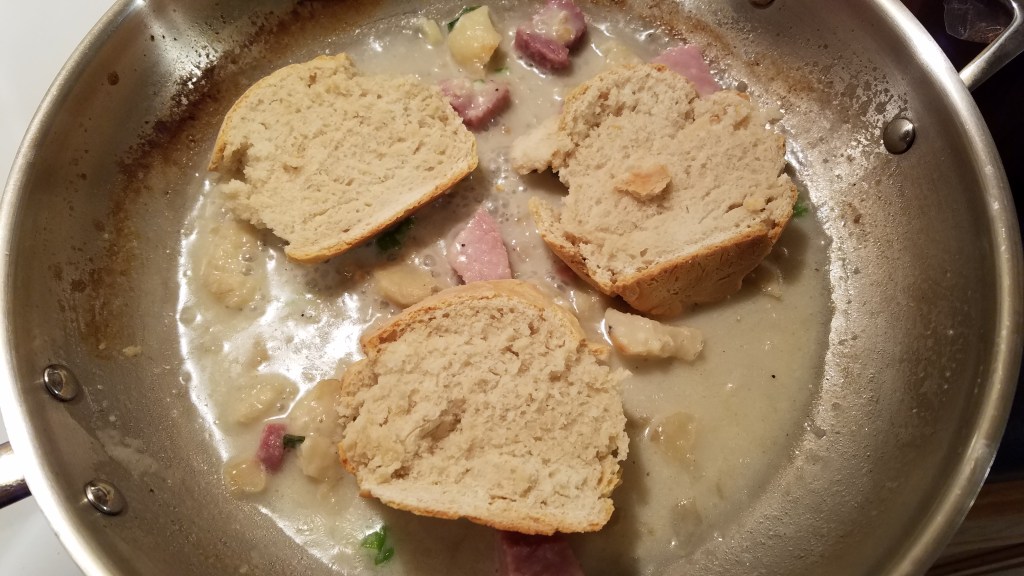
Add the sliced bread to the pan and let the bread absorb some of the liquid.  Turn the bread over and turn the heat off.

Assemble individual serving plates by adding portions of the shrimp and pasta, along the with the scalloped potatoes and ham on bread slices, and braided garlic bread.  Serve with the a side of chicken salad and a sample of the daily news.

Super Easy Salmon

Well, it’s official.  Our worldwide dilemma has caused the train to jump of the tracks.  The Catholic church announced that we can stop abstaining from eating meat on Fridays for the remainder of Lent.  At least, that is what one bishop from New Jersey has decreed.

It seems that we have suffered enough.  Maybe a delicious hamburger and fries will pick up our spirits. 

Lent is one of those old-world traditions that I actually appreciate.  Fasting and simplifying our lives through meditation and reverence for 40 days each year seems like a healthy practice.

So, let’s prepare a nice salmon filet, shall we?

Ingredients:

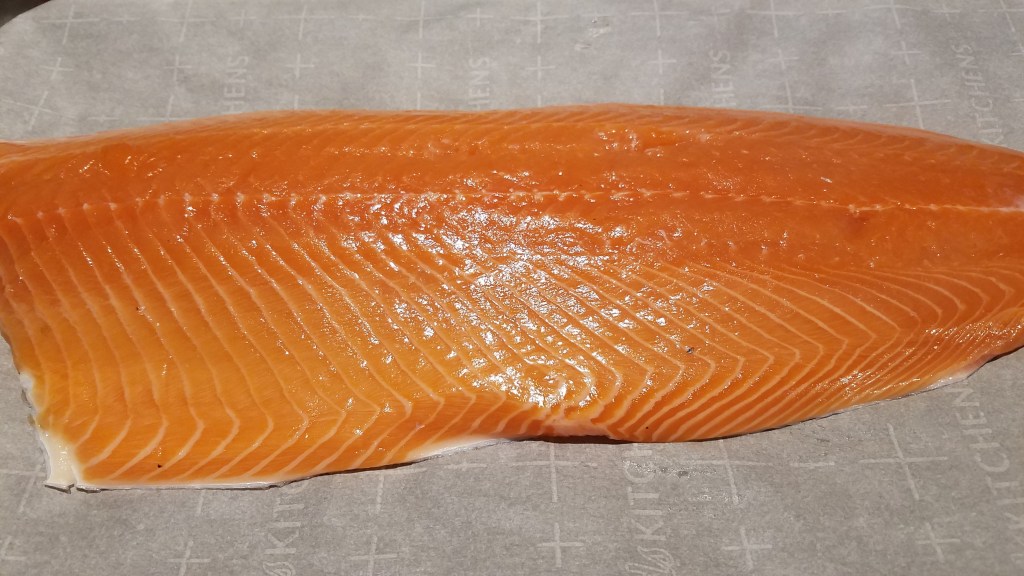
2.5 lb fresh salmon filet

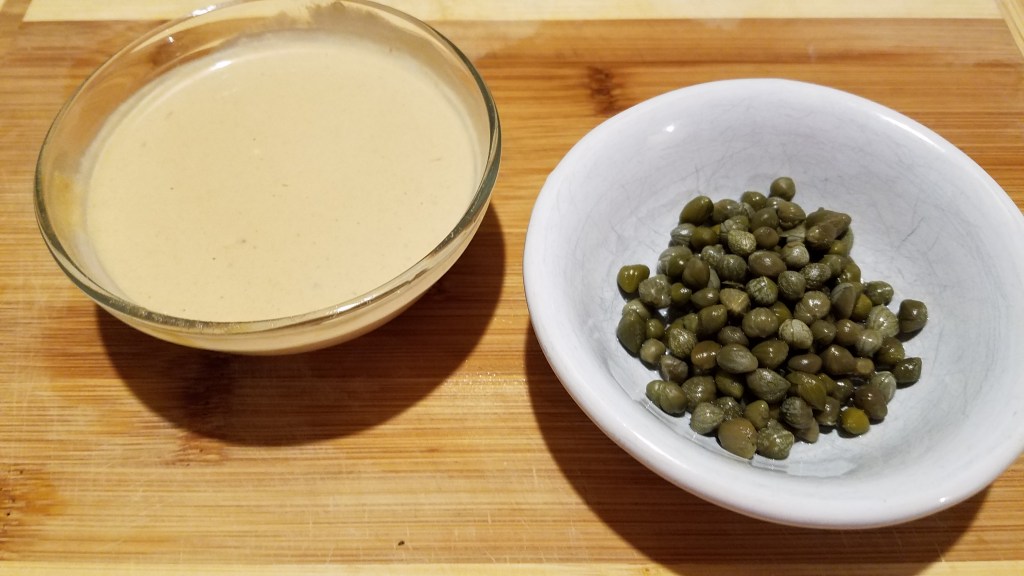
3 Tbs Dijon mustard

3 tsp lemon juice

3 tsp mayonnaise

1 ½ tsp chili sauce (spicy ketchup)

¼ cup capers

Directions:

Set oven to 375°.

Lay the salmon, skin-side down, on a parchment paper lined baking sheet.

Combine Dijon mustard, lemon juice, mayonnaise and chili sauce in a small bowl. 

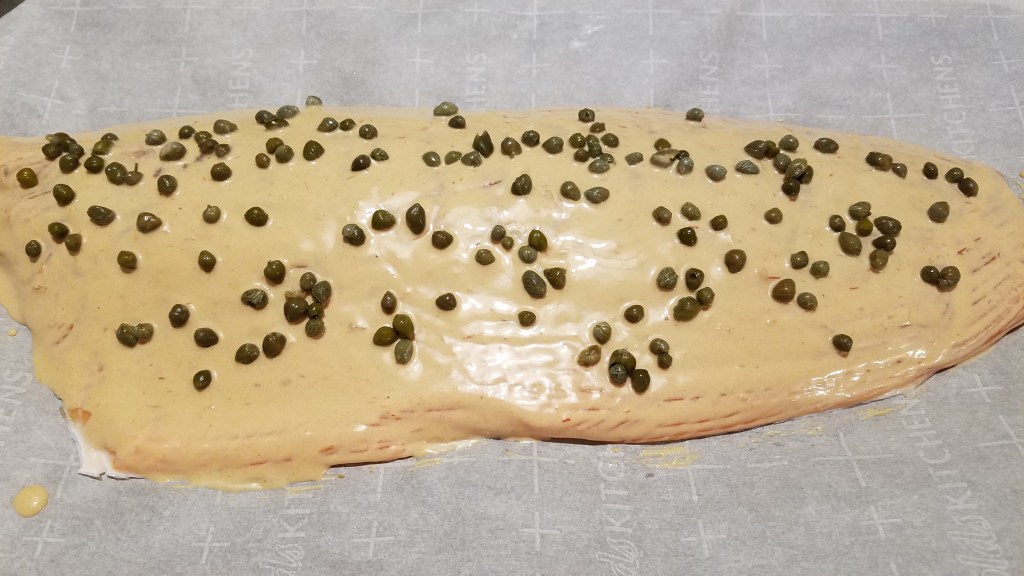
Spread the mixture across the top of the salmon.  Make sure to coat the entire surface to prevent the fish drying while baking.

Sprinkle capers across the top of the fish.

Bake uncovered at 375° for 20 to 25 minutes.  Remove and allow to rest for a few minutes before serving.

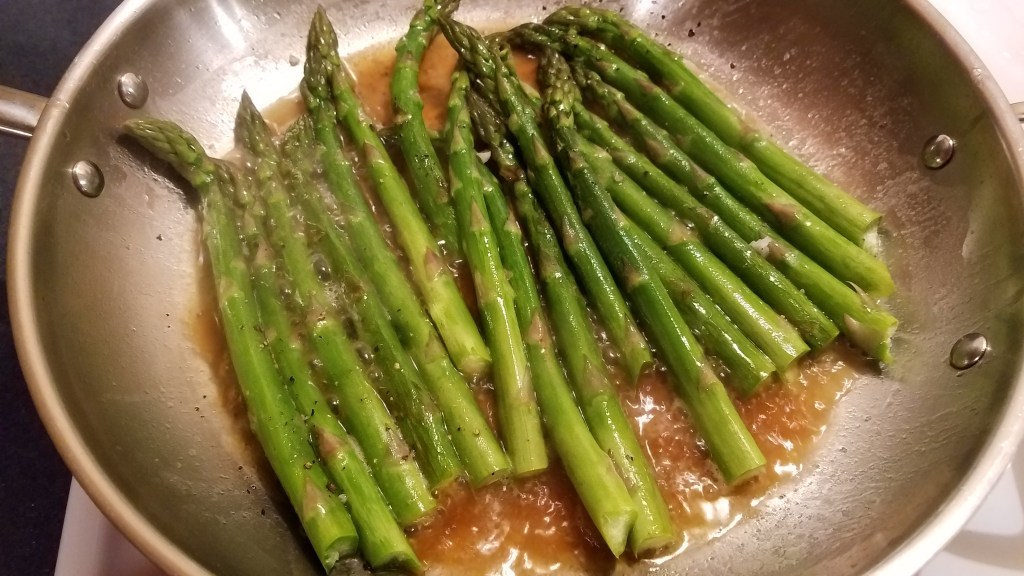
Serve with sautéed asparagus and rice.

Social Distancing

Two things. 

First, I predict that when the Oxford Dictionaries and Merriam-Webster reveal their word of the year, they will choose “social distancing” as their ‘word of the year’.  I know that might come as a surprise to some people because “social distancing” is actually two words, but that sort of rule-breaking has not swayed scholars in recent years. 

Secondly, “social distancing” has become a popular phrase that I am already tired of. The phrase, ‘social distancing’ reeks of Orwellian creepiness.  To me, it is misleading and confusing. 

“Quarantined” is a very elegant and succinct word, and it more accurately describes what we are experiencing now and it ties us to our past.  Not so long ago, if you contracted malaria, you were quarantined.  If you succumbed to bubonic plague, you were quarantined.  If members of society wanted to inhibit the spread of disease, you were quarantined, or you could choose to quarantine of your own accord, if you were concerned of spreading a disease.
Let’s investigate the origin of the word quarantine, shall we?

Quarantine: From Latin quadrāgintā

From Italian quarantina (“forty days”), the period Venetians customarily kept ships from plague-ridden countries waiting off port,[1] from Latin quadrāgintā (“forty”)

A period of 40 days. A sanitary measure to prevent the spread of a contagious plague by isolating those believed or feared to be infected.

Is that too much to ask?

Be safe, be prepared and stay in touch with those you hold dear.  This time will pass and we will have new challenges to occupy our time. 

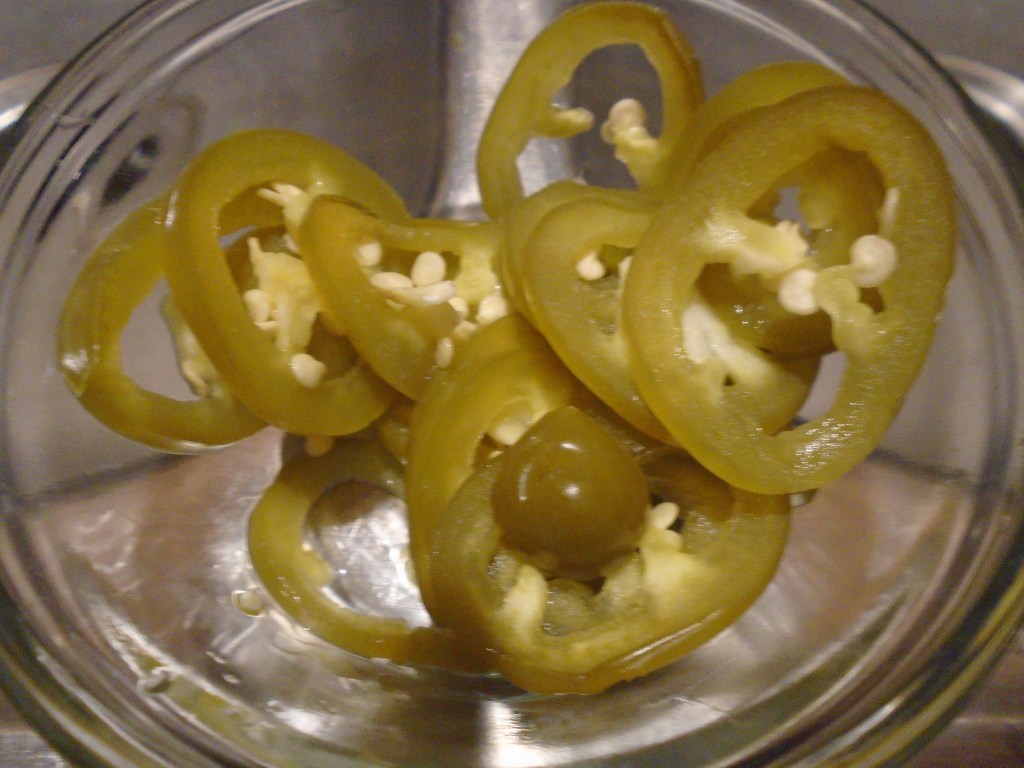
Pickled Jalapeños (Small Batch)

Oh no, I forgot to get jalapeños during my weekly trek to the toilet paper store, er, I mean grocery store.

The good thing is that I have some fresh jalapeños and vinegar and sugar.  Pickled jalapeños only take a few minutes to make and they can be just as good as store bought.

Ingredients:

3 Tbs white vinegar

3 Tbs water

1/2 tsp sugar

1 garlic clove, smashed

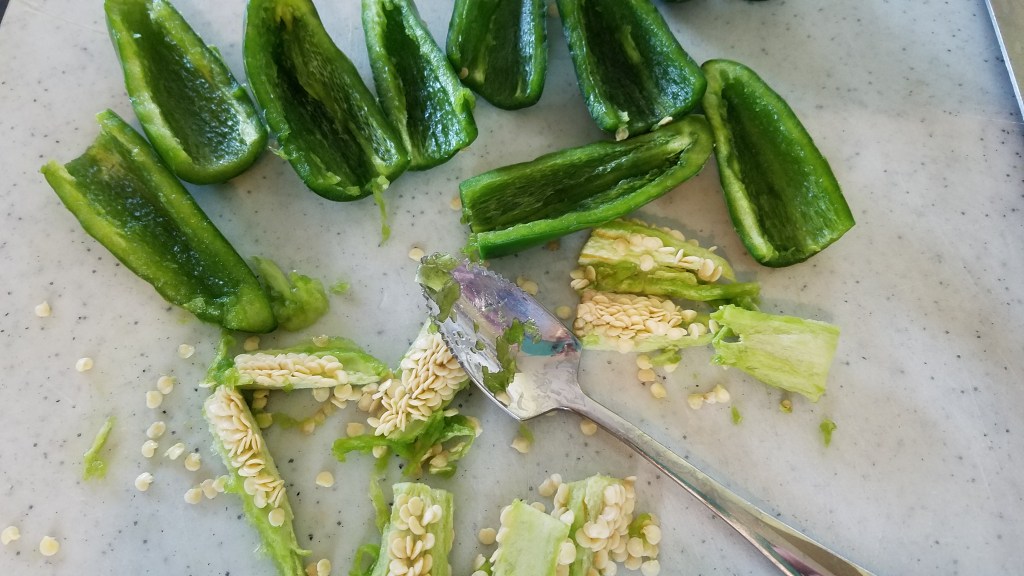
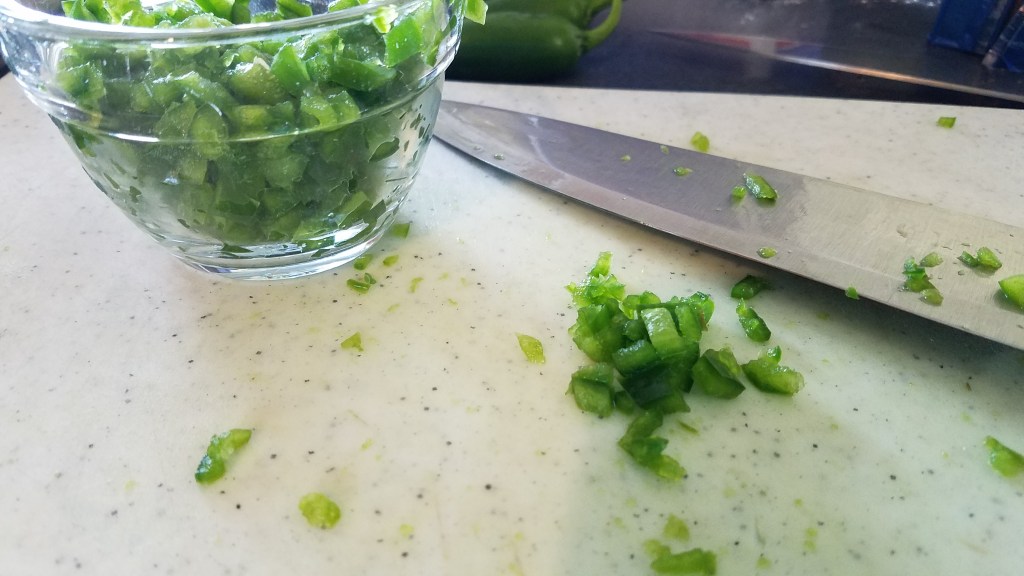
2 fresh jalapeños, sliced

Pinch of salt

Directions:

Combine the vinegar, water and sugar in a small microwave safe bowl.  Heat in the microwave until the mixture begins to boil.  Carefully remove the bowl and add the garlic, jalapeño and pinch of salt.  Wait 10 to 15 minutes and enjoy some tangy peppers!

10 Essential Spices

I was reading a post from Ella at thewackyspoon.com recently and she mentioned a “Well Stocked Spice Cabinet” and that made me think about my ten essential spices.  It didn’t take me very long for to come up with my ten.  These are the things I use nearly every day.  I’m taking a certain liberty by adding some dried herbs because I treat them like spices.

salt

black pepper corns

garlic powder

chili powder

cumin

cayenne pepper

oregano

basil

cinnamon

rosemary

I believe many of these would find their way on many cook’s essential 10.  What I find interesting (and sad) is what didn’t make the cut.

onion powder, bay leaves (laurel), paprika, turmeric, parsley, mint, sage, chocolate (yes, chocolate!)…  The list goes on and on. 

Spices and herbs are the things we, as cooks, use to make mundane food exceptional.  All manner of vegetables, fruit and meats are heightened by the spices we add.  What would our world be without our favorite spices?

Thank you, Ella for giving me something to ponder!

I am adopting a new kitchen motto: 

Keep it simple, but add lots of spice!

I’m interested to see what others might offer for their top ten…

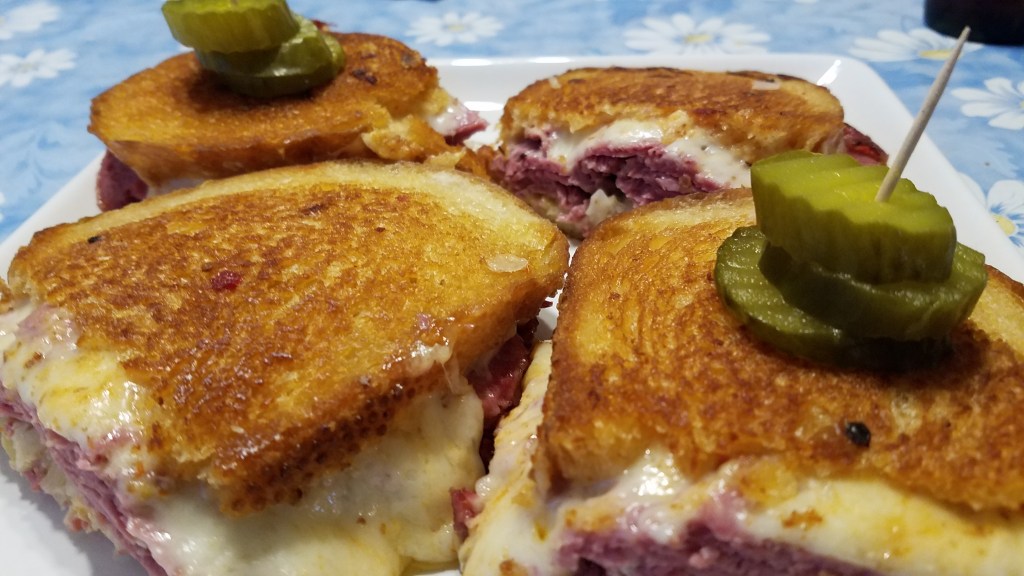
The Reuben Sandwich

My first Reuben sandwich came from an airport deli.  To be precise, I was at D/FW Regional Airport, Terminal 2E (American Airlines), on a sunny spring day, in 1977.  I wasn’t traveling and I wasn’t meeting anyone.  I was there just for fun.

When I was a 12 and 13 years old, I used to ride my bike to the airport just for fun.  That’s the sort of thing I did while other kids were playing sports or hanging out at the mall.   Yes, I was a little odd. 

In some ways, going to the airport, by myself, made me feel connected with other people.  It was an interesting way to observe people, without being obtrusive.  I imagined stories about the people I saw and dreamed about the places that they would go to and places they had been.  I was living life vicariously by watching others but it poured gasoline on the fire of my imagination. 

I rarely had much money…usually nothing more than a dollar or two.   But, on that day I had five dollars in my pocket.  I gazed at the menu, reading the descriptions of the sandwiches that the deli had to offer.  One sandwich in particular drew my attention.  The Reuben.  I had never had corned beef and sauerkraut was something I never imagined on a sandwich and rye bread was something I imagined only existed in New York.  I had to have it.

I savored every bite of that Reuben sandwich and I still recall its warmth, aroma and the piles of sliced corned beef to this day.  Every time I have a Reuben sandwich I recall the fun times I had during my trips to the airport, when I was globetrotting teenager, at least in my mind.

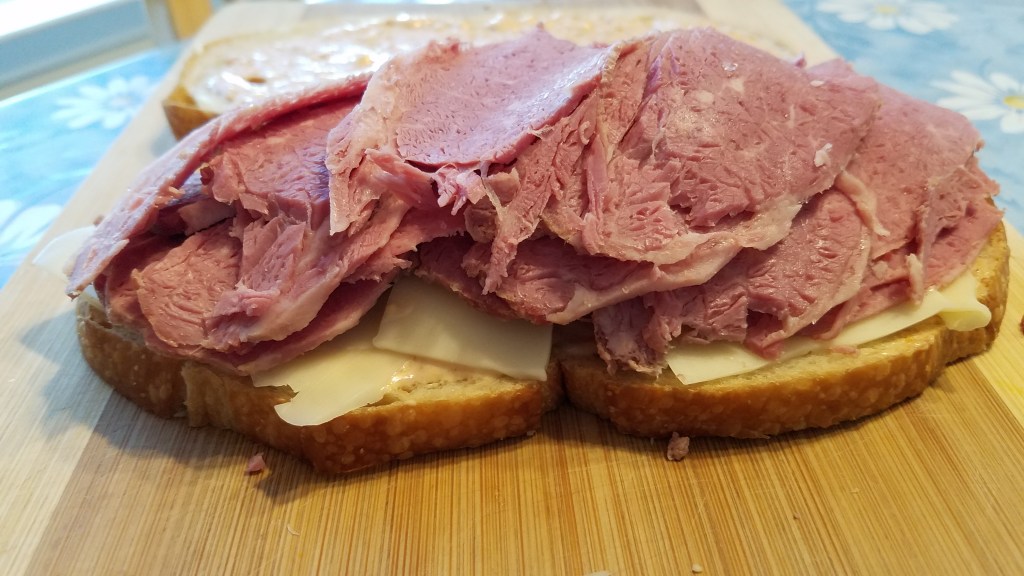
The Reuben that I am making today will have sour dough bread, instead of rye.  Other than that, I have remained true to the classic sandwich recipe.  I bought a beef roast that came with corned beef seasoning and followed the directions on the package.  I boiled the roast for a few hours and then let it rest until cooled.

Ingredients:

2 lbs prepared corned beef roast

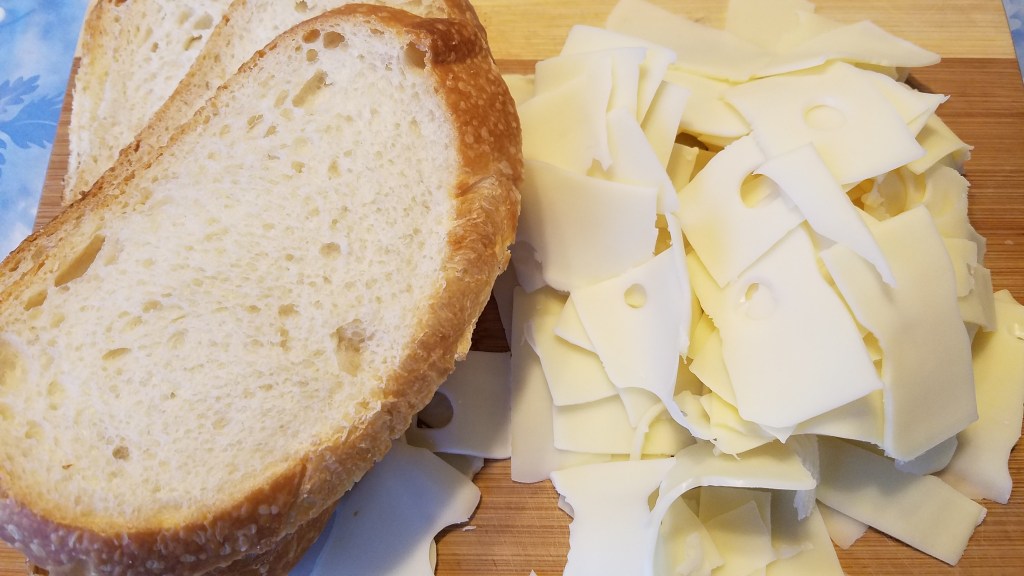
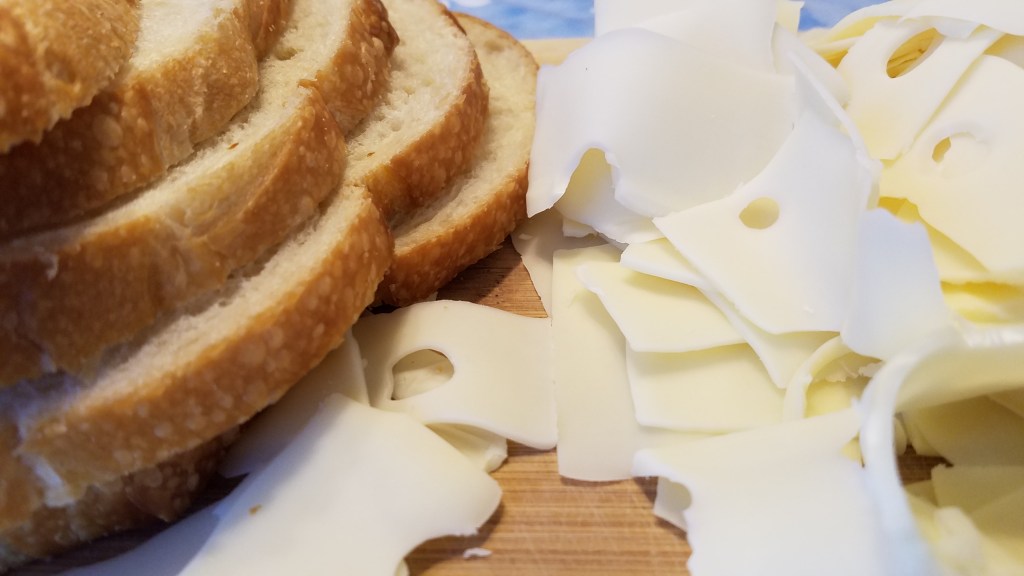
16 oz Swiss cheese, sliced

1 ½ cups sauerkraut

1 ½ cups Russian dressing (ingredients and directions below)

Sour dough bread, sliced

1 Tbs olive oil

2 Tbs butter

Directions:

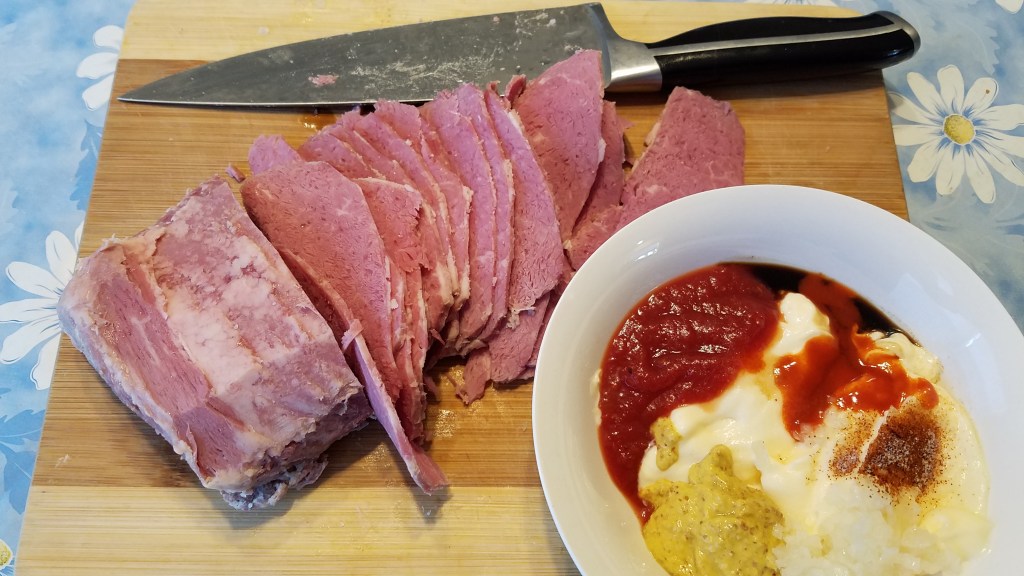
Slice the corned beef, ¼” slices or thinner if you can.  Slice the Swiss cheese.  Set these aside.

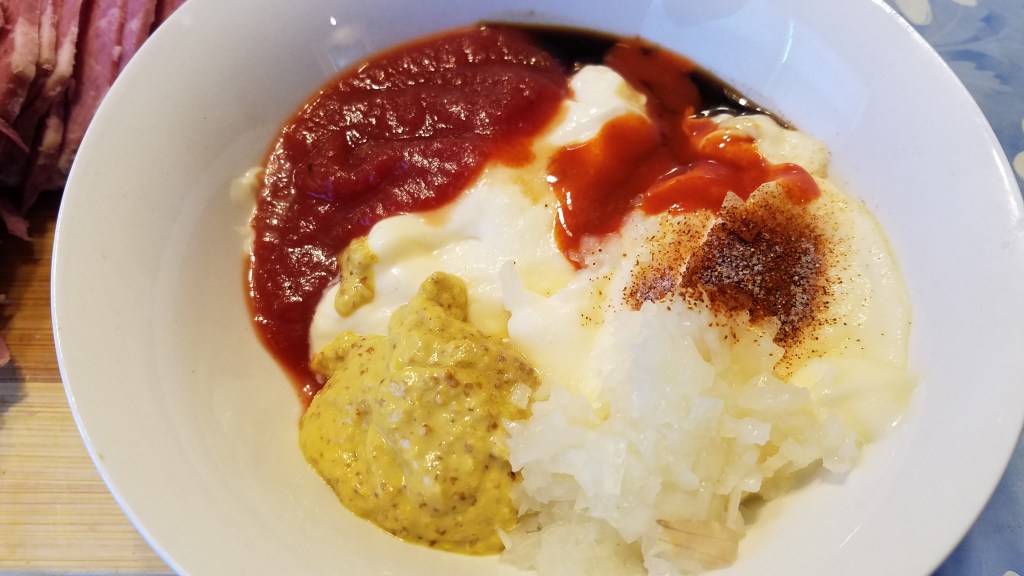
Preparing the Russian dressing:

   2 Tbs onion, minced and pulverize with the broadside of a knife

   1 cup mayonnaise

   3 Tbs chili sauce (spicy ketchup)

   2 Tbs horseradish, from a jar

   1 tsp Worcestershire sauce

   1/4 tsp paprika

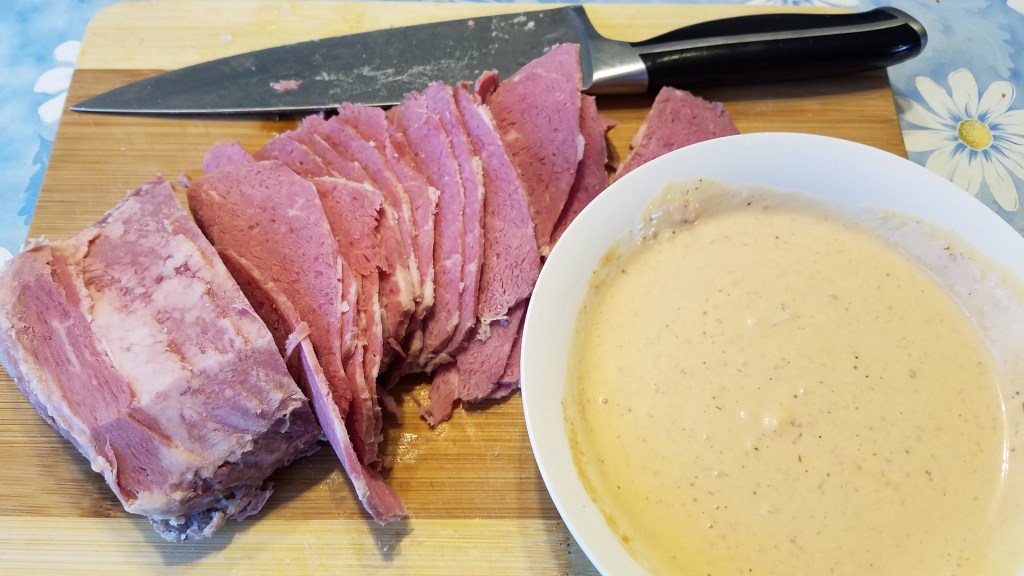
Combine all and mix thoroughly.  Set aside.

Assembling the sandwich:

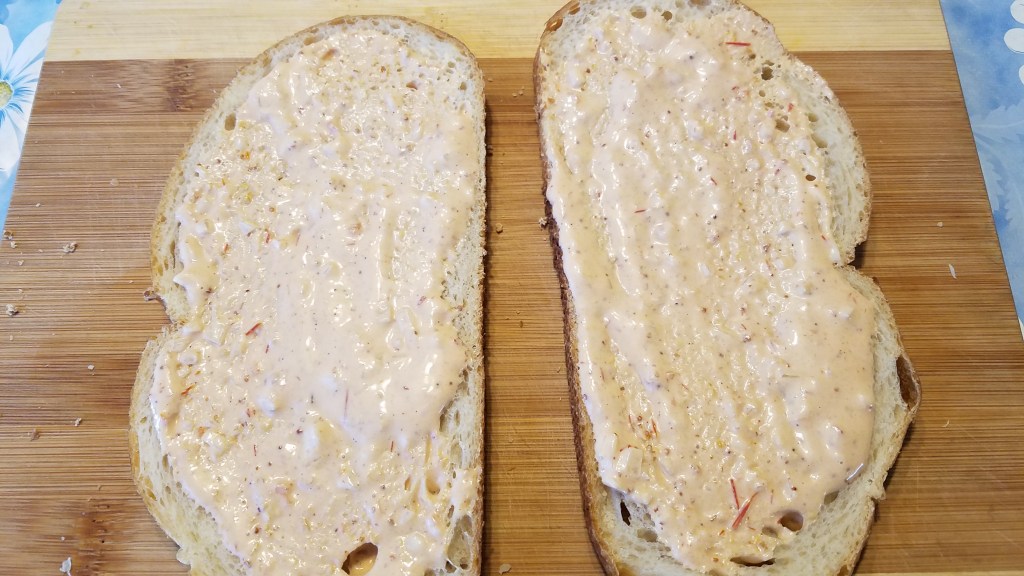
Lay slices of bread on a clean work surface.  Slather Russian dressing on both slices.

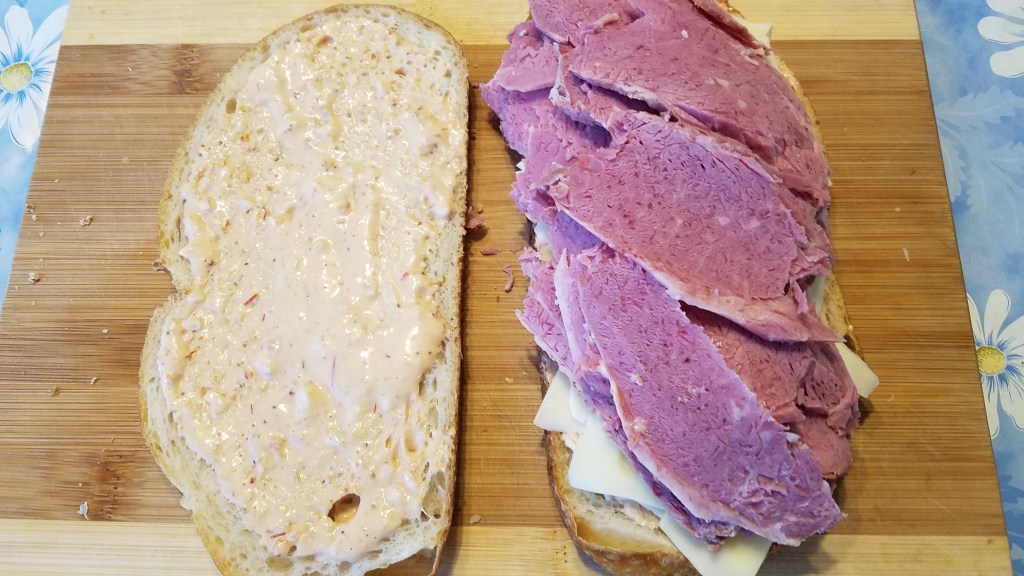
Lay slices of Swiss cheese on one of the slices.

Pile slices of corned beef on one top of the cheese. 

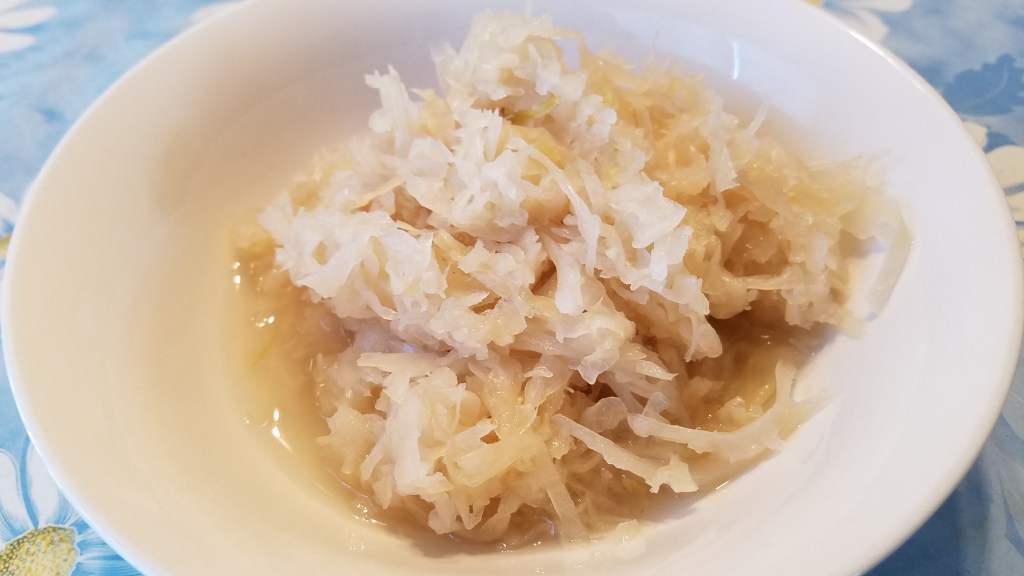
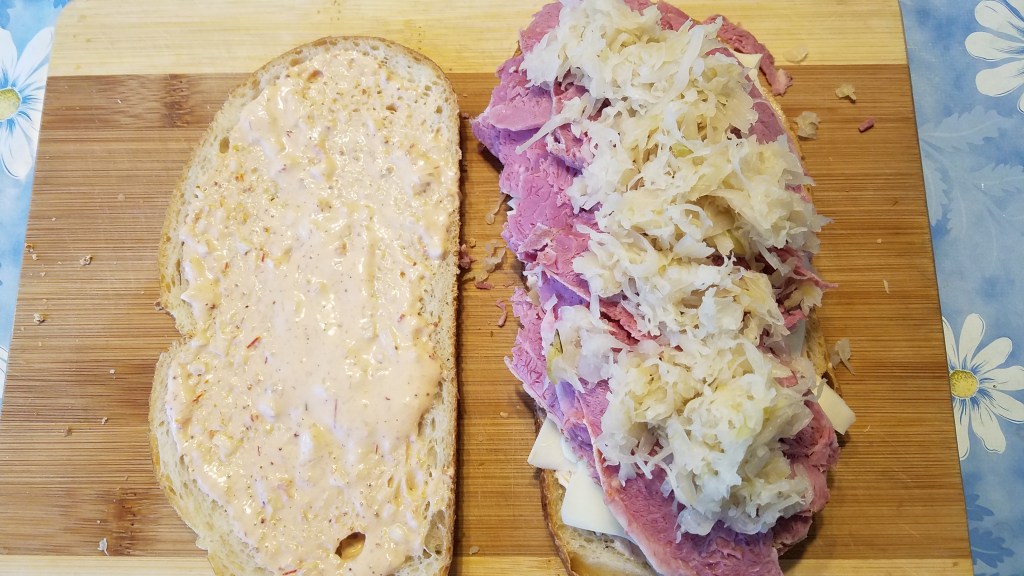
Squeeze some sauerkraut in your hands to remove as much of the liquid as possible.  Lay the sauerkraut on top of the corned beef.

Top the sandwich with the other slice of bread. Repeat the process to make a second sandwich.

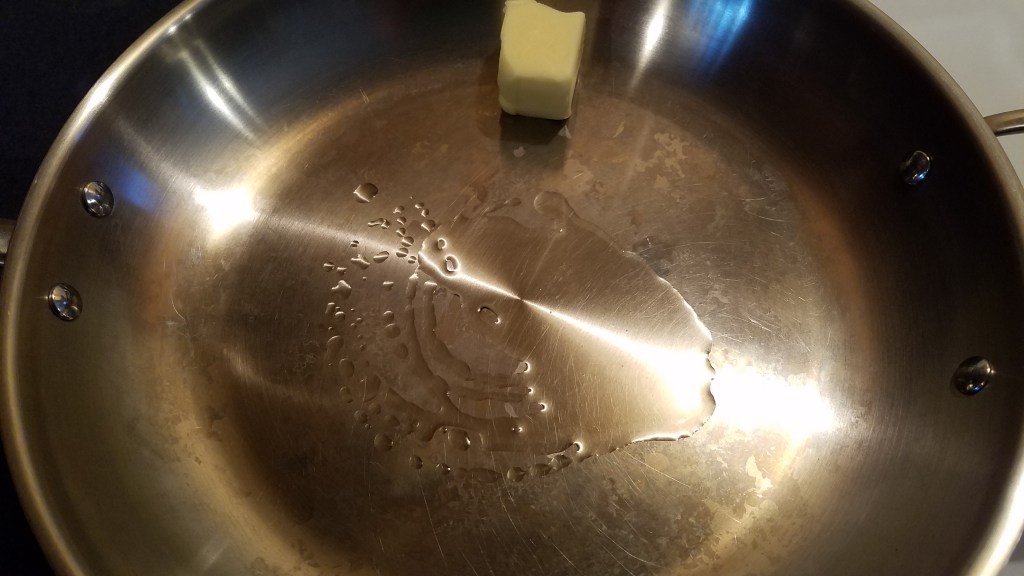
Heat a skillet to medium/low heat.  Add olive oil and butter.

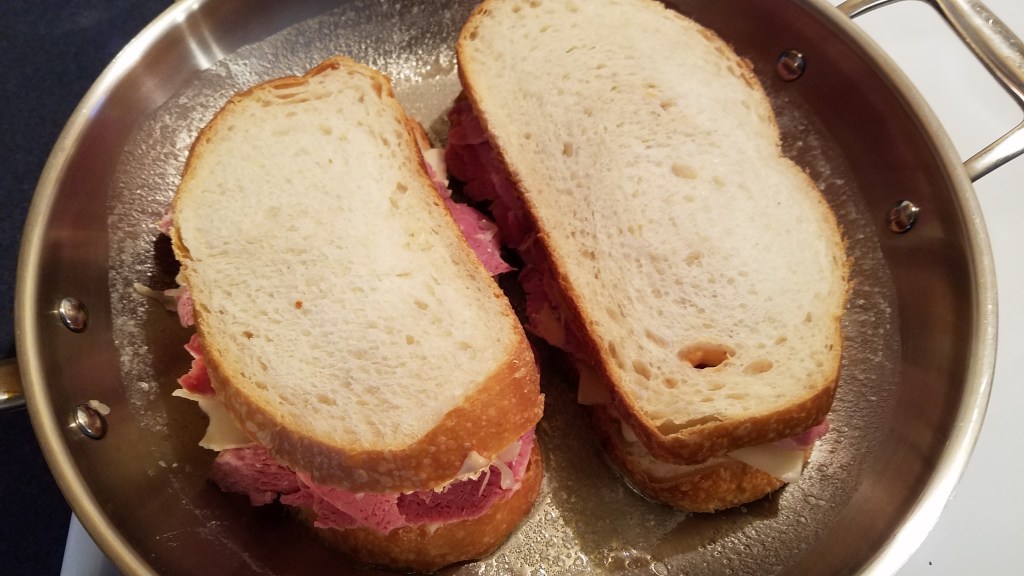
When the butter melts, turn heat to low and carefully lay the sandwiches onto the skillet.

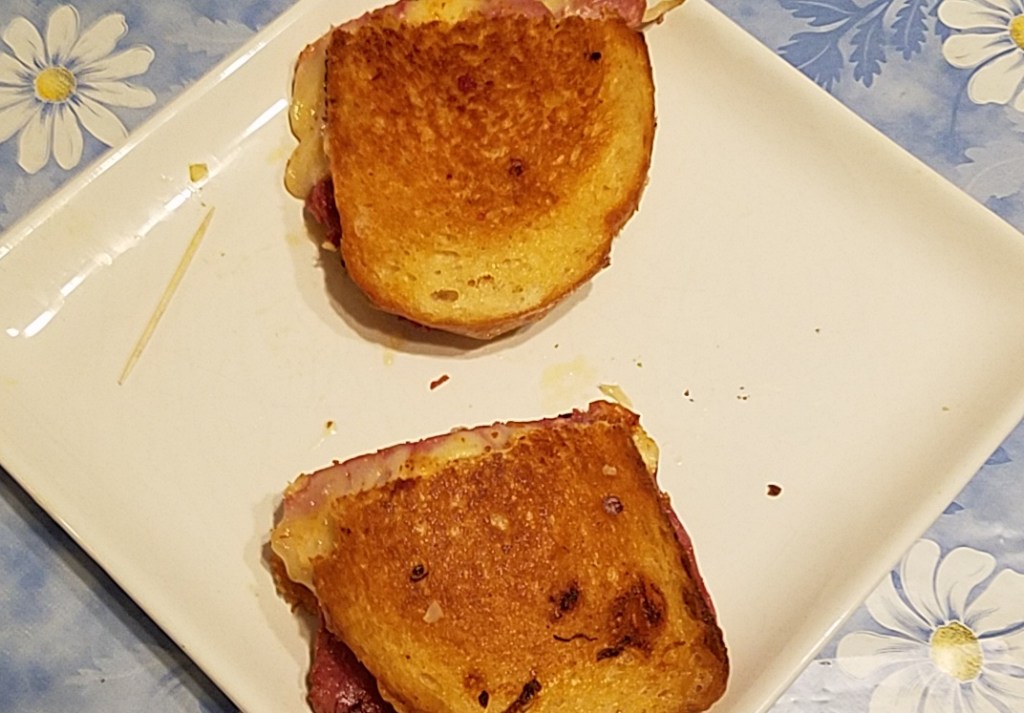
Brown both sides of the sandwiches, turning occasionally.  Continue to turn until both sides have browned and the cheese has melted.

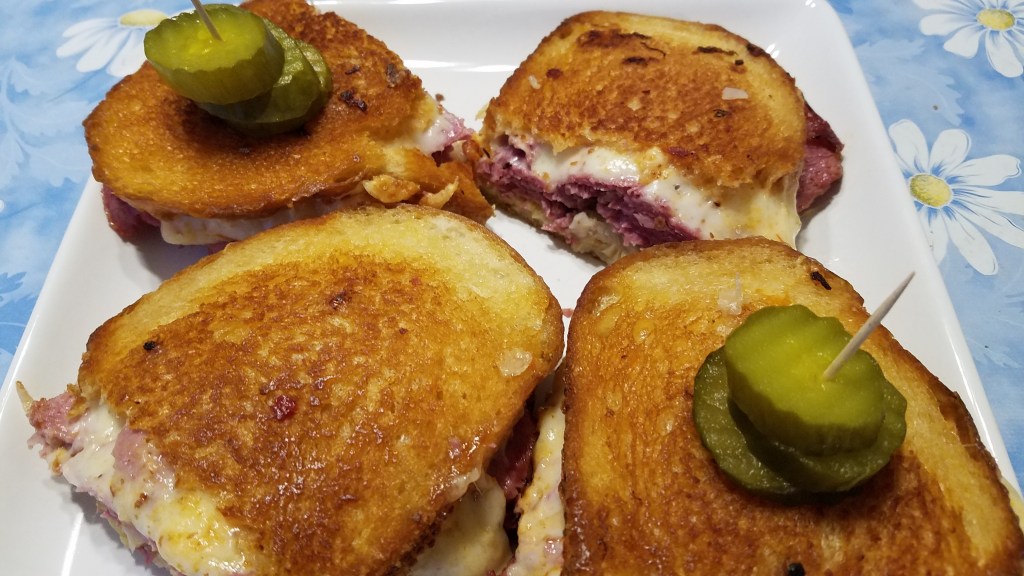
Remove the sandwiches and slice them in half. 

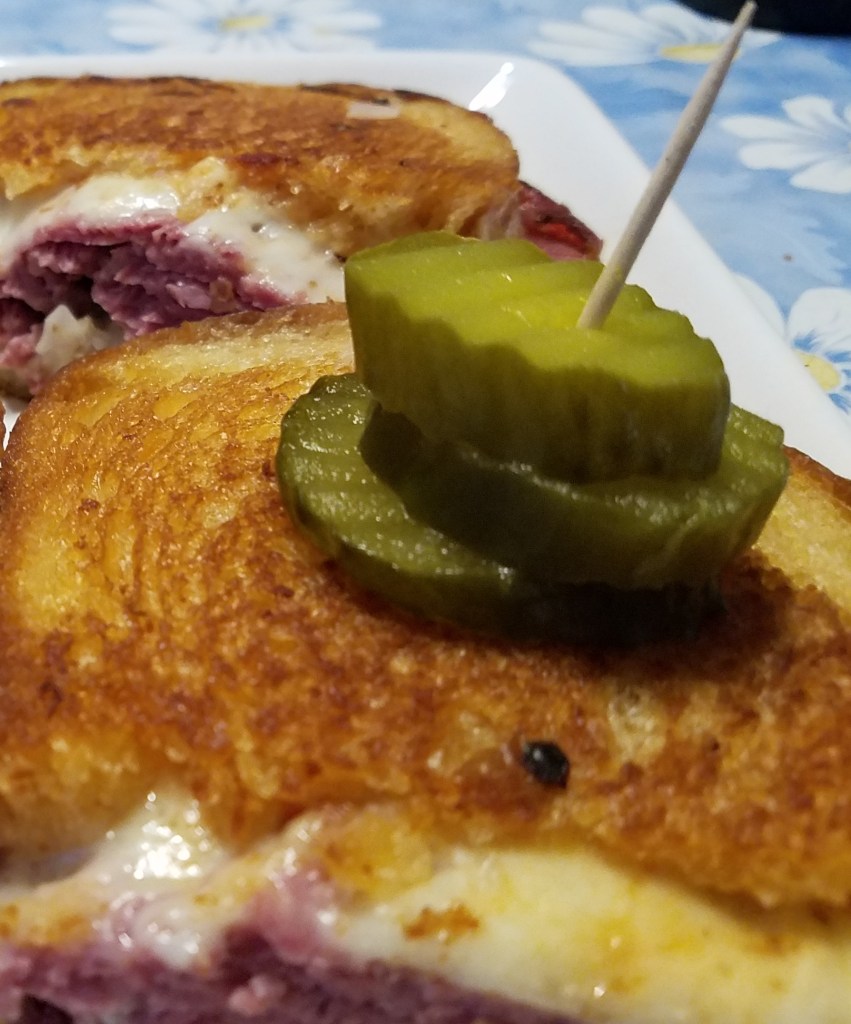
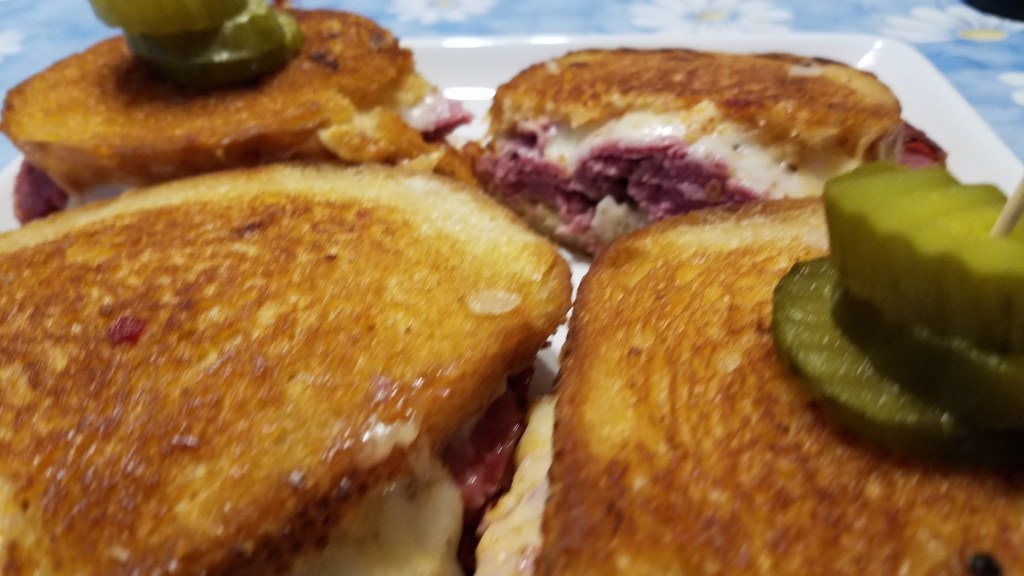
Secure the sandwiches halves with toothpicks and dill pickle slices.

Beer Run!

I haven’t been to a grocery store in over a week and I’m glad to have missed out on the recent onslaught of anxious people that are on a quest to  hoard sanitary items and toilet rolls.  Today’s trip to the store was juvenile but necessary.  Beer and snacks.

My good friend from Miami…Miami, Manitoba, Canada, mind you, wants to know what sort of beer I got when I went on my beer run today.  Well, Graham, for your pleasure, I offer you two beers!  Both are originally products of Pennsylvania, which is where I was born.

Rolling Rock est. 1939, Latrobe Pennsylvania.  Brewed in Latrobe, PA, until purchased by Anheuser–Busch in 2006.  Now it’s brewed wherever Anheuser–Busch wants to brew it, which might be in any of the 13 cities in the U.S., where Anheuser-Bush brews.  There is a much storied myth and history behind the “33” and the pony that is displayed on the bottles.  I’m all for a good mystery, but I prefer to drink the beer, rather than dwell on the myth.

Yuengling est. 1829,  Pottsville, PA.  Yuengling claims to be the oldest brewery in the U.S.  It’s near Wilkes-Barre PA, in the heart of the Pennsylvania coal mining region.  The name Yuengling is an Anglicized version of Jüngling.  David Gottlieb Jüngling was the entrepreneur that started the brewery and I give him a wink and a nod, each time I enjoy one of his beers.

Since I bought two types of beer, I had to make a choice of which I would drink first.  Rolling Rock won, easily.  Rolling Rock has a “clean” taste.  It finishes like it starts, clean and crisp.  I used to refer to Rolling Rock as a poor man’s Heineken.  It’s a straightforward pale ale that fits any occasion, even self-quarantining, I suppose. 

I will finish with the Yuengling.  Yuengling lager is probably the better beer, when compared to Rolling Rock, because of its distinct sweetness and balanced hops flavor.  Yuengling’s mystery is in the unique flavor of the beer, where Rolling Rock’s mystery is the number 33 and a pony.  Taste wins, in my book.

Either one is fine with me, really.  It’s just nice to be able to sit down and enjoy a beer once in a while.

Celebrate when you can and where you can.  Cheers!