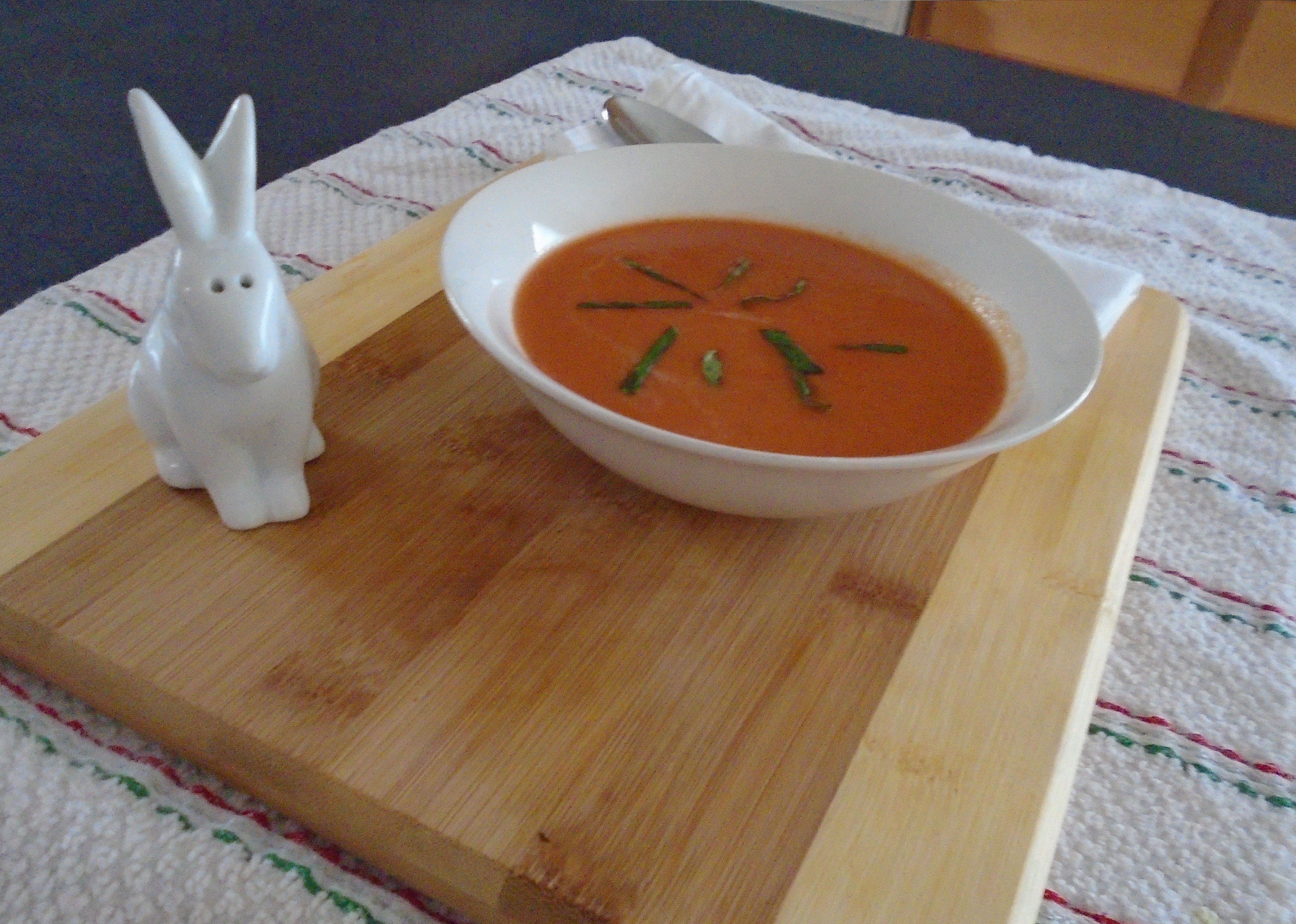
Helen might approach this soup using her painterly
style. What is it the first thing we
think of, when we think of creamy tomato soup?
The bold red hue? The silky
smoothness? The depth of flavors? Perhaps all of those. And how will we achieve that goal?
In my mind, I see Helen approaching this project in
phases. First, establish a suitable
foundation and, with that foundation firmly in place, add complexity and
vibrancy. Obviously, the tomatoes will be
the foundation. The tomatoes provide the
base color and key flavor. The onions
and carrots will provide an unseen, subtle accent. The oil and garlic are essential, but they will
stay in the background. The chicken
stock adds a new dimension to the rich body of the tomato. The cream, oh, the cream is the finishing
touch that turns this into a masterpiece.
Basil brings the vibrancy with the magician’s trick aimed to appeal to
the eyes and palate. Salt and pepper to
taste, because spice is the spice of life!
Let’s begin…
Ingredients:
2 Tbs olive oil
1 1/2 cups onions, chopped
1 carrot, shredded
4 garlic cloves, whole, but mashed
6 large, ripe tomatoes, chopped
1/4 cup fresh basil, chopped
2 cups chicken stock
1 Tbs salt
1 tsp ground black pepper
3/4 cup heavy cream
a little bit of julienned fresh basil, for garnish
Directions:
Heat a large, stainless steel pot to medium/low heat. Sauté the onions and carrots for about 10
minutes, or until soft. Add the garlic
and cook for about one minute. Remove the
garlic. Add the chopped tomatoes,
chicken stock and basil. Bring the soup
to a boil and then lower to a simmer for a few minutes to allow the flavors to combine. Add salt and pepper to taste. Cook uncovered for about 30 to 45 minutes, to
soften the tomatoes and thicken the soup.
Stir in the cream and simmer for one more minute. Pour the soup into a blender and puree. Pour the soup through a strainer and discard
the solids. Pour the soup back into the
pot and simmer for another minute or two.
Turn off the heat and ladle the soup into bowls. Garnish with slender, slivers of basil leaves.
I would venture to guess that just about everyone in
American knows who Bob Ross was. We
either know him from his PBS instructional painting series, “The Joy of Painting” or, for the
younger crowd, we know him from countless internet memes and other pop culture imagery. Either way, he became an American icon. He was placid and appealing, disarming and charming,
thoughtful and charismatic. Okay, do you
know his mentor, Bill Alexander? Oh, a
few of you raised your hands.
Bill Alexander gained notoriety from his TV series on PBS revealing his “wet on wet” technique with oil painting. Bill Alexander was also Bob Ross’s teacher for a short time. Bill Alexander hosted the PBS series called, “The Magic of Oil Painting”, which aired for eight years. During Bill Alexander’s heyday, he developed and marketed his own brand of art supplies. After a few years, Bill handed over the gauntlet to his protégée, Bob Ross, giving Bob the opportunity to expand his career. Bob Ross seized the opportunity and wrote several instructional books on the “wet on wet” technique, and made several How-To videos and even marketed his own brand of paints and art supplies. Ross was the showman that Alexander could not be. Ross went on his way to stardom and snubbed his former mentor. Alexander was resentful and he claimed that Ross had copied his technique. A bitterness developed between the two of them that continued for the rest of their lives.
The “wet on wet” technique actually finds its origin in
Flanders, now known as the Netherlands, during
the 15th century. Artists
such as, Caravaggio, Paul Cezanne, John Singer Sargent, and Claude Monet, were just
a few of the artists that utilized the “wet on wet” painting style.
Bob Ross died in 1995.
Bill Alexander died later, in 1997
Okay, bonus question: Who remembers Helen Van Wyk? “Bueller…Bueller?”
Just as I suspected.
In 1990 Helen Van Wyk’s TV series, “Welcome to my Studio”, aired on PBS for the first time. It was also the same year that she was
diagnosed with cancer.
Helen wasted no time on her show. When the camera was turned on, she got straight
to the point. She explained color
theory, discussed the nature of light and darkness and illustrated elements of
good design, all while manipulating her brush and mixing paint on her pallet. She produced beautiful still life paintings
and portraits… not the glib, kitschy paintings that Bill Alexander and Bob Ross
cranked out, show after show. Helen’s work conveyed a sense of sincerity and
artistry and, when she spoke to her audience, she often spoke to herself,
honestly. We could hear her praise and
criticize her own actions as she painted.
She had a knack for vocalizing the sort of thoughts that every artist experiences
during the creative process. Her mistakes and victories were exposed. During those moments, we had the opportunity
to see into her mind.
At the end of each episode, she would end with, “…and next
week, I may teach you how to make soup”.
I have to admit, I watched all of her shows and I waited for
the day that she would show me how to make soup. Helen Van Wyk died of cancer in 1994.
Fortunately, we can still find many of Helen’s episodes of “Welcome to my Studio” on YouTube. I encourage everyone to see Helen at work…whether you are a painter or a cook, because the truth of the matter is, painting and cooking are not so different. Anything that you do with a sense of passion and purpose is art.
Ah, just when you thought this might be a Tex-Mex blog, I packed up and took a trip to Italy. Chicken Parmesan is actually more American than Italian. Italian immigrants created this dish but it was inspired by classic Italian dishes, which sometimes included breaded eggplant and sliced ham…sometimes with sauce, sometimes not. As with so many recipes, I admire different interpretations. Each variation exists for a reason, whether it is based on taste preference or the availability of ingredients. Make every meal one that you will enjoy. If you fall in love with a meal, others will follow.
This dish is simple to make but, admittedly, difficult to
make with verve.
The secret ingredient, this time around, is homemade tomato
sauce. Summer is here and I am
surrounded by buckets of fresh tomatoes.
My lovely wife has already sliced many of those tomatoes and put them in
them in a dehydrator to make “sun dried tomatoes”. Sun dried tomatoes are an absolute joy! They are intensely sweet and are full of concentrated
tomato goodness! They can be sealed in
plastic bags and frozen for months. When
they are pulled out of the freezer, they will still seem just as vibrant as the
day that they were prepared. If you want
to soften them, just soak them in water for 20 to 30 minutes. They can be used in
salads or added to soup stock. One of the
best ways to use them is with pasta. Prepare
any pasta you like and add sun dried tomatoes, mushrooms and basil and you won’t
be disappointed. So simple…so elegant! Whatever you do, don’t let your ripe tomatoes
go to waste!
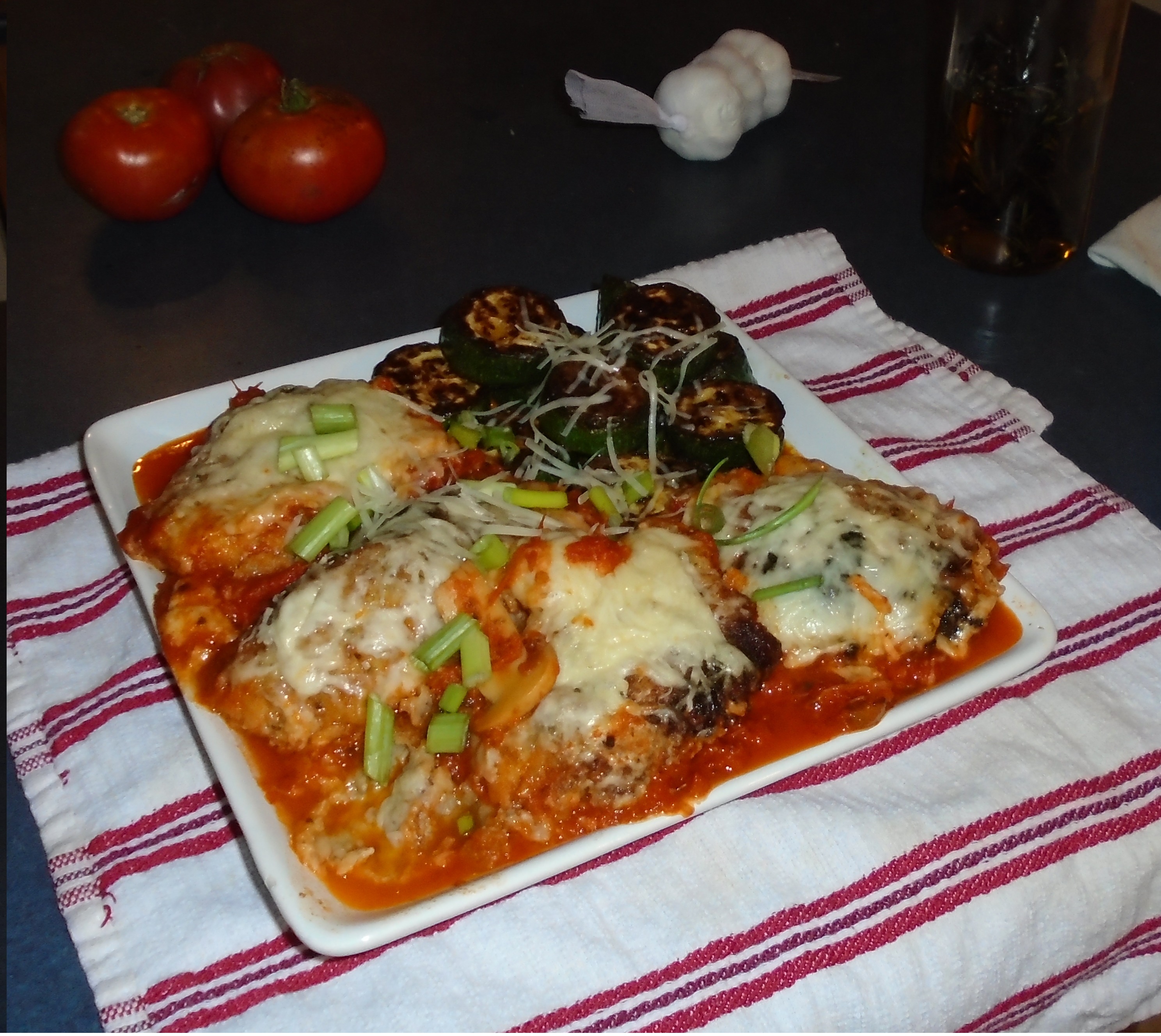
But, while I had fresh tomatoes on hand, I wanted to create a delicious foundation for an American-Italian classic… Parmigiana di Pollo, or Chicken Parmesan. Sautéed zucchini accompanies the Chicken Parmesan, shown here…
Ingredients for the
sauce:
2 gallons whole, ripe tomatoes
6 Tbs fresh basil, chopped fine
6 garlic cloves, crushed
2 Tbs dried onion flake
2 tsp fresh thyme
2 tsp fresh rosemary, minced
½ tsp crushed black pepper
Directions for the
sauce:
I picked enough tomatoes to fill two gallon buckets. After washing them, I cut the tops off and
scooped out the seeds and much of the juice with my fingers. I cut the tomatoes into one inch pieces and
put them in a large pot. I set the stove
to the lowest setting and let them simmer for about five hours, stirring every
half hour, or so. Keeping the heat low
reduces the chance of burning the tomatoes.
You really don’t want the sauce to have a burnt flavor! I could have set the stove to medium heat, to
reduce the cooking time, but that would have required me to stand at the stove,
stirring and stirring, to avoid charring them.
Patience and laziness are a virtue, sometimes.
I allowed the tomatoes to reduce down to about ½ gallon of
chunky sauce. I added the basil, garlic,
dried onion flakes, thyme, rosemary and black pepper and then I poured the
sauce into a blender. I pureed the reduction
and poured it back into the pot. In case
you are wondering, I didn’t add sugar.
Since I used ripe tomatoes, the sauce was already sweet enough. I say, let the tomato speak for itself! Or, in my feeble attempt at Latin phrasing, “res
lycopersicum loquitur”!
I reduced the sauce until it was nearly a paste, which took about ½ hour. I wound up with about one quart of
sauce. Perfect for a serving of four to six
people.
Ingredients for the
rest of the dish:
4 to 6 medium sized chicken breasts – or about 1 ½ to 2 lbs.
(Note: in the good
ol’ days a whole chicken breast was defined to be the two halves that were
still connected. For this recipe, I am using
the modern definition, which means two or three whole chicken breasts, divided
in half. (Sound confusing?…well, I
suppose it is.)
3 Tbs olive oil
1 cup all-purpose flour
1 cup bread crumbs
2 eggs (lightly whisked)
1 cup grated fresh Parmesan cheese
½ cup grated mozzarella
½ cup fresh, sliced fresh mushrooms (optional)
Directions for
preparing the chicken:
Dredge the chicken in flour and knock off the excess
flour. Dip the chicken in egg and then
coat with bread crumbs.
Heat an oven-proof pan on the stove at low to medium heat. Add the oil and then add the chicken. Turn the chicken every few minutes until each side turns golden brown. Remove the chicken and add the sauce to the pan. Lay the chicken on top of sauce and spoon some sauce on top of the chicken. Top with the mozzarella, mushrooms and Parmesan cheese. Bake in oven at 350° for about five minutes, or until the cheese has melted.
You may serve the chicken from the pan, which will help to keep
the food warm, or remove to a serving platter.
Garnish with fresh Italian parsley, or diced green onion.
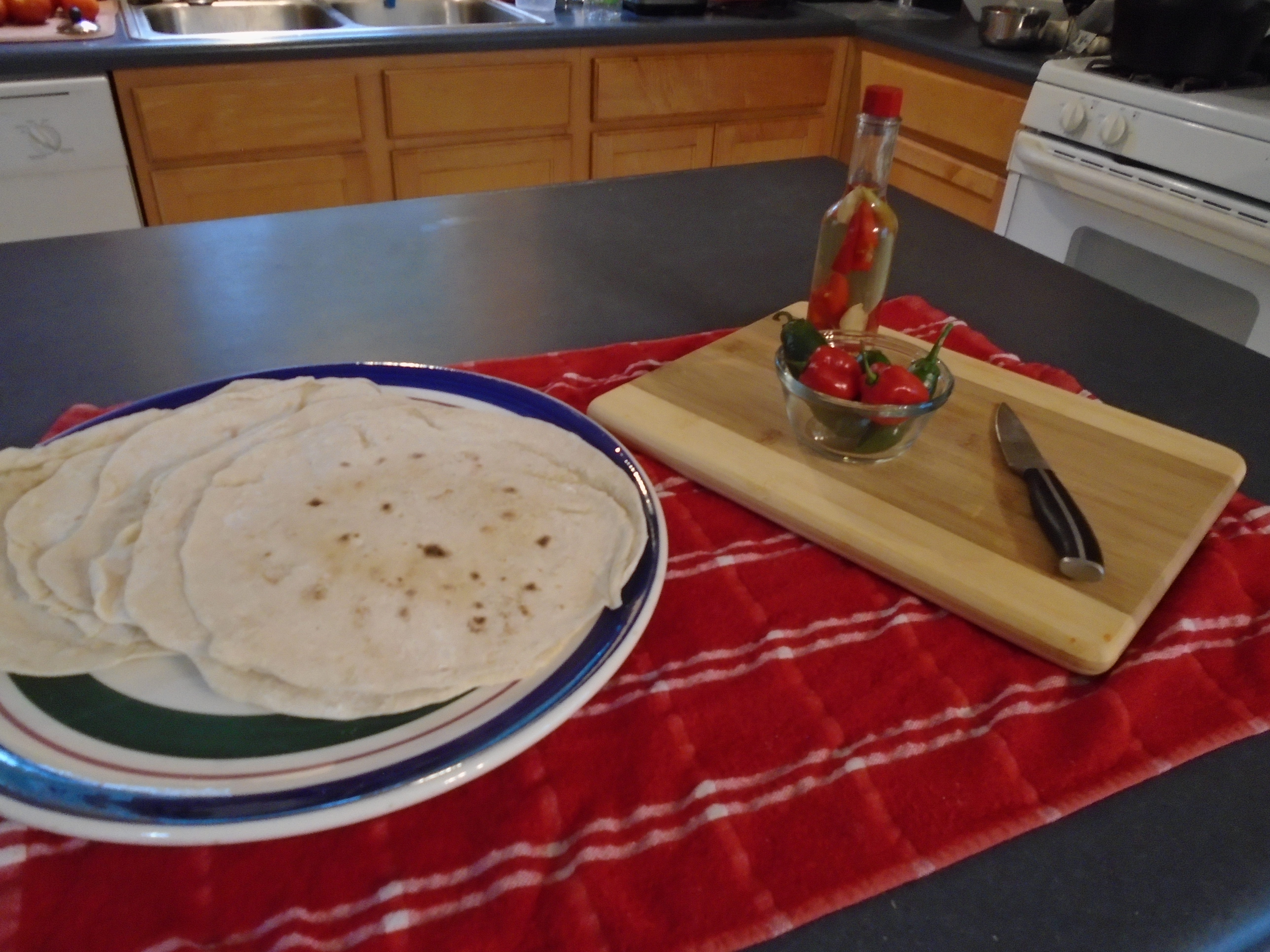
As a follow up to my previous post about tortillas, I have
this to offer…
What’s wrong with people today? And by that, I mean why doesn’t everyone
think like me?! When did gluten become something
that must be avoided? According to
medical research, about 2% of people are intolerant to gluten. For those people, I say, avoid gluten for the
sake of your health. For the other 98%,
I say, do some research before trying to eliminate gluten from your diet. Gluten has been an integral part of global
cuisine for millennia and it hasn’t killed us yet. Many food products that contain gluten often carry
nutrients that promote good health and many of those food items are a good
source of fiber.
So, as with anything we might put into our bodies, “everything
in moderation”, is a good rule to follow.
Eat what you love, and know that your body needs balance.
And, while I’m at it…what’s the deal with lard? Why do so many people have a revulsion to
lard? Is it possible that they don’t
know that lard doesn’t contain trans fats?
Do they not realize that lard is higher in monounsaturated fat (the good
kind of fat) than butter? Is lard as
good for you as olive oil, with regard to saturated fats?…No. But, don’t rule lard out. Celebrate lard. Your biscuits, pie crusts, tortillas and
fried chicken will thank you!
And, here’s the final kicker…if you were offered one last
meal before you were put in front of a firing squad, would you request a gluten-free
meal? Let that thought marinate in your
mind as you consider preparing the next meal for your family or friends.
Today’s words of encouragement are, “If at first you
don’t succeed, try, try again.” I
did not adhere to that wise old adage many years ago when I first attempted to
make homemade flour tortillas. After two
or three failed attempts, I gave up. Twenty
years later, I tried again and produced some of the best tortillas I have ever had. Now, I consistently prepare quality tortillas.
What was the difference between then and now? Well, there were some key differences: Ingredients, Process and State of Mind.
On my first attempt at making tortillas I used solid
vegetable shortening. I am sure that
vegetable shortening can produce good tortillas but if you want REALLY good
tortillas, nothing compares to good ol’ lard.
Another key to making good tortillas is keeping the dough warm throughout
the entire process of mixing, kneading and resting. Warm water and warm air facilitates gluten
production. Yes, I want that
gluten! A good flour tortilla should be
pliable and soft. You should be able to
grip the tortilla with both hands and pull it gently without tearing it
apart. The only way to get there is by kneading
the dough. When making the dough, add
the flour, a little bit at a time, to warm water. By adding flour to the water you have better
control over achieving the proper consistency of the dough. The finished dough ball should be soft and malleable,
not dense and difficult to work with.
Another key to successful tortillas is using an appropriate
pan. When I first attempted to make
tortillas I used a non-stick pan that did not retain heat well. The sad thing was, I had a cast iron skillet and
I did not even think about using it.
What a shame! A cast iron
skillet, or a cast iron comal, which is what I use now, or even a good, dense
stainless steel pan will give you the necessary, sustainable heat to produce
tortillas quickly, and that is essential.
Tortillas need to cook quickly.
Once you lay the uncooked tortilla on the pan, give it about thirty
seconds and then flip to the other side for another fifteen seconds, or
so. If you maintain heat high, the
tortilla will puff up and you will get wonderful, slightly browned spots on the
tortilla.
Finally, you need to cook with confidence. Your state of mind will affect the outcome
just as much as proper ingredients and technique. Listen to your inner self throughout the entire
process. If you feel that the dough is
not coming together the way you want, you’re right. Fix the problem by relying on your intuition
and be confident with your decision. If
you think that the tortillas are cooking too quickly and they smell burnt, you’re
right…fix that problem. Turn down the
heat on the stove to achieve a better result on the next tortillas.
And remember, if at first you don’t succeed, try, try
again. If it worked for me, it will
surely work for you!
Tortillas Casersas (Homemade Tortillas)
Ingredients:
4 cups all-purpose flour
1 tsp salt
2 tsp baking powder
2 Tbs lard
1 ½ cup warm water
Directions:
Whisk the flour, baking powder and salt together in a
bowl. Add the lard and pinch apart the
flour covered lard with your fingers.
Continue pinching apart the clumps of lard, bit by bit, and avoid the
temptation to smear the lard together with the flour. Once you have broken down the clumps of lard,
scoop up some of the mixture in both hands and gently rub your hands
together. Continue gently rubbing the mixture
together until it is crumbly.
In a separate mixing bowl, add the warm water. Introduce some of the flour mixture. Mix with a sturdy spatula. Add more flour and continue mixing. Repeat until the mixture becomes thick, like cake batter. At this point you will mix by hand. Keep adding flour and mix by hand until the dough begins to form a ball. It’s ok to leave the dough a little sticky. You can always add more flour later, if you wish. Knead the dough in the bowl and then turn it out to a lightly floured surface and knead for a few minutes. As you knead, you will feel the dough becoming more stretchy. Put the ball of dough back into the mixing bowl and cover tightly with aluminum foil or a warm, wet towel.
Let the dough rest for at least a half hour. In warm weather, I will take the bowl out to
my truck and let it rest on the seat. The
heat of the sun keeps the interior of the truck nice and warm…perfect for the
dough. In colder weather, I will let the
dough rest on top of the oven, with the oven set to 250°F.
While the dough rests, preheat your skillet or comal on the stove. Clean your work surface and make sure that it is completely dry. Sprinkle some all-purpose flour on the work surface and rub some flour on your rolling pin. Turn the dough onto the work surface and knead a few times. If the dough is too sticky to work with, add a little more flour and knead, to incorporate the flour. Once you are happy with the dough, pinch off a piece and roll it in your hands. You’ll want a golf ball sized dough ball. Place the ball of dough on the floured surface and press it with your hand. Shape it into circle and then use the rolling pin to flatten it out. I have found that rolling it out very thinly makes the best tortillas. Roll it out to about eight inches in diameter.
Place the tortilla on the skillet for about thirty seconds. You might see air pockets pop up…this is a good thing! Turn the tortilla over for another fifteen seconds and then move the finished tortilla to a plate, in a warm area. Continue in this fashion until you have made all of the tortillas. If you have a tortilla warmer, place the tortillas in it. If you don’t have a tortilla warmer, place another plate on top of the tortillas to keep them warm.
The summer heat has taken a slight break in my neck of the woods and I couldn’t be happier. It’s actually been cool enough for me to sit and relax on the patio during the last few evenings and listen to the hypnotic drone of the cicadas and watch the fireflies flickering through the trees. This is the sort of weather that begs for margaritas with chips and salsa. When it’s hot outside, I like to prepare this salsa. It starts out slightly spicy and finishes with a cool, refreshing bite.
Ingredients: 2 medium cucumbers, peeled, seeded and chopped 2 medium tomatoes, chopped 1⁄2 cup green bell pepper, chopped 1 jalapeno, seeded and minced 1 small onion, chopped 1 clove garlic, minced 3 Tbs fresh lime juice 1 tsp fresh parsley, chopped 2 tsp fresh cilantro, chopped 1 tsp dried dill weed 1⁄2 tsp salt
Directions: Combine all ingredients and refrigerate for about one hour. Serve with sturdy, salty tortilla chips and margaritas!
I hope you will enjoy some of my favorite recipes, along with an occasional story or two. Most of the recipes you will see are ones that I have made time and time again, in my home. I can’t claim that any of my recipes are truly unique. I like to take established recipes and bend them just a bit, to meet my own preference. I believe that is what any good cook should do.
Cooking should be an expression of one’s self. When you share your food with others, you share your ideas and you share your love.
As I become more blog-savvy, I will introduce photos and other bells and whistles that can make a blog a place where you will want to visit often. Come back every now and then…there’s plenty of room at the table!

 Toothpick Tales