My favorite sort of days evolve and flow in natural, unpredictable ways. I don’t always plan meals ahead of time, and even when I do, my instincts guide me when it actually comes time to cook.
1. Segmented Grapefruit
I saw some nice looking grapefruit at the store recently. Even though they weren’t bonafide Texas Ruby Red grapefruit, they were large and ripe and I thought they would make a nice addition to the next day’s breakfast.
I like grapefruit but I don’t like the white, bitter pith and I don’t like the membranes between the segments. I wasn’t a big fan of grapefruit until I discovered that I could cut away the parts that I didn’t like! I started by cutting the top and bottom off, just to the point where I could see the fruit beneath. Then I used a sharp kitchen knife to spiral cut the rind, deeply enough to get beneath the pith. Then I cut the segments, sliding the knife along the sides of the membrane, leaving nothing but pristine segments. This takes some practice but it’s definitely worth the effort.
2. Citrus Aromatic
I decided to use the grapefruit rinds to make a citrus aromatic on the stovetop. It’s an easy thing to do and it makes the entire house smell fantastic. I heated a pot of water and added some star anise, a cinnamon stick and a crushed nutmeg seed. Just as I was about to toss the grapefruit rinds into the pot I had an idea. I could use the rinds to make candied ginger and still use the top and bottom pieces of the grapefruit for the aromatic pot.
3. Candied Grapefruit Peels
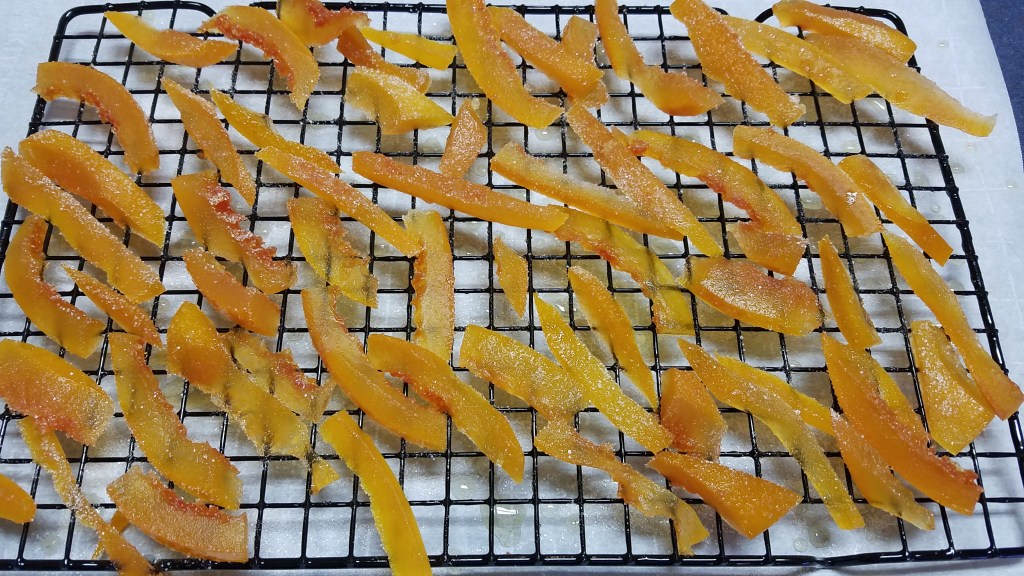
Once the aromatic pot was simmering, I sliced the grapefruit rinds into thin strips. I boiled the rinds three times in water, to remove some of the bitterness and then I made a simple syrup, using 1 cup of water and 1 cup of sugar. I brought the syrup to a boil while whisking.
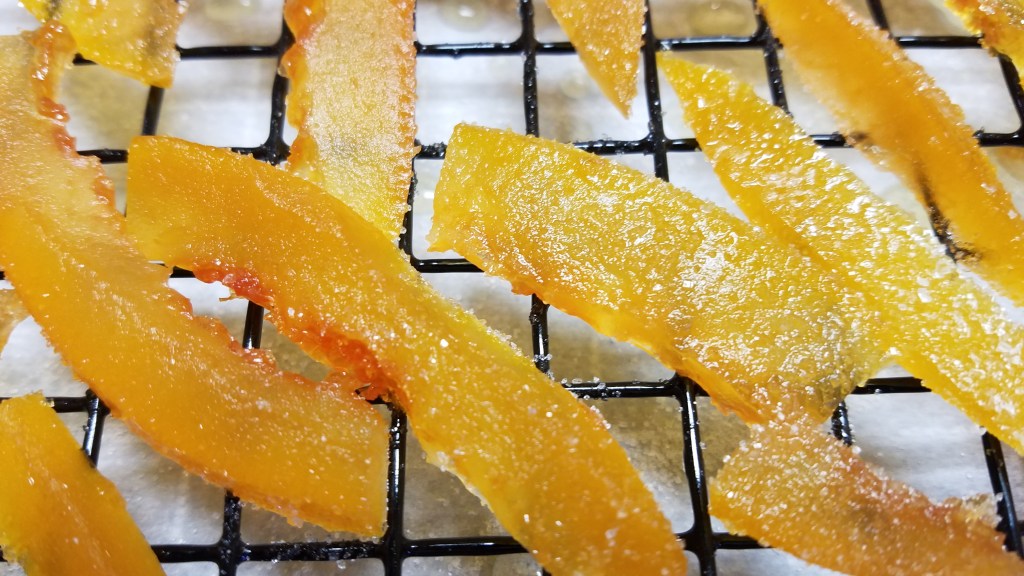
I added the cut grapefruit rinds to the syrup and simmered them at low heat for about 20 minutes. Once the rinds turned translucent, I moved them to a wire rack to dry for about 4 hours. On a dry day, they might have dried in an hour but the humidity was high and they took most of the day to dry. After a few hours I dredged the pieces in sugar and then I returned them to the rack. An hour later, I tossed them in sugar again and let them finish drying on the wire rack.
I was left with 1 cup of grapefruit flavored simple syrup. Being the frugal sort of cook that I am, I devised a plan to use the syrup.
4. Sweet and Sour Chicken
Ingredients:
1 cup flour
3/4 cup cornstarch
2 lbs chicken thighs, skinned and deboned
1 cup cooking oil
For the sauce:
1 cup simple syrup (from the candied grapefruit)
1 cup ketchup
1 ½ Tbs soy sauce
1 tsp Hoisin sauce
1 tsp rice vinegar
For the stir-fry:
1 Tbs cooking oil
½ tsp sesame oil
2 garlic cloves, smashed
1 Tbs fresh ginger, minced
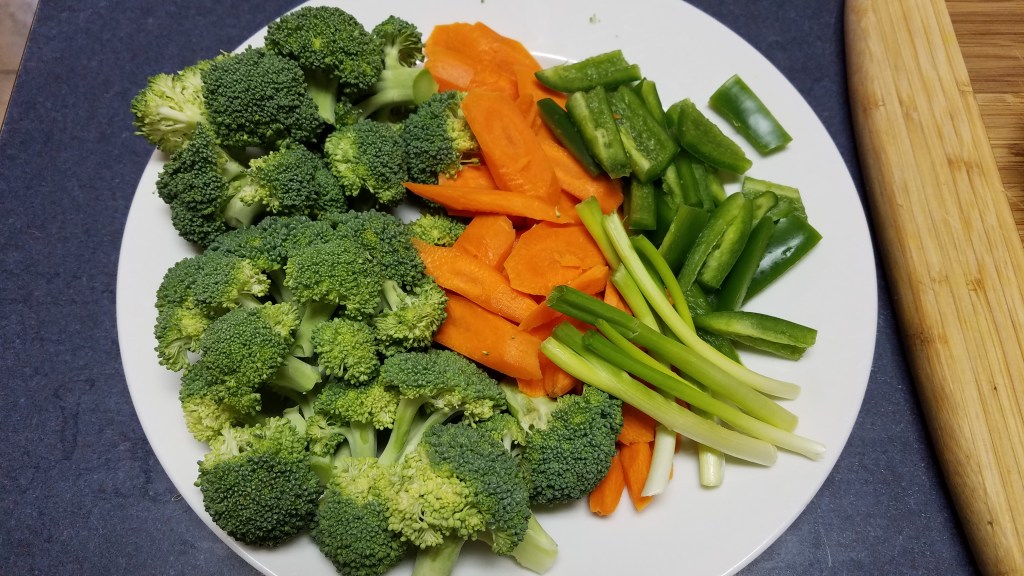
½ lb broccoli florets
3 green onions, chopped
2 large carrots, sliced diagonally
2 large, mild jalapeños, seeded and chopped
1/4 cup cilantro
Directions:
In a large bowl, combine the cornstarch and flour. Whisk to combine. Remove half of the flour mixture and set aside.
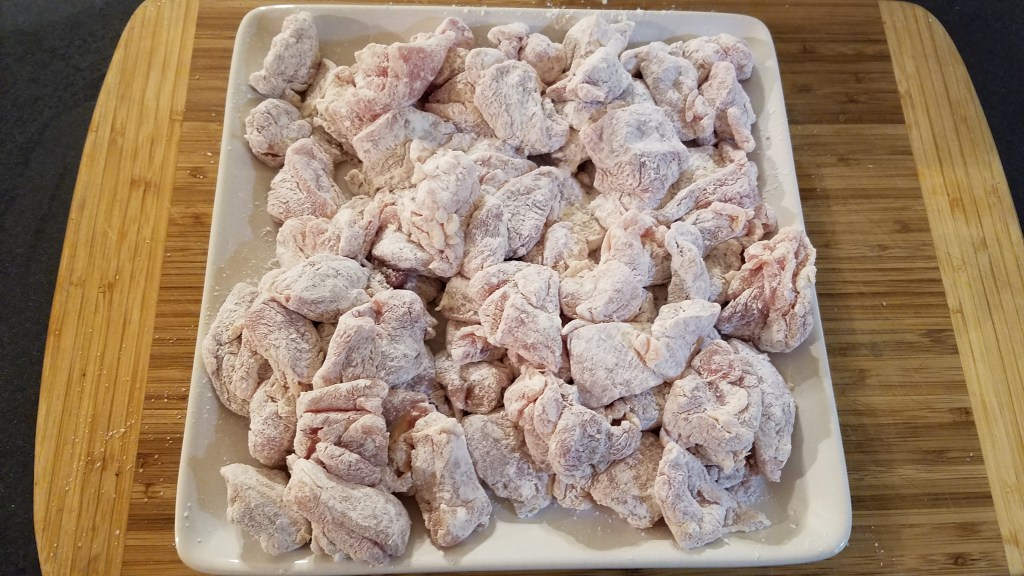
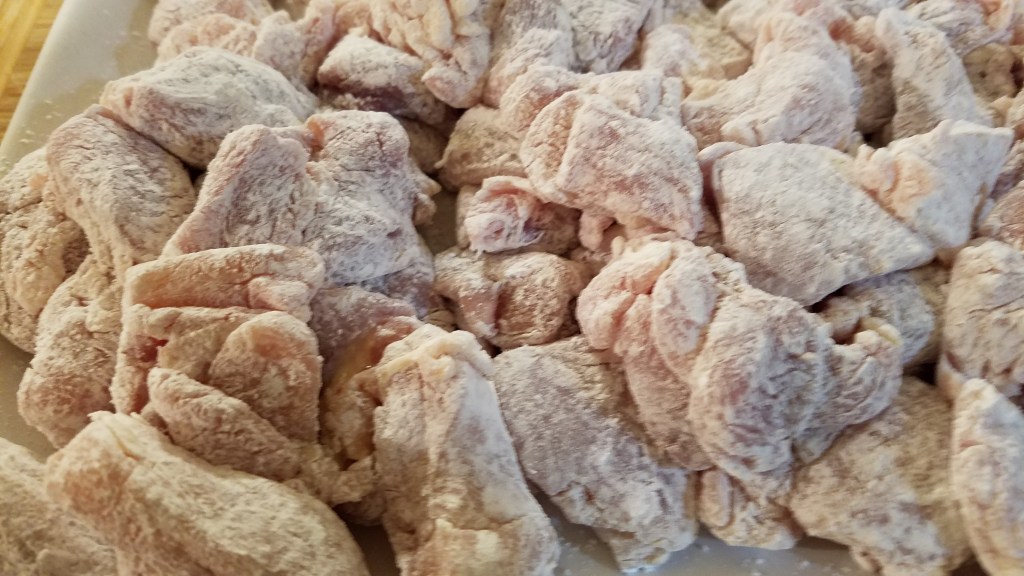
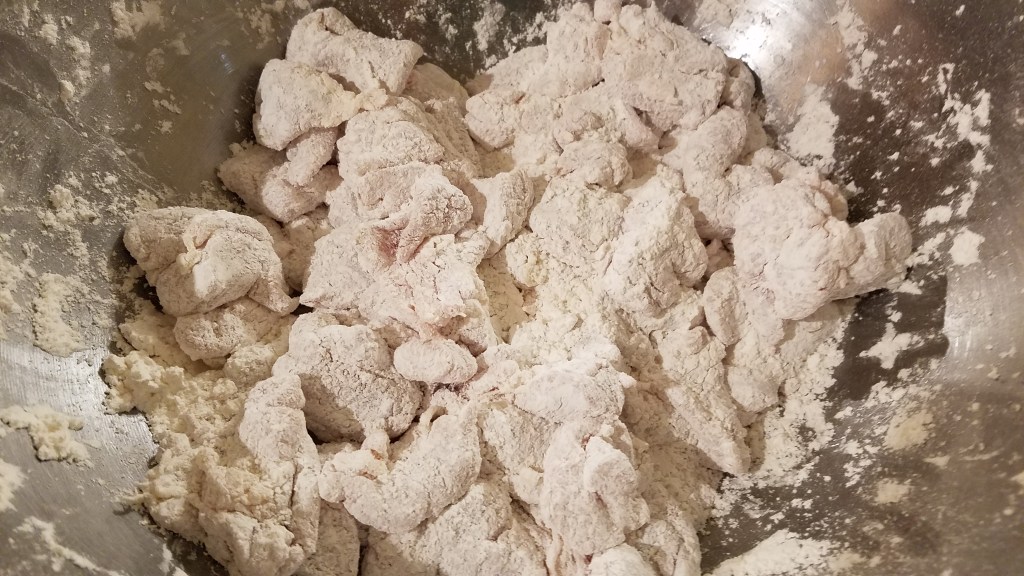
Remove the skin from the chicken thighs and debone. Cut the chicken into bite sized pieces. Add the chicken to the bowl containing half of the cornstarch and flour. Toss to coat the chicken. Leave the chicken in the flour dredge for 10 minutes.
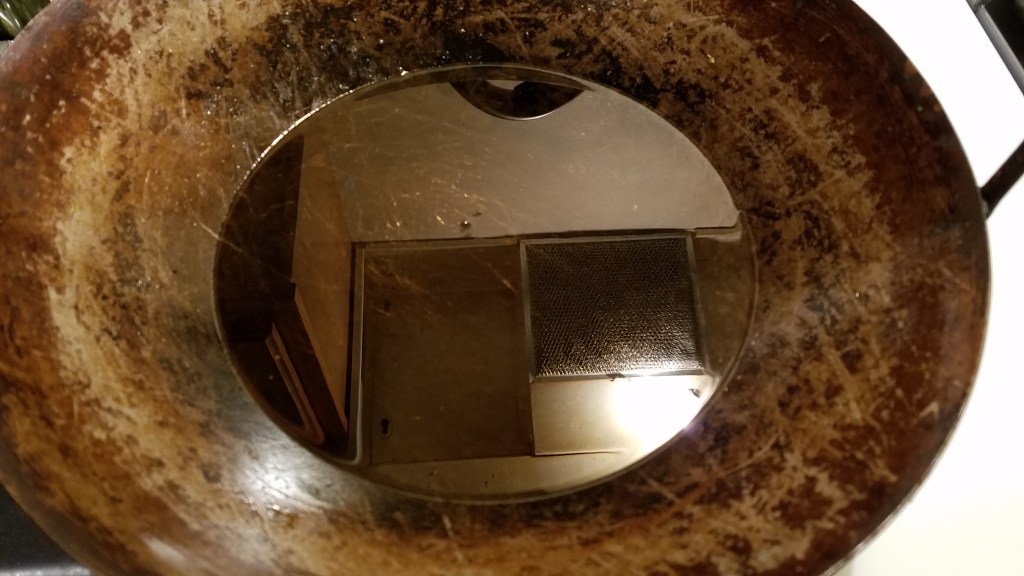
Prepare a wok by adding 1 cup of cooking oil and set the heat to high.
Add remaining flour to the chicken and toss to coat.
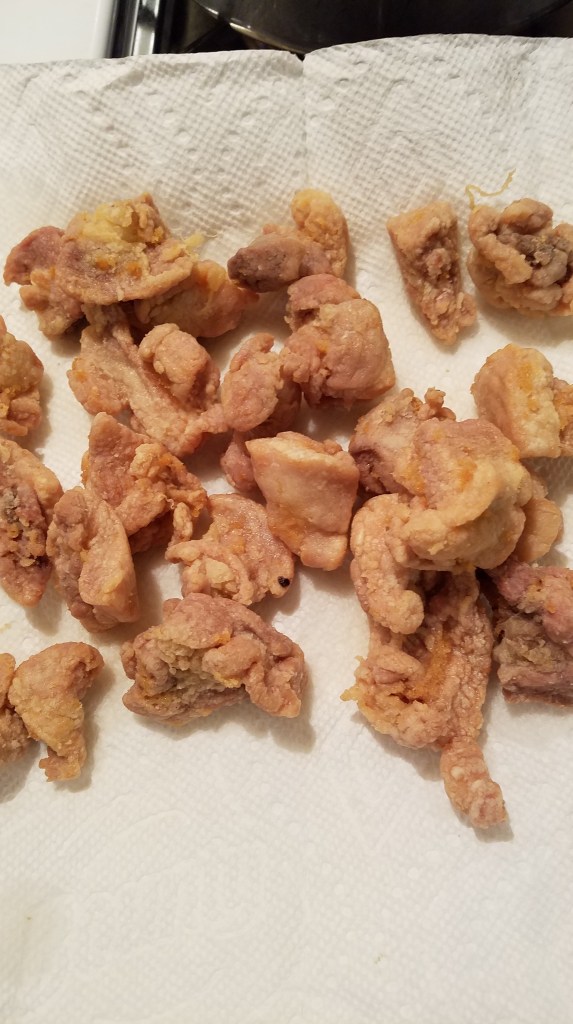
Add the chicken to the hot oil, a little at a time. Fry the chicken until crispy, golden brown.
Remove to a paper towel lined plate and keep warm.
Remove the oil from the wok and wipe the wok clean with a paper towel.
Combine the ingredients for the sauce in a small bowl. Set aside.
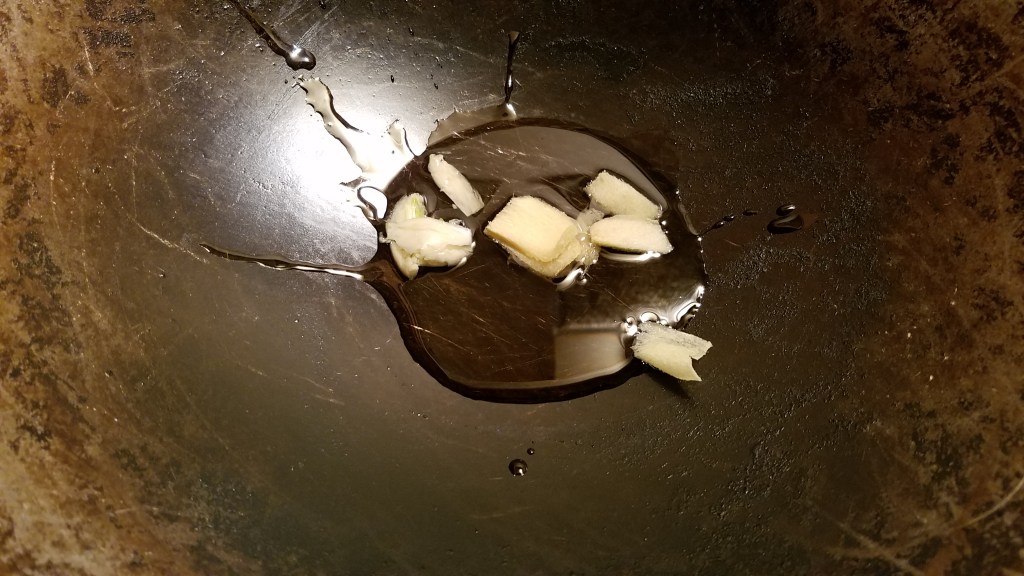
Add 1 Tbs cooking oil and ½ tsp sesame oil to a hot wok. Add the garlic and ginger and simmer for a few seconds.
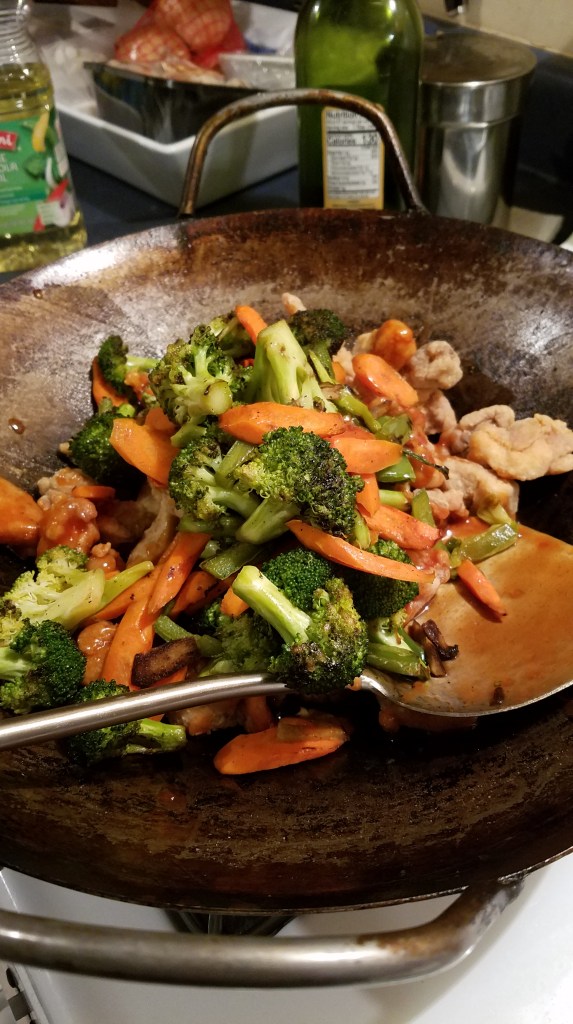
Add the vegetables and stir-fry until the vegetables are tender. Remove the vegetables to a bowl and keep warm.
Add the sauce to the wok at medium heat. Once the sauce begins to bubble, add the chicken and stir to coat.
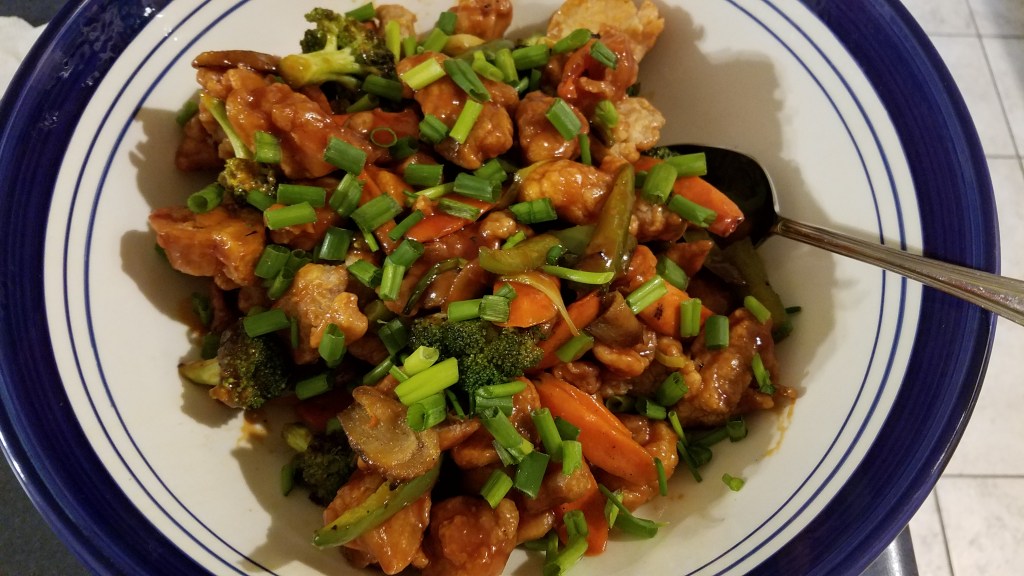
Add the vegetables and stir to combine. Turn out to a large serving bowl.
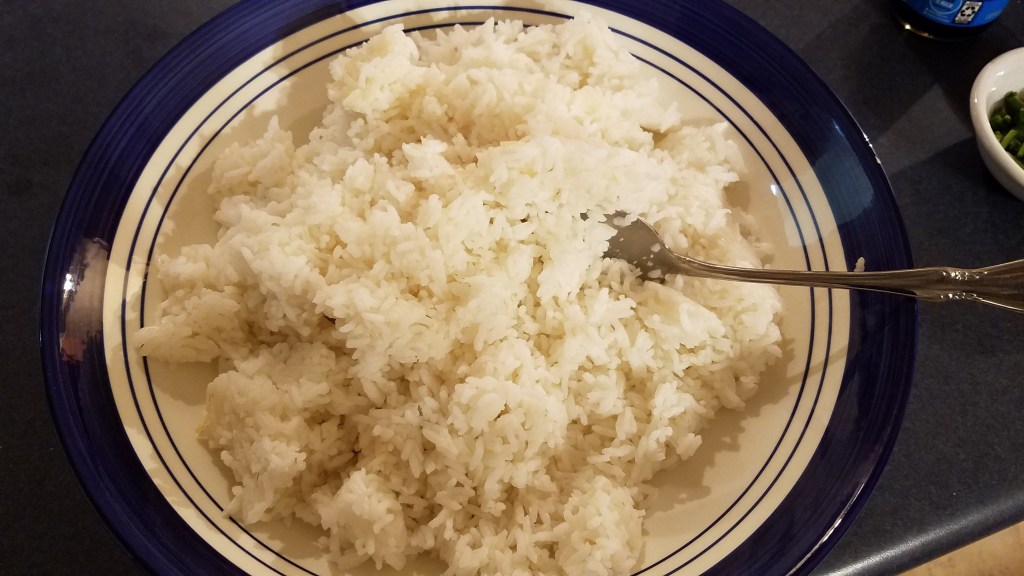
Top with cilantro and serve in bowls with steamed jasmine rice.
The turkey went fast this Thanksgiving. We had enough left over turkey to make a big batch of turkey, biscuits and gravy but that went quickly, too. The leftover green beans, yams, mashed potatoes and macaroni and cheese have all been eaten. Why is it that dressing is always the last remnant of Thanksgiving at my house? Maybe it’s because we always make too much of it. The dressing was very good this year, mainly because my wife made it. She knows how to balance the flavors. I tend to get heavy handed when adding herbs and spices.
But, the fact remains. I have all of this dressing to deal with. Some types of leftovers make great additions to other future meals. Vegetables and meat can be added to omelets or salads…that’s easy. But dressing, or stuffing, depending on your preference, is pretty much singular, in nature.
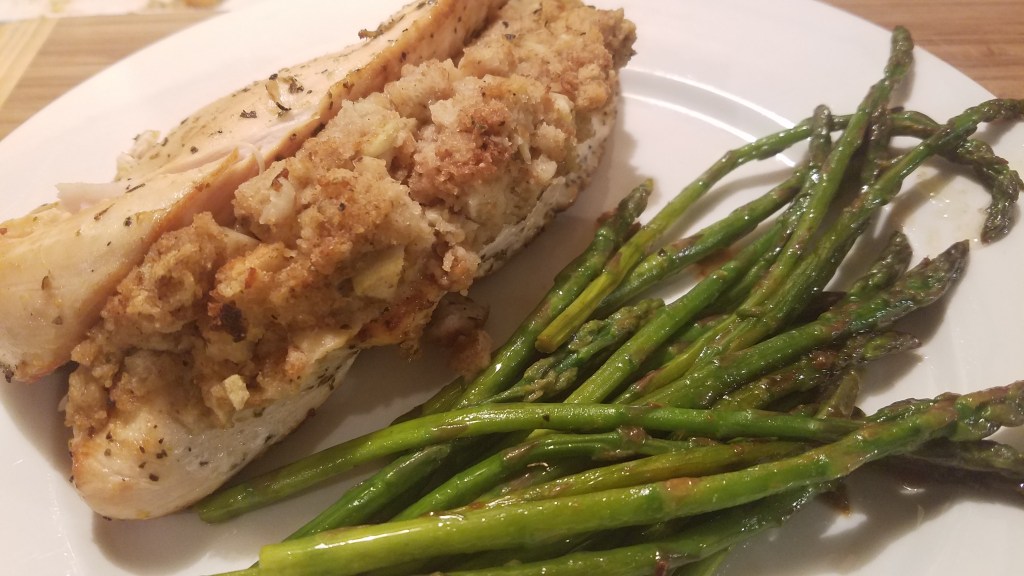
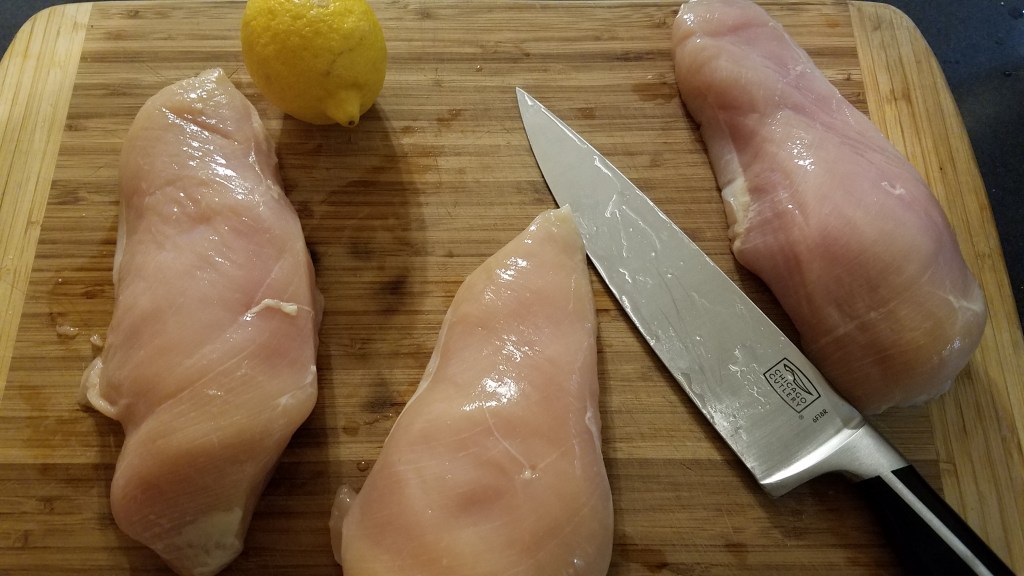
I was portioning some extremely large chicken breasts the other day and I decided to use a few of the breast pieces to make stuffed chicken.
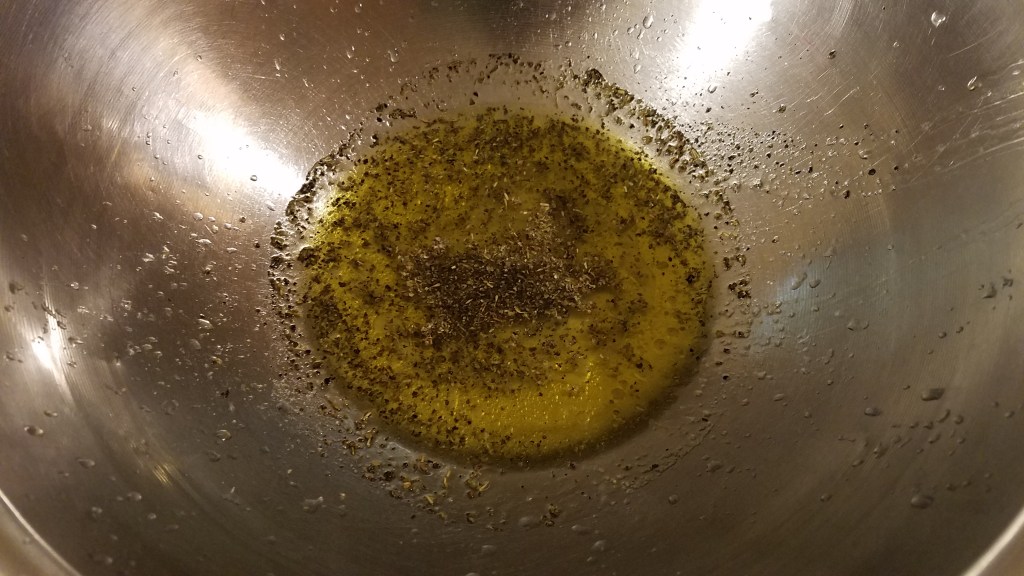
Ingredients for the marinade:
¼ cup olive oil
Juice of 1 lemon
1 Tbs dry Italian seasonings
1 tsp cracked black pepper
½ tsp salt
Ingredients for the stuffed chicken:
3 monstrously sized chicken breasts
3 cups prepared and cooked bread stuffing (dressing)
Directions:
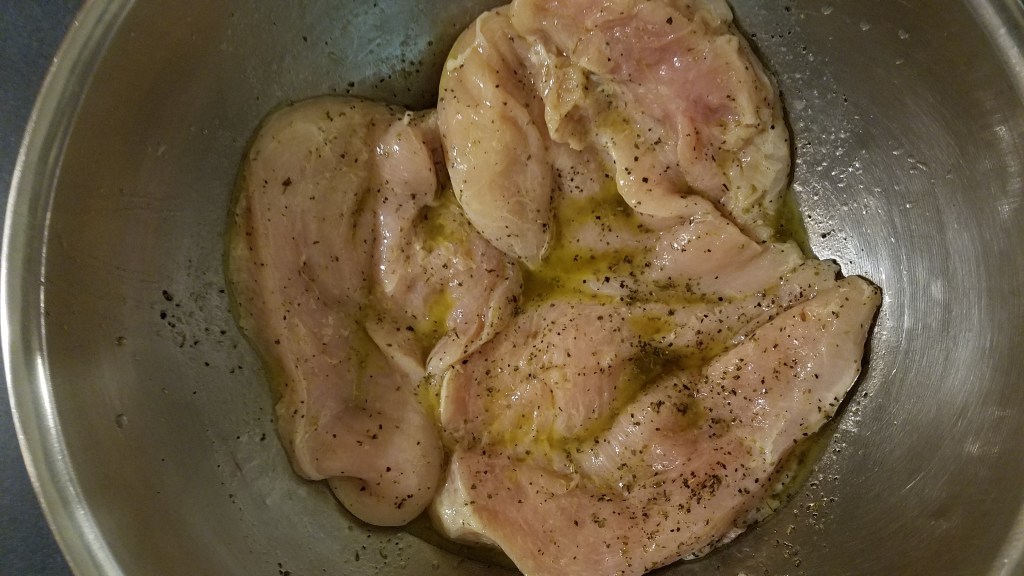
Combine the marinade in a large bowl.
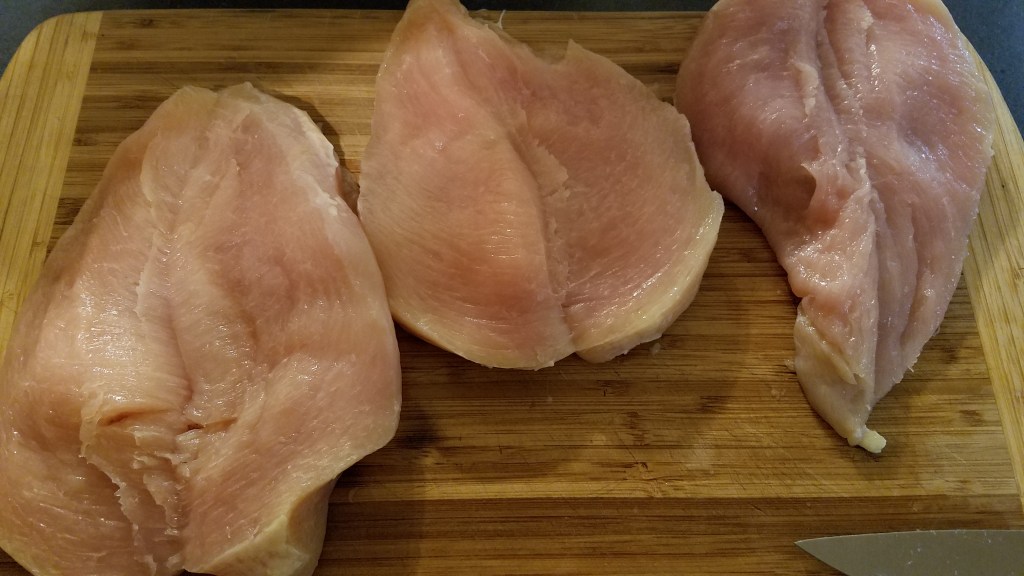
Butterfly slice the chicken breasts, leaving about half an inch of the breast uncut.
Lay the chicken breasts open and put them in the bowl containing the marinade. Allow the chicken to marinate for a half hour, turning occasionally.
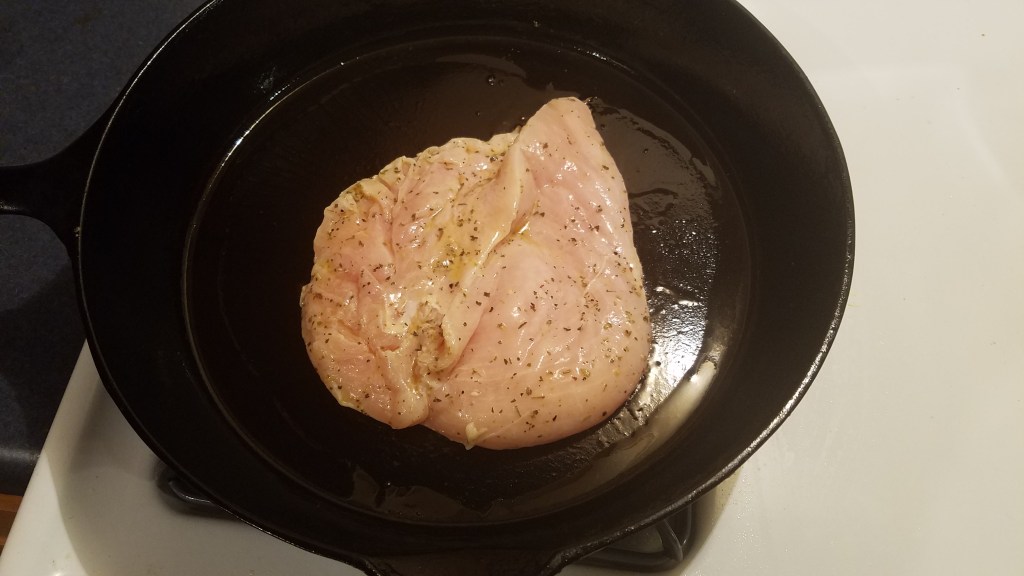
Heat a cast iron skillet to high. Once the skillet is hot, sear the cut sided of the chicken. Sear for about 1 minute and turn the chicken over to briefly sear the other side, about 10 or 15 seconds. Remove the chicken to a work surface. Sear the remaining chicken breast in a similar fashion.
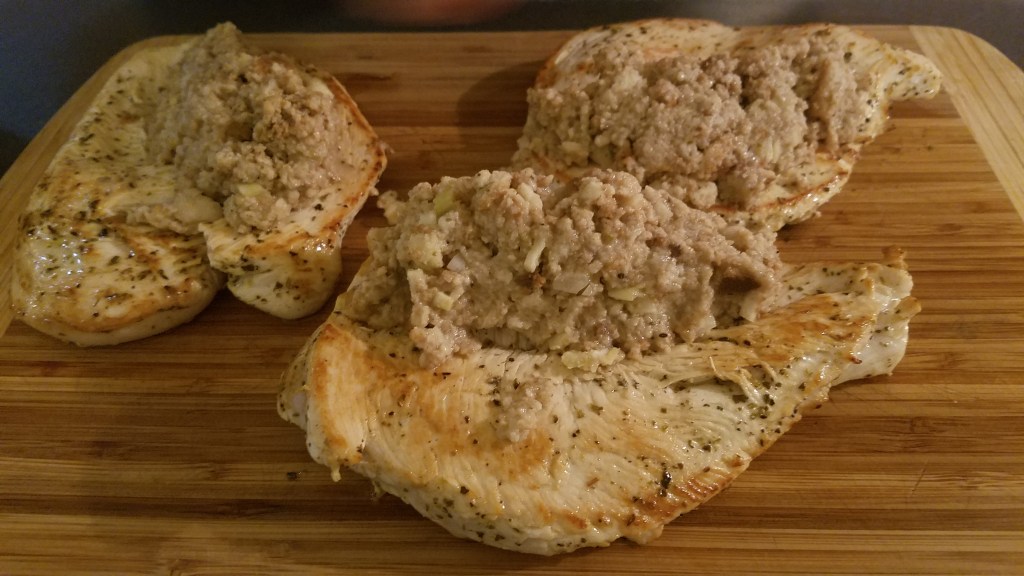
Lay the chicken breasts on a work surface with the cut side facing upward.
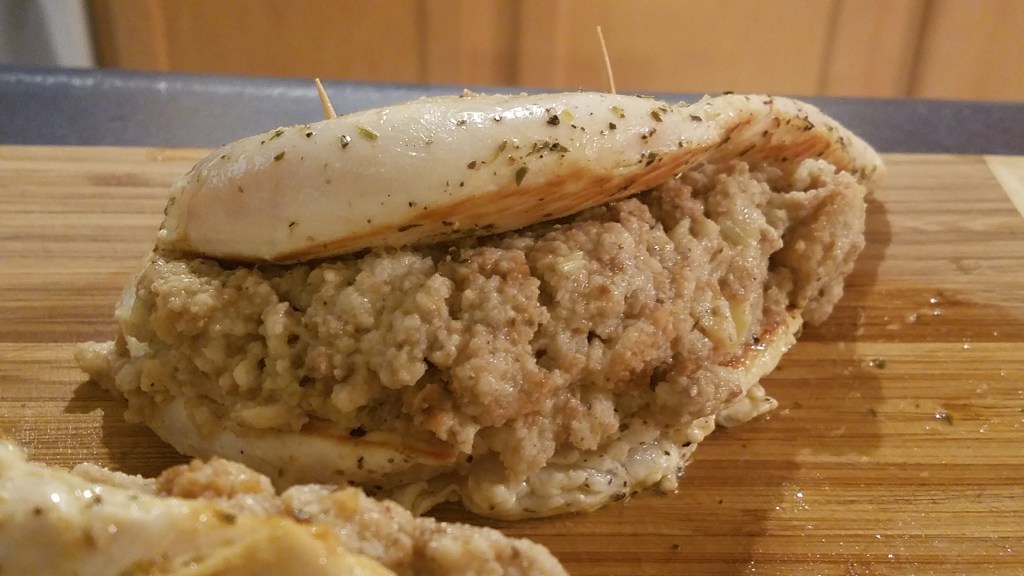
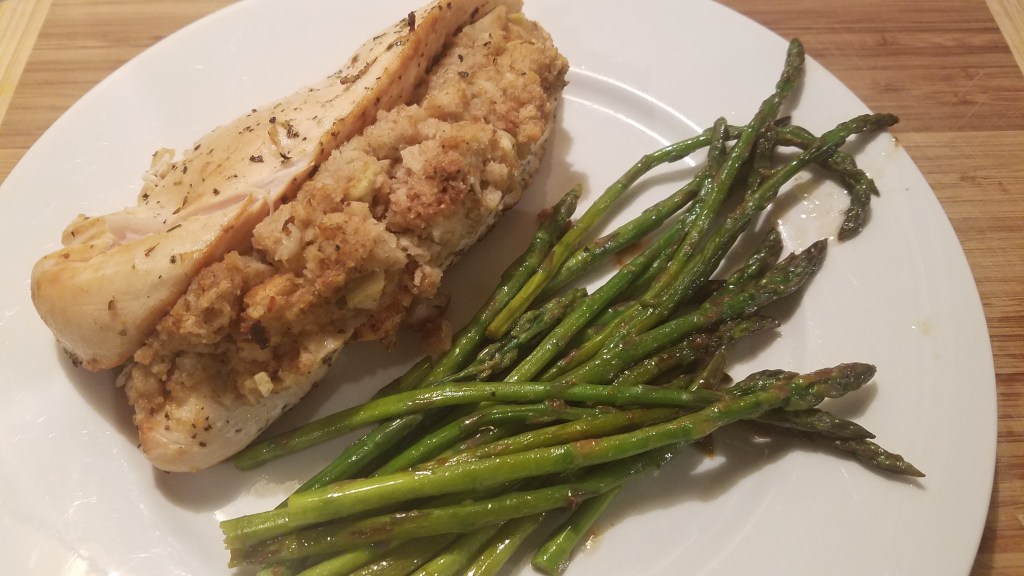
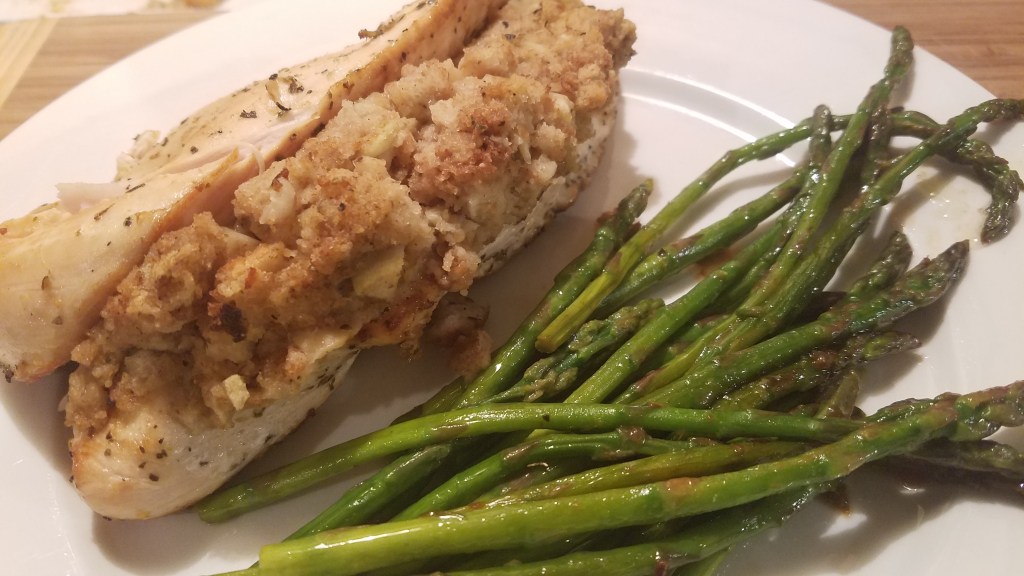
Compress some stuffing in your hands and lay the stuffing on one side of the chicken. Fold the chicken over along the seam and secure with toothpicks. Repeat the process with the other chicken breasts.
Return the chicken to the skillet and bake at 300° for 30 minutes, uncovered. Turn the heat up to 350° and bake for another 10 minutes.
Serve hot, along with a vegetable or salad. I served this with asparagus…
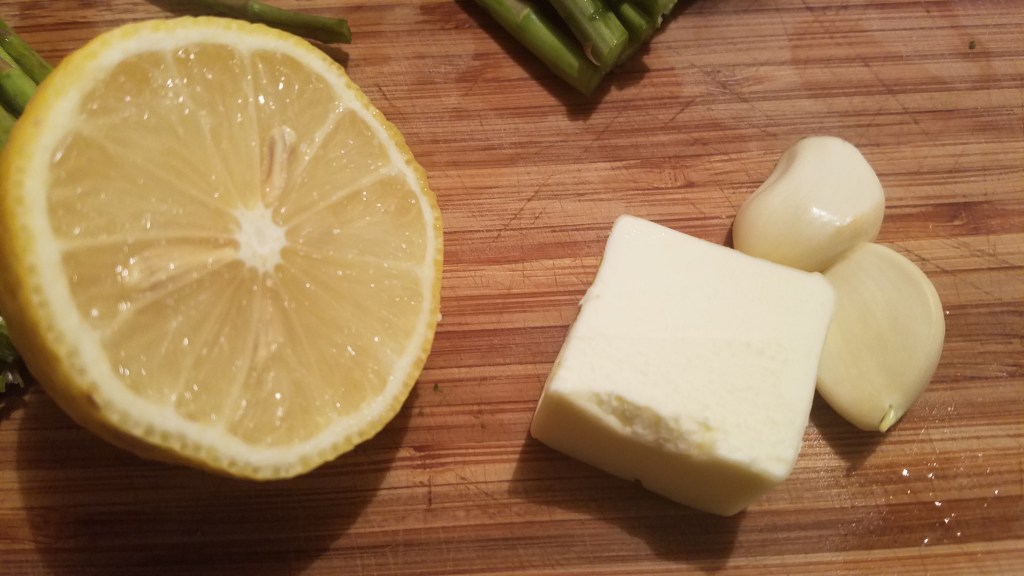
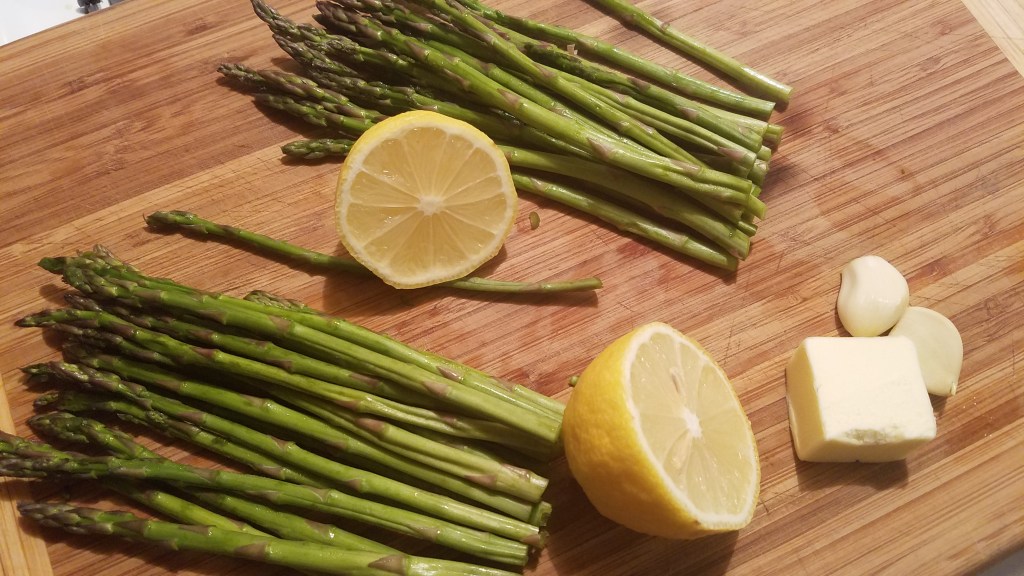
Skinny Asparagus in Lemon, Garlic Butter Sauce
Maybe it’s just me but I don’t remember seeing pencil-thin asparagus in stores until a few years ago. It’s probably just me… When it comes to asparagus I let the price determine which kind I will use. Naturally, the thicker variety is better suited for grilling and the thinner variety is perfect for pan frying, quickly.
Ingredients:
½ lb skinny asparagus
1 Tbs butter
2 garlic cloves, smashed
Juice of ½ lemon
Directions:
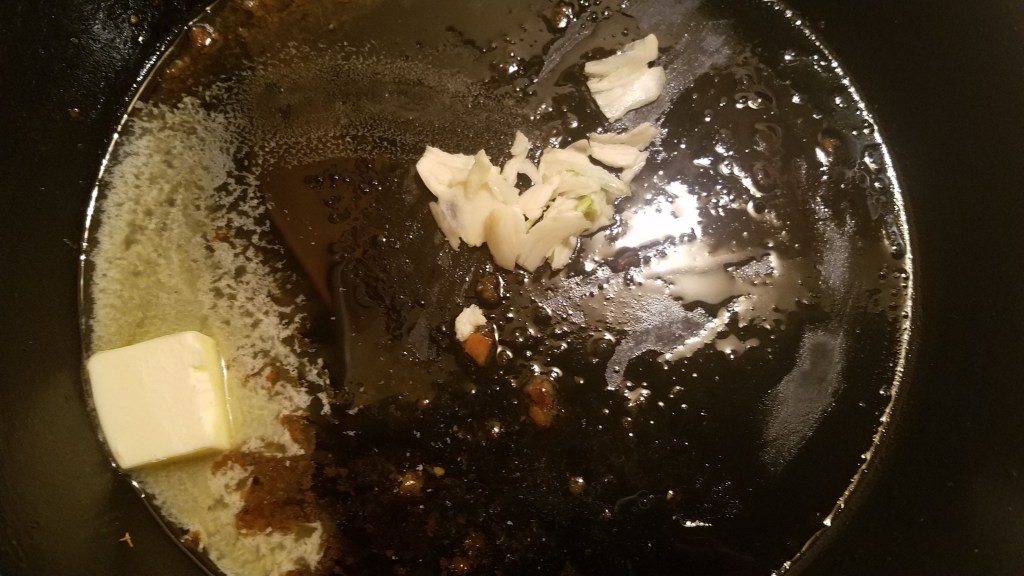
Once the chicken has been removed from the skillet, wipe the skillet with a paper towel to remove most of the residual oil.
Add the butter and garlic and sauté the garlic for about a minute, or until the garlic begins to turn light brown.
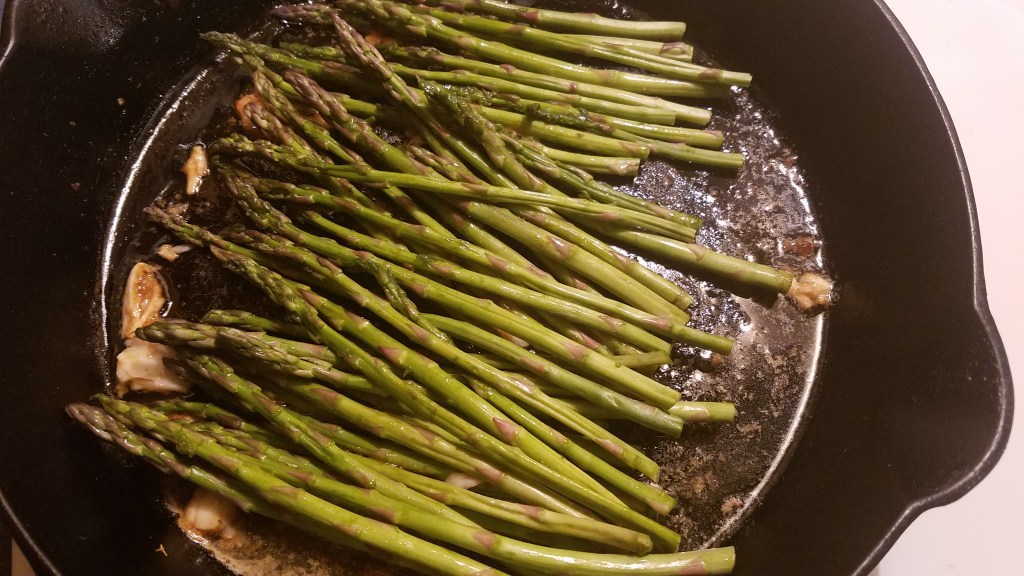
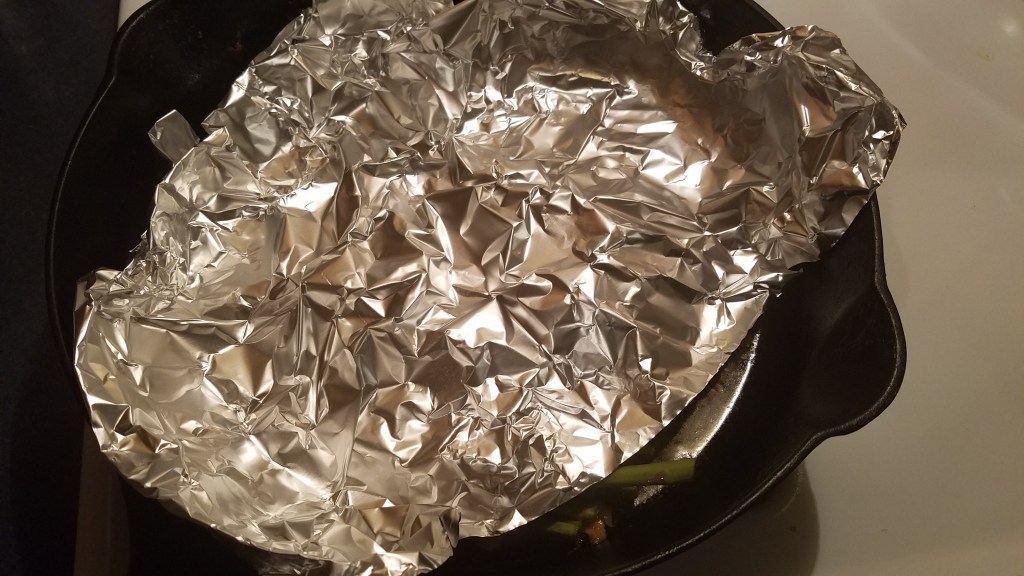
Set the heat to low and add the asparagus. Stir briefly and cover. I used a piece of aluminum foil. I like the flexibility I get with foil. Let the asparagus steam for about 4 minutes. Uncover and gently stir the asparagus for another minute.
Well, Thanksgiving’s just around the corner and you know
what that means…
Bánh mì and Cheesesteak sandwiches!
Yes, it’s an odd pairing and no, it has nothing to do with
Thanksgiving.
Once again, “Necessity” grabbed hold of the wheel of invention and I just sat back and enjoyed the ride. Working on Saturdays disrupts my rhythm and I usually wind up feeling out of sorts as I head back home from work. I didn’t have anything in particular planned for dinner, since this particular Saturday was more like a regular weekday for me. That changed when I learned that we were expecting guests for dinner. While I was still at work, I recalled what was in my refrigerator. We had a small pork loin and a some thinly sliced beef. Both cuts of meat had been in the refrigerator for several days and they would spoil within a day or two, if not cooked.
It seemed to me that sandwiches would be a good solution. Quick and easy. I asked my wife to pick up a couple loaves of
French bread at the market and I got straight to work, after I came home from
work.
These sandwich recipes are inspired by two classic sandwiches. I didn’t set out to make the quintessential
version of either sandwich. I just wanted to whip up some decent
sandwiches.
I used items that we already had at home, so some
improvisation was employed. I normally
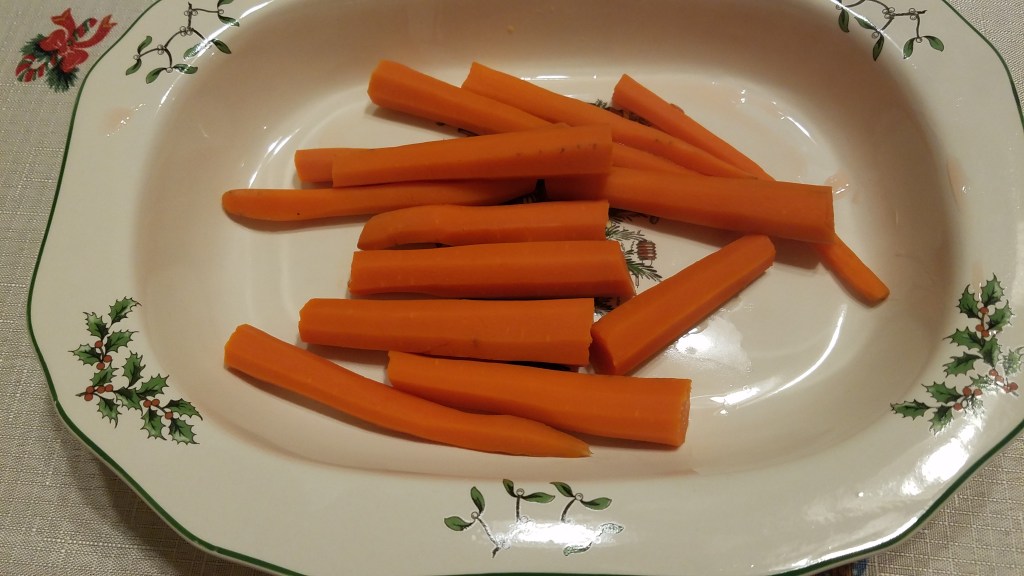
wouldn’t use cocktail carrots because they give me the creeps. They remind me of amputated limbs and they
develop a weird white coating on them, as they lose moisture in the
refrigerator. Other than that, they are perfectly
fine. 🙂
The key to really good Bánh mì and cheesesteaks relies on the
quality of the bread that is used. We
are fortunate to have a grocery store nearby that stocks authentic New Orleans
style French bread.
Bánh mì sandwich
Ingredients:
10 stubby little carrots (cocktail carrots)
1 onion, very
thinly sliced
2 cloves of garlic, smashed and sliced thin
¼ rice wine vinegar (or white vinegar)
2 Tbs sugar
1 lb pork loin
2 Tbs ketchup
1 tsp Hoisin sauce
1 tsp soy sauce
2 green onions
¼ cup cilantro leaves
1 24” New Orleans
style French bread loaf (Cartozzo’s
Bakery)
¼ cup mayonnaise
1 tsp Sriracha sauce
Directions:
Heat the oven to 400°.
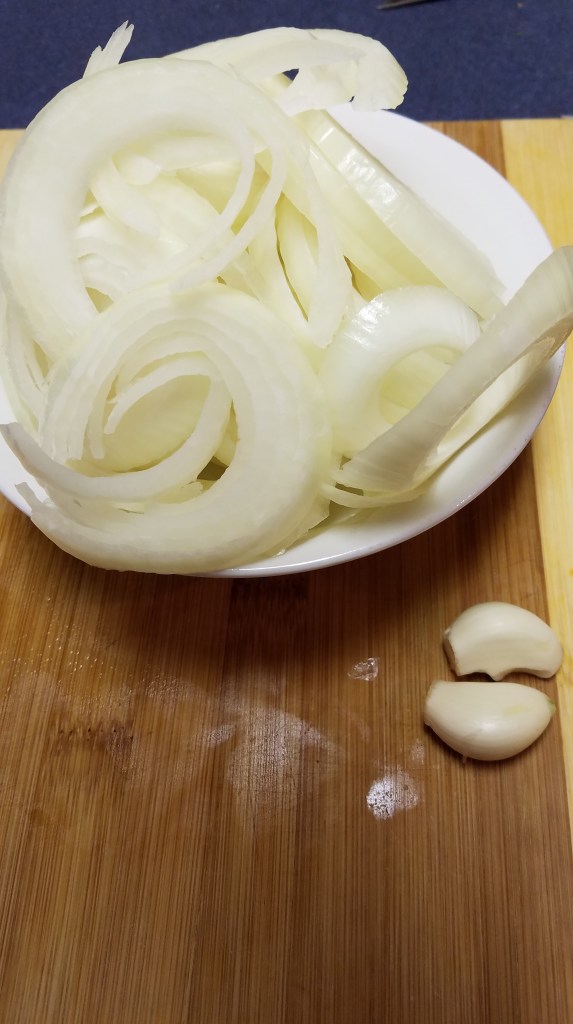
Slice the onions and garlic and grate the carrots. These all need to be very thin.
Add the onions and carrots of a bowl and add the rice vinegar and sugar. Mix together and set aside for an hour.
Slice the green onions lengthwise, very thin. Separate the cilantro leaves from the stems. Set these aside.
In a small bowl, mix the ketchup, Hoisin sauce and soy
sauce. Smear the sauce onto all sides of
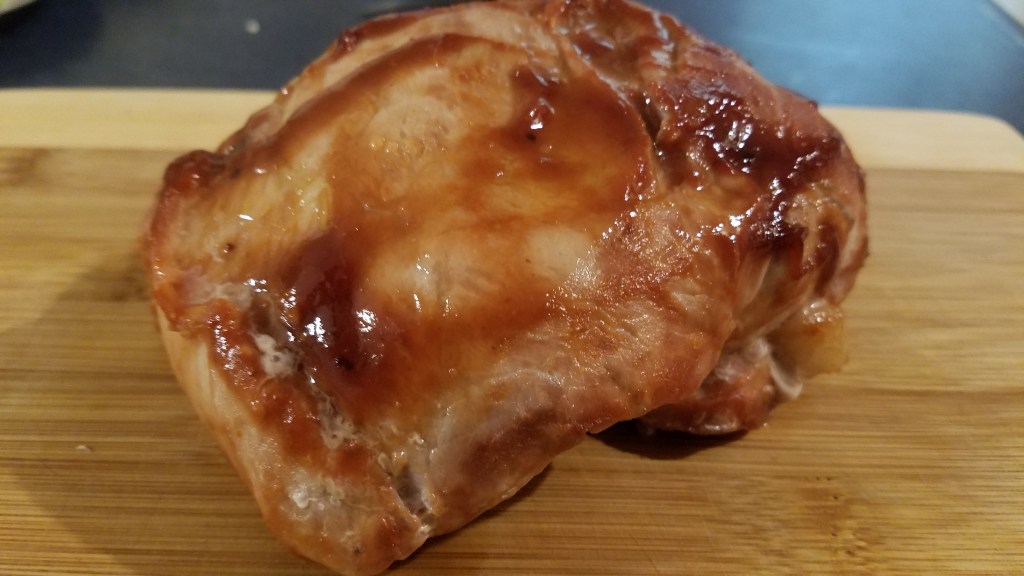
the pork loin.
Put the pork loin in a ceramic baking dish and bake in the
oven for 30 minutes.
Remove the pork loin after 30 minutes and loosely cover with
a foil tent. Rest the pork for 15
minutes before slicing.
Slice the pork as thinly as possible. Return the sliced pork to the baking dish and
mix thoroughly with the sauce and baked drippings. Seal the dish with aluminum foil and keep in
a warm place until ready to serve.
Slice the French bread lengthwise. I chose to cut all of the way through but, I could have cut just deep enough to open the loaf like a book. Either way is fine. Warm the bread in a 200° oven for 10 minutes. Pull the bread out when the crust is warm and slightly crisp.
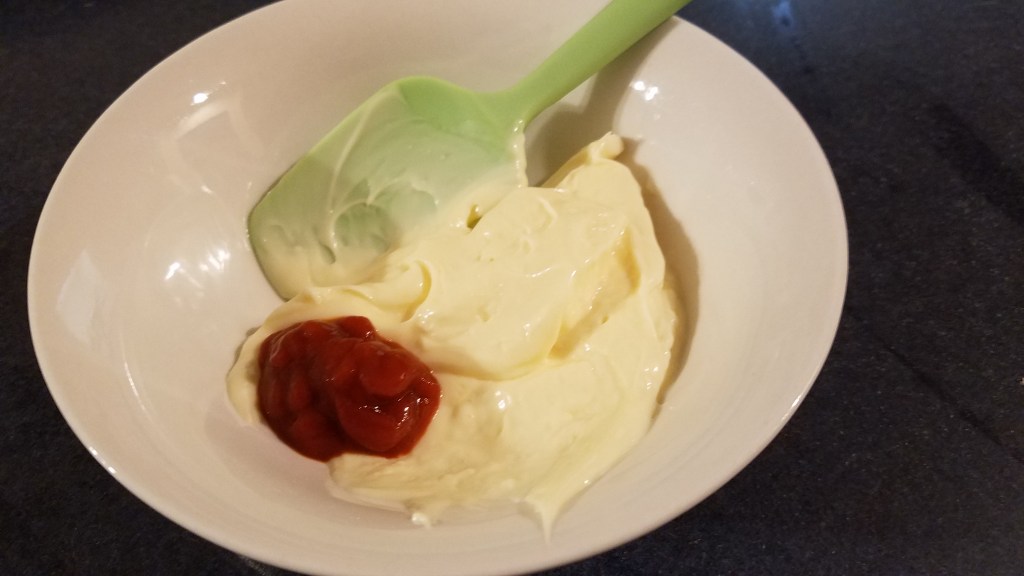
Mix the mayonnaise and Sriracha in a small bowl.
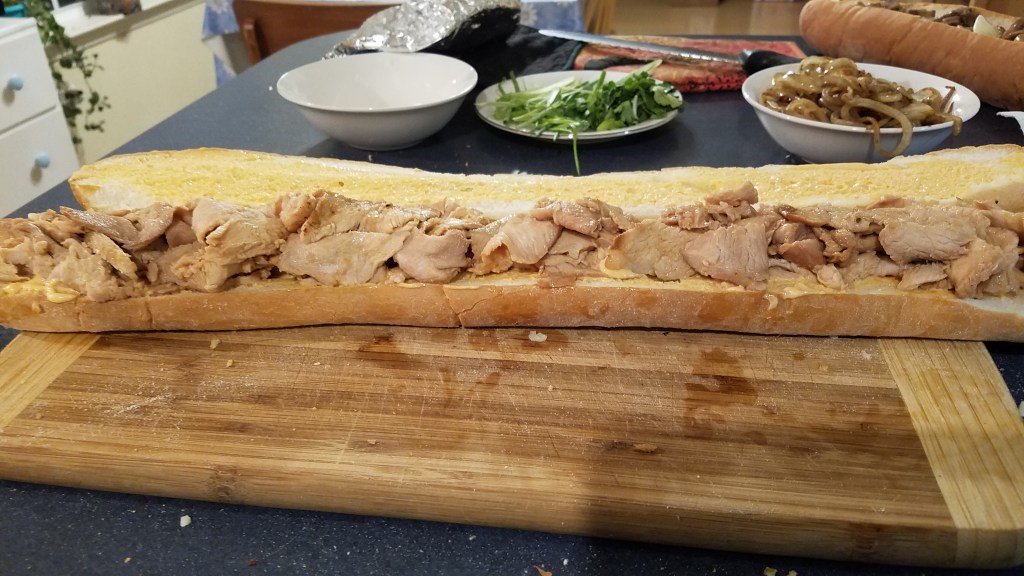
Slather the mayo mixture on both sides of the warm French
bread.
Arrange the pork on the bottom slice of the bread.
Add sliced green onions.
Top with the pickled onion and carrot mixture.
Sprinkle cilantro on top of the onion and carrot.
With a bread knife,
cut the assembled sandwich into four equal pieces (four 6” sandwiches).
Cheesesteak sandwich
Ingredients:
16 oz Muenster cheese, sliced
1 onion, sliced in ¼” rings
2 cloves garlic
1 tsp olive oil
1 lb thinly sliced beef
1 8oz can sliced mushrooms
8 oz marinara sauce
1 24” New Orleans
style French bread loaf
Directions:
Note: I used a wok to prepare the onions and sliced steak. Cheesesteaks are best when cooked quickly at high heat and a hot wok is probably the next best thing to a hot flat top grill.
Slice the Muenster cheese and set aside.
Slice the onion into ¼” rings. Set aside.
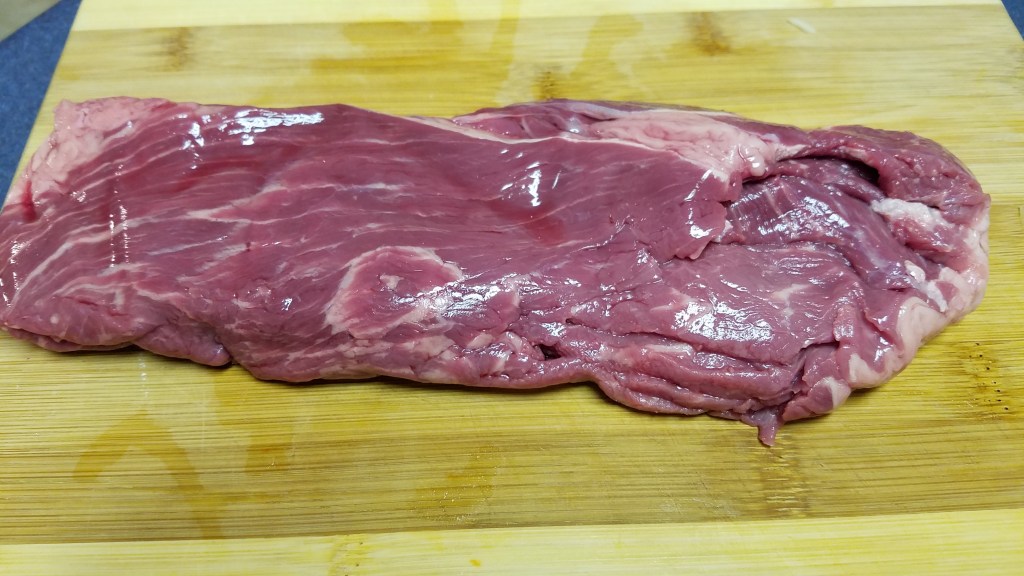
I used a pre-sliced cut of beef. The slices are very thin which makes it easy to cut the meat into thin ribbons.
Slice the meat into ribbons and set aside.
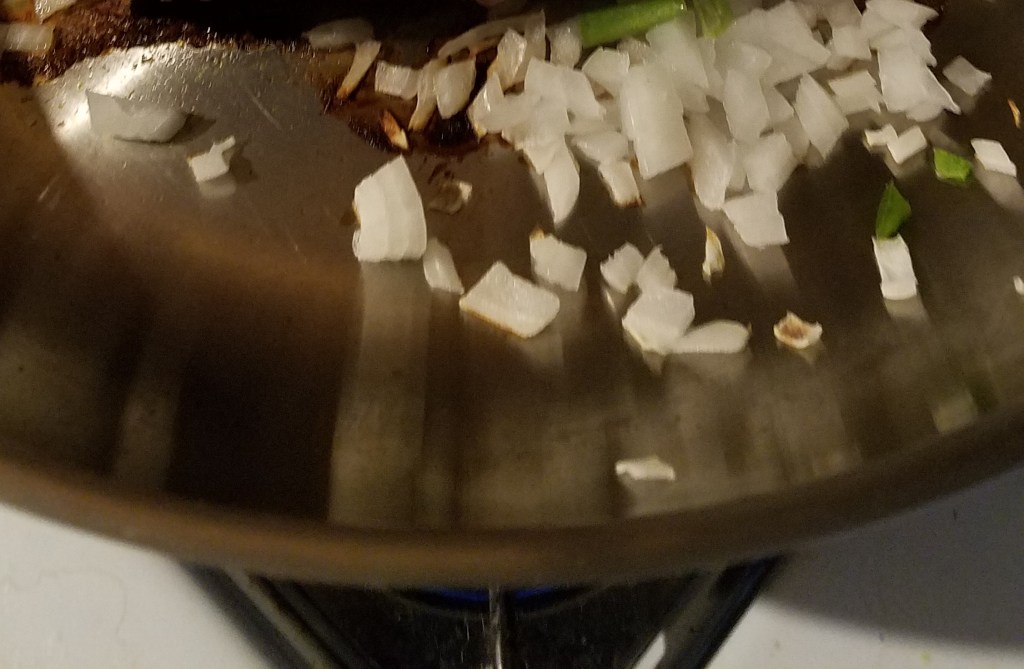
Sauté the onions and garlic in a teaspoon of olive oil. Remove the onions after they soften. Smash the cooked garlic cloves and mix with the onions.
Stir-fry the beef until no longer pink (about two minutes). Remove and keep warm.
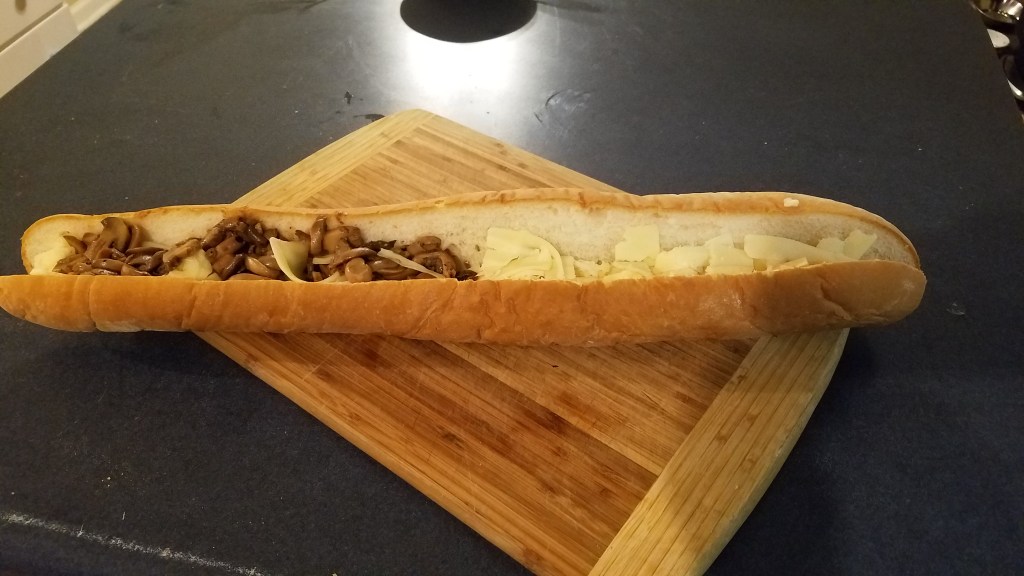
Slice the French bread lengthwise. Layer the sandwich with the sliced cheese. I added mushrooms to one half of the sandwich.
Bake in a hot oven until the cheese begins to melt.
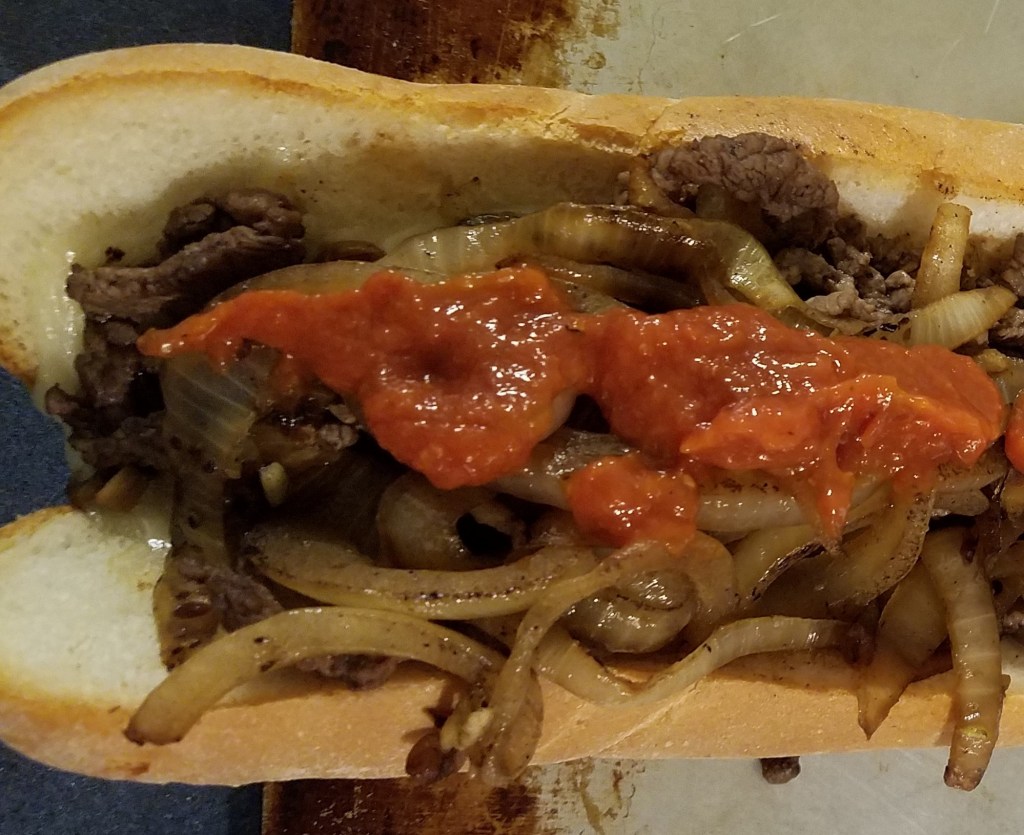
Remove the bread and top with the cooked beef. Add the sautéed onions.
Top with warm marinara.
Cut the sandwich into four equal pieces ( four 6” sandwiches).
It all started so innocently.
I just wanted to find a way to use some pears. “How about a tart,” I thought.
A true
tart has exposed fruit filling on top. I
actually made a pie, since I used a top crust.
But, I called it a tart anyway because I’m a rebel.
Ingredients
for the pie crust:
½ cup lard
¼ cup butter
3 cups flour
¾ tsp salt
¼ cup cold water
Ingredients
for the pie filling:
8 Bartlett pears
Juice of ½ lemon
3 Tbs flour
½ tsp cinnamon
¼ tsp cardamom
Ingredients
for the egg wash:
1 egg, beaten
1 Tbs sugar
¼ tsp cinnamon
Directions:
Cut butter into smallish pieces chill in the freezer, along with
the lard, for about 20 minutes.
Sift flour and salt together.
Cut butter and lard into flour.
Continue to use a cutting action until the flour mixture resembles corn
meal, in texture. Cover and return to
refrigerator to chill.
Rinse, wash and peel pears.
Quarter the pears by cutting the pears in half, lengthwise and then cutting
them in half again. With a paring knife, cut a small arc across the ridge
of the slice pear to remove the seeds and hard membrane.
Add the pear pieces to a large mixing bowl. Add juice of ½ lemon and toss the pears to coat. Set aside.
Mix together 1 tablespoon flour, ½ tsp cinnamon and ¼ tsp cardamom
in a small bowl. Sprinkle the mixture
over the pears and give the pears a few tosses.
Remove flour mixture from refrigerator. Add water, 1 tablespoon at a time. Gently incorporate the water and continue
adding water until the dough begins to hold together. Divide the dough into two equal parts. Set one part aside.
Lay one of the dough halves onto a lightly floured surface. Form the dough into a ball and press down to
flatten into a disc. Turn the disc over
and roll out with a rolling pin. Start
in the middle of the disc and roll toward the edges. Continue rolling until disc is 10” to 11”
wide.
Center the pie crust on a 9” glass pie pan. Press the dough down gently to conform to the
pan. Pour the pears into the pie pan.
Roll out the other half of the dough and center it on top of the
pears, in the pie pan. Press the two pie
crusts together at the seams to seal them, or use a fork or other tool to seal
the edges.
Prepare the egg wash for the pie crust by whisking and egg in a small bowl. Apply the egg wash with a pastry brush. Sprinkle some sugar and cinnamon on top.
Place the pie pan on the middle rack of a 400° oven. Bake for 30 minutes and then turn the oven down to 350°. Bake for another 20 minutes.
Rest the pie pan on a cooling rack for an hour before
slicing. The pie filling will thicken as
it cools.
This is when things took an unexpected turn. I was impressed with how well the crust
baked. I could rotate the pie within the
pie plate with just a little effort which meant that the crust did not stick to
the pie pan, while it baked. I decided
to invert the pie pan and inspect the bottom pie crust. I figured that I had already taken pictures
of the competed pie so I had nothing to lose.
Once I had the pie resting upside
down on a cutting board, I felt along the surface of the crust. It didn’t feel as crisp as the top crust,
which makes sense, because it wasn’t exposed to air while it baked.
The oven was still hot and I wanted to give the pie a few more
minutes in the oven to crisp the bottom crust.
I inverted the pie again and set it on a metal rack. As I took the metal rack to the open oven,
the pie slid off and crashed onto the open oven door. It all happened so quickly, yet it seemed
like slow motion at the same time.
The pie was a total wreck. There
was no way to hide the massive damage.
It all happened so quickly that I didn’t even find time to curse. I just stood there and stared, numb and unblinking. I grabbed a piece of pear that had broken free from the crust and tasted it and I
came up with a plan.
Pear Tart
a la Mode
Ingredients:
1 broken pear tart
1 cup brown sugar
3 Tbs hot water
½ gallon, high quality vanilla ice cream
Directions:
Break apart a pear tart and put the chunks in large mixing
bowl. Set aside.
Heat 1 cup brown sugar in a heavy bottomed stainless steel pan, at
medium-low heat. When the sugar melts,
reduce heat to low and stir for one minute.
Remove the pan from the heat.
Carefully add the hot water. It will
sputter and put on a spectacular show.
Return the pan to low heat and stir for another 2 or 3 minutes, or until
the sugar has turned reddish brown.
Remove and cool. The cooled sugar
should have a crunchy quality to it.
Put 1 ½ cups of the broken pear tart in a large serving bowl. Add 1 large scoop of ice cream (about 1cup) to the bowl. Top the pie and cake with caramelized sugar and sprinkle some raw brown sugar on top, for good measure.
I haven’t been making regular trips to the grocery store
lately. Time constraints mixed with a
dash of laziness is a recipe for invention.
Despite the lack of grocery shopping, my pantry and refrigerator are
still full of all sorts of odds and ends, which is a good thing.
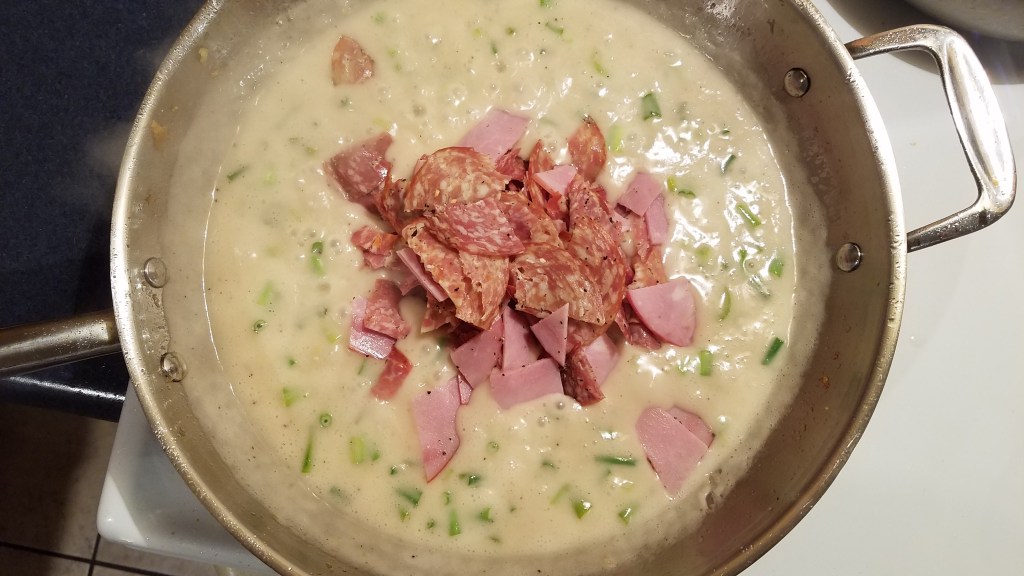
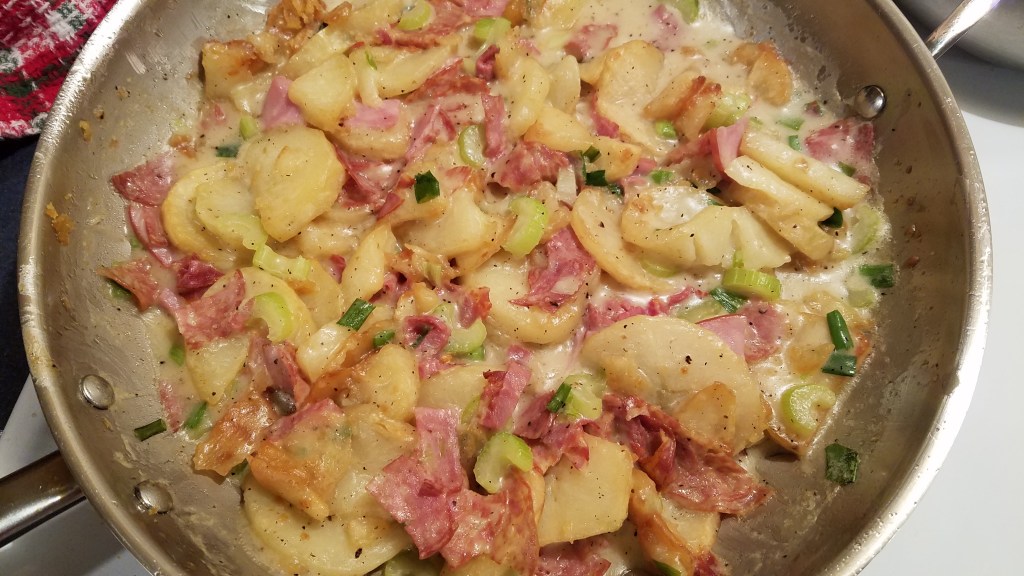
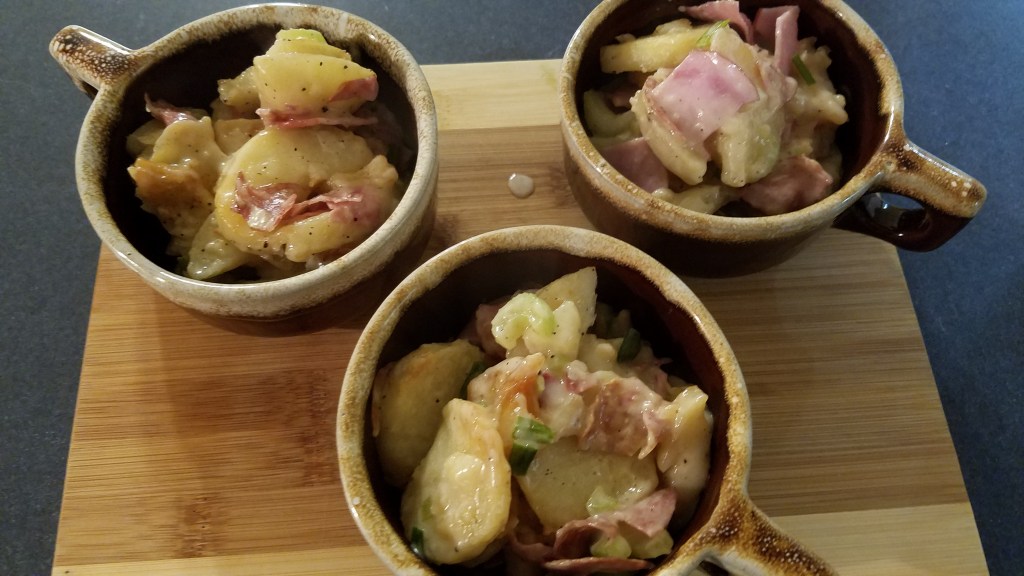
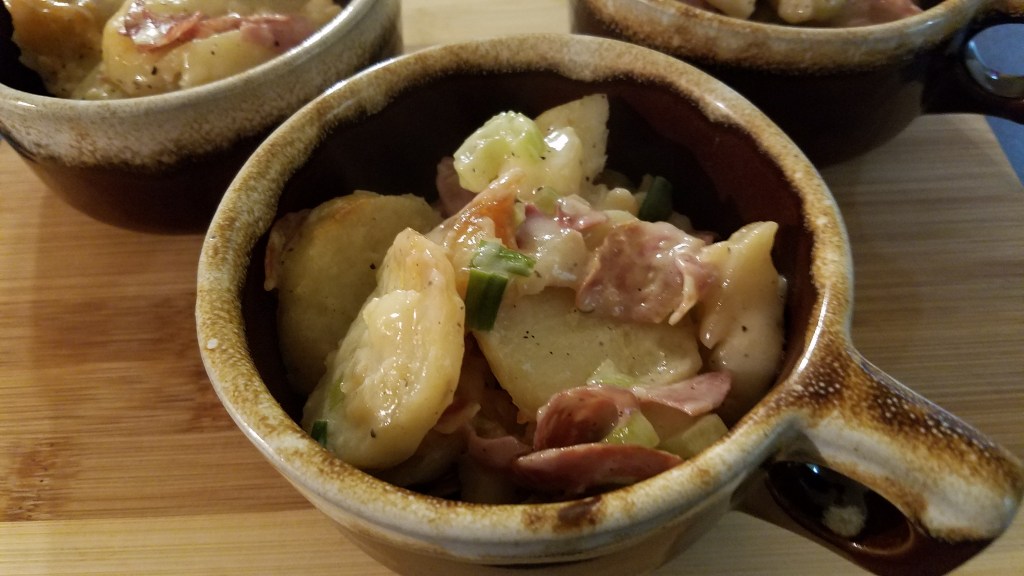
This meal came together quickly and it provided a warm, hearty end to a cold and dreary day. This was made to serve three, but it could stretch to serve four. The various cold cuts added to this dish turned simple scalloped potatoes into something special.
Ingredients:
3 large russet potatoes
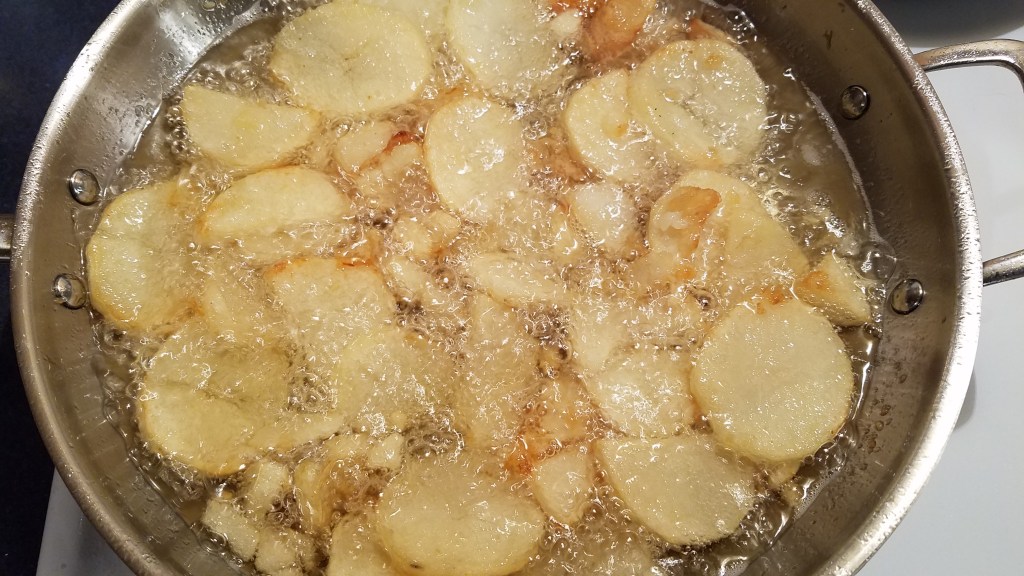
3 cups cooking oil
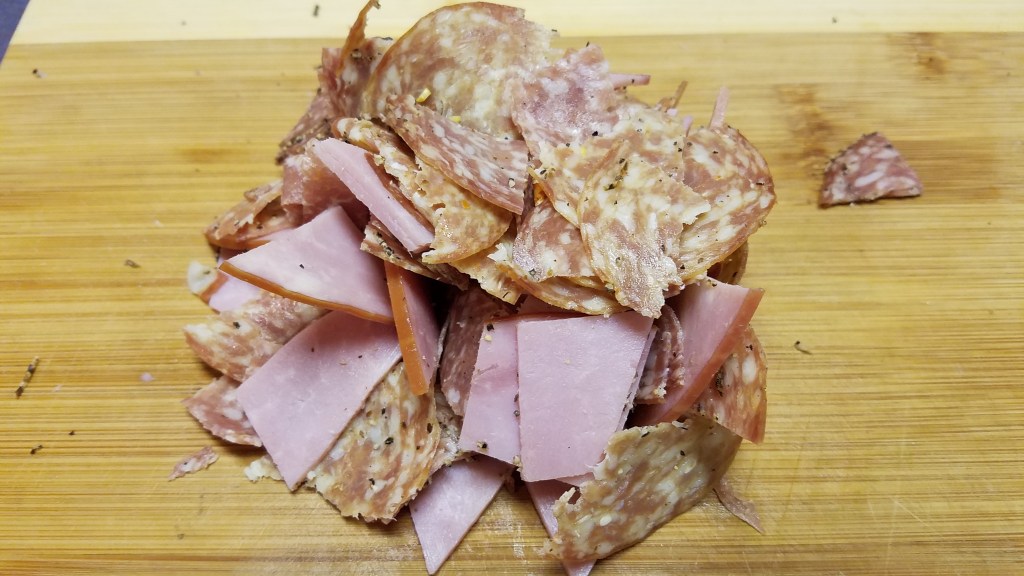
6 oz cold cuts (capocollo, calabrese, pepper salami and
cured ham)
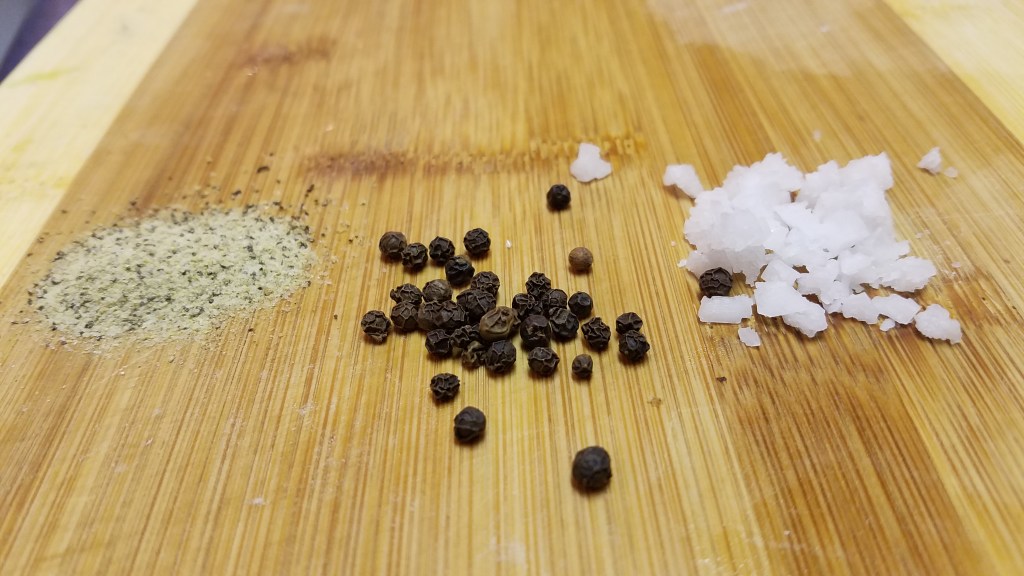
1 tsp coarse salt
½ tsp whole black pepper
½ tsp Cavender’s Greek Seasoning
5 green onions
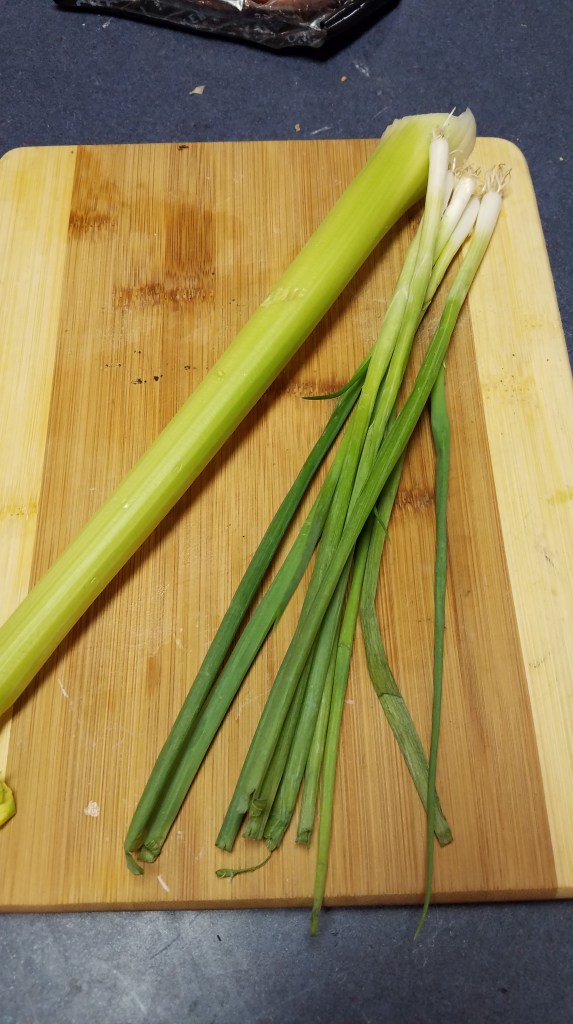
1 celery stalk
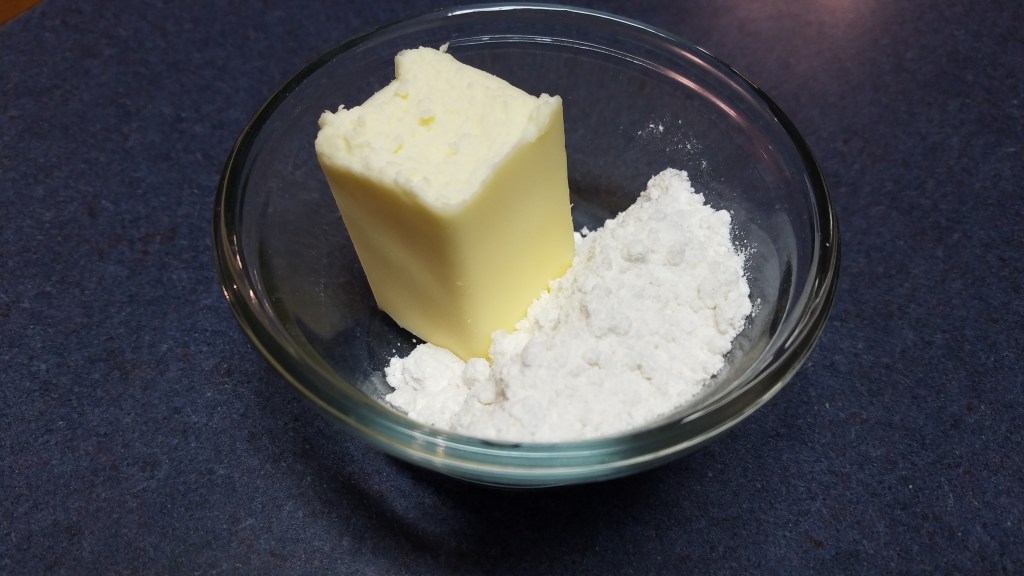
4 Tbs butter
4 Tbs flour
2 cups chicken stock
¼ cup heavy cream
Directions:
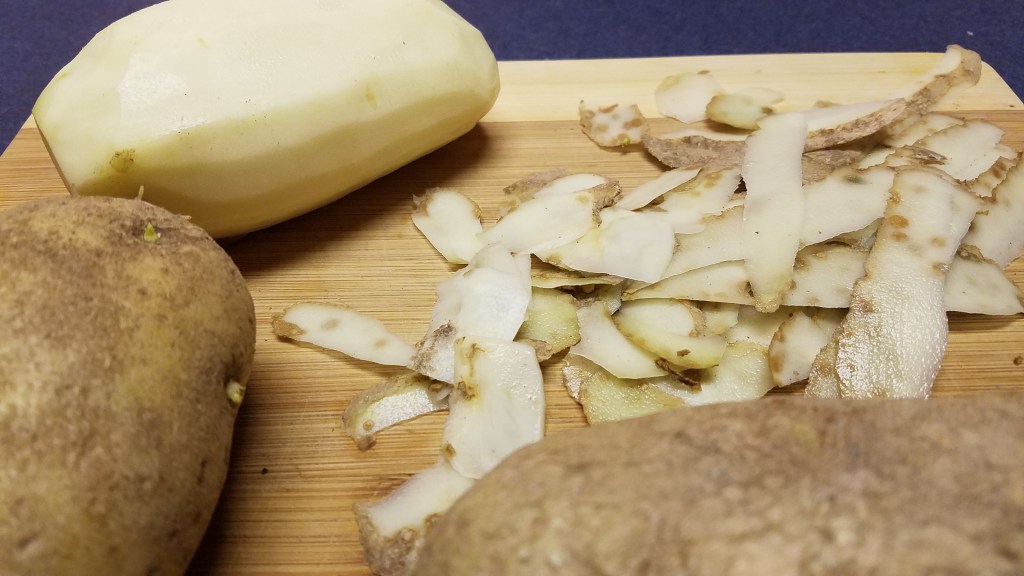
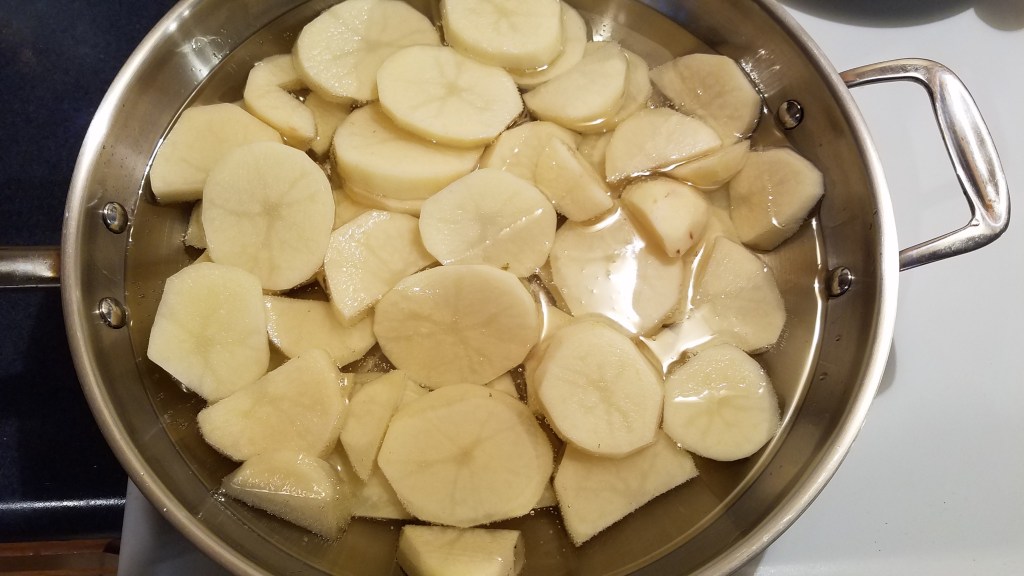
Peel the potatoes and slice them into ¼ discs.
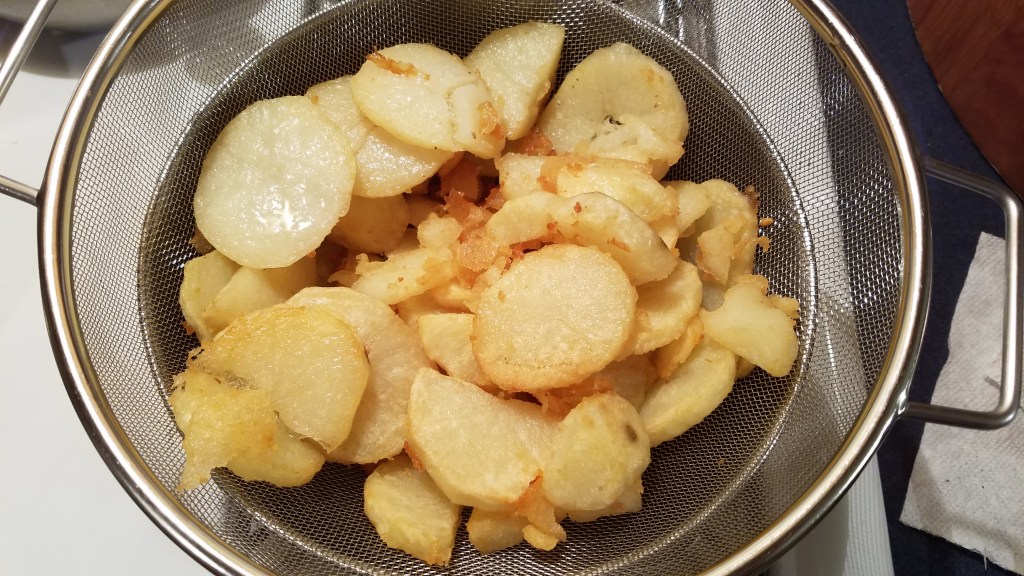
Fry the potatoes in the cooking oil. Once the potatoes begin to turn golden brown,
strain them and set aside.
While the potatoes cook, prepare the other ingredients.
Cut the cold cuts into ½” pieces. Set aside.
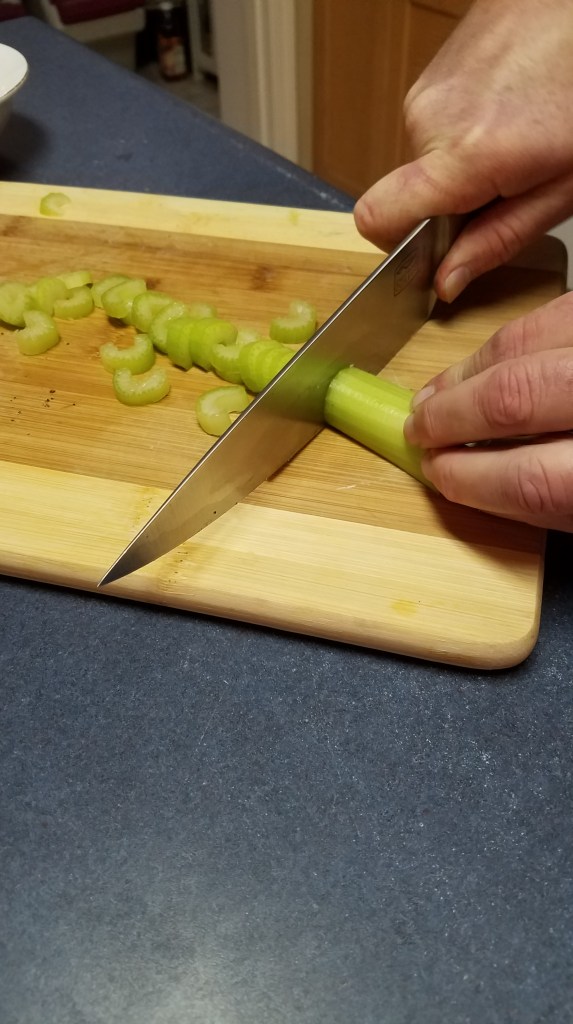
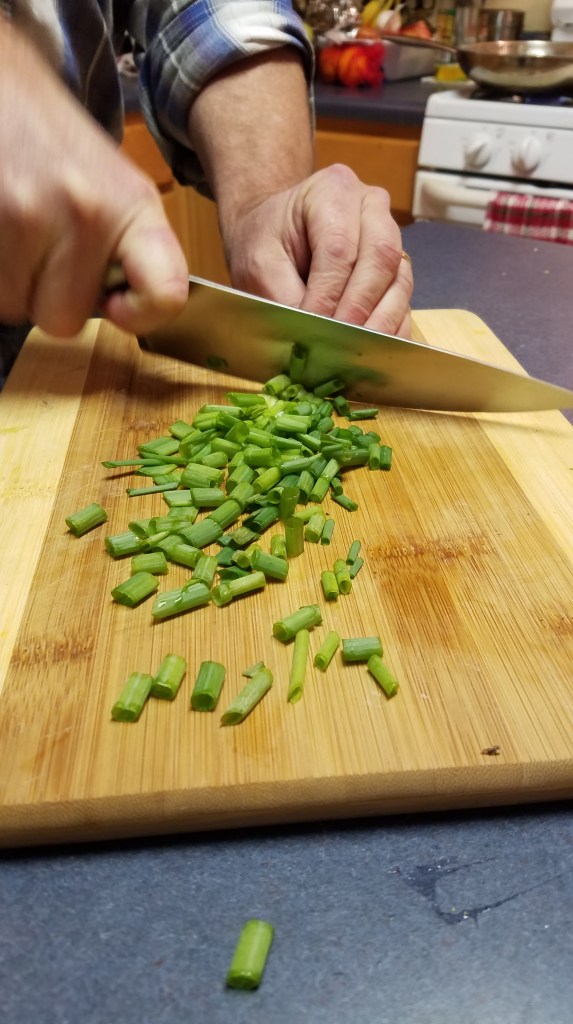
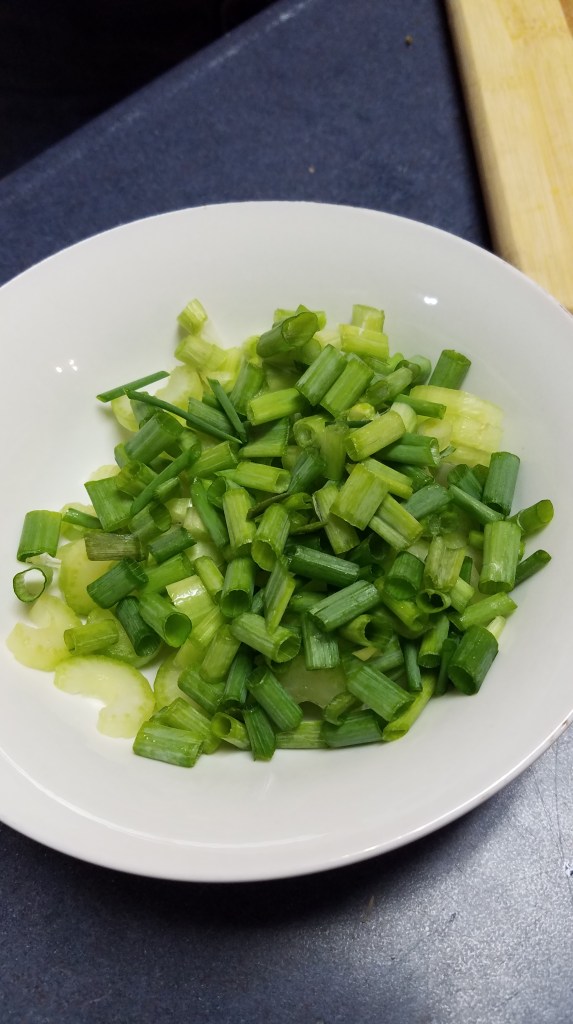
Chop the celery and green onions. Set aside.
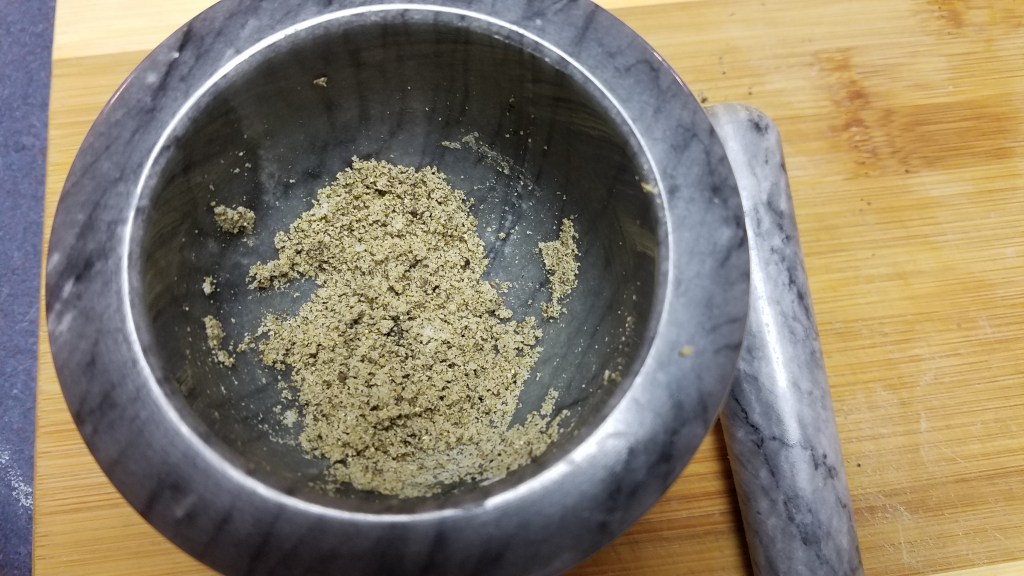
Grind the salt, pepper and Cavender’s Greek seasoning in a
mortar and pestle. Set aside.
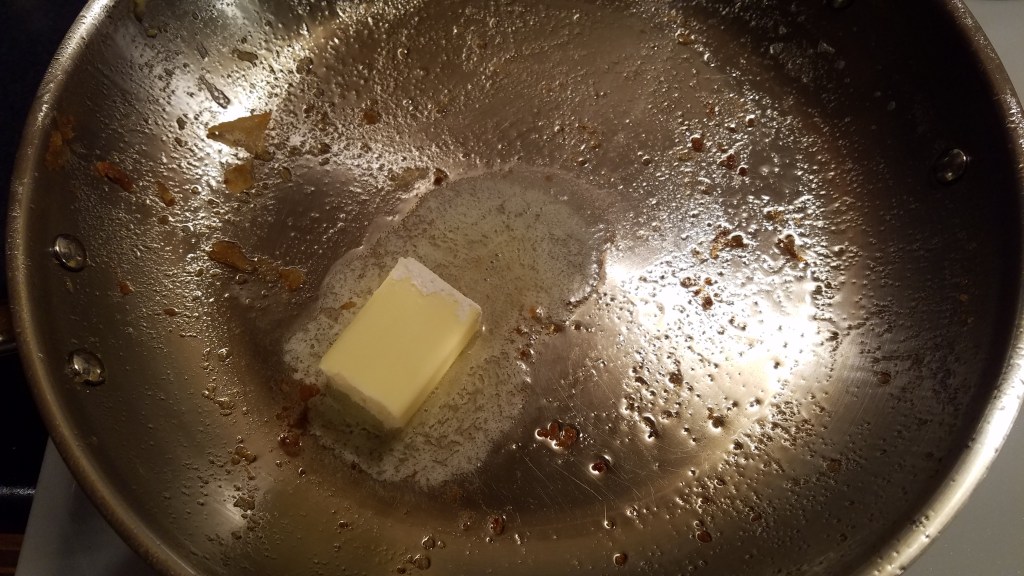
Using the same skillet that was used to fry the potatoes, turn
the heat to low and add the butter. When
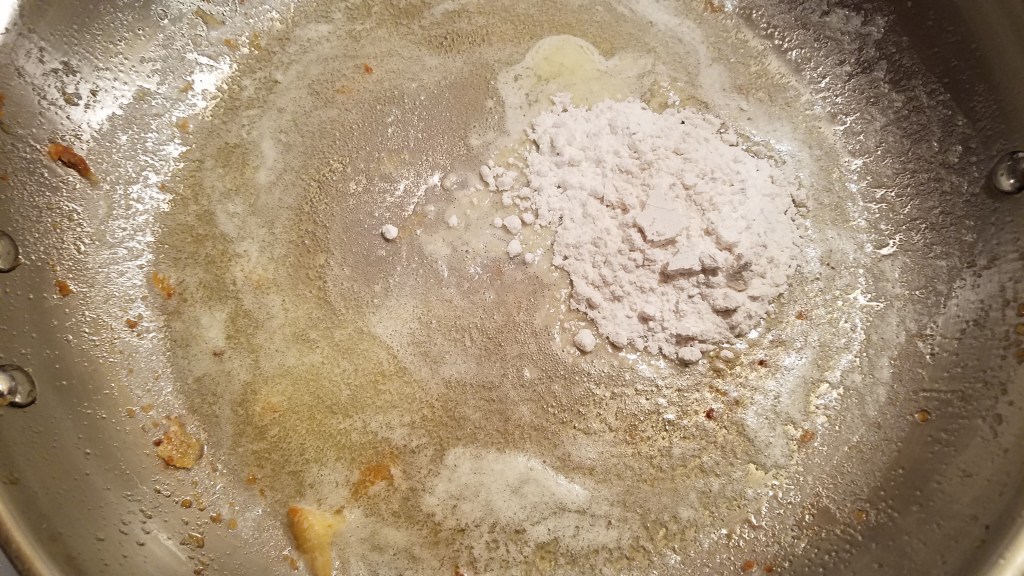
the butter melts, add the flour and whisk to form a roux.
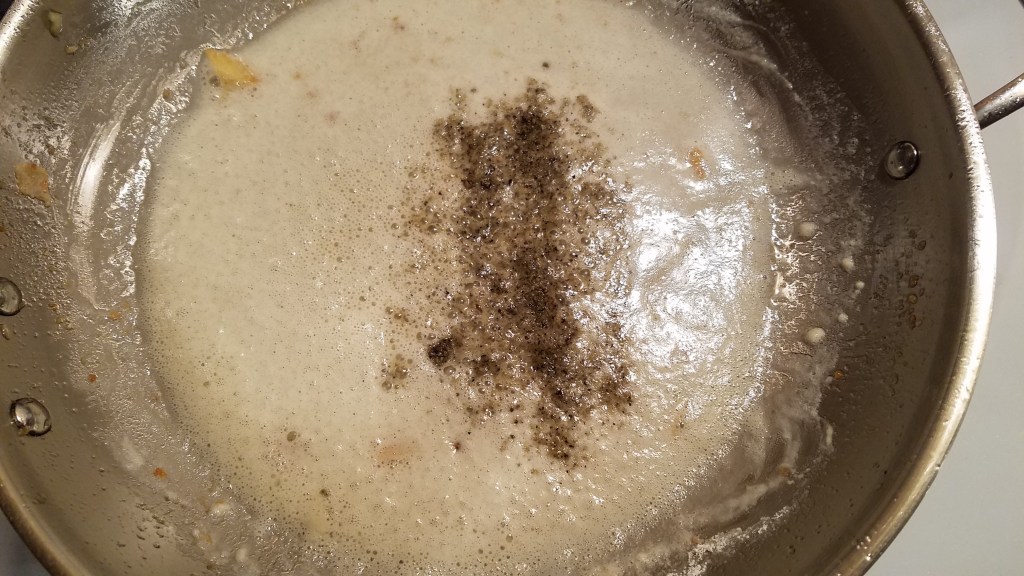
When the roux begins to bubble and becomes frothy, add the
seasonings. Whisk.
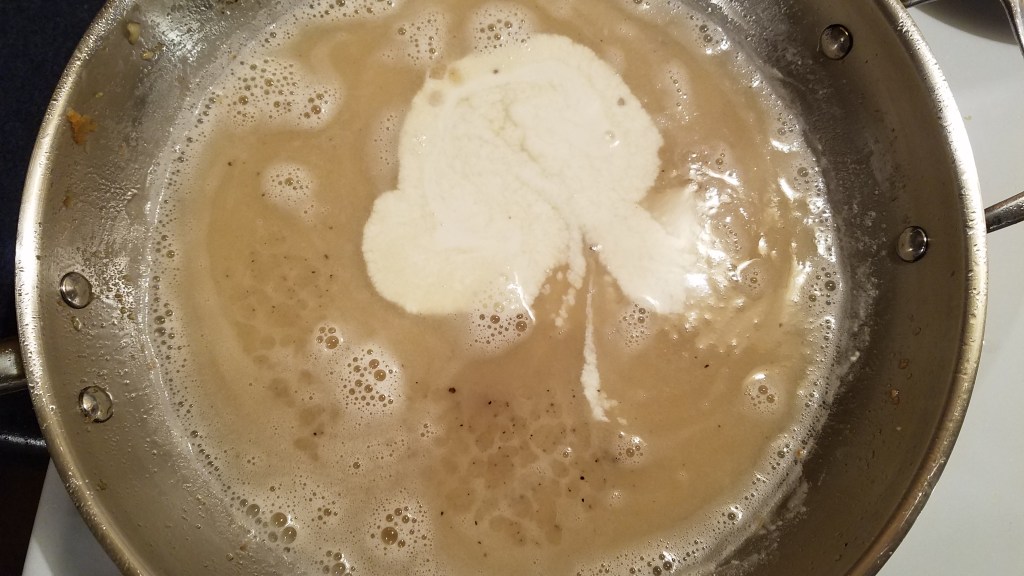
Slowly introduce 1 cup of the chicken stock and whisk. Add the cream and continue whisking. As the sauce thickens, add the remaining cup
of chicken stock. Whisk until the sauce
thickens again.
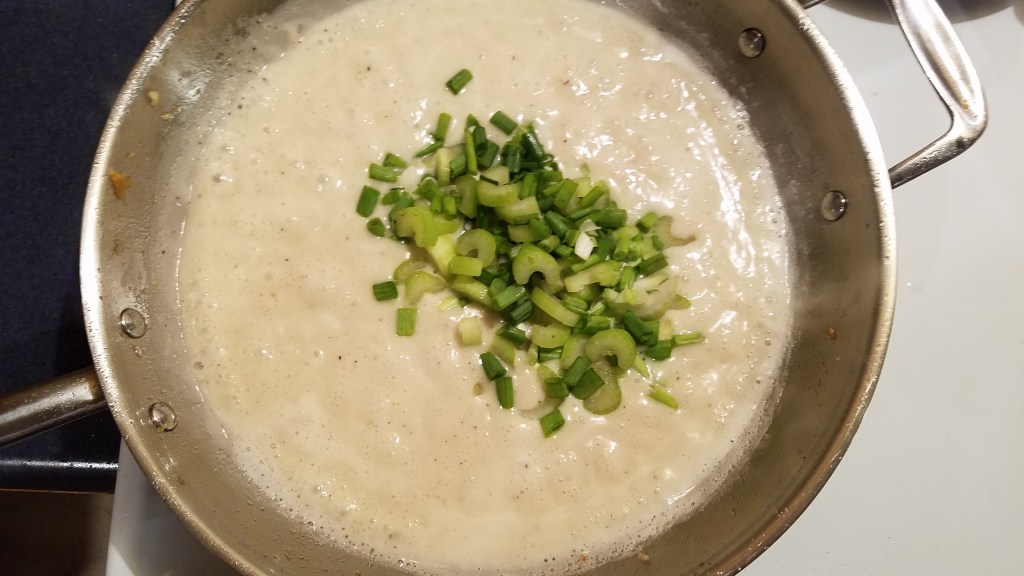
Add the celery and green onions and stir to incorporate.
Add the cold cuts and stir. Simmer for about 3 minutes, while stirring occasionally.
Fold in the potatoes and simmer for a few minutes.





























 Toothpick Tales