I can’t wait for springtime. Trees are budding and the daffodils have bloomed and waned. Pretty soon, I’ll be tilling the garden and planting vegetables and herbs. We will probably have another frost in the near future, so all I can do is wait.
In the meantime, I can celebrate the imminent arrival of spring through food.
Botanas are snacks, in Spanish. They are often small items, like tacos, empanadas, or nachos, and when several different items are arranged together you have a botanas platter.
This botana spread celebrates fresh vegetables and fruit, more than the actual tasty fried treats that are a common staple of botanas.
Colorful peppers, tomatoes, onions are arranged in floral patterns. Sour cream, guacamole, pico de gallo, and grated cheese make for good toppings.
Crispy taco cups and flautas act as a vehicle to carry all of the other good ingredients.
Make your dining experience festive, whenever possilbe.
Special thanks to Janet Kushner at Jauja Cocina Mexicana for this recipe, which I have unabashedly stolen!
My wife was raised in the Catholic faith, which came with all manners of rituals, rites and traditions. One of these is avoiding meat during the Lenten season, which is the 40-day period that begins on Ash Wednesday and ends at sundown, Holy Thursday. Eating meat from warm blooded animals is forbidden, but fish, and other seafood, is permitted because they are cold blooded. There’s a lot to unwrap there, but suffice it to say, Lent is something I can get behind, especially since I love seafood.
I come from a Protestant background, specifically an evangelical, Pentecostal, fire-and-brimstone sort of sect that has its own dos and don’ts, which include things like prohibiting alcohol, dancing, and gambling. Eat anything you want, but don’t dare have any fun while doing it!
Over the years I’ve realized that living a good life requires nothing more than treating people with decency and respect. It seems to me that religion can muddy the water, making it difficult to see the important things in life. Be kind. Be generous. Be sincere.
All that said, I still enjoy Lent when it rolls around each year! Let’s have some fish!
Note: The sauce from this recipe is a very versatile soup base. You could substitute the fish with meatballs, rice, lentils, or anything else that strikes your fancy. Control the spiciness of the sauce by adding or subtracting the chile de arbol.
Caldo de Pescado
Ingredients:
1 ½ lbs Tilapia filets, sliced into large pieces
1 oz. dried shrimp (eyes removed)
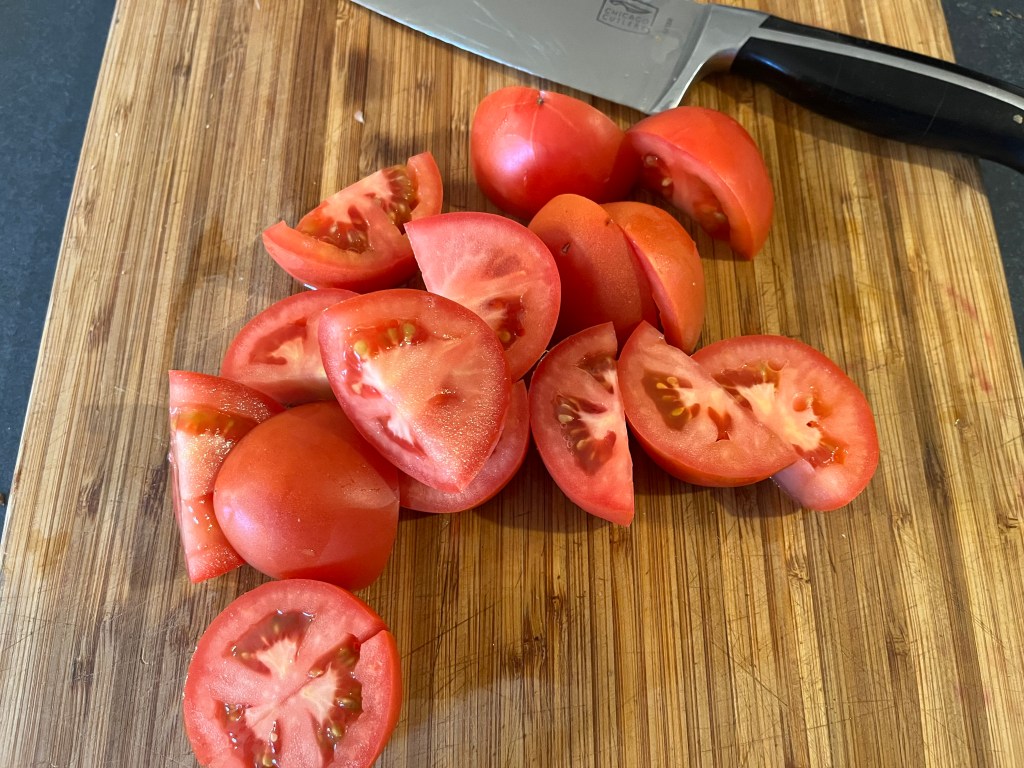
4 Roma tomatoes (quartered)
2 chile guajillo
1 chile ancho
A few chile de arbol, optional
½ onion, sliced
3 cloves garlic, peeled.
1 large leek, thinly sliced
1 bay leaf
1 Tbs oregano, crushed
Salt to taste
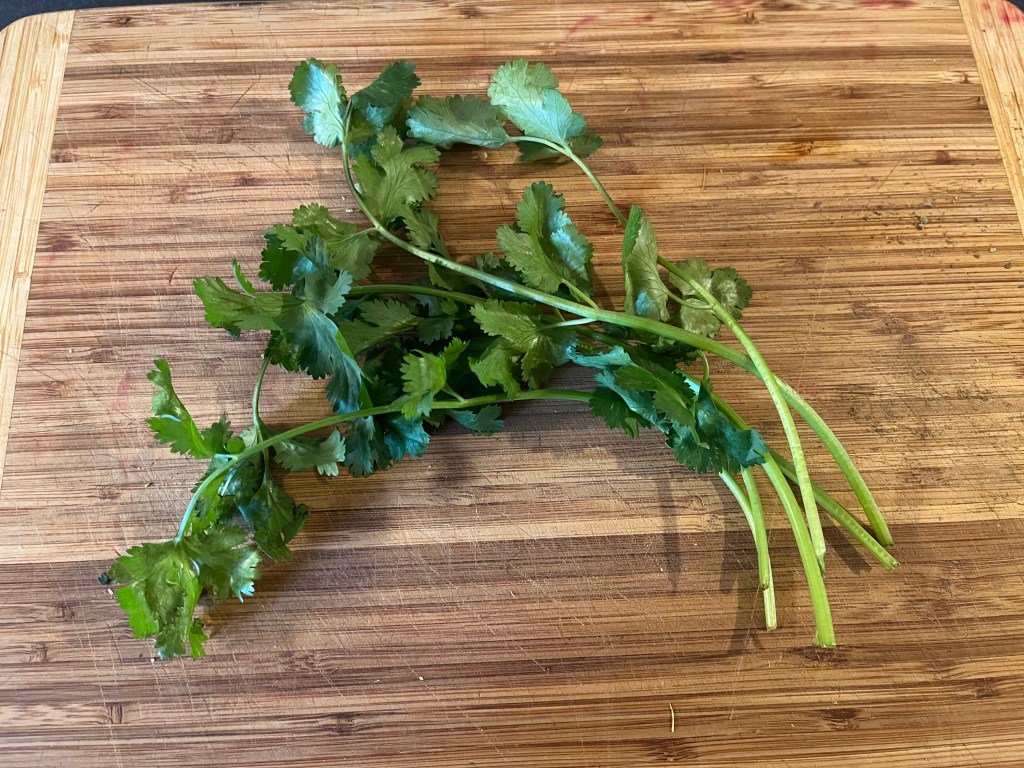
1 small handful cilantro leaves
3 carrots, peeled and cut into ½” pieces
2 medium potatoes, peeled and cut into ½” pieces
Directions:
Cover cut potatoes in water and soak until needed.
Sauté onion, leek, and garlic for 5 to 6 minutes. Set aside.
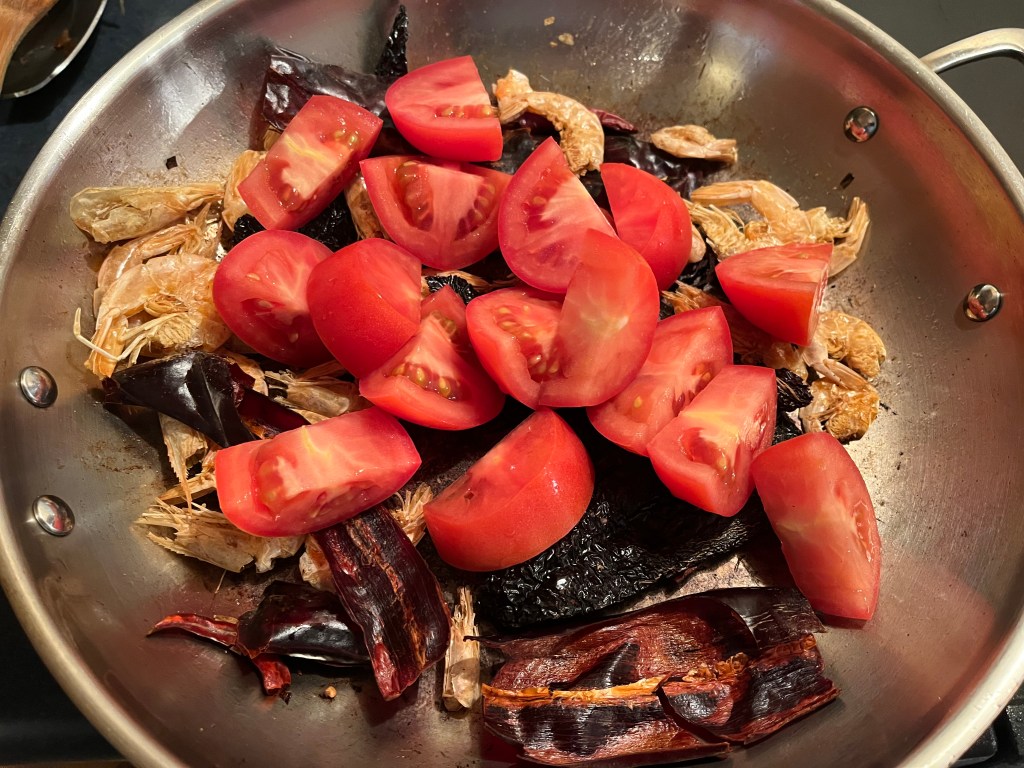
Sauté dried shrimp for 1 minute.
Add chiles. Sauté for 2 minutes.
Add tomatoes. Sauté for 2 minutes.
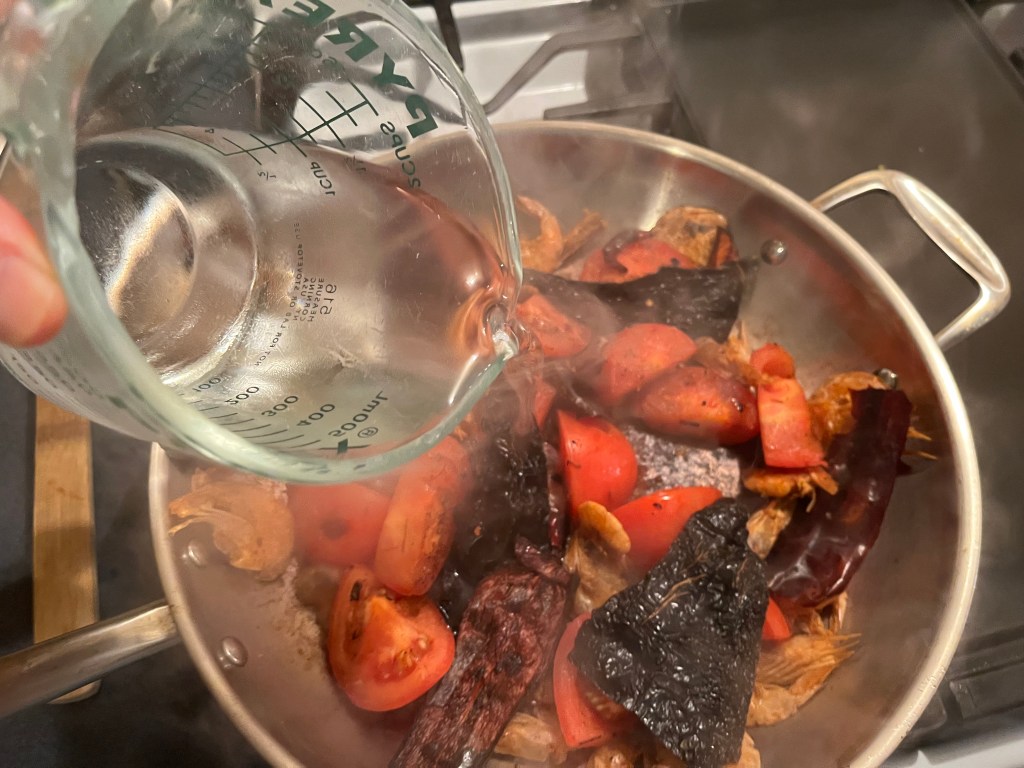
Add 1 ½ cup water. Cover and simmer for 10 minutes.
Add cooked salsa to blender. Add onion, leek, and garlic. Add 1 ½ cup water. Puree and strain into large bowl.
Add pureed salsa to a large pot.
Add bay leaf and oregano.
Cook uncovered over medium heat for 10 minutes. Stir frequently.
Often times, my approach to cooking is wham-bam-get-it-done! This is the sort of cooking that I tend to do when I prepare dinner, after coming home from work. It’s a fun, energetic romp that usually results in a good meal and doesn’t chew up a lot of time. That kind of approach allows for more time to sit down and enjoy a meal with the family, rather than slave away in the kitchen only to be faced with a need to eat quickly, clean up from dinner, and get ready for bed.
There are times that I enjoy a more relaxed, gentle approach to cooking, and I usually reserve those times for weekends. That’s when I like to prepare meals that require a little more time for preparation and, today’s chile rellenos are a perfect example.
It takes a gentle touch if you want to make delicious chile rellenos. Every step requires equal amounts of skill and care. I recommend watching one of the many tutorial videos that can be found online before making chile rellenos, for the first time. Pay attention to the way a chef gently handles the chiles throughout the process.
I’m always amazed at the versatility of Mexican food, and I feel like I say that every time I talk about Mexican food, but it bears repeating! Poblano chiles are probably the most common chiles used for chile rellenos, but you can use any fresh chile that you like. The same goes with the stuffing. Most chile rellenos include cheese, and any cheese is suitable, if it melts nicely. Other items for stuffing can include meats, grains, vegetables, or fruit.
I went with Queso Oaxaca (a Mexican cheese from southern Mexico), and I added a little cooked, ground breakfast sausage that we had, left over in the refrigerator.
I prefer roasting the chiles over an open flame, rather than broiling. I lay the whole chiles on top of my gas burner and gently turn them until all sides are slightly charred. After the chiles have charred, I store them in a paper bag for several minutes, so that the chiles can gently steam. A sealable bag can be substituted for a paper bag.
With a small, sharp knife, gently make a slit down the length of the chiles, just large enough so that you can reach in and gently remove the seeds from the top of the chiles, with your fingers.
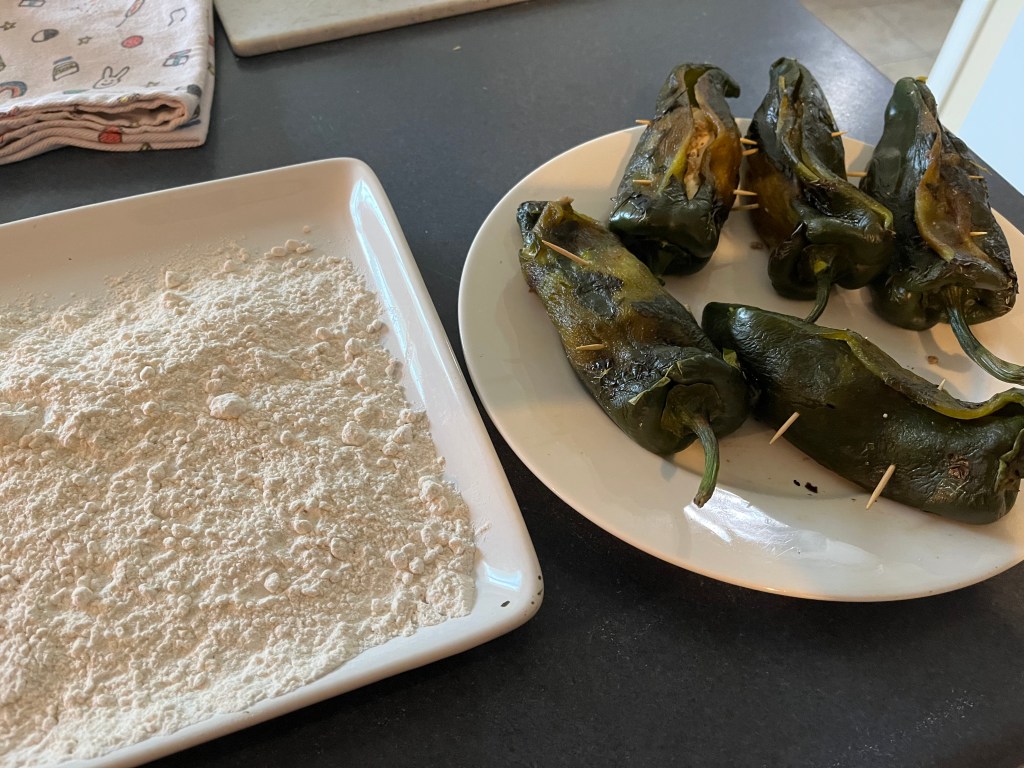
Form a ball of stuffing mixture in your palm and gently insert it into the cavity of the chile. Gently seal the chiles with toothpicks.
Whip egg whites to form stiff peaks and then gently fold the egg yolks into the batter.
Gently dredge the chiles in flour.
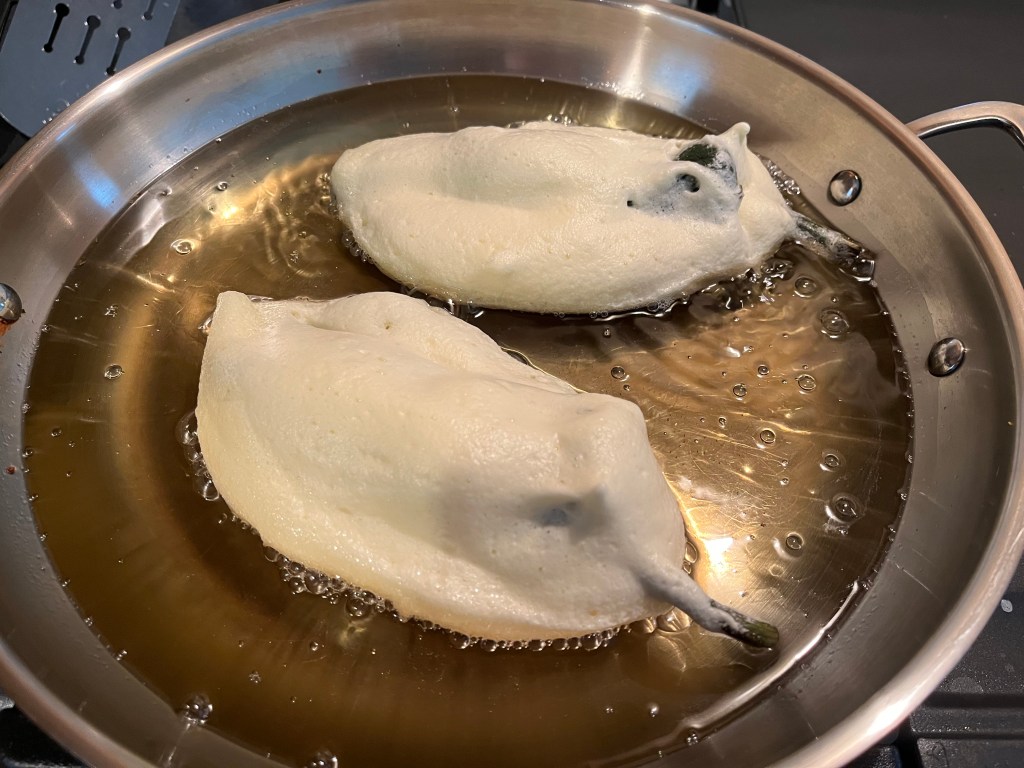
Gently submerge the chiles in batter, to coat the chiles, and gently place them in a pan of hot cooking oil. The cooking oil needs to maintain a temperature of about 350º throughout the cooking process. If your oil is not hot enough, the chile rellenos will be greasy and, if the oil is too hot the batter will brown and burn quickly.
After about one minute, gently turn the chiles over to cook on the other side.
Gently remove the cooked chiles and rest on rack, so that any residual oil can drip off.
The chile rellenos are ready to eat at this point but, you might want to consider adding an additional step.
I prepared a warm tomato sauce that I used to bathe the chiles in, before plating. I also spooned some of the sauce on top.
I am totally sold on the idea of adding tomato sauce! The slightly acidic and sweet sauce brought the chile rellenos to a whole new level!
To make the tomato sauce, I added some fresh Roma tomatoes, a little chopped onion, a few garlic cloves and about 1 cup of water to a blender. After the sauce was pureed, I simmered the sauce in a pan, over medium-high heat to reduce a bit. While the sauce reduced, I added some chicken bouillon, cracked black pepper, onion powder and some fresh, chopped epazote leaves. In case you are unfamiliar with epazote, it’s a Mexican herb that is commonly used when preparing beans, soups, or stews. Don’t worry if you don’t have epazote…it’s not essential, but it’s a nice addition, if you happen to have some on hand.
One chile relleno was enough to satisfy me, but my tastebuds wanted more!
Traditional Chile Colorado is a stew made with beef and red chile sauce. Even the toughest cuts of beef will become tender when cooked slowly in the sauce for a long period of time. I don’t always have the luxury of time when I cook, so I find ways to improvise.
This meal took about an hour and a half to make, which could have been trimmed down to about 45 minutes, if I had used canned enchilada sauce, but I wanted to use my dried Guajillo and New Mexico chile pods for the sauce.
I didn’t record the amounts of the ingredients I used for this dish because I was in a hurry, and I only took photos of the finished product. That said, this is an easy dish to make, and proportions are easy to figure out, on the fly.
I started by seeding the chilies and then steamed them. I added a small amount of beef stock to the chile pulp and simmered over medium heat for a few minutes, to thicken.
I pan fried thinly sliced steak over high heat to medium-rare. After a little chopping, I added the cooked beef to 14” burrito sized tortillas.
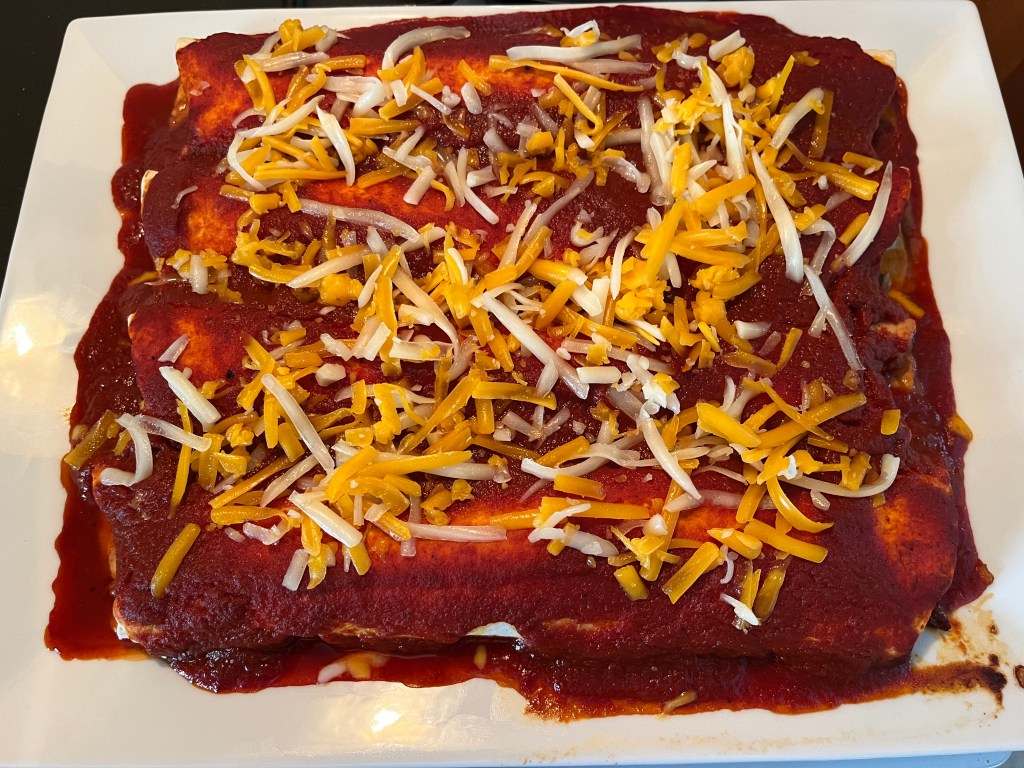
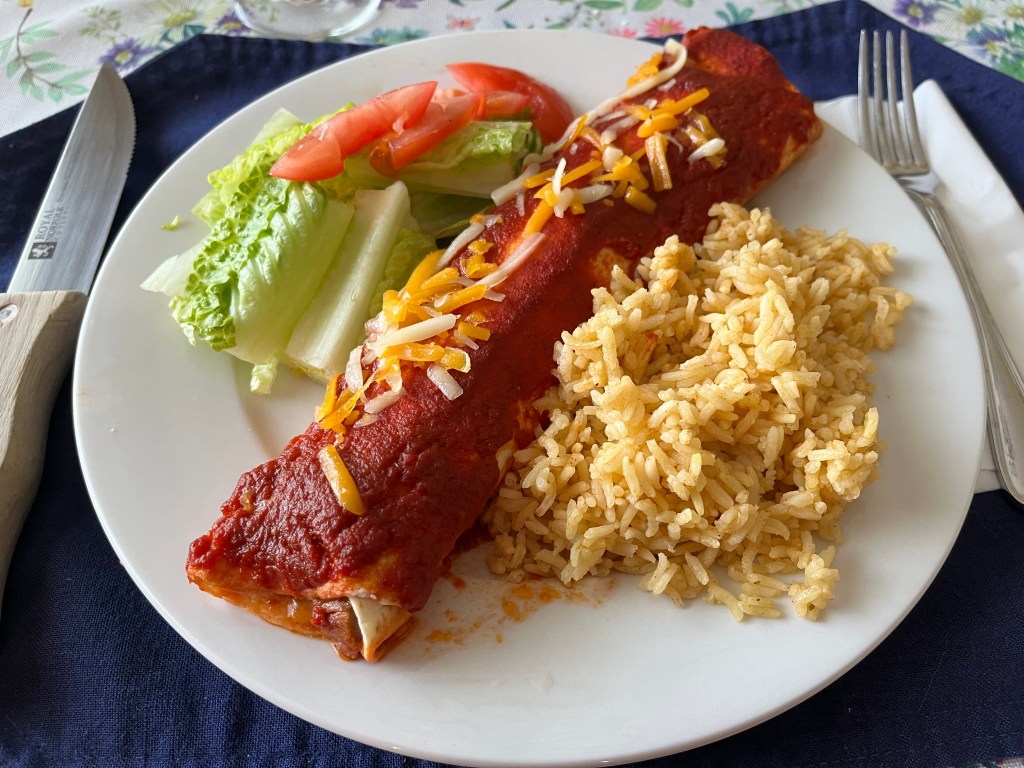
I added the rolled burritos to a large skillet and topped them with the sauce. The burritos baked at 350º for about 15 minutes. I added some shredded cheese to the top, after arranging the cooked burritos on a serving plate.
A little salad and Mexican rice completed the deal.
When did “Taco Tuesday” become a thing? Well, according to sources on the internet, we can thank New Jersey’s Gregory’s Restaurant & Bar, in 1982, Wyoming’s Taco John’s, in 1989, and more recently, LeBron James’ Instagram posts about his weekly dinner habits, and the amazing thing is that all three sought to trademark the term, “Taco Tuesday”.
How silly is that?
Tacos have been known to make an appearance on my dinner table more often than just one day a week. I could make tacos for dinner every day for a month and never have a repeat recipe!
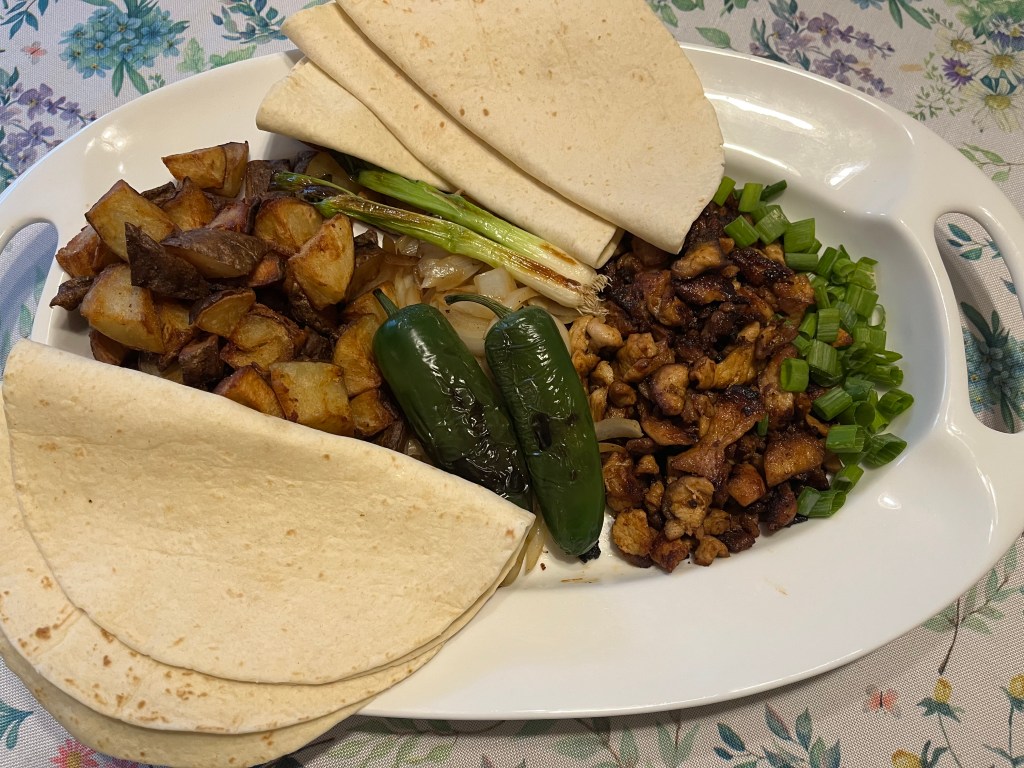
Tonight, it’s quick carnitas. Classic Mexican carnitas recipe requires simmering pork for several hours, until the pork is tender and shreds easily. My method is much quicker and better suited for making dinner in a hurry. I use country-style ribs, which, surprisingly do not contain bones and are not actually meat from the rib. Country-style ribs come from the fatty, muscular portion of the shoulder, which gives them a good amount of marbling, making them well suited to fast or slow cooking.
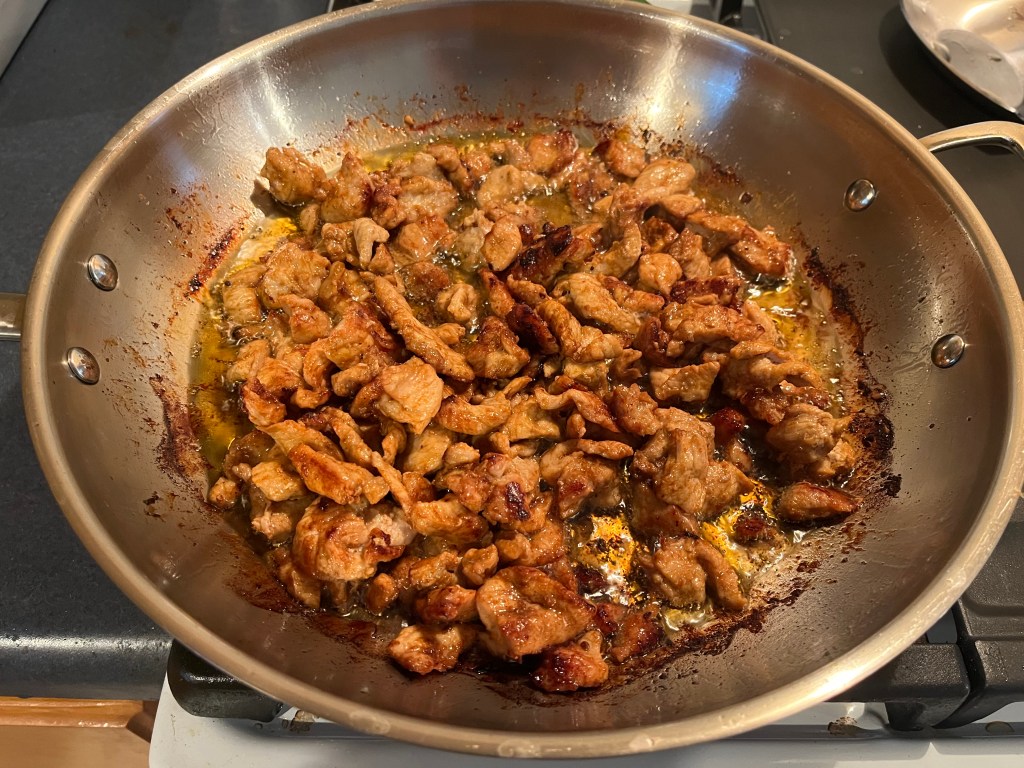
I sear the pork on all sides, in a hot pan, in a little oil. I remove the meat and cut it into tiny pieces and return the pieces to the pan. I add some chopped white onion, cumin, red chili powder, garlic powder, salt, black pepper, and a pinch of oregano and then mix everything together. I cover the pan with a lid and simmer at low heat for about 20 to 30 minutes, stirring occasionally.
As with any dinnertime meal, I like to be efficient while preparing everything, so I start cooking the potatoes in hot oil at the same time I start cooking the pork.
I roast a few jalapeños over the gas burner on the stovetop.
I chop some lettuce, tomatoes, and green onions while the pork and potatoes cook. I arrange the vegetables on a serving tray, along with some cooked corn, sour cream and salsa.
I steam the flour tortillas, just before the pork is ready.
Expect cooking time, including preparation, to be 45 minutes to 1 hour.
Just for fun, anyone who played Advanced Dungeons & Dragons, way back in the 1970’s and 1980’s might appreciate THACO Thursdays. That’s a very obscure reference, so don’t feel bad if you don’t get it.
During a recent conversation with my dad, I mentioned that I was making caldo de pollo. I was surprised when he asked, “What’s caldo?”
My dad speaks some Spanish so, I was a bit surprised when he wasn’t familiar with the word, caldo. I told him that it was like sopa, (which is soup, in Spanish). He knew sopa, but he had not heard of caldo.
That conversation got me thinking. What is the difference between caldo and sopa? So, after some research, I found that sopa translates to soup and caldo means broth. Caldo de pollo is chicken soup but, more importantly, it’s a soup made with a rich, delicious chicken broth.
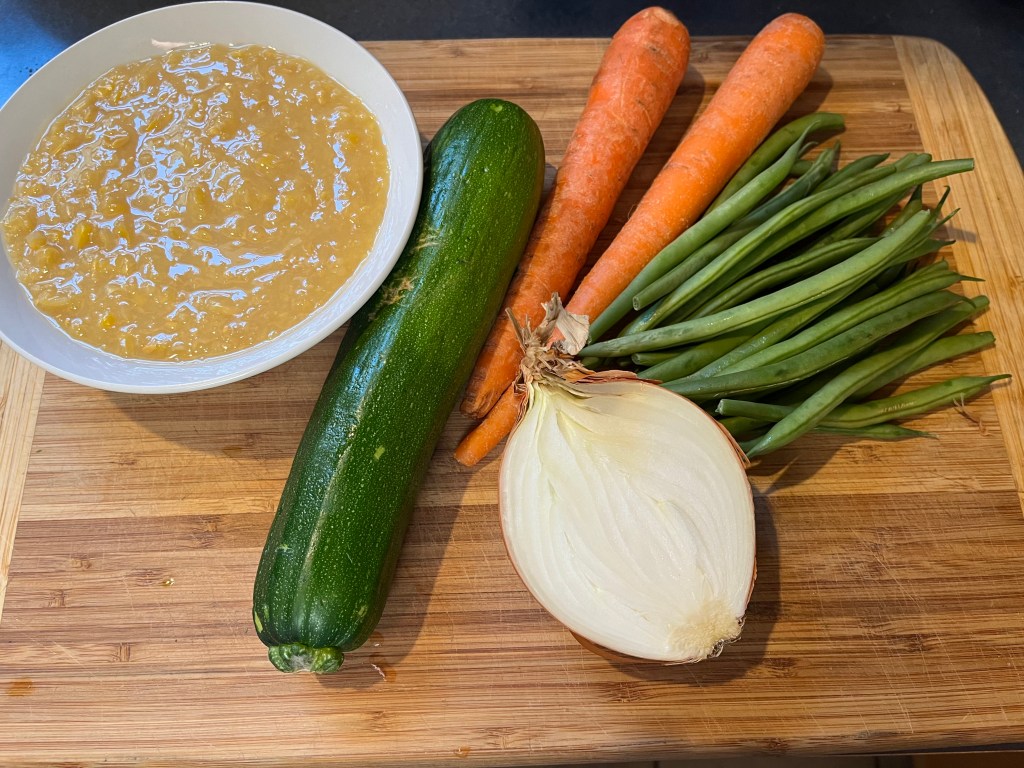
Like many soups and stews, ingredients can easily be substituted. I used ingredients that I had on hand. You can replace any of the vegetables I used with cabbage, potato, celery, or whatever else strikes your fancy. I looked at this caldo as a good way to use some items before they withered away in my refrigerator.
Ingredients:
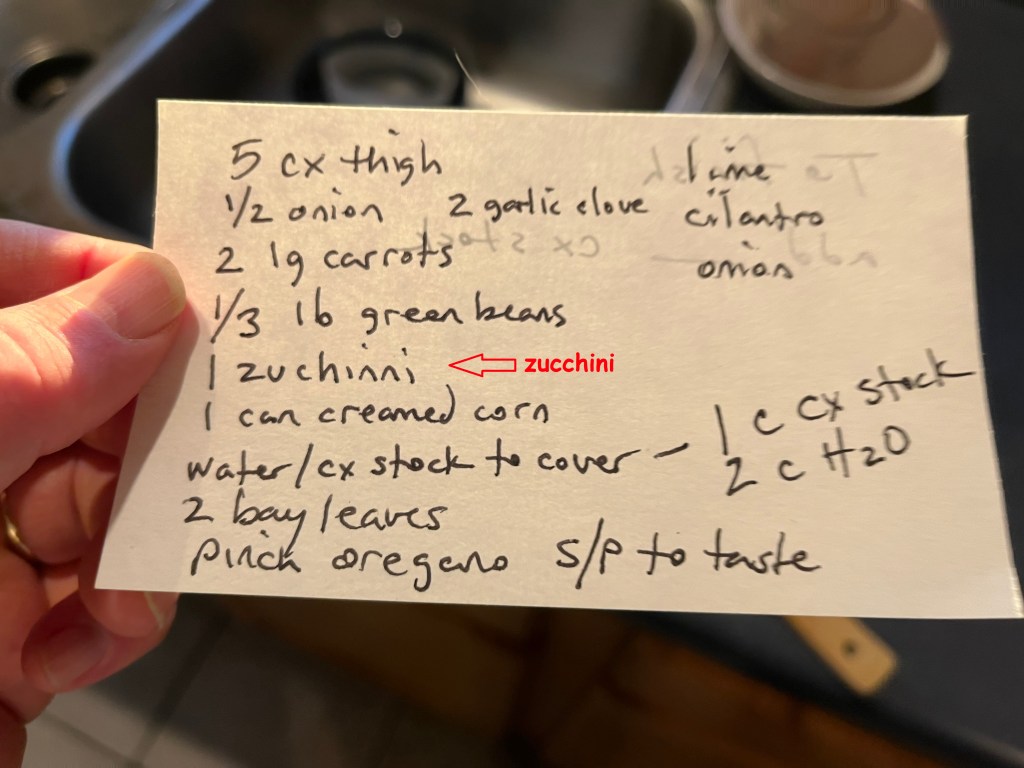
I rarely measure ingredients exactly when I cook because I like to measure by sight, feel and aroma. This makes cooking exciting for me, but that can make describing recipes difficult when it comes time to post on the blog! I sometimes jot down ingredients and proportions on a 3×5 card while I cook…
3×5 cards don’t have spell checkers!
5 skinless chicken thighs (bone in)
1 cup chicken stock
2 cups water
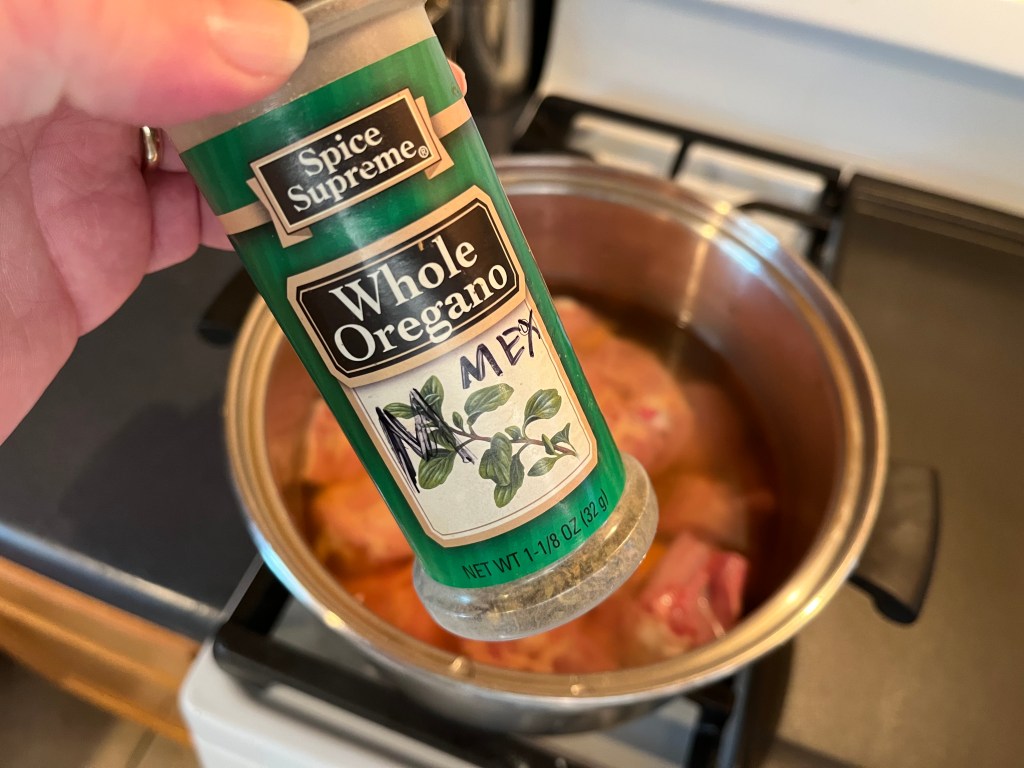
A pinch of Mexican oregano
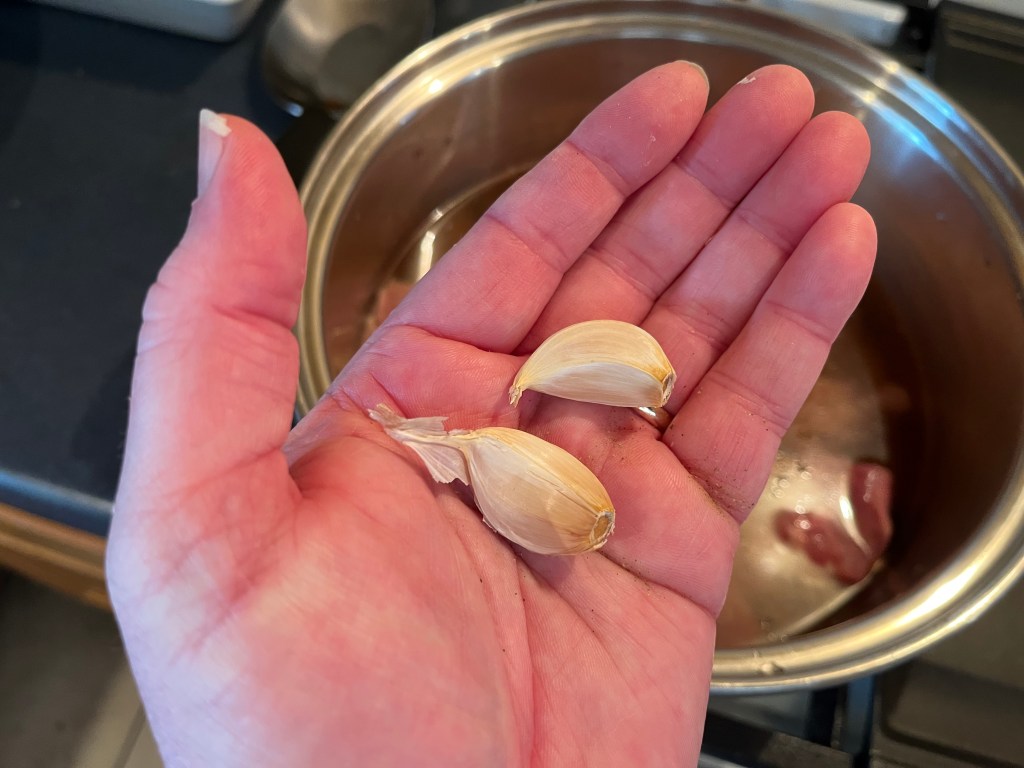
2 garlic cloves, mashed
½ onion, chopped
2 large carrots, chopped
1/3 lb. fresh green beans, chop
15 oz. can creamed corn, strained
1 zucchini (calabacita, if you can get it), peeled and chopped
2 bay leaves
A pinch of Mexican oregano
Salt and pepper to taste
Lime, cilantro, diced jalapeño, and diced onion, for garnish
Directions:
Rinse the chicken thighs under cool running water.
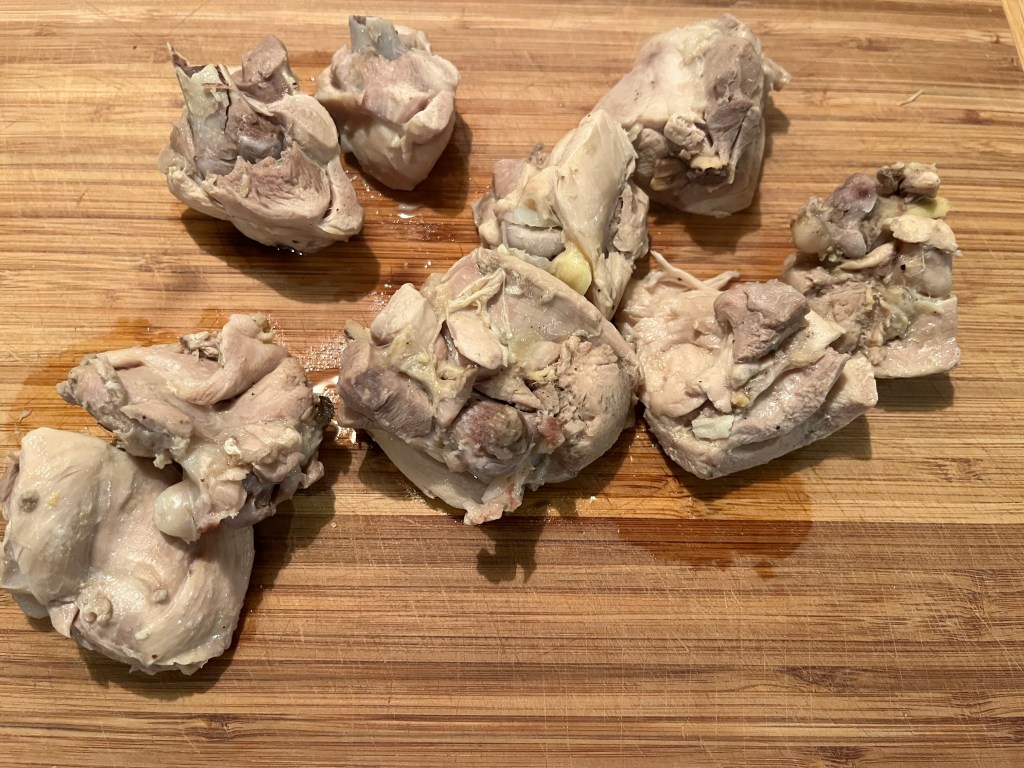
Chop the thighs into large chunks. Chopping through the bones allows the bone marrow to release into the stock as it cooks, which is a great way to add rich flavor to the broth.
Add the cut chicken to a large stock pot. Cover with chicken broth and water. Set the heat to medium/low.
Add oregano and mashed garlic cloves.
Cover and simmer for about one hour.
While the chicken is cooking, prepare the vegetables.
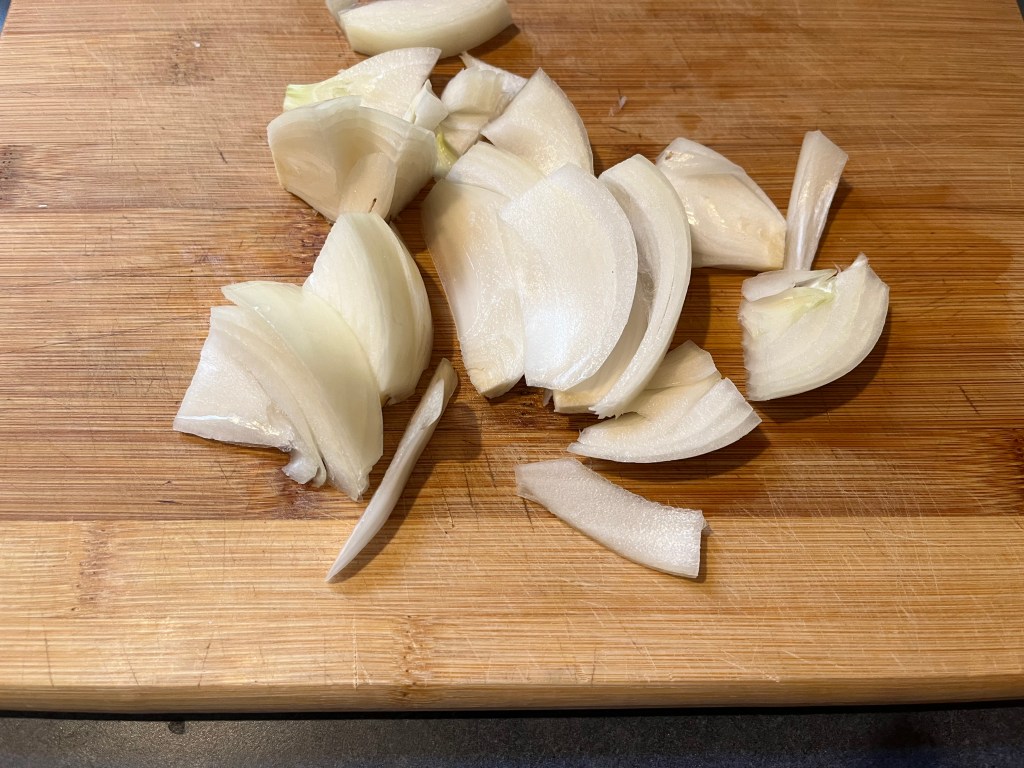
Chop the onion, carrots, and green beans into large pieces. Set aside.
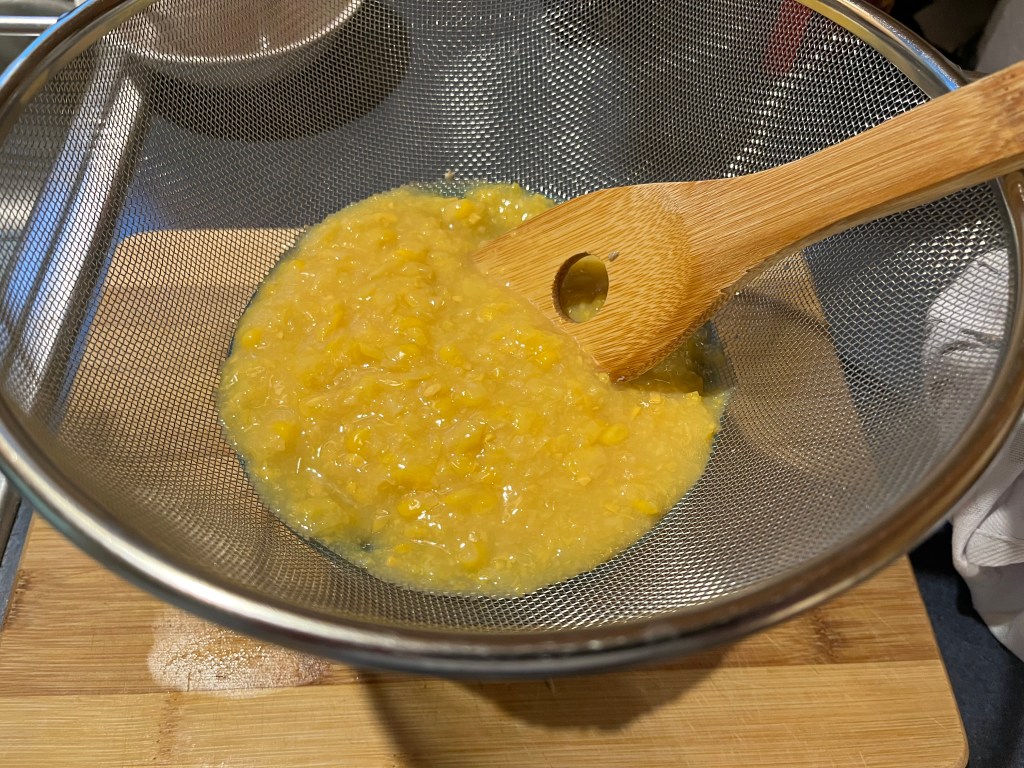
Strain the creamed corn. Save the solid pieces of corn and discard the liquid, (or drink it, like I did!)
Remove the cooked chicken to a cutting board and allow to cool for a few minutes.
Separate the bones from the meat with a knife and fork. Discard the bones.
Return the chicken to the pot. Cover and simmer at low heat for another hour.
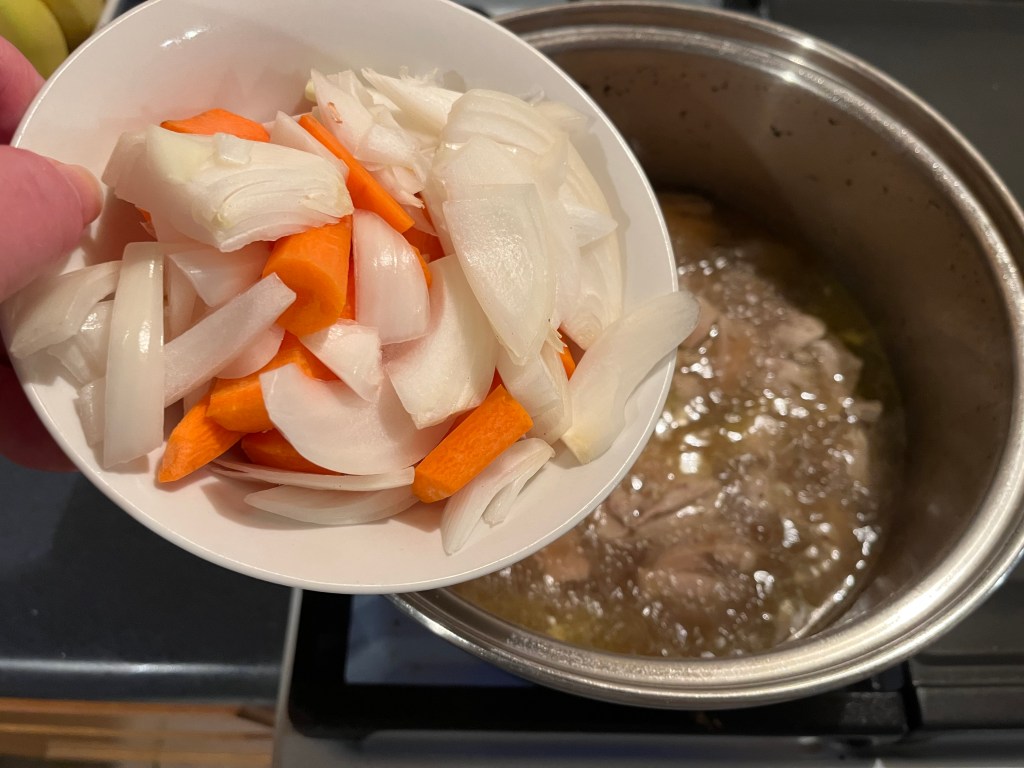
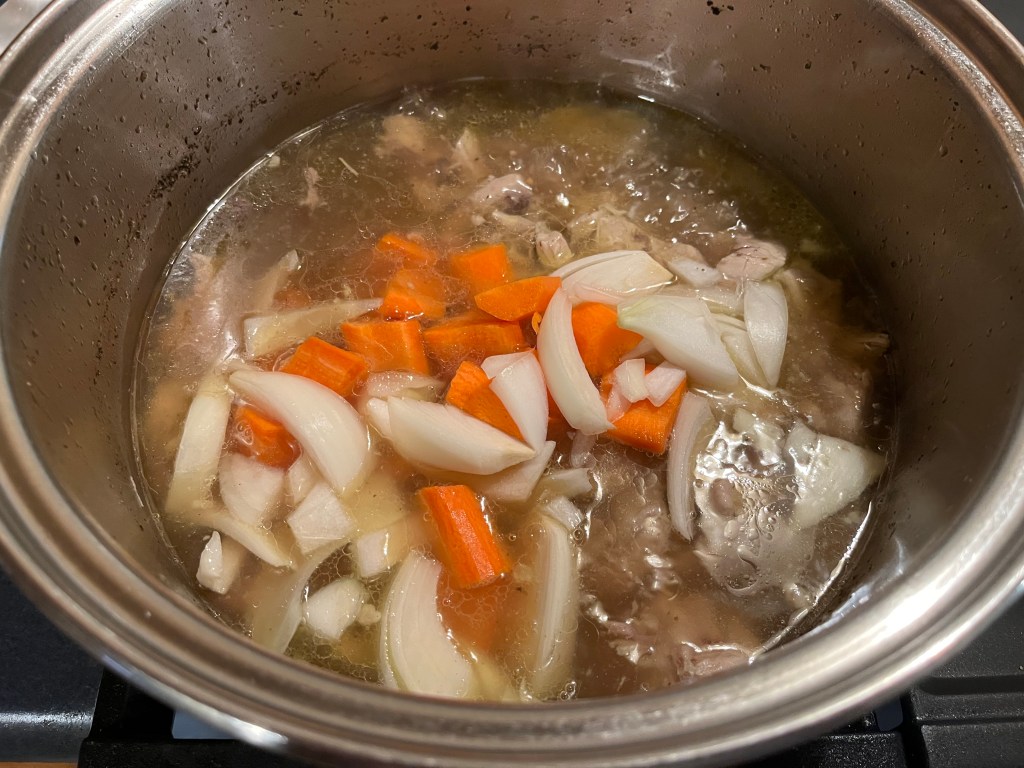
Add the onion and carrot. Cover and simmer for 10 minutes.
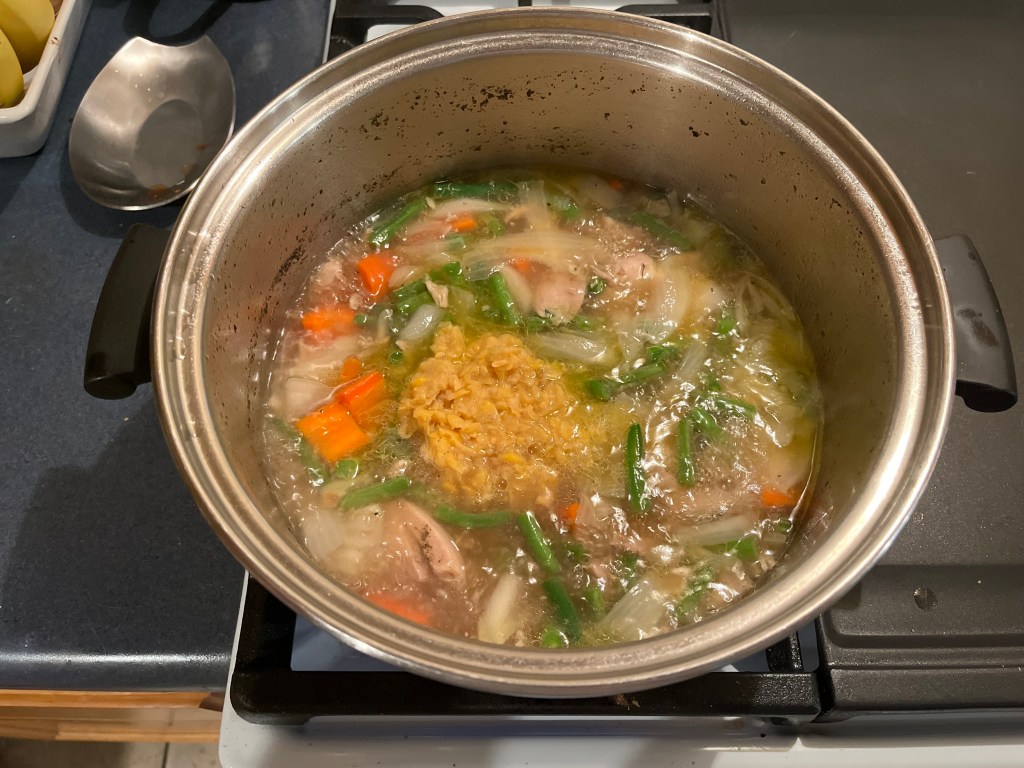
Add the green beans. Cover and simmer for another 10 minutes.
Add the creamed corn. Mix gently to combine.
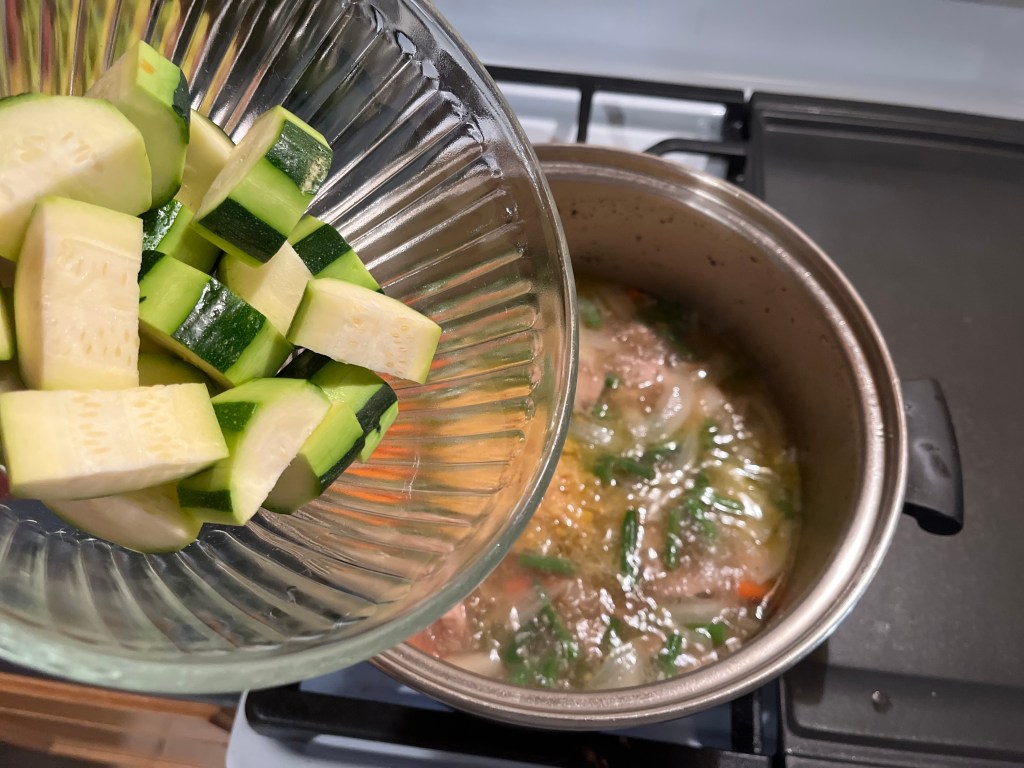
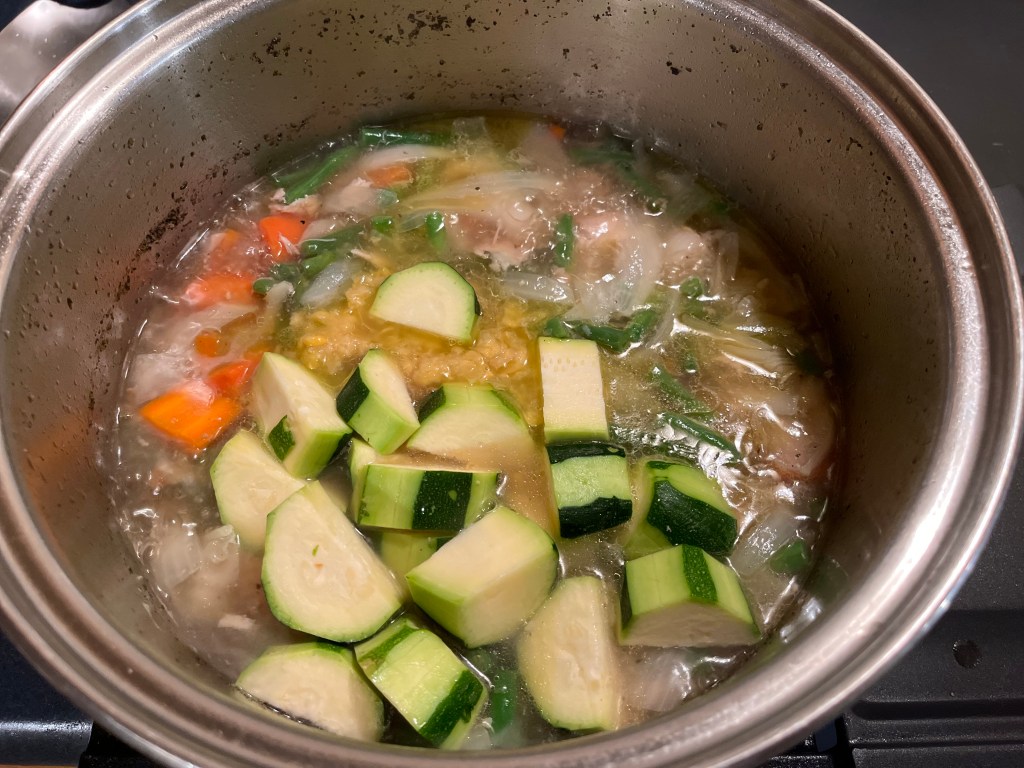
Add the chopped zucchini. Cover the pot and turn the heat off. Wait 20 minutes while the zucchini steams and softens.
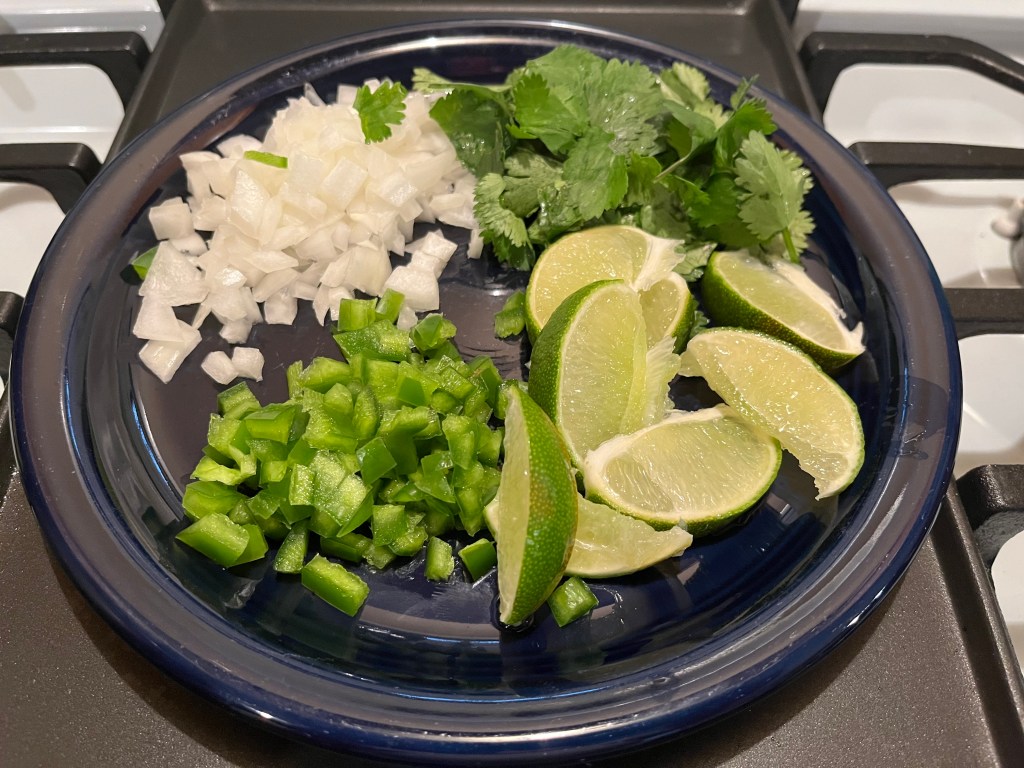
Serve cut limes, cilantro, diced jalapeño, and diced onion on the side so that guests can add the items to suit their individual taste.
It occurred to me that I’ve shared recipes that use cast iron skillets and Dutch ovens but, most of those recipes showed how cast iron cookware can be used in the comfortable confines of the kitchen. The real beauty of cast iron cookware is what it can do outdoors!
There’s nothing like the unbridled, primal thrill that comes from cooking outdoors…just ask any backyard barbecue chef or weekend pit master.
My first outdoor cooking experience came when I was a Boy Scout. If there was such a thing as an underachiever merit badge, I would have earned it. Despite my short-lived, lackluster scouting career, I did learn a lot about nature, and I enjoyed camping and hiking with my friends. The extent of my cooking was usually limited to charred hot dogs, roasted on a skewer, or pouring a can of SpaghettiOs into my mess kit and warming it over the campfire, but I swear those were the best hot dogs and SpaghettiOs ever! Everything just tastes better when it’s cooked outdoors, over a lively campfire.
When I became a father, I rekindled my love of outdoor cooking when I became a father of Scouts. Both of my kids joined Scouting programs and, I am pleased to say they achieved ranks, knowledge, and experiences that far surpassed my pitiful attempt, so many years ago. I had the pleasure of cooking lots of meals and teaching kids how to cook outdoors. I took a deep dive into Dutch oven cooking.
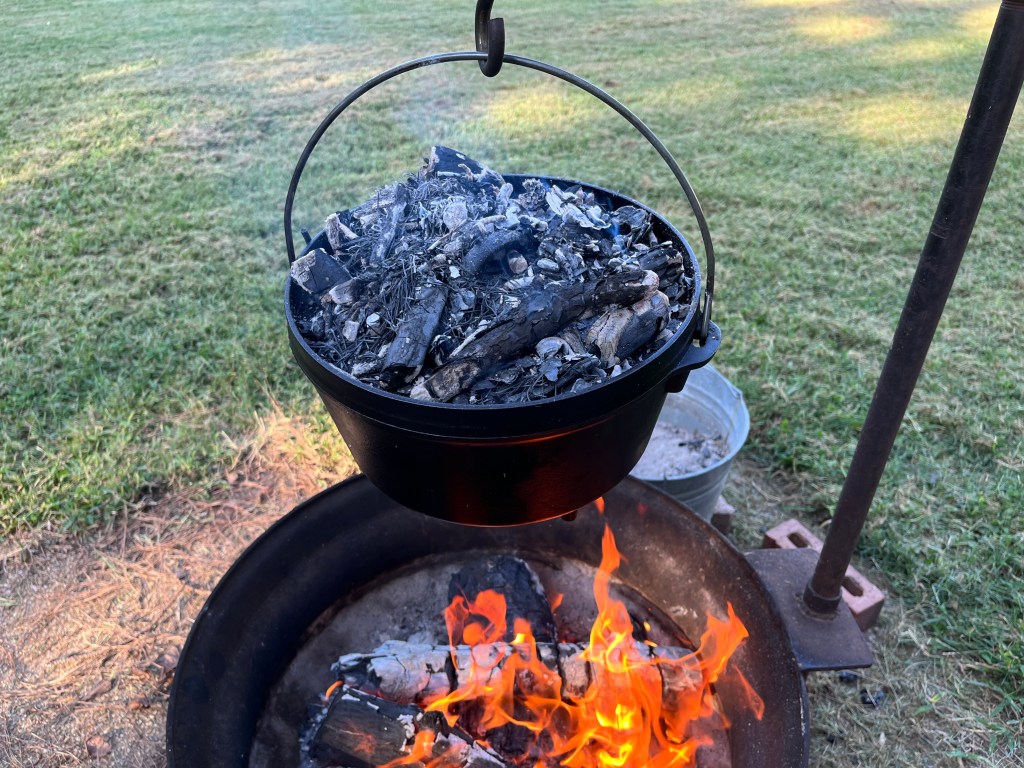
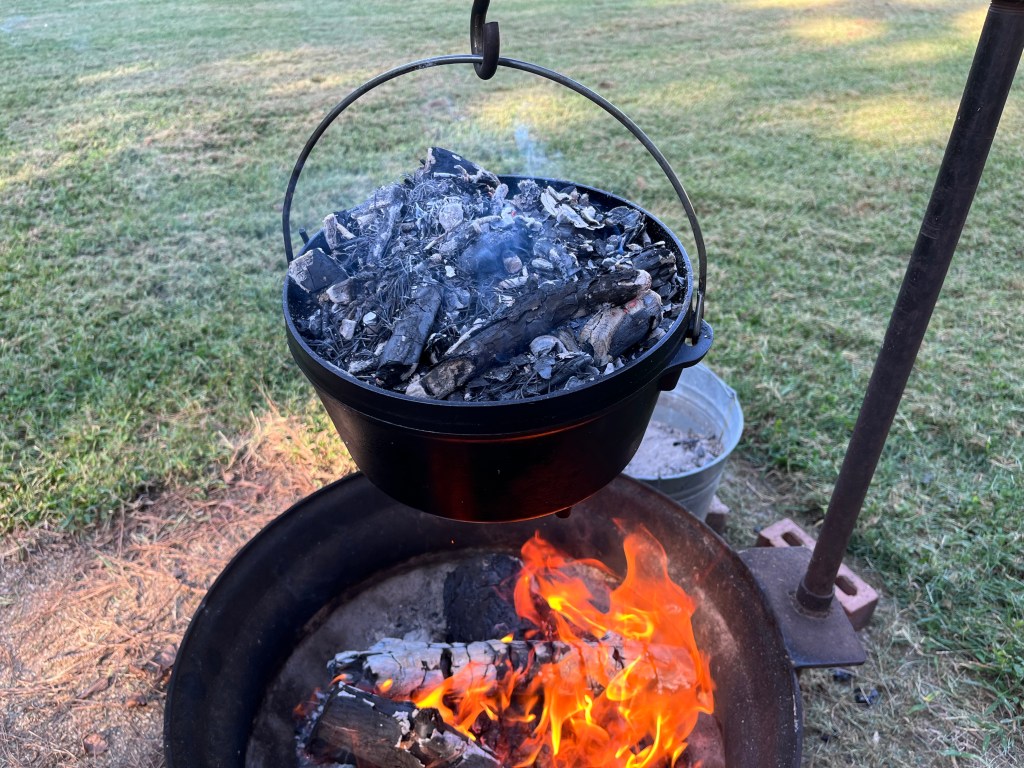
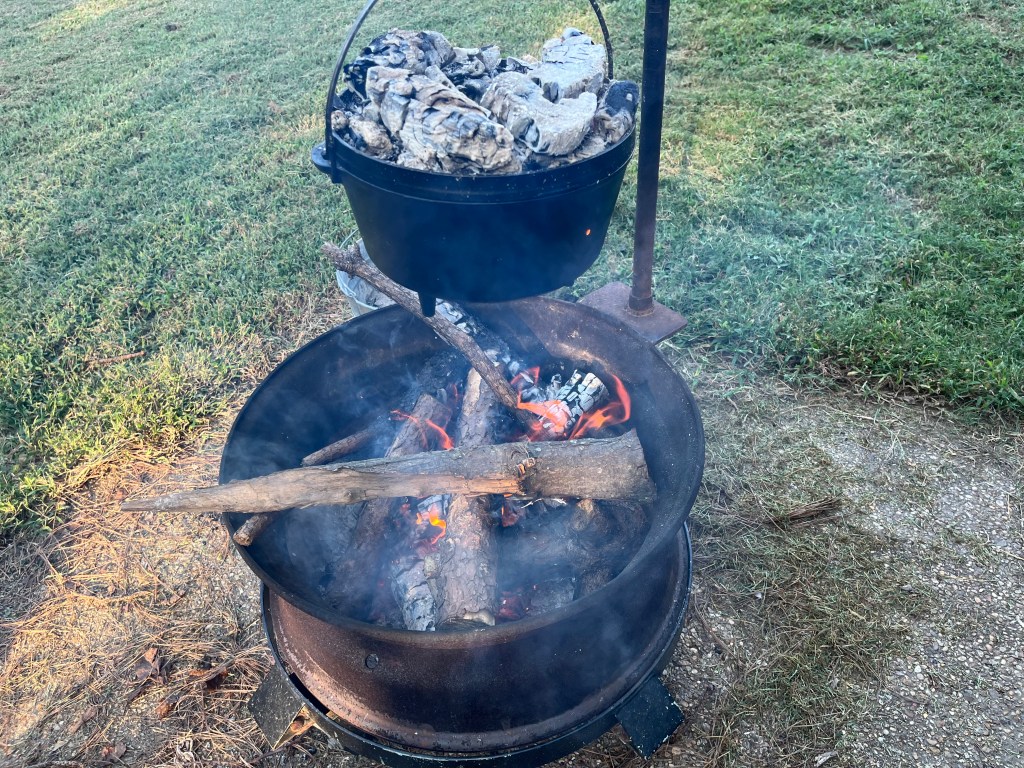
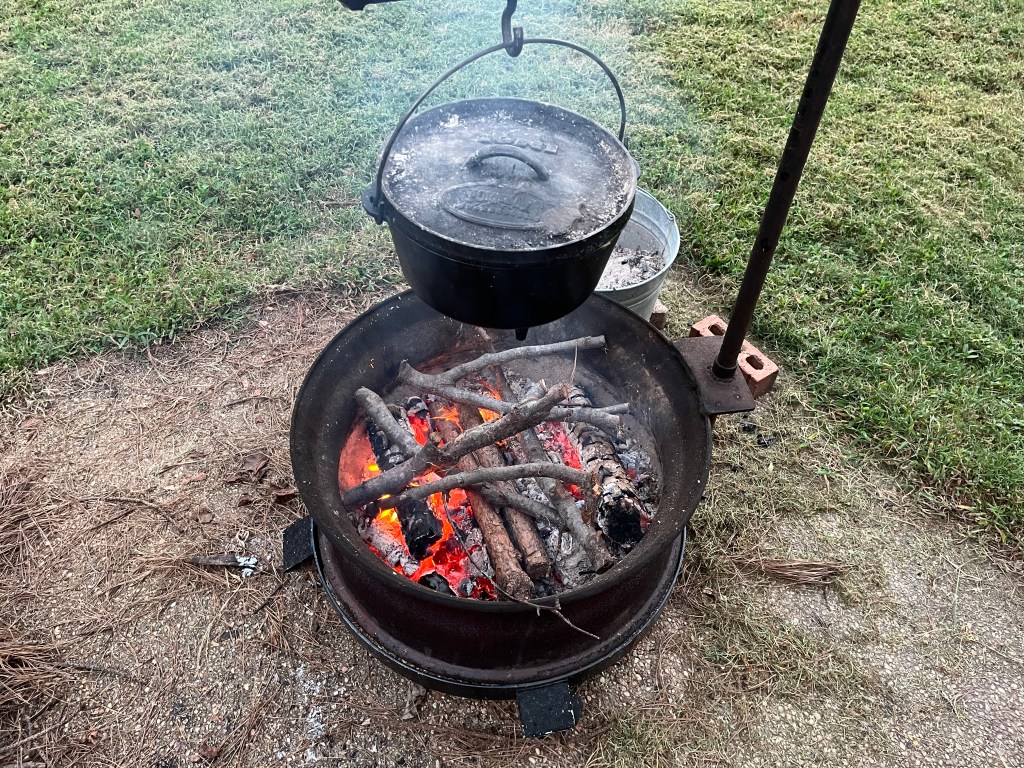
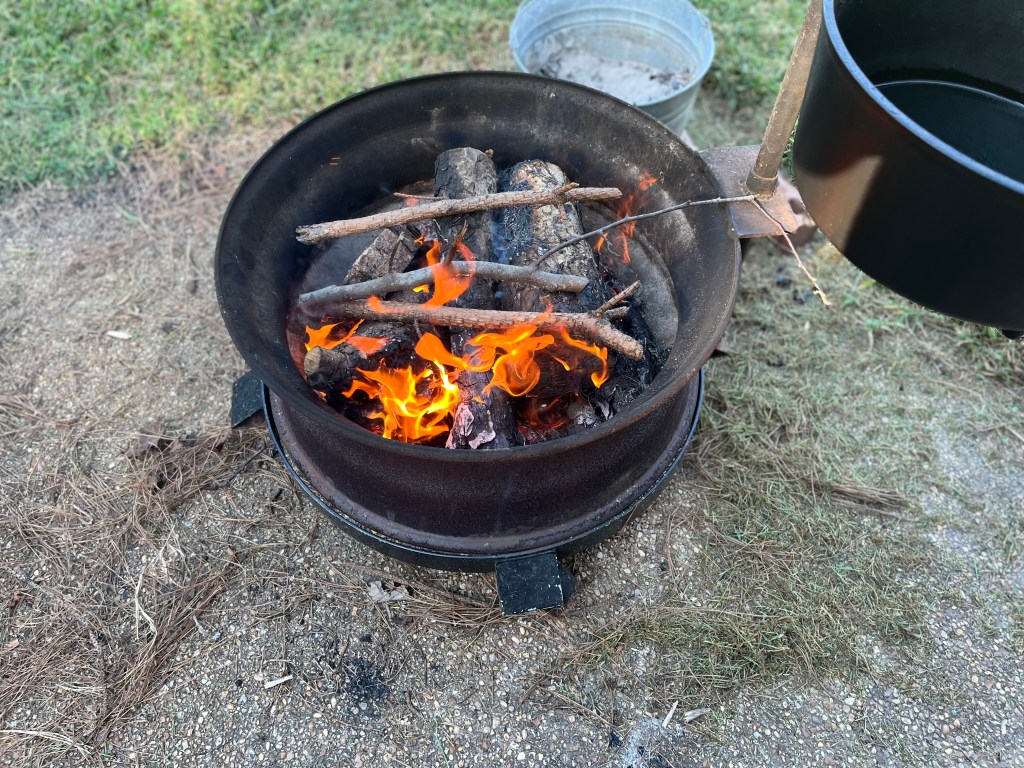
One of the “Scout dads” made a fire pit from a large, steel wheel rim. He added casters, so that it could be moved about easily, and he welded a pole to the base with a sturdy arm that could be used to suspend a Dutch oven. It’s very heavy and not something I would want to take on campouts, so I keep it on my back porch. I know that most people don’t have a cool handmade fire pit like this, but a simple campfire tripod can be purchased for a modest price, and it can achieve the same results.
Backyard Enchiladas
I made a few substitutions to the ingredients, based on what I had on hand. Feel free to use whatever ingredients you like! I used a 5-quart cast iron Dutch oven for this recipe. It’s a beast of a Dutch oven at 14” wide and 9” deep and it is perfect for making a big batch of stew, or a big batch of enchiladas! You will need some additional tools such as, fire resistant gloves, long metal tongs, a Dutch oven lid lifter, and a Dutch oven lid stand. You can find these items at an outdoor supply store, or shop online.
Total prep time (for me) was about 1 1/2 hours. Total cooking time for the enchiladas was about 1 hour.
Ingredients:
7 bone-in, skinless chicken thighs (about 2 ½ pounds)
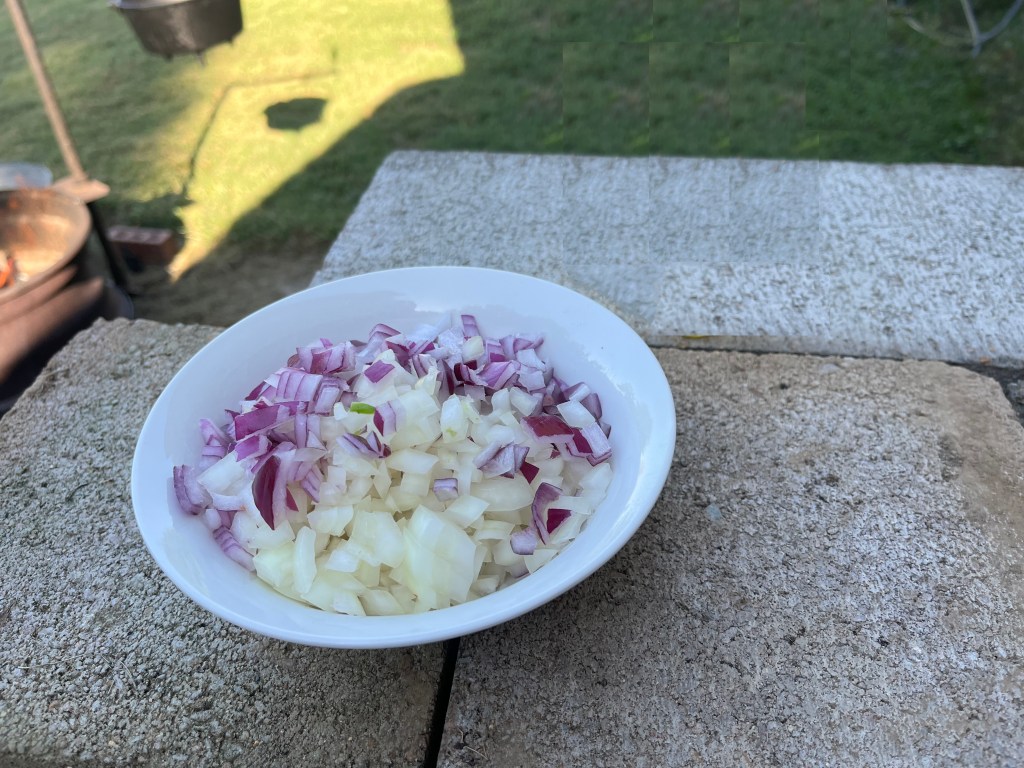
One large onion, diced (I used half of a red onion and half of a white onion)
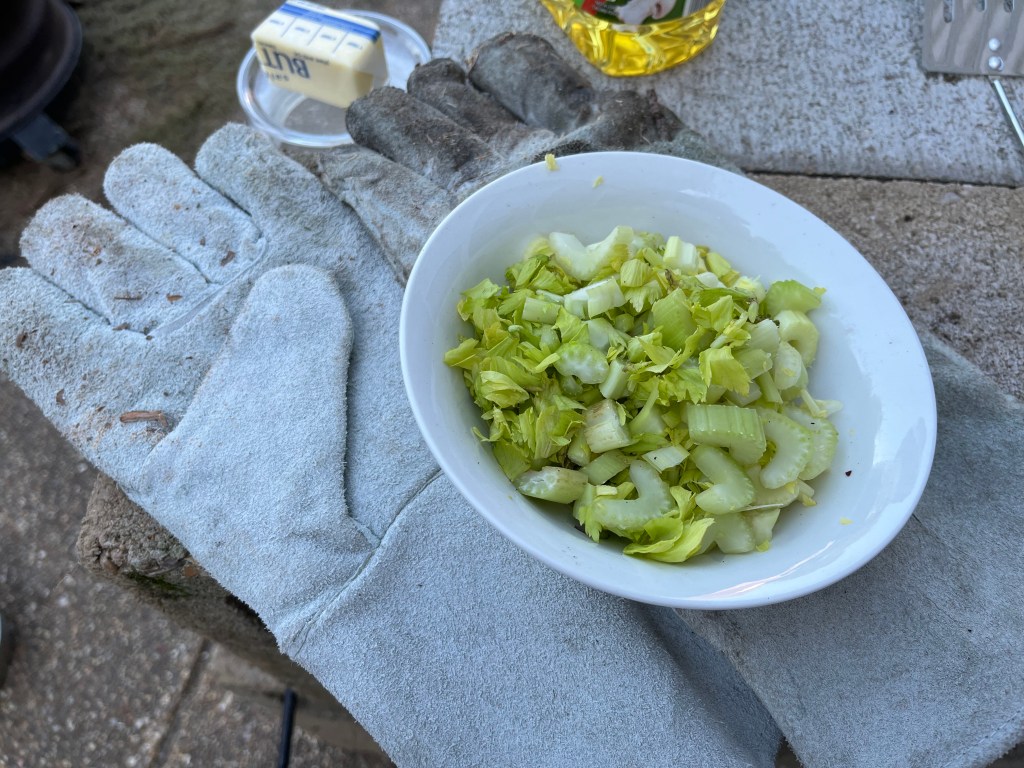
3 celery stalks (chopped)
4 tablespoons butter
6 tablespoons flour
32 ounces chicken broth
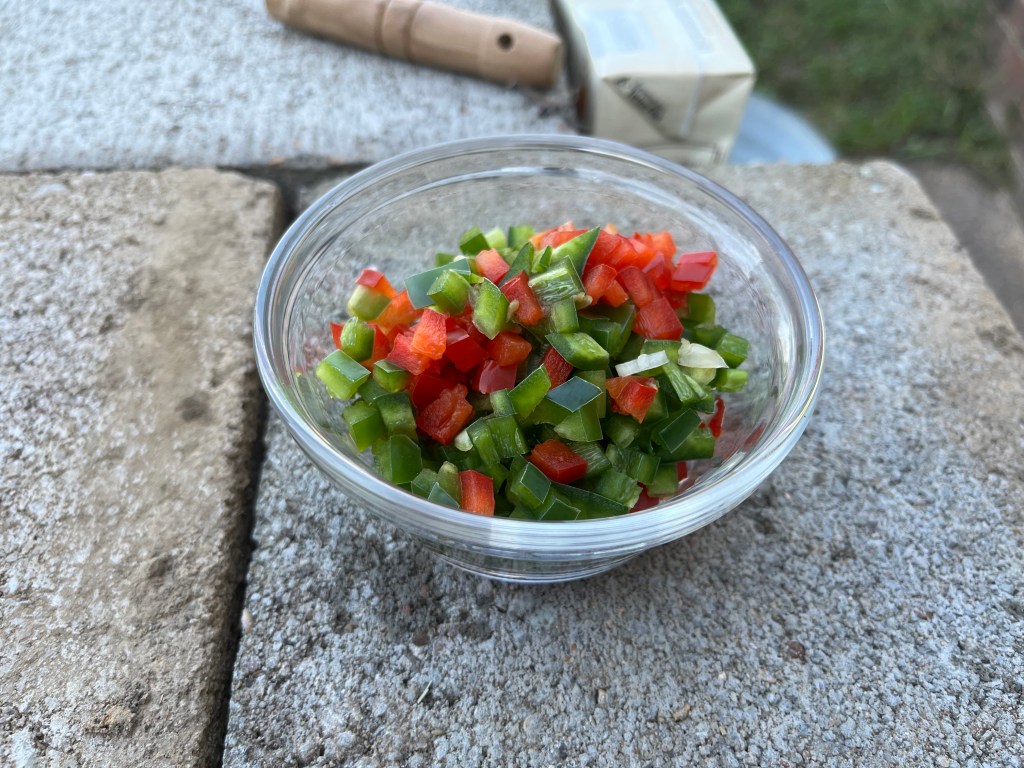
1 large jalapeño (seeded and diced)
¼ of a large red bell pepper (seeded and diced)
2 cups prepared green sauce (roasted, blended tomatillos and serrano chiles)
20 corn tortillas, pan fried in hot oil until they just become stiff, but pliable.
8 ounces Monterrey Jack cheese, shredded (I used Havarti cheese)
16 ounces cotija cheese (Mexican crumbing cheese)
½ cup fresh cilantro
Directions:
If there was ever a time to be fully prepared, cooking outdoors is it. Whether you plan on cooking in your backyard, as I have done, or cooking outdoors, far away from home, preparation is the key to success! If you plan on doing something like this on a camping trip, I suggest that you do all of the measuring, dicing, and chopping at home, in advance of your trip. Pack items that need to stay cool in a portable cooler and pack non-perishable items in a large tote bag or basket. I have found that things I can do quickly in my kitchen take much more time when I attempt to do them outdoors! I don’t like searching for utensils or cookware when I’m outdoors and I really don’t like trying to chop and dice vegetables on a wobbly surface, while I’m crouched in an awkward position. The idea is to make outdoor cooking fun, not to prove you can prepare the whole thing “from scratch”.
With that said, I will illustrate the various stages of preparation, but these steps do not have to be done in this order.
Prepare the Vegetables
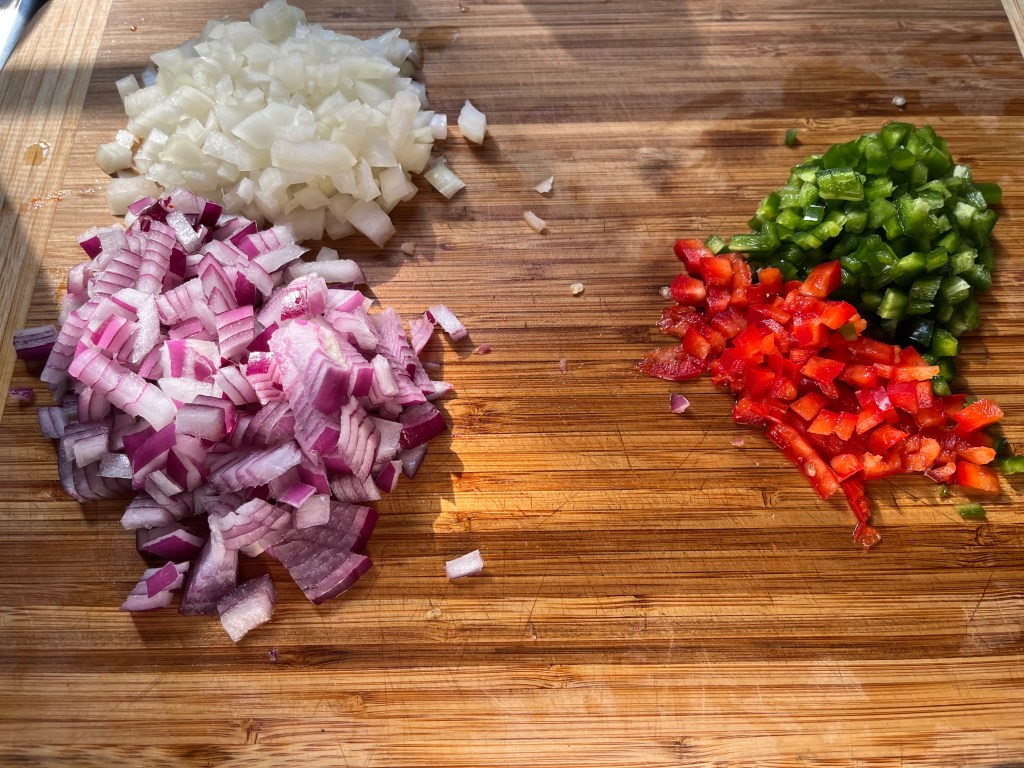
Dice the onions and set aside.
Dice the jalapeño and red bell pepper and set aside.
Chop the celery (leaves and stalks) and set aside.
The Fire (and coals)
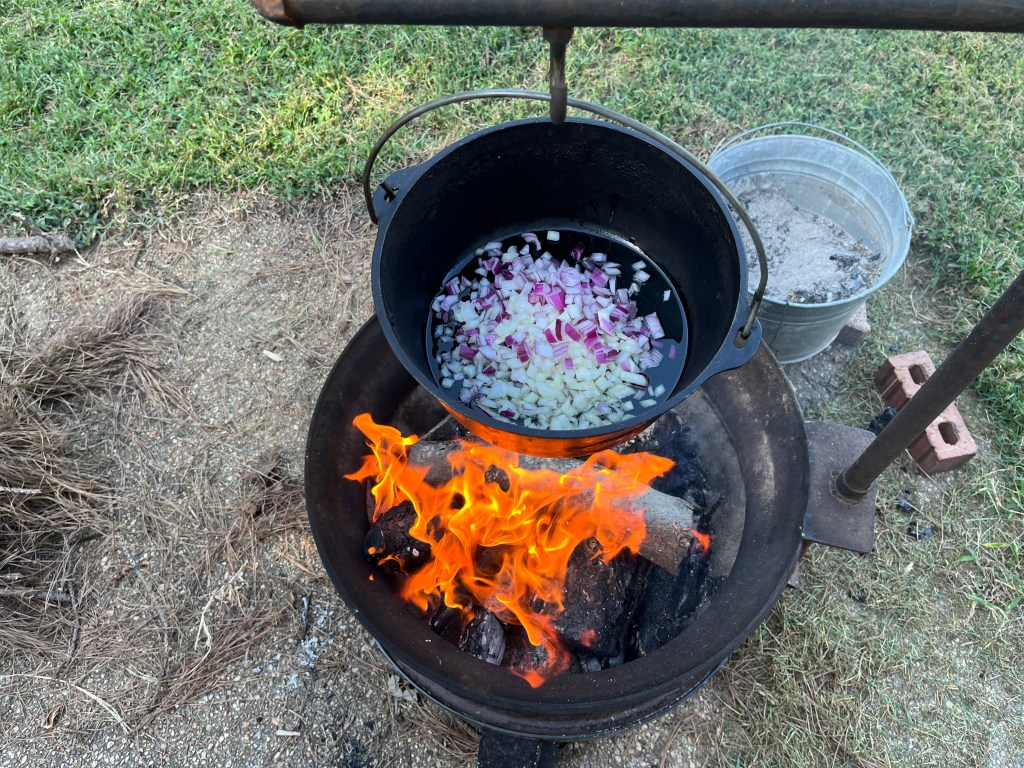
Start a fire and add logs to it to make a mound of hot coals. Keep adding more wood to maintain hot coals. I started the fire about an hour and a half before I cooked over it and I kept adding more wood during the cooking process.
Prepare the Tortillas
Add some cooking oil to a small pan and fry the corn tortillas to the point where they begin to stiffen but are still pliable. I did this on my stovetop, indoors, for convenience but, this could be outdoors over the coals, if you feel brave and adventurous. Set the tortillas aside.
Cooking the Enchiladas
Now that all of the prep work is done and the coals are raging hot, it’s time to cook!
Add just enough oil to cover the bottom of the Dutch oven. Add the diced onions and simmer over high heat for a minute or two.
Normally, I would trim the fat from the chicken thighs before cooking but, I wanted to render some of the fat to add flavor to enchilada sauce, and I wanted to avoid burning the chicken!
Pack the bone-in chicken thighs into the Dutch oven. (I put four pieces on bottom and three on top).
Cover the Dutch oven and pile plenty of hot coals on top of lid.
I piled on as many hot coals on top that I could. I wanted a lot of heat coming from top and bottom.
Cooking time will depend on how hot the coals are and how close the Dutch oven is to the heat source. Rotate the lid a quarter turn every ten minutes to ensure that the heat is evenly distributed. Luckily, when I checked the chicken after twenty minutes it was sufficiently browned and cooked. If you’re using a thermometer, the internal temperature of the chicken should be at least 165º F.
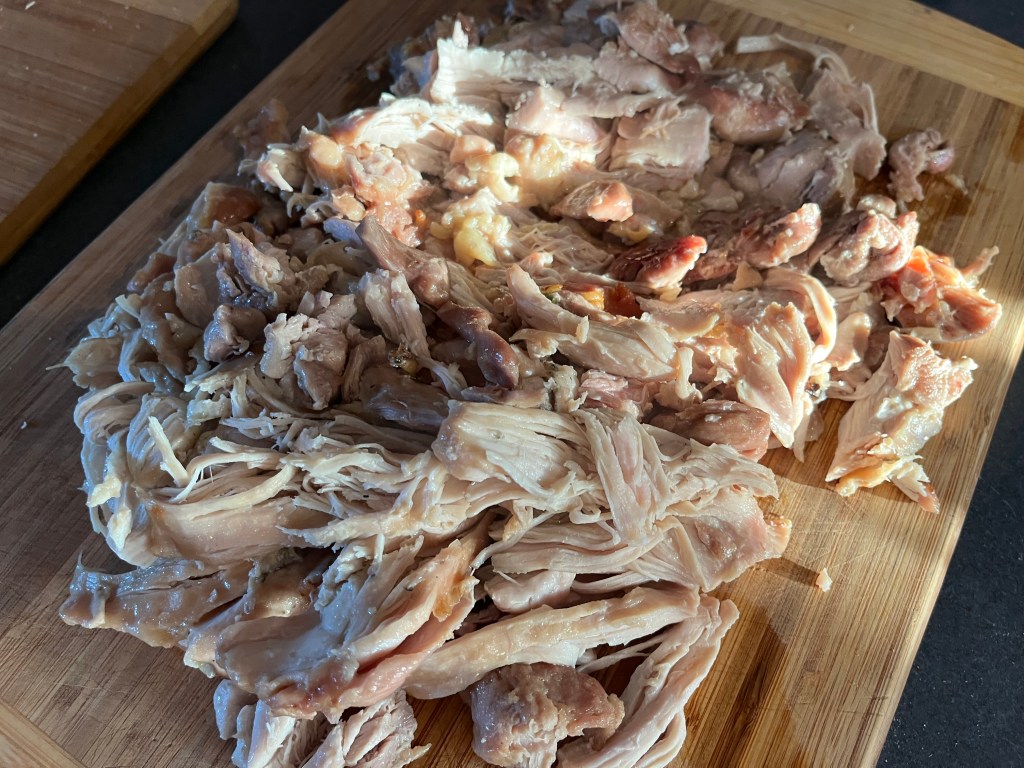
Remove the Dutch oven from the fire and remove the cooked chicken. Allow the chicken to rest and cool for a few minutes. I took the chicken inside and set it on a cutting board. Pull the chicken from the bones. Discard bones and any tough pieces of cartilage. If the chicken does not easily pull away from the bone, it hasn’t cooked long enough. Throw it all back into the Dutch oven and finish cooking.
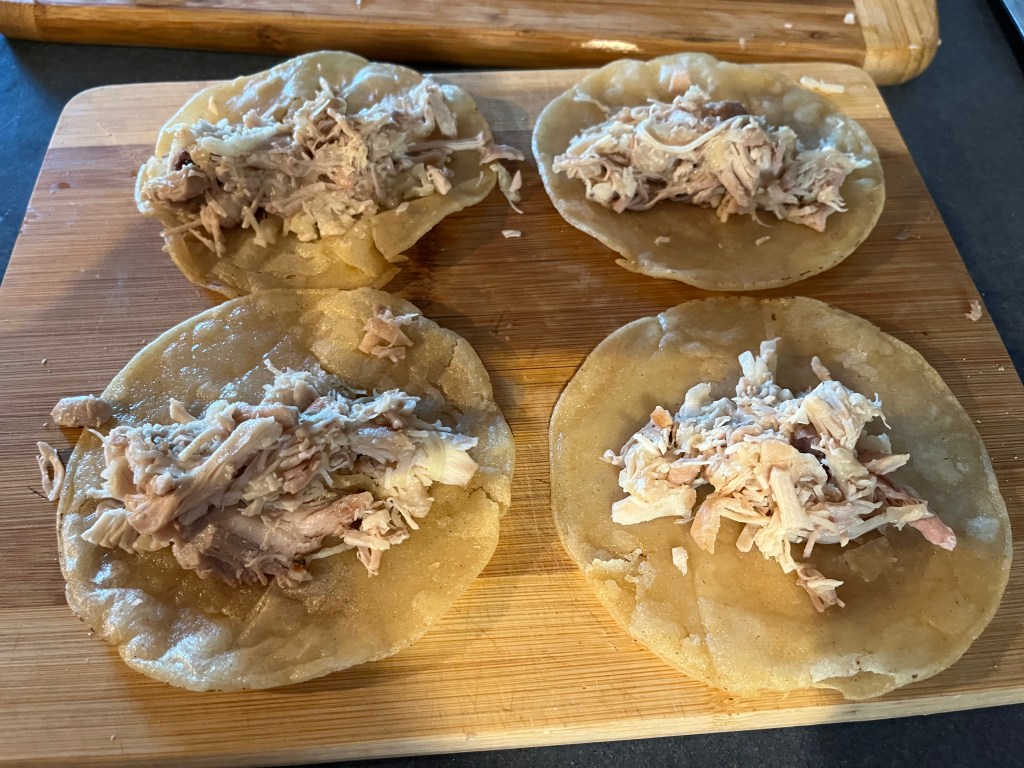
Shred the chicken with a knife and fork.
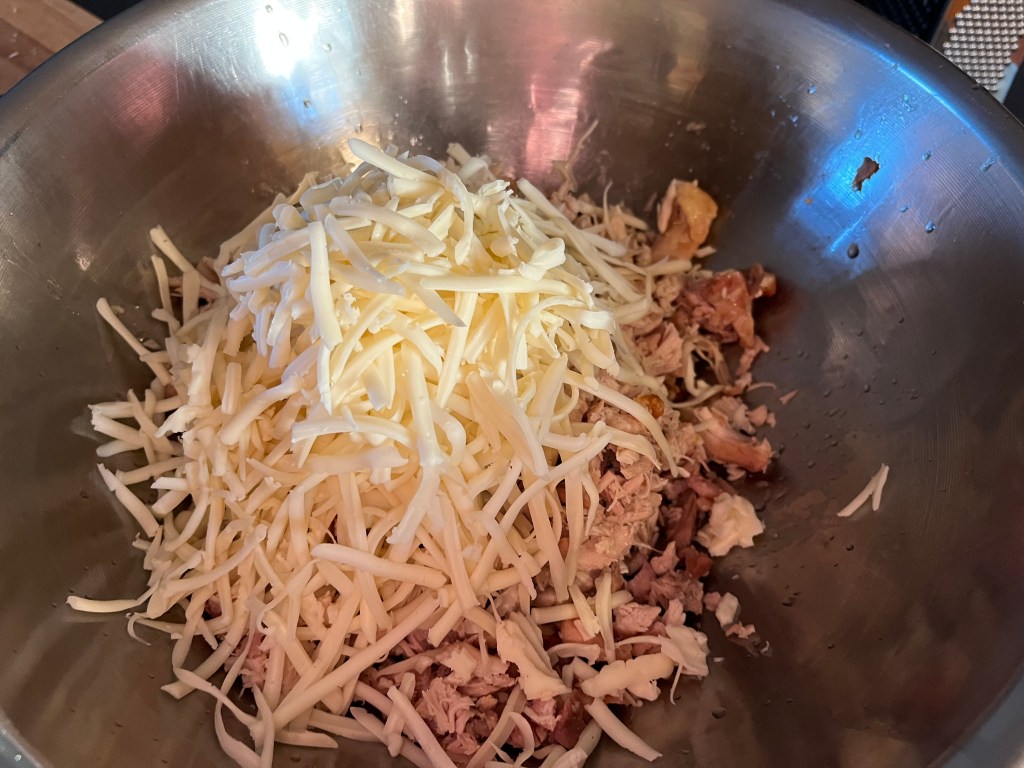
Shred the Monterrey Jack cheese ( I substituted with Havarti) and add the cheese to the shredded chicken. Mix well.
Assemble the enchiladas by placing the chicken and cheese mixture into prepared tortillas and wrapping them. Set the rolled enchiladas aside.
Place the Dutch oven back over the hot coals. Add the chopped celery and simmer, while stirring occasionally, for about 5 minutes.
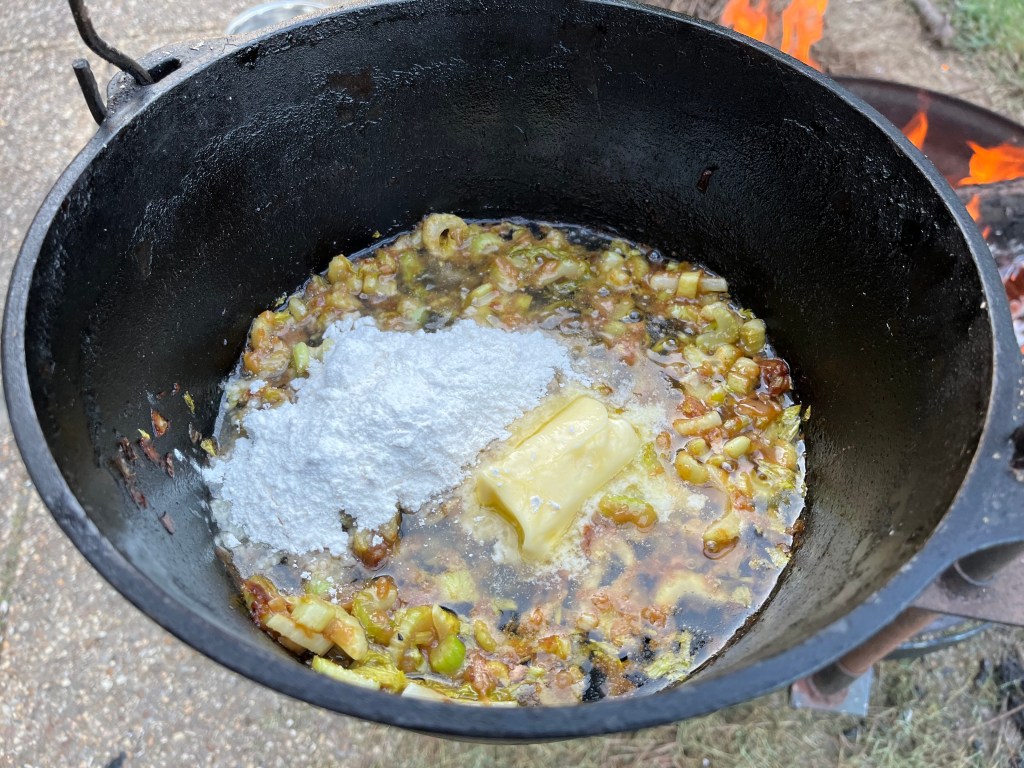
Add butter and flour. Whisk for a few minutes until the mixture makes a smooth roux.
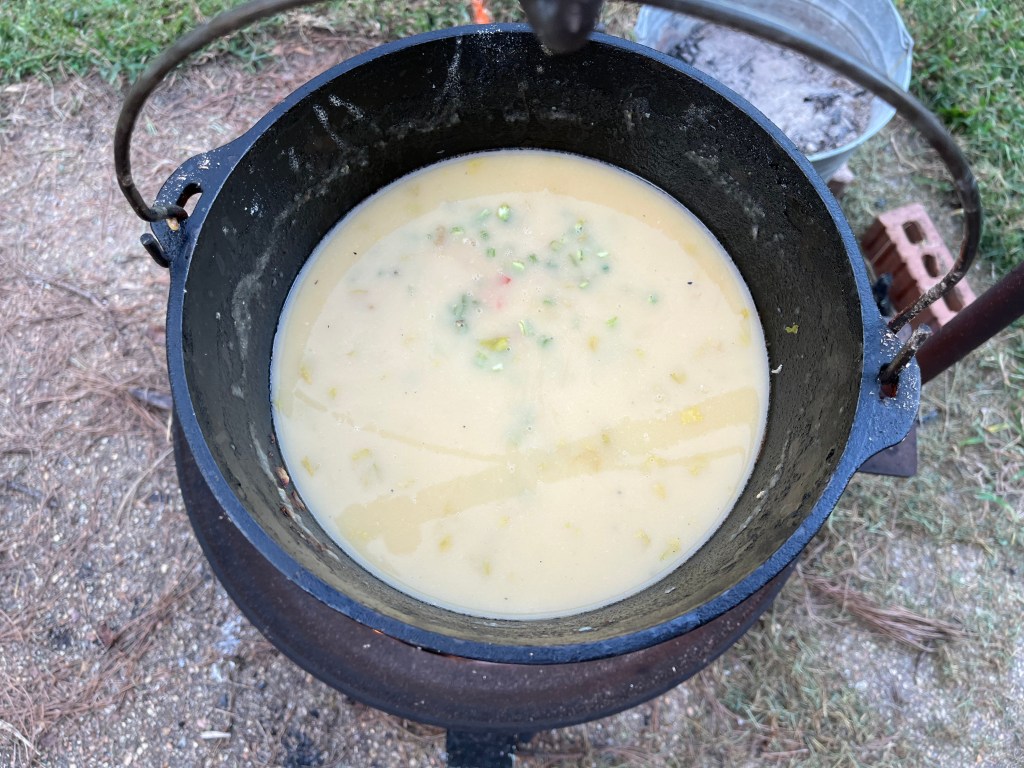
Add the chicken broth and continue whisking for a few minutes, until the sauce thickens.
Add the chopped jalapeño and red bell pepper. Mix briefly.
Add the prepared green chile sauce and mix to incorporate. (Note: I used a homemade green chile sauce but, a good store-bought salsa verde will also work. Serrano chiles bring a significant amount of heat to the sauce I made. I used 1 serrano to every 6 or 7 tomatillos. It made a very spicy sauce but, when I added it to the enchilada sauce, it mellowed and gave the sauce a nice “green” flavor to the sauce. That’s what I look for in chicken enchiladas…a nice, spicy “green” flavor).
Here comes the tricky part! After the sauce was ready, I carefully poured half of it into a very large bowl. I knew that the enchiladas were going be stacked on top of each other, and I wanted to make sure that they were surrounded by the sauce. It might not have been necessary, but I wanted to achieve homogeneity. (Hey, my spell checker is telling me homogeneity is really a word!) Pouring a sauce from a very hot and very large Dutch oven is not easy! It requires a good deal of strength and skill. If you’re not up to the challenge, just use a ladle to remove half of the sauce.
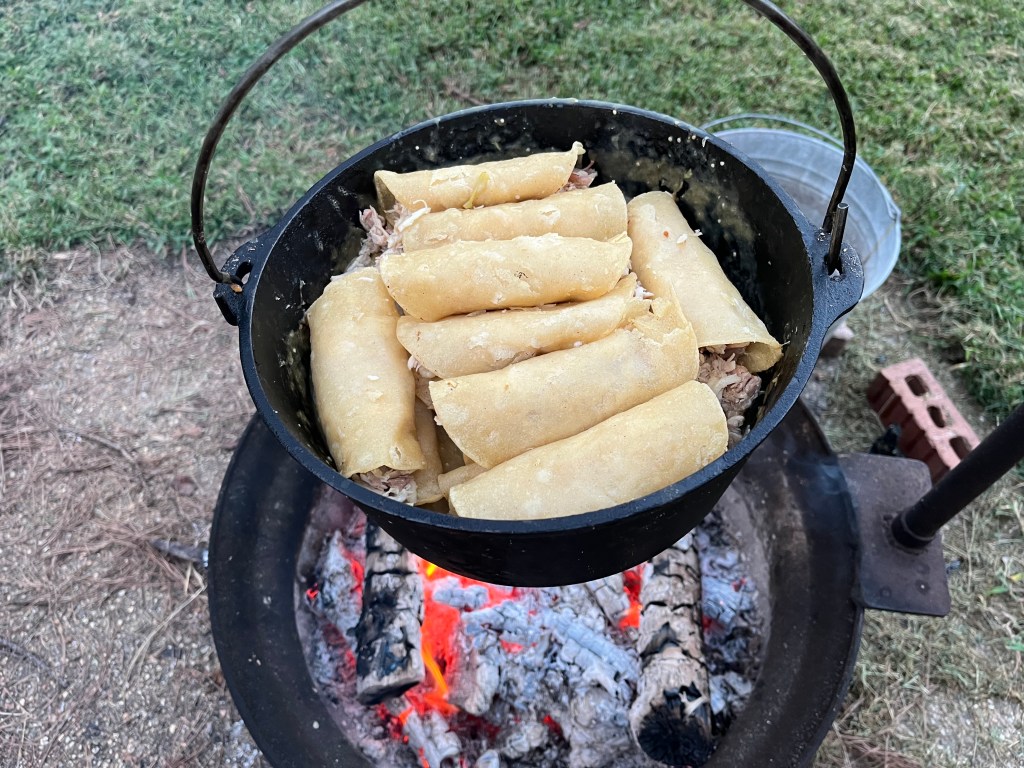
Carefully add a layer of enchiladas to the Dutch oven.
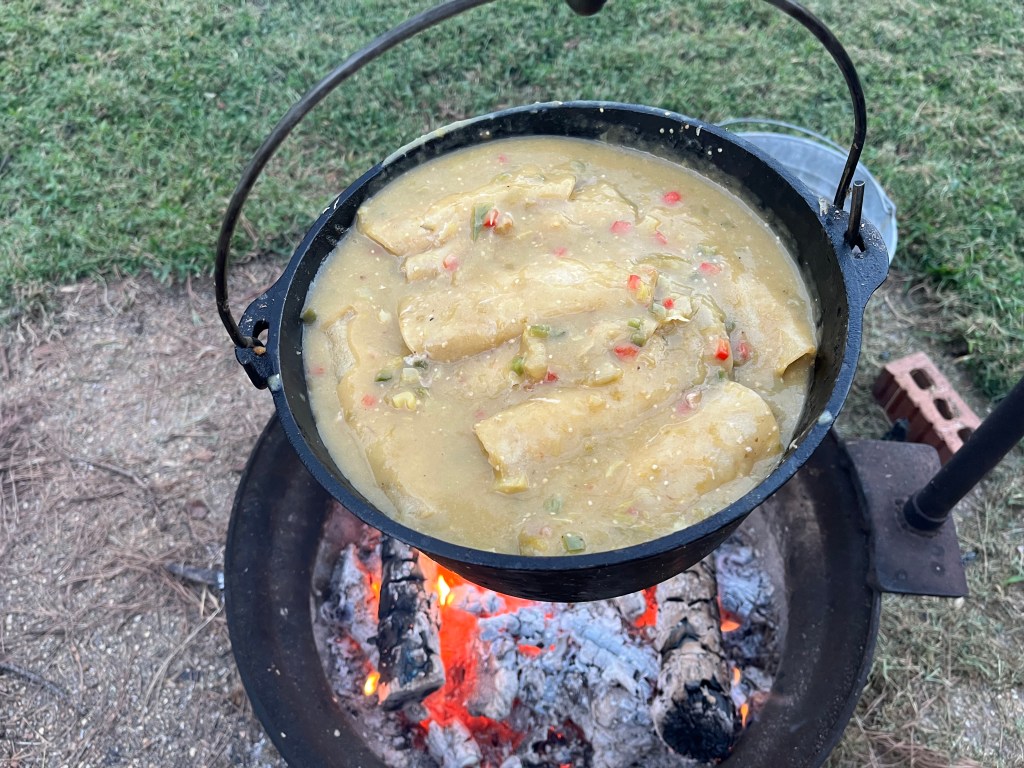
Stack the remaining enchiladas on top and pour the remaining sauce over them.
Cover and simmer over medium heat for about 15 minutes. No need to add coals to the top, this time!
Remove the Dutch oven and let it rest, uncovered for a few minutes.
It’s time to dig in!
Pull the enchiladas out of the Dutch oven with tongs or ladles. They’re going to break apart either way, so don’t worry about glamorous presentation!
Serve with rice, cotija cheese, cilantro, and a fresh, cool salad. (Adding cucumbers to the salad will offer some relief in case the enchiladas are too spicy)!
Home cooks are always on the lookout for economical ways to make a meal. When it comes to selecting meat, beef has become something I only buy on rare occasions, due to skyrocketing prices. Pork and chicken prices have also increased over the last few years, but good deals can still be found. Chicken thighs and leg quarters tend to be the least expensive cuts. Pork loins and pork rib meat find their way into my shopping basket more and more, because of their affordability.
Country-style pork ribs are cut from the area of the hog where the loin meets the shoulder. Country-style ribs are a blend of lean white meat and rich dark meat, which makes them a versatile cut of meat.
Carnitas are typically made from roasted pork shoulder, but they can be made from slow-cooked pork loin, too. Since I chose country-style rib meat for this recipe, I chose to sear the meat in a pan and then gently stew, with broth and vegetables.
Homemade tortillas make this Mexican dinner even more special!
Ingredients:
2 lbs. marinated country-style pork rib meat
¼ cup cooking oil
1 medium sized onion, chopped
1 large jalapeño, seeded and chopped
1 cup picante sauce (salsa)
1 cup chicken stock
Chopped lettuce, tomatoes, and onions (for the tacos)
1 lime, sliced
10 warm flour tortillas
Tapatio hot sauce
Directions:
I’ve got to confess that I forgot what I used in the marinade for the pork. Most likely, I used a combination of tomato sauce, dark soy sauce, lime juice, dried onion flake, cumin powder, red chili powder, paprika, garlic powder, and a pinch of turmeric. A marinade will help tenderize the meat, but it’s not necessary, since the meat will be braised in a little stock and vegetables, until it becomes tender
Absorb excess moisture from the pork with paper towels.
Seed and chop the jalapeño. Chop the onion. Set these aside.
Add cooking oil to a cast iron skillet (or any other oven-proof pan). Set the heat to medium/high.
Sear the pieces of pork on all sides. Remove the pork and keep in a warm place.
Add the chopped jalapeño and onion to the skillet and sauté at medium heat for about 3 minutes.
Add the salsa to the skillet and stir for about 1 minute.
Add the chicken stock.
Return the pork to the skillet.
Cover the skillet with aluminum foil at bake in the oven at 350º for 40 minutes.
Carefully remove the foil. The pork should be fork tender. If the pork is not tender, return to the oven for another 10 minutes.
Shred the pork and mix with the braising liquid.
Serve on warm tortillas and add lettuce, tomato and onion.
Serve with fresh lime wedges and Tapatio hot sauce.
If you’re familiar with Tapatilo hot sauce, you might be wondering what looks different about this particular bottle. The regular image of the sombrero-wearing Tapatio has been replaced by comedian Gabriel ‘Fluffy’ Iglesias, along with Fluffy’s chihuahuas, to celebrate the 50th anniversary of Tapatio.
On any given day, I can search my refrigerator and find fruits and vegetables that, only a few days before, were vibrant and beautiful. What sad fate is in store for those items, that I have passed over and ignored? Often times, they sit, tucked away in the deepest corners of the produce compartment of my refrigerator until, one day, I acknowledge the awful truth. All good things must come to an end.
But, before I throw in the towel, I like to find a way to use the fruits and vegetables that have “gone south.” I am reminded of an excerpt from Jacques Pépin’s book, “Heart & Soul in the Kitchen” entitled, ‘For the love of wilted vegetables’. Jacque is a kindred soul who, like me, hates to see anything go to waste.
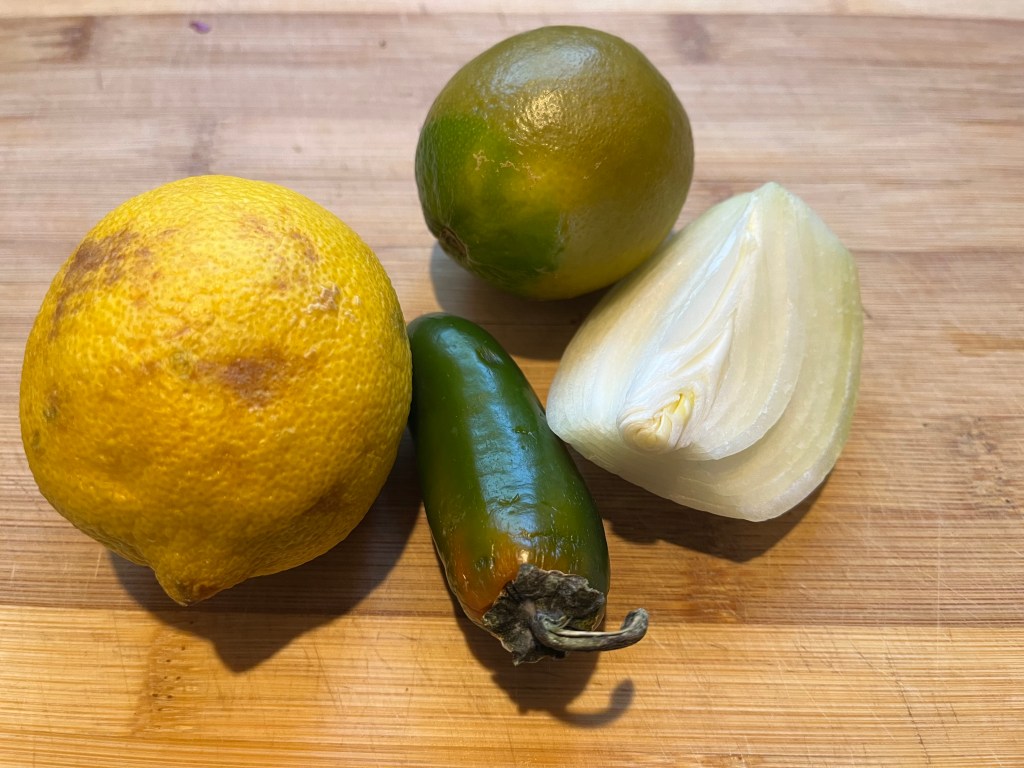
Today’s example is a lime, a lemon, a jalapeño, and a wedge of onion, that have past their prime, but not past their worthiness.
I was going to make salmon today and I was pawing through the refrigerator, looking for a lemon, when I came across these sad little items. They inspired me. In fact, I tossed the idea of salmon to consider what sort of noble thing I could do with the slightly wrinkled and discolored fruit and onion.
A marinade! Yes, indeed!
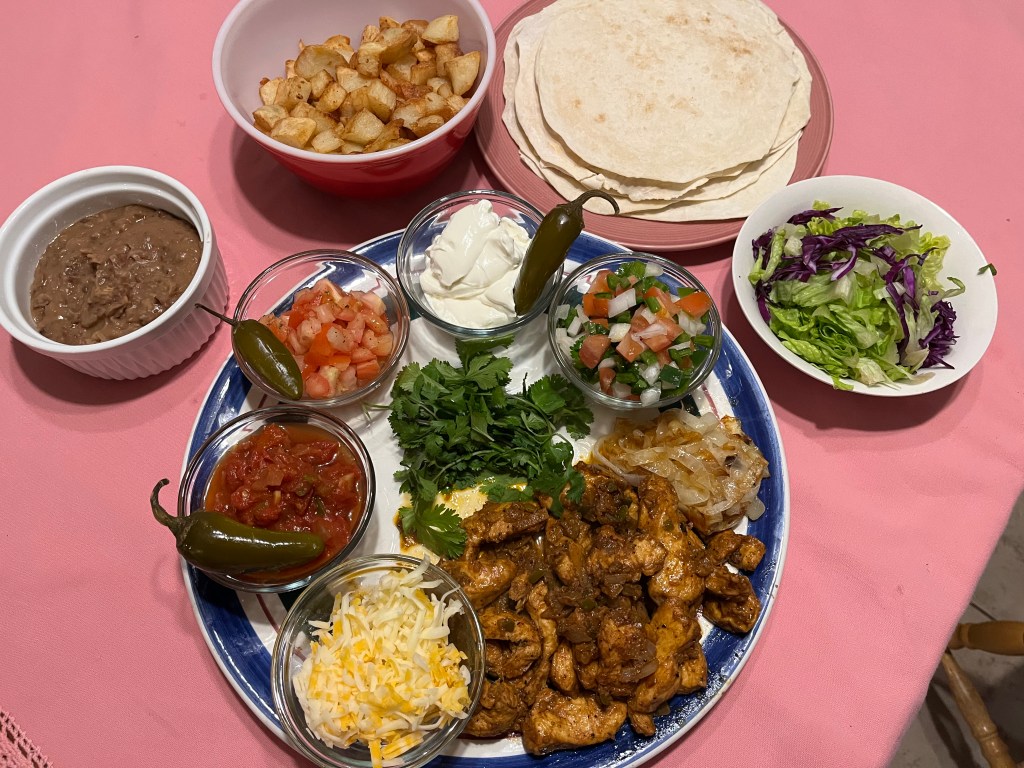
The pieces came together in my head quickly. I will marinate some chicken and make chicken fajitas for dinner.
Marinade ingredients:
Juice of 1 lime
Juice of 1/2 lemon
1 jalapeño, chopped
1/4 large white onion, chopped
1 tsp garlic powder
1 tsp black pepper
1 tsp salt
1/2 tsp oregano
1 1/2 tsp ground dried onion
1 1/2 tsp cumin powder
1 1/2 tsp Tajin seasoning
1 tsp smoked paprika
2 tsp chili powder
Three hours later, after allowing the chicken to thoroughly marinate, dinner was served.
What can you do with your vegetables and fruit after they have gone south?
Arroz con Pollo Étouffée, con per miso, s’il vous plaît
In other words, I’m in a spastic, frantic frame of mind!
It’s nearly two hours past my normal bedtime and I’m pausing to let the day’s events soak in. I’m submitting this post without editing, and that’s a scary thing for me. I don’t usually spend a lot of time editing what I write but, I rarely throw caution to the wind by allowing my hands to type out the thoughts in my head without giving consideration to the quality of prose or grammar. Today is a day when I violently throw caution against the wall, just to hear it make a satisfying “splat”.
It’s been a long day. It’s been a long week. Many successes and many failures. So goes the life of a work-a-day-Joe, such as myself. I wanted to leave work today in time to ship a package to a loved one. That didn’t happen. During the drive home, I was stuck in traffic, behind a sea of cars and a parade of police cars and emergency vehicles that maneuvered through the gridlock toward an accident. I found an alternate route, only to encounter another accident. I gnashed my teeth, still reeling from the tremendously bad day at work, and crept along, thinking about what I could make for dinner, once I arrived home.
It never came to me. I was so preoccupied by the events of the day that I couldn’t focus on what to make for dinner. Once I arrived home, I immediately went to the refrigerator and started pulling out items. I pulled out some fresh vegetables, left over chicken and a little bit of butter. I went to the pantry and grabbed some rice, olive oil and flour. I put everything on the kitchen counter and stared at the items and started to put everything together, in my mind.
I texted my wife, who is out of state, visiting my mother-in-law. I gave our dog her daily antibiotic, because she’s healing from a vicious fight with a racoon.
Time to put dinner together, eh?
I pulled out a few fresh tomatoes, yes I still have tomatoes from the garden, and that’s something that I cling to, in these trying times. I shaved some dried thyme leaves from the stem, another gift from the garden. I pulled out a carrot, 3 semi-wilted green onions and two partially frozen celery stalks from the “crisper drawer” from the refrigerator. Why are my vegetables freezing in the refrigerator?!
I wanted to hear some music but I didn’t want to fight with Alexa and the almighty Amazon. I’ve had enough of that. I imagined that I was listening to ZZ Top’s “Asleep in the Desert” and I went to work.
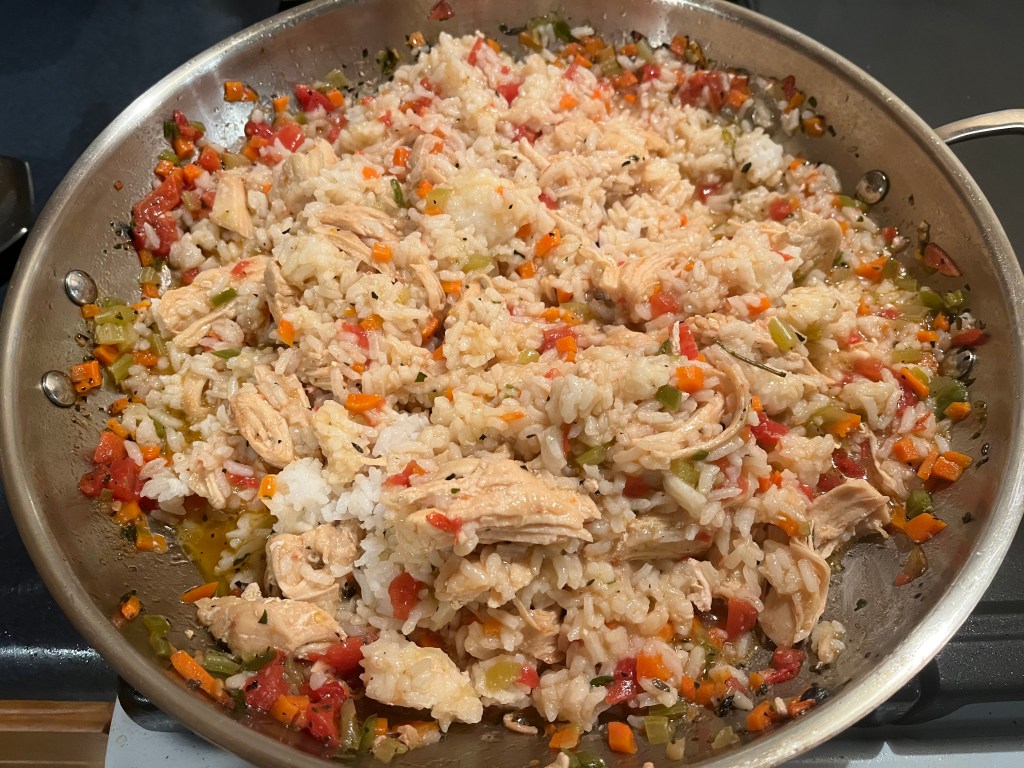
Once I started putting everything together, I tried to put a name on the thing I was creating. I was leaning so heavily on Tex-Mex and Cajun concepts that I decided that this would be a marriage of arroz con pollo and etouffée. It was a beautiful marriage. You should have been there!
Ingredients:
2 Tbs olive oil
1 fresh red serrano chili
3 chicken breasts (about 1 pound)
3 cloves garlic, smashed
1 carrot, peeled and diced finely
2 stalks of celery, slightly frozen and diced finely
1 jalapeño, seeded and diced finely
2 Tbs melted butter
1 1/2 Tbs flour
4 Roma tomatoes, diced finely
2 tsp crushed, dried thyme leaves
3 green onions, chopped, separate white and green parts
1 ounce shrimp bouillon cube
1 1/2 cups chicken broth
1 tsp Cajun seasoning
3 cups cooked white rice
Directions:
Prepare steamed white rice.
While the rice cooks, heat the olive oil in a large skillet.
Add the chicken and serrano chili and cover the pan. Simmer at low heat for 10 minutes.
Turn the chicken over and add the garlic. Simmer at medium heat for 15 minutes. Remove chicken and keep warm.
Chop the vegetables.
Removed the chicken from the skillet and keep warm. Deglaze the skillet with a little water.
Add 1/2 cup chicken broth and the vegetable (excluding tomatoes). Simmer covered for 10 minutes.
Mix the melted butter and flour. Add the mixture to the skillet. Set heat to low and whisk for a minute.
Add remaining chicken broth. Add shrimp bouillon, Cajun seasoning, tomatoes and thyme. Stir over low heat for a few minutes.
Cover and simmer for 5 minutes.
Shred chicken into bite-sized pieces and add to the skillet. Mix to combine.
Add cooked rice, a little bit at a time. Mix and add the rest of the rice.
Simmer for a few more minutes.
Serve in large bowls with soft bread, on the side.
And there you have it. Stress has been relieved. Once again, good food prevails.
Of course, it doesn’t hurt to sit down and jot it all down while listening to the soundtrack to the Terry Gilliam move, “Brazil” and Joni Mitchell’s album, “Hejira.”
Life is strange. Life is good. Life goes on.
Let it all come out. Don’t hold back. Share the ups and downs with the ones you love and, when you sit down for dinner, be a listener.
And now, it’s 3 hours past my bedtime. My pillow is calling!


















































 Toothpick Tales