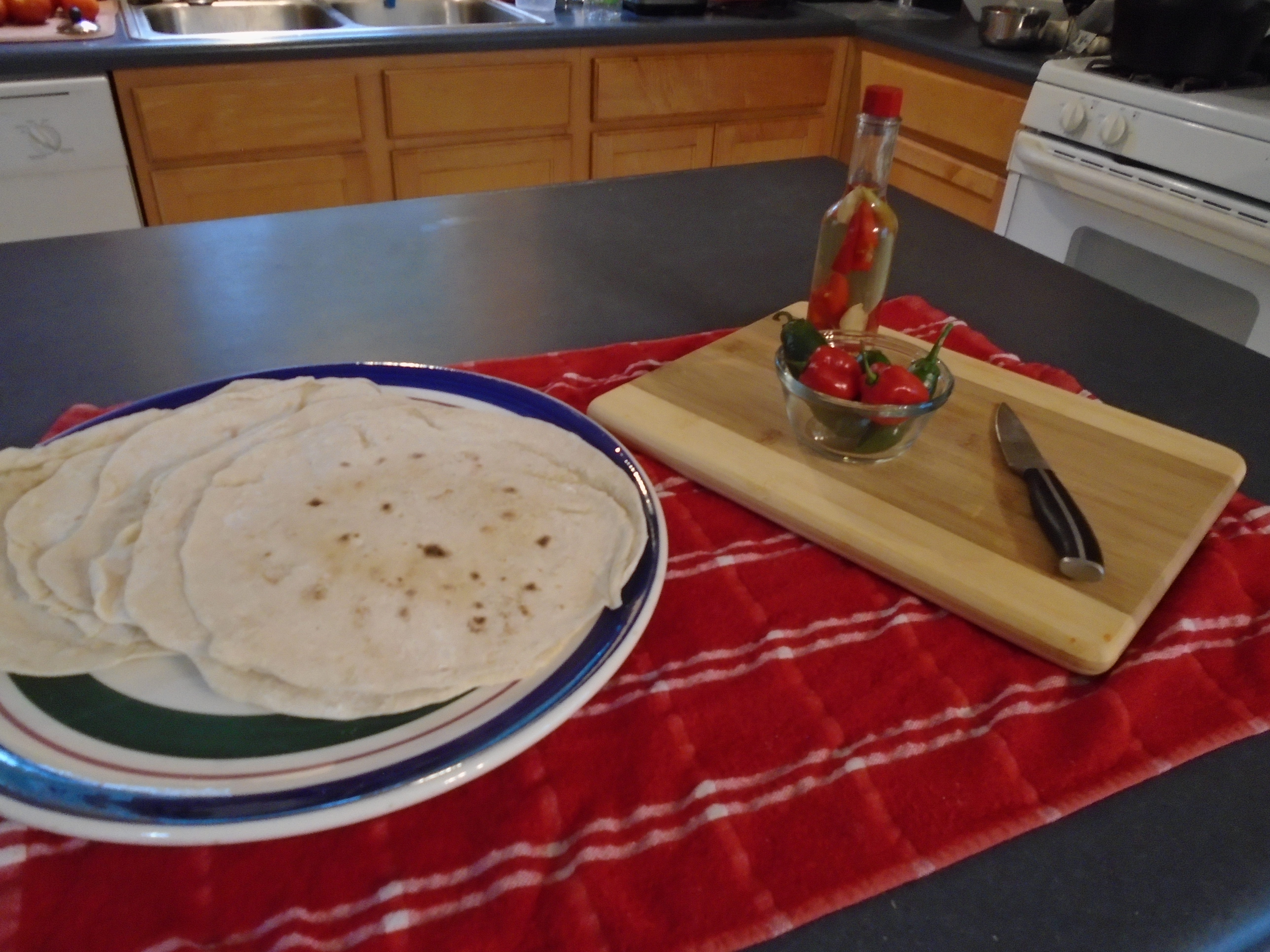
Tres Tacos (Three Tacos)

In my never-ending attempt to rid my refrigerator of leftovers I found myself falling back on a familiar theme: Tex-Mex.  Mexican cuisine can be made with all sorts of things and that’s what makes it so easy to rely on, when having to decide what to scrape together for dinner.

For this meal, corn tortillas tied everything together.  I made three different types of tacos, two with beef and one with turkey.  All of them shared some of the typical taco toppings like lettuce, tomato, onion, cilantro and sour cream.  Each one had at least one signature ingredient and each had a different kind of cheese.

Each taco had its own, unique quality.  Everyone that ate them had their own favorite.

This was fun to make but, I have to admit, it didn’t come together as quickly as I wanted.

I had some tomatoes from the garden that needed to be used so I cooked them down to a sauce and added jalapeños, onion and garlic.  I pureed the sauce after it cooked for about 40 minutes.  Normally, I would use picante sauce from a jar but I just can’t resist fresh sauce, when I have the ingredients in my garden.

One more comment before we jump into the recipe.  I sometimes use two corn tortillas per taco, instead of just one.  These tacos are prepared like “street tacos”, which is to say they resemble authentic Mexican tacos.  They are not the crispy corn tortillas that you might find at a grocery store, or ones that you might get at a fast food restaurant. 

The tortillas are heated just to a point where they are still soft and pliable.  Doubling up on the tortillas means that the tacos are more durable.  I hate tacos that fall apart in my hands!

Ingredients:

½ cup beef barbacoa

½ cup cooked ground beef

½ cup cooked ground turkey

1 cup prepared spicy tomato sauce

1 Tbs chipotle in adobo sauce (diced)

¼ cup sautéed sliced mushrooms

½  cup borracho beans, drained

¼ cup spicy mayo/sour cream sauce

½ cup grated cheddar cheese

½ cup cotija cheese

½ cup grated Monterey Jack cheese

¼ cup diced tomatoes

½ cup shredded lettuce

¼ cup diced onion

½ cup cilantro

6 pitted black olives, chopped

¼ cup sour cream

18 corn tortillas

lime wedges

Directions for the salsa:

If you don’t want to make fresh salsa, use a store bought salsa of your choice…otherwise, this is what I did to make the salsa for this dish.

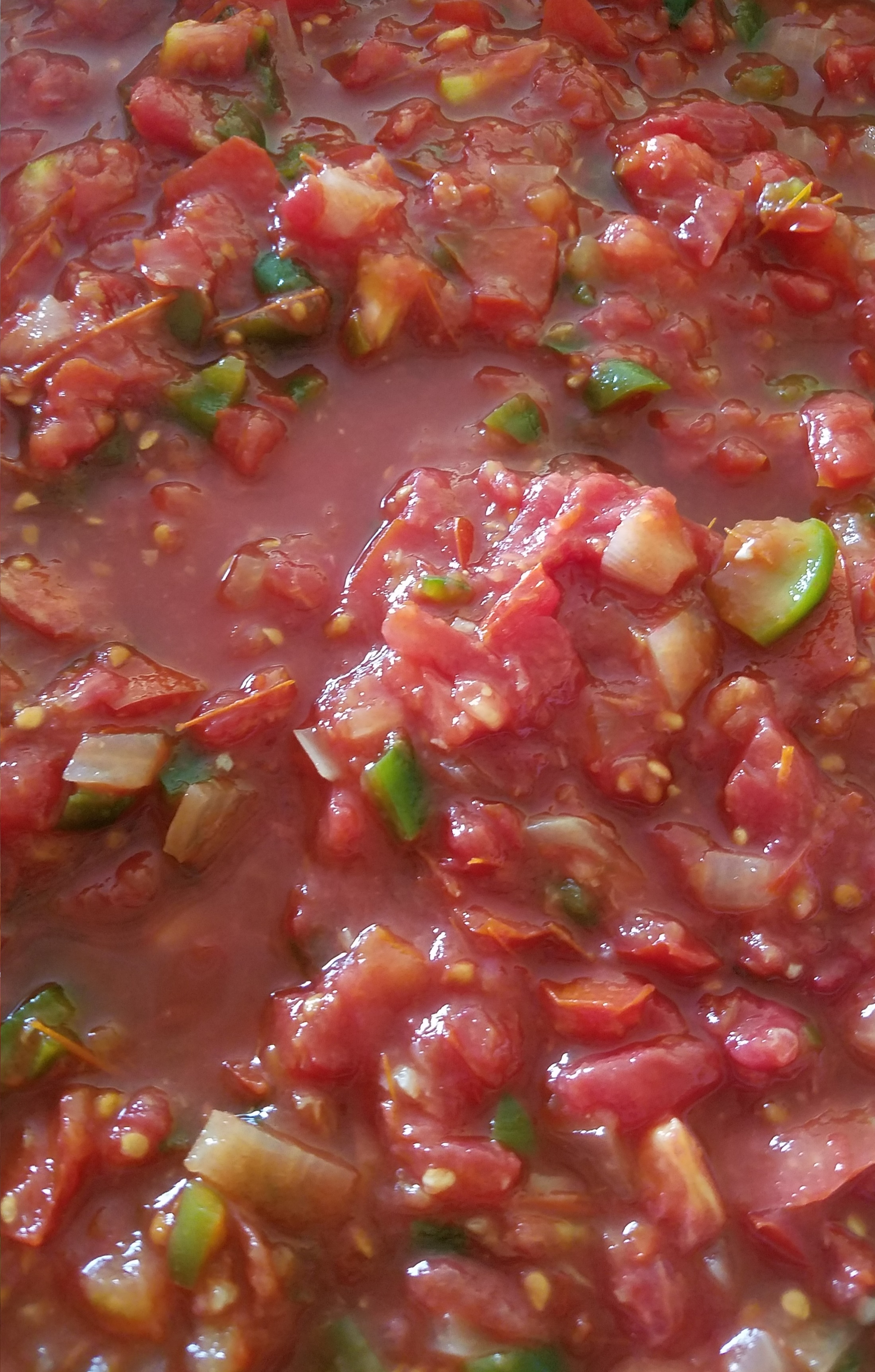
Dice 6 to 8 small to medium sized tomatoes.  Add to a large pot and simmer at low heat.  Dice ½ onion and smash 3 garlic cloves and add those to the pot.  Add 1 tsp dry oregano and 1 Tbs cumin powder.  Simmer at low/medium heat for 30 to 40 minutes, stirring occasionally to prevent the sauce from burning on the bottom of the pot.  Puree the contents.  Now you have fresh sauce!  Set this aside.

finished salsa

While the sauce is cooking, prepare the rest of the ingredients for the tacos.  You will be chopping, peeling and slicing vegetables so keep a bowl handy for the refuse. 

carrot, mushroom, lime and olives
onion, tomato and cilantro

Peel, chop and dice all of the vegetables.  Set aside.  Grate the cheese and set aside.

Break apart and crumble the meat.  Lay the meat in separate piles on a baking sheet lined with parchment paper and warm in the oven at 250° for about 15 minutes.

Heat a pan, or a comal, on the stove to low/medium heat.  Add a little oil and cook the tortillas on each side.  Add a little more oil after two or three tortillas are cooked.  The tortillas should cook for about 20 seconds on each side.  Remove to a plate and keep warm.

I kept forgetting what I was going to put on each taco so I decided to write it down on a 3×5 index card.  Not a bad idea, especially for someone with the attention span of a gnat, like me.

Even after writing this down, I still switched the cheese on two of the tacos…go figure!

Directions for assembling the tacos:

I recently got some taco holders as a gift and, although I don’t use them often, they made it easy to assemble tacos and they made a nice presentation.

I worked on all three tacos simultaneously.

For the barbacoa taco:

Start by adding some barbacoa.  Add borracho beans, followed by salsa and cheddar cheese.

For the ground beef taco:

Start with ground beef.  Add minced chipotle sauce, salsa and cotija cheese.

For the turkey taco:

Add ground turkey, followed by mushrooms, followed by the mayo/sour cream sauce, Monterey Jack cheese and black olives.

Top all three tacos with lettuce, tomato, onion, carrot, cilantro and finally, a small dollop of sour cream. Serve with lime wedges.

Borracho Beans (Frijoles Borrachos)

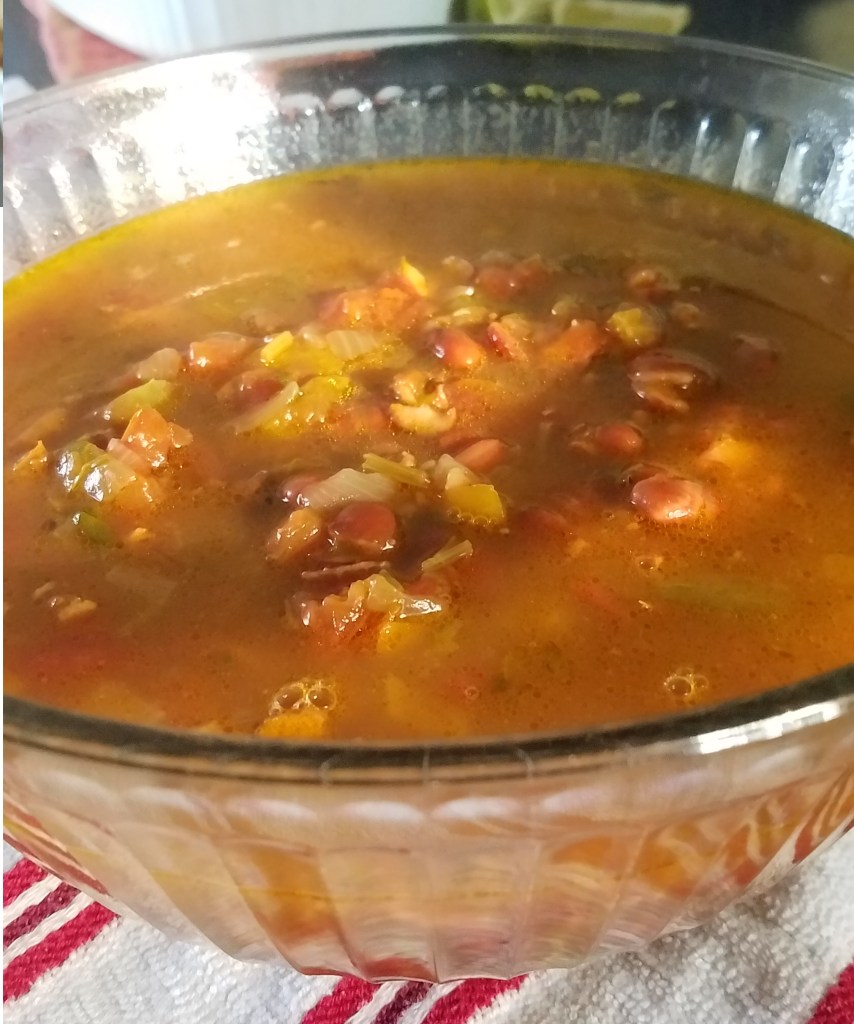
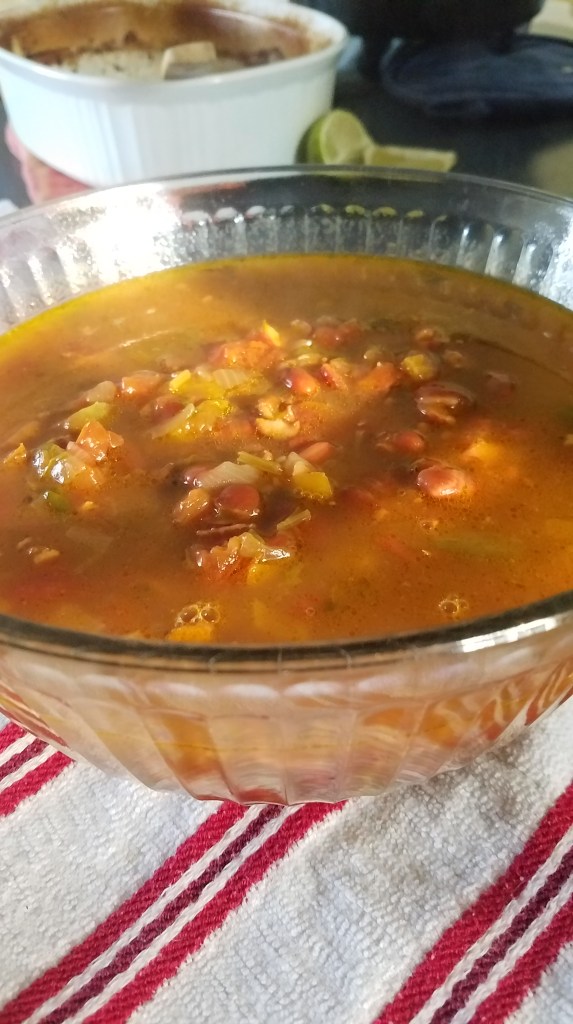
Borracho translates to “drunk” in English, so these are “Drunk Beans”.  I suppose they are called this because one of the ingredients is beer.  The alcohol cooks out and, honestly, I can’t detect the flavor of beer in the final soup.  I guess I include the beer out of habit.

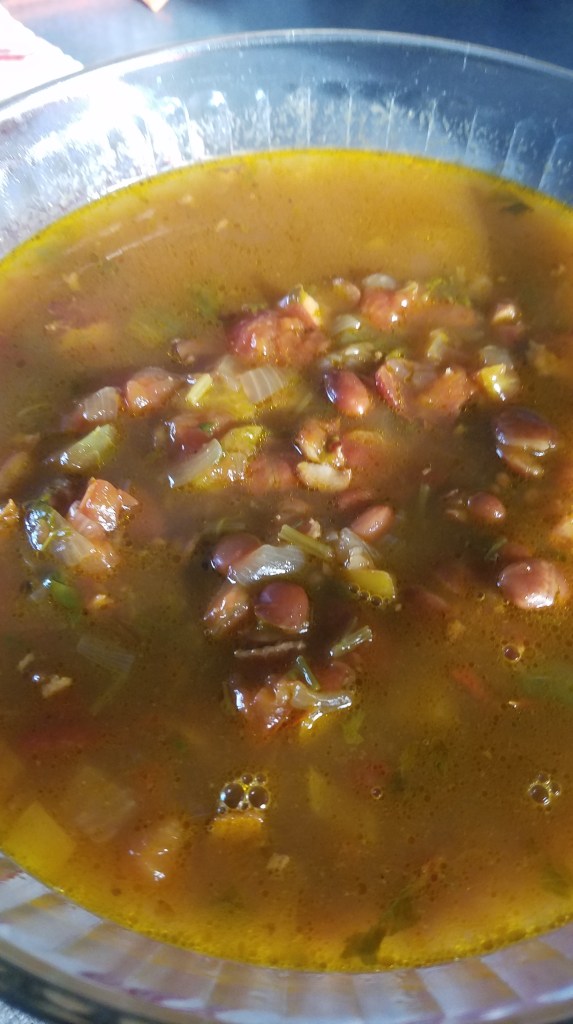
The soup is very flavorful and satisfying.  It warms the heart, as any good soup or stew should.

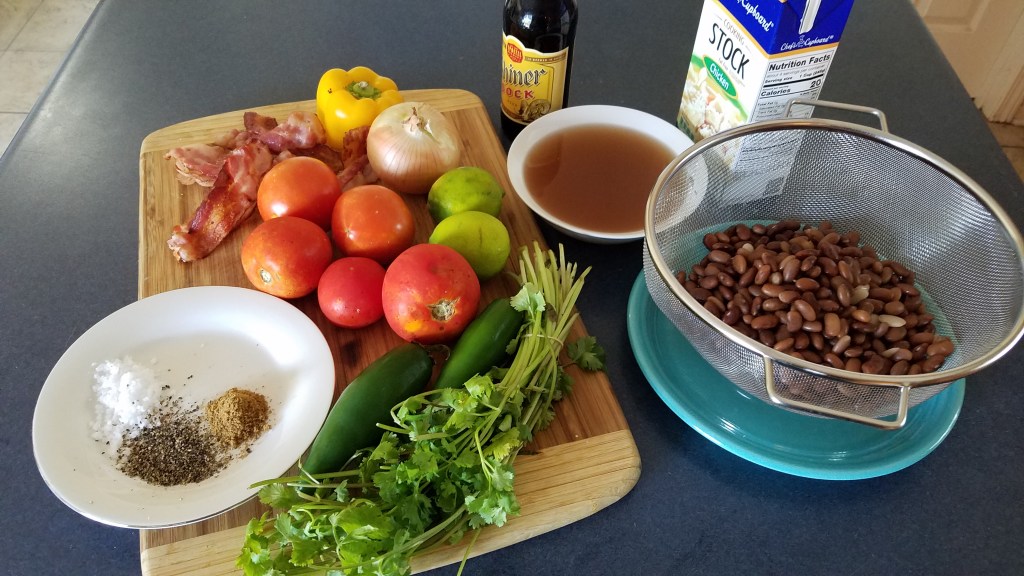
Ingredients:

1 lb dried pinto beans

½ lb of Bacon

1 onion, chopped

2 jalapeños or serrano chilis, chopped

2 cloves of garlic, chopped

4 or 5 tomatoes, chopped (or a 15 oz can of diced tomatoes)

1 bottle of beer (I used Shiner Bock)

4 cups Chicken Broth (32 oz carton)

1 tsp ground cumin

1 cube of tomato bouillon

½ cup chopped cilantro

½ tsp salt

¼  cup fresh lime juice (about 3 limes)

Directions:

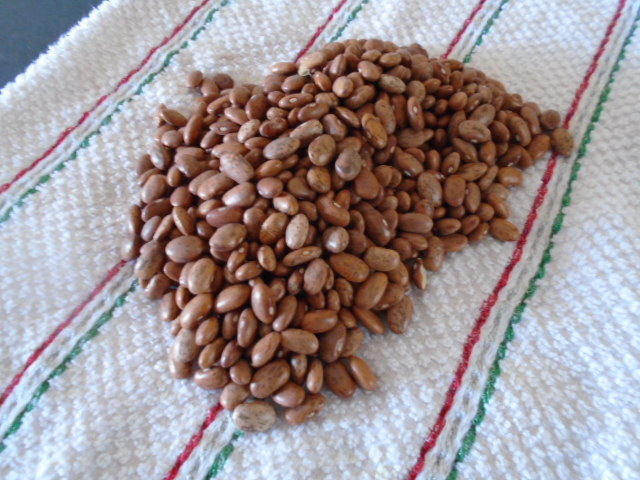
Wash and sort the beans.  Remove any shriveled beans and stones.

Presoak the beans.  You can soak them in water overnight or, you can use a faster method.  I prefer the fast method.

Fill a large pot with water and bring it to a rapid boil.  Add the dry beans and boil for two or three minutes.  Turn the heat off and cover the pot.  Allow the beans to soak for an hour.  Reserve 1 cup of the water from the beans and drain the rest of the soaking water. 

Put the beans in a 7 quart Dutch oven (or a large oven-proof pot).

Cook the bacon in a pan.  Don’t overcook it.  Remove the cooked bacon and keep bacon fat in the pan.  Chop the cooked bacon into ½ inch pieces and set aside.

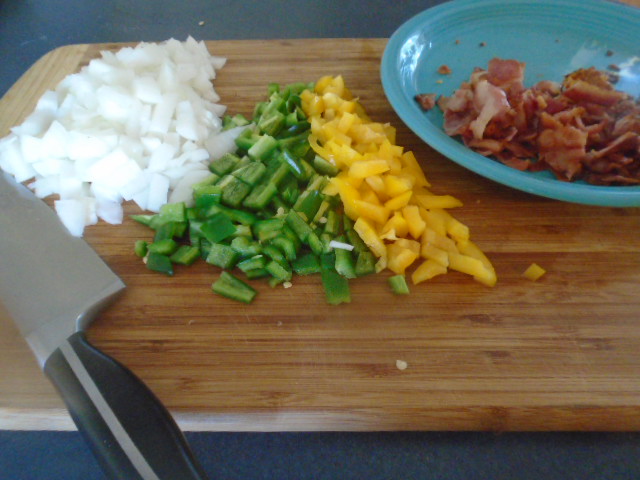
Chopped onion, jalapeño and yellow bell pepper

Add the onions, jalapeños and garlic to the pan and simmer on medium heat.  Stir until the onions are softened…about 3 minutes.

Notice the slice of red habanero. I stirred it along with the other peppers and onions for about 30 seconds and then I removed it.
Add everything to the pot and cook for 5 hours.

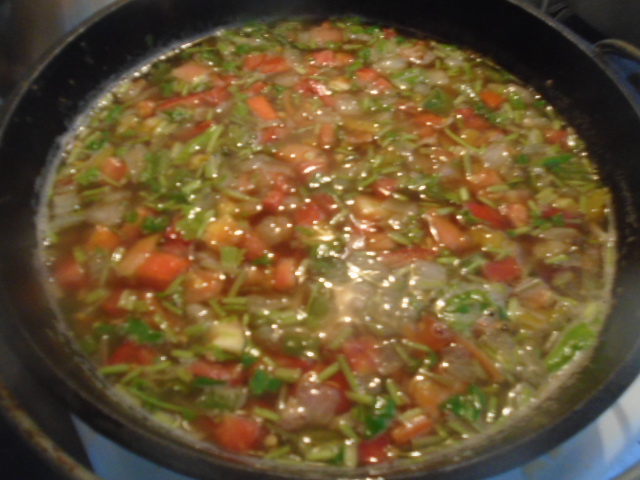
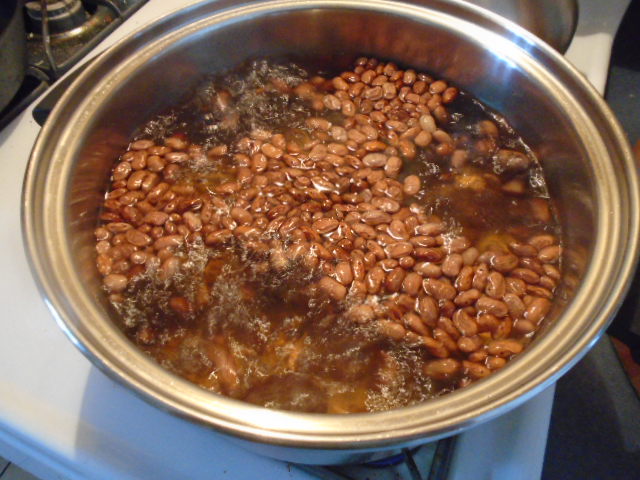
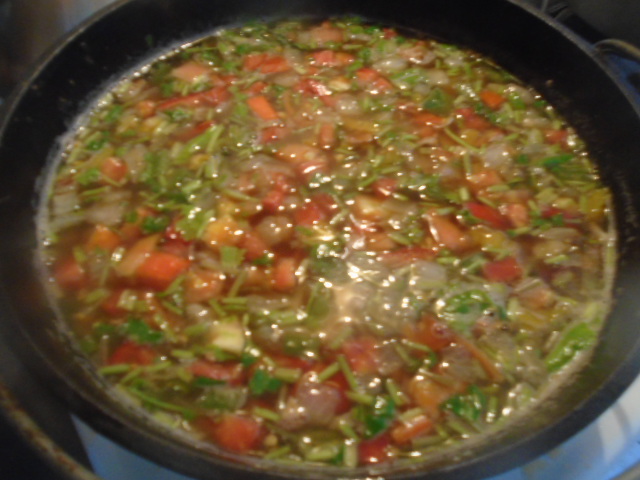
Add all of the ingredients to beans in the Dutch oven, except for the lime juice.  Stir to combine.  Cover the Dutch oven and cook on the stove top at low heat for 4 or 5 hours.  Stir every hour, or so.  When the beans have softened, the soup is ready to eat.  Turn off the heat and add the lime juice.

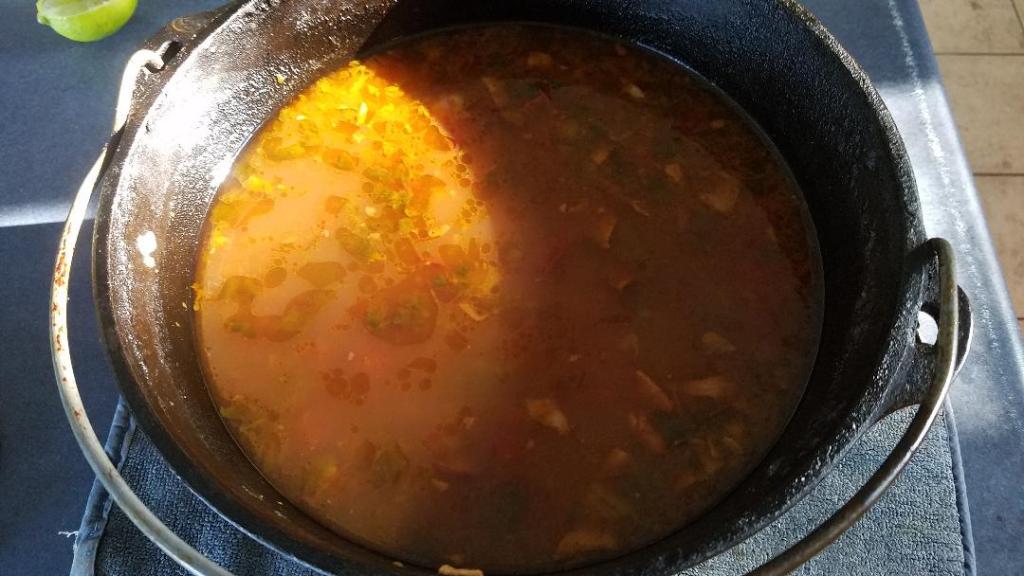
After 5 hours of simmering…ready to eat.

Barbacoa de Res

Before we get down to business let me just say that barbacoa is a very special thing.  Barbacoa is more than just slow cooked meat.  Much more.  Preparing barbacoa is a time-honored tradition in Mexico.  The tradition spread to Texas years ago, along with the Mexican immigrants who introduced the cuisine.  Anywhere you find a sizeable Mexican population you are bound to find barbacoa. 

The origins of barbacoa are steeped in history and culture.  Ancient cultures, and not-so-ancient cultures, adhere to the notion that the animals we eat should be respected and treated with reverence.  When an animal is slaughtered it should be treated with dignity and it should be thanked for the sustenance that it provides to us.  Using all parts of the animal pays respect to the animal.  This ritual is a sacred rite and one that is increasingly disappearing in our modern culture.

Barbacoa is typically served on weekends.  It is presented to family and friends as a celebration of life.

Cooking methods vary from place to place.  Traditionally, barbacoa is made from young goat (cabrito), lamb (borrega), beef (res) or pork (cochina).  The entire animal is often used, including entrails and stomach.  If you want to make barbacoa the traditional way you will need to dig a pit, line it with fire resistant bricks, slaughter and butcher an animal, obtain some agave leaves (hojas de maguey), prepare an intensely hot fire and layer all of the ingredients in the pit, cover the pit with sheet metal and wait for several hours. 

I don’t have an underground brick oven…but don’t think for a minute that I haven’t considered making one!  I have had authentic barbacoa on a few occasions and words can’t sufficiently describe how rich and wonderful  the experience was. 

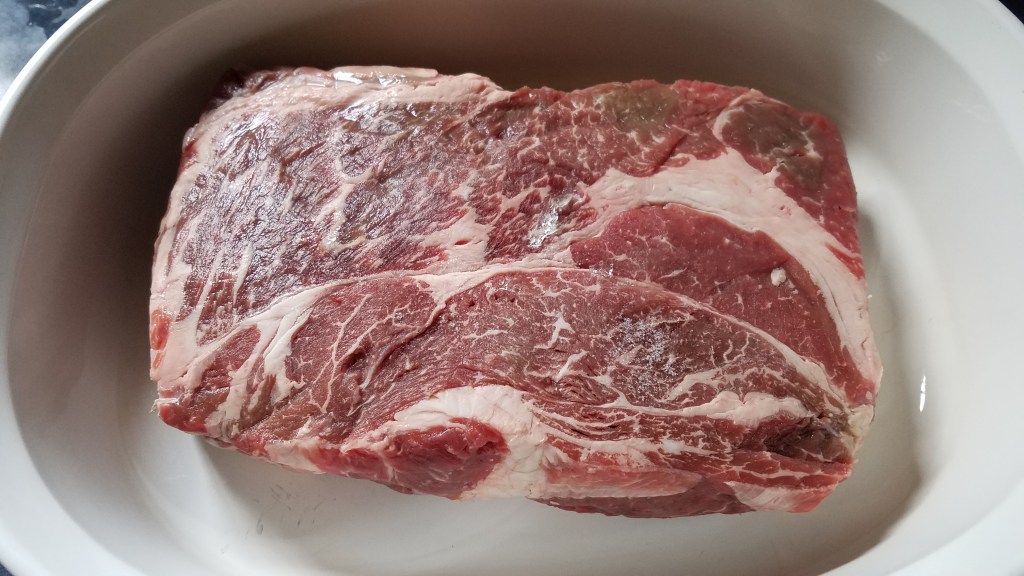
Since I don’t have an underground pit, I buy beef shoulder roasts (chuck roast) and braise the meat in a Dutch oven, or a covered casserole dish.  Sounds simple, when you compare this to the effort involved with the traditional method, right?   

The chuck roast is a tough, muscular cut of beef, which means it contains a good amount of collagen.  When you cook it at a low temperature for a long period of time, the collagen dissolves and becomes gelatinous, and that is what makes the meat moist and succulent.  

If you have the luxury of living in a place where you can get fresh beef from a butcher, ask the butcher for a “blade roast”.  A blade roast is a shoulder roast that contains part of the shoulder blade.  As the roast cooks, the bone imparts rich flavor and the meat that is next to the bone becomes very tender. 

In Mexico, barbacoa is served with soft, warm corn tortillas.  Here in the states, we tend to use warm flour tortillas.  Both kinds of tortillas are equally good in my mind, when it comes to barbacoa tacos.  If you want to make this meal even more special, find freshly made corn tortillas or homemade flour tortillas.  See my recipe here for homemade tortillas

Okay, let’s make some barbacoa!

Ingredients:

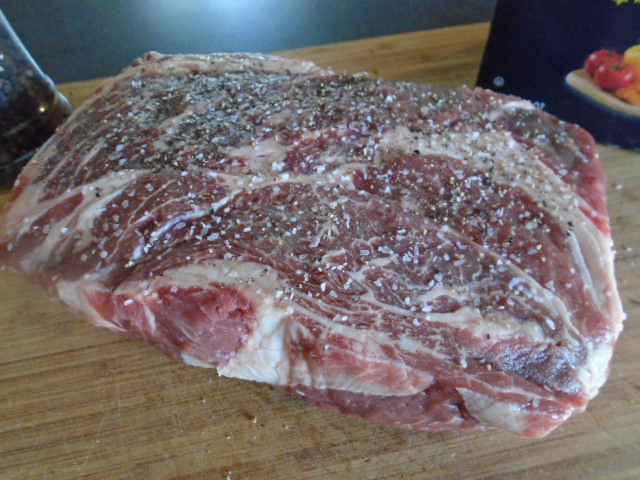
Beef shoulder roast (chuck roast) 3 to 5 lbs.

2 Tbs cooking oil

2 cups chicken stock (or vegetable stock)

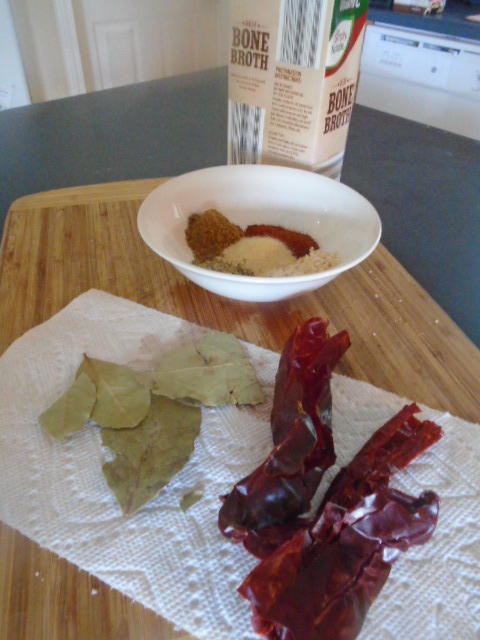
3 or 4 dried guajillo chilis, stemmed and seeded

3 or 4 bay leaves

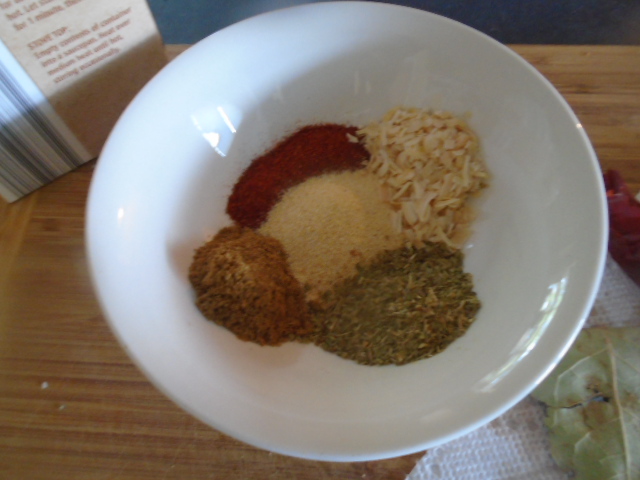
2 Tbs dried onion flakes

2 Tbs paprika

2 Tbs cumin powder

2 Tbs garlic powder

2 Tbs oregano (Mexican oregano is preferred)

Directions:

Heat an oven to 225°.

Apply salt and pepper to the raw meat. 

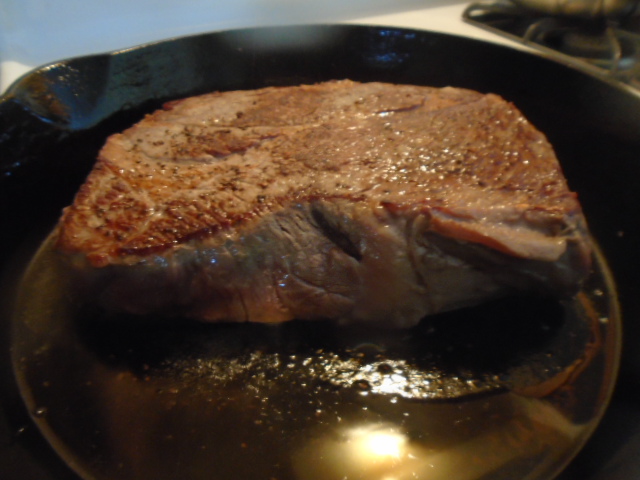
Sear the meat in a hot skillet, with a little oil.

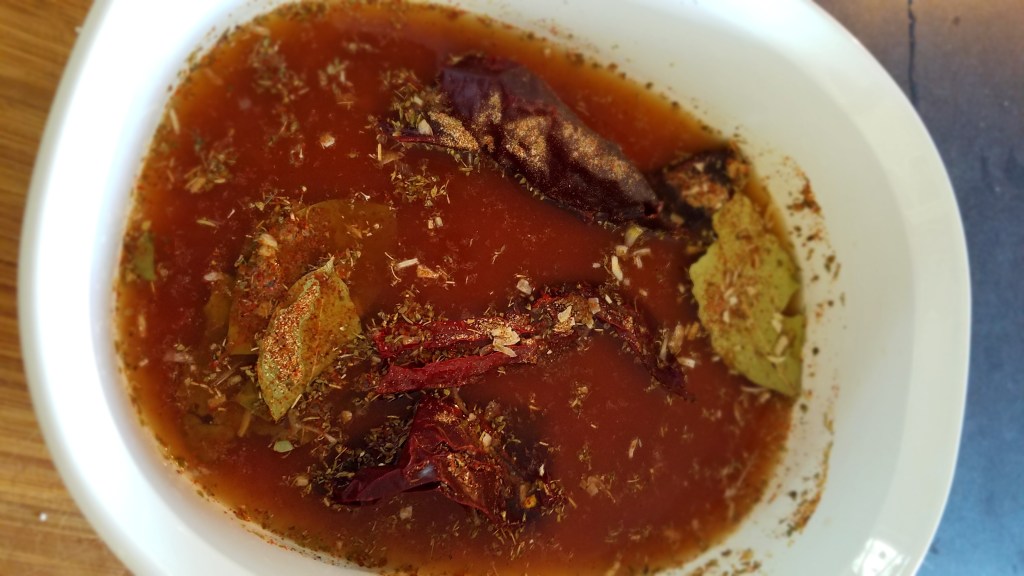
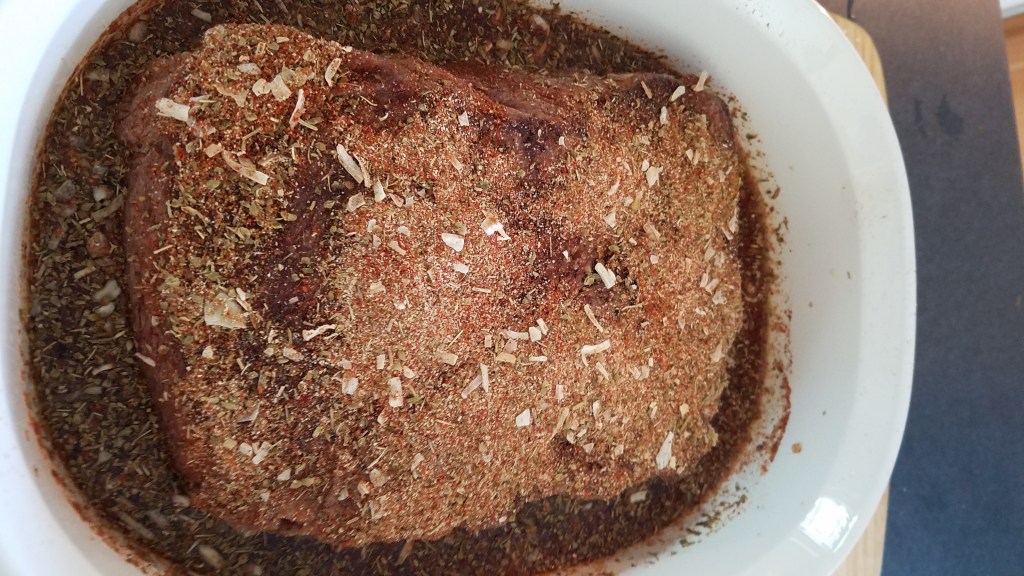
Add the stock, bay leaves and most of the spice mix to a Dutch oven or casserole dish. 

Spread the rest of the spices on top of the meat and cover.

Braise in the oven for 5 hours.

Pull the meat from the oven and let it rest for 10 minutes.

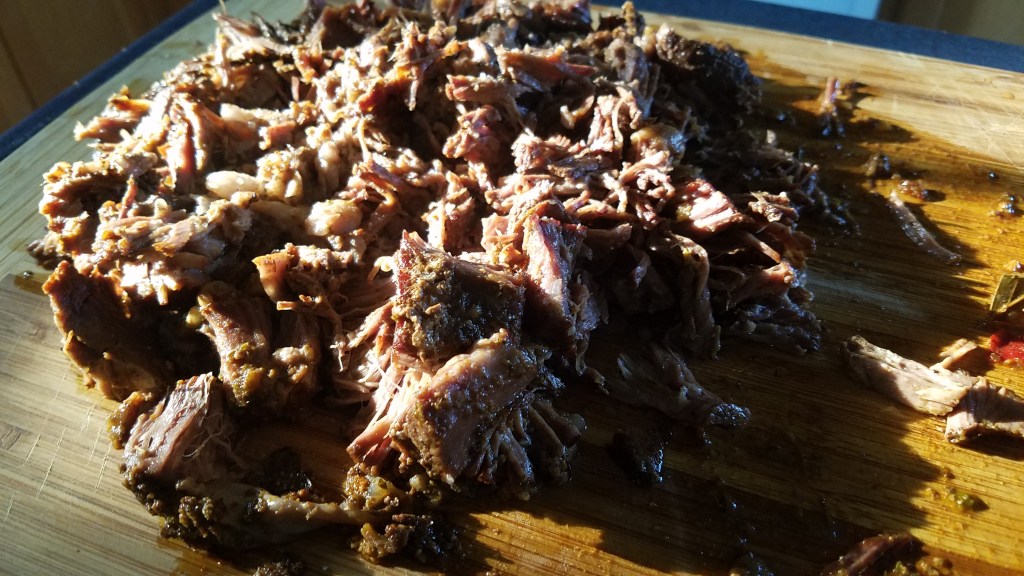
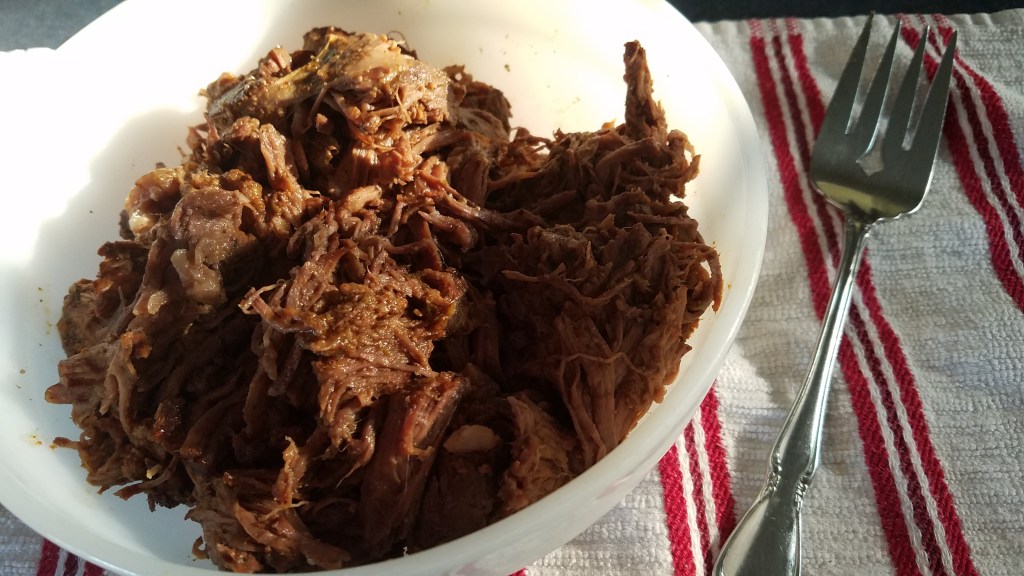
Shred the meat with two forks and transfer to a serving bowl.  (Make sure to remove any stray bay leaves and chilis before shredding.)

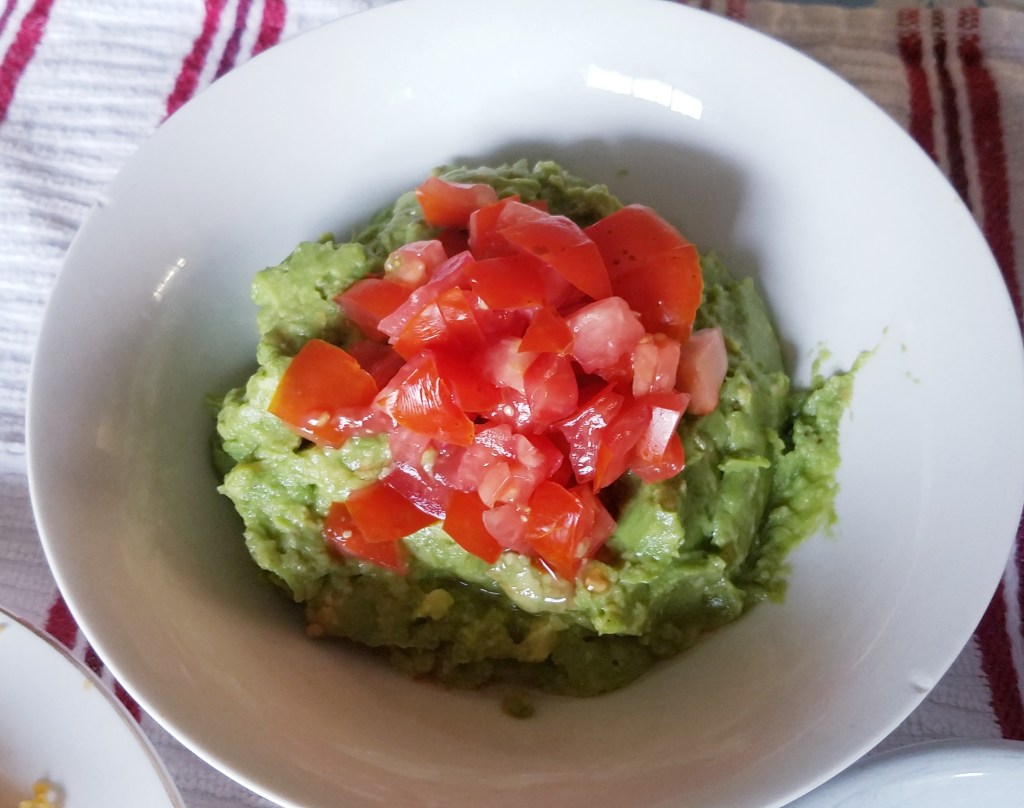
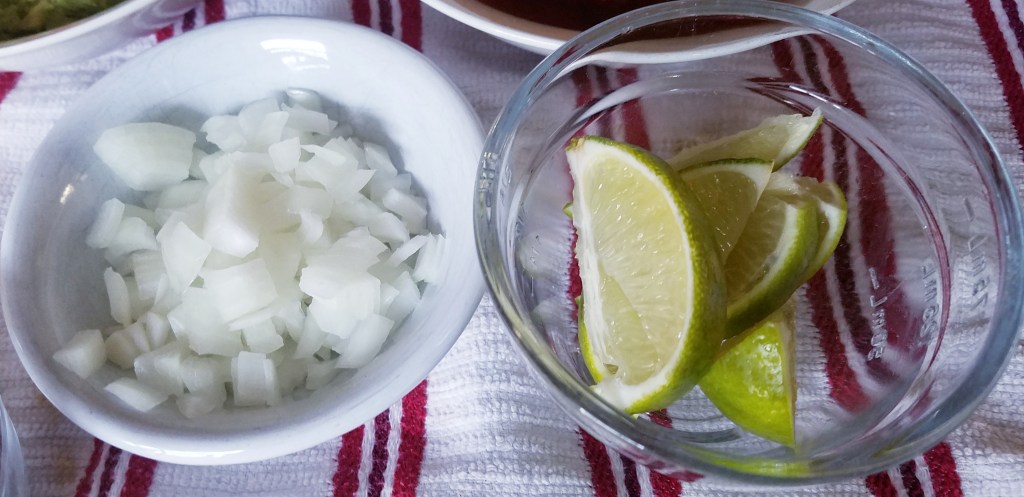
Serve with warm tortillas, guacamole, fresh tomatoes, onions, cilantro and lime wedges. 

To complete the meal, include side dishes like refried beans, borracho beans, fried potatoes or Spanish rice.

Above all, as you sit down to eat, consider the ranchers and farmers that made the meal possible.  Consider the sacrifices that we all make for each other as we try to make each other happy, safe and healthy. 

Mexican Flag Chimichangas

Chimichangas have been a staple of Tex-Mex cuisine for longer than I can remember.  They’re really just glorified, fried burritos, but ‘chimichanga’ sounds mysterious and exotic!

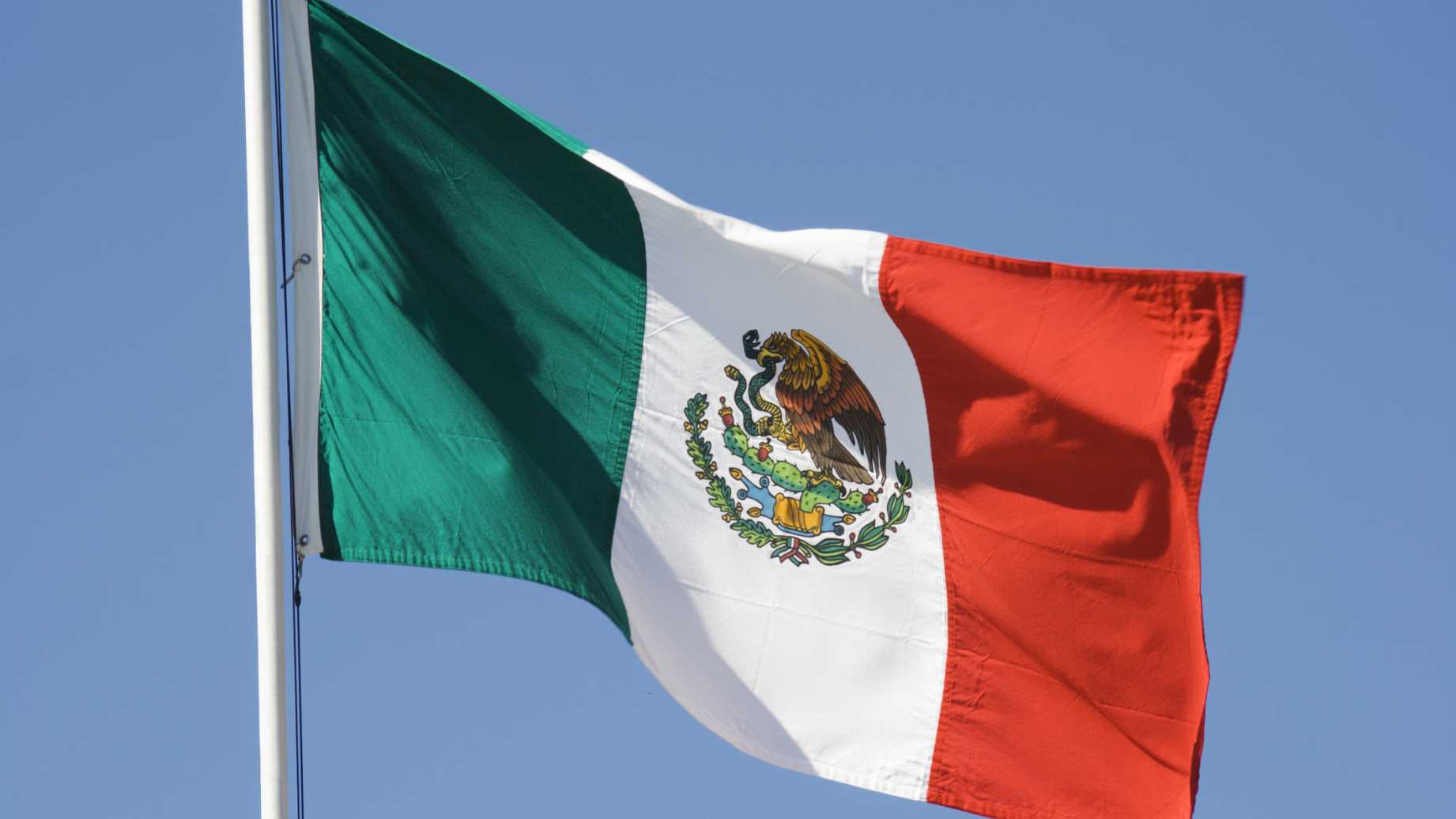
For me, chimichangas are a kitschy comfort food and they can be made with all sorts of fillings and toppings.  This recipe showcases the colors of the Mexican flag, red, green and white and it will make 6 large chicken chimichangas.

Ingredients for braising the chicken:

4 large chicken breasts

2 cups chicken stock

2 garlic cloves, smashed

1 bay leaf

1 Tbs butter

1 tsp oregano

1 tsp cumin

½ tsp paprika

½ tsp salt

½ tsp black pepper

Ingredients for chimichangas:

6 large burrito sized tortillas

Shredded chicken

About 2 cups of cooking oil

1 cup green sauce: (see the recipe here…)

1 cup red sauce: see the recipe here… (see the recipe here…)

1 ½ cup white cheese sauce (see the recipe below)

The 4 chicken breasts that I used were enormous.  I’ve seen turkey breasts that were smaller than these monsters!  I forgot to check the weight on the package but I am sure that it was at least 5 lbs.  I sliced them down the middle, separating the tenderloin from the breast.

Directions for preparing the chicken:

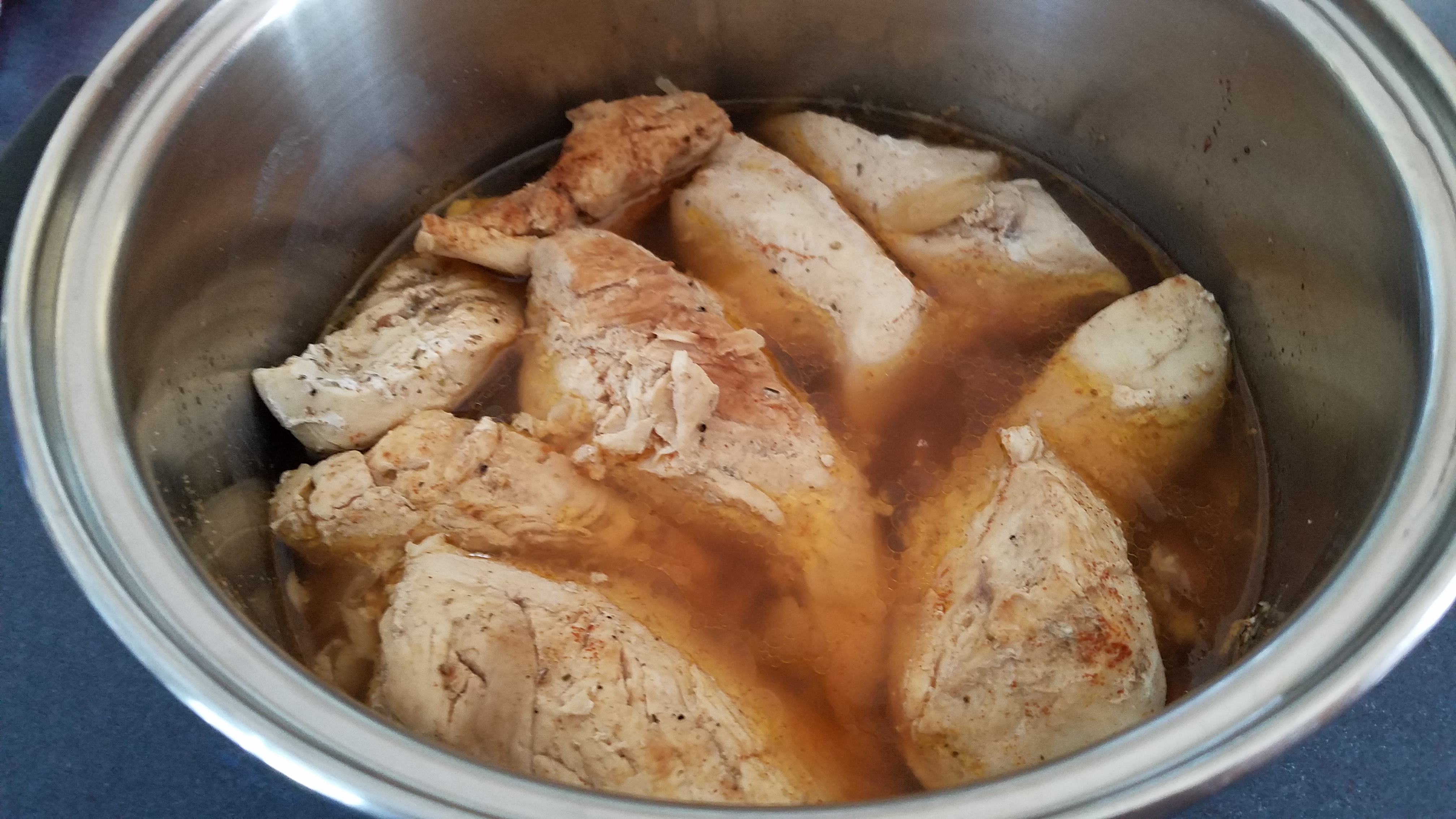
Add all ingredients, except the chicken to a 4 quart pot.  Cook at medium heat and stir to combine.  Add the chicken and braise for 5 minutes, turning chicken over occasionally.  Reduce heat to low, cover the pot with a lid and simmer for 30 to 40 minutes.  Remove the chicken and allow it to cool.  Strain the stock from the pot and reserve for later.  The stock is perfect for making Mexican rice, or anything else that calls for chicken stock.
After the chicken has cooled a little, shred with forks and seal in a plastic bag until needed.

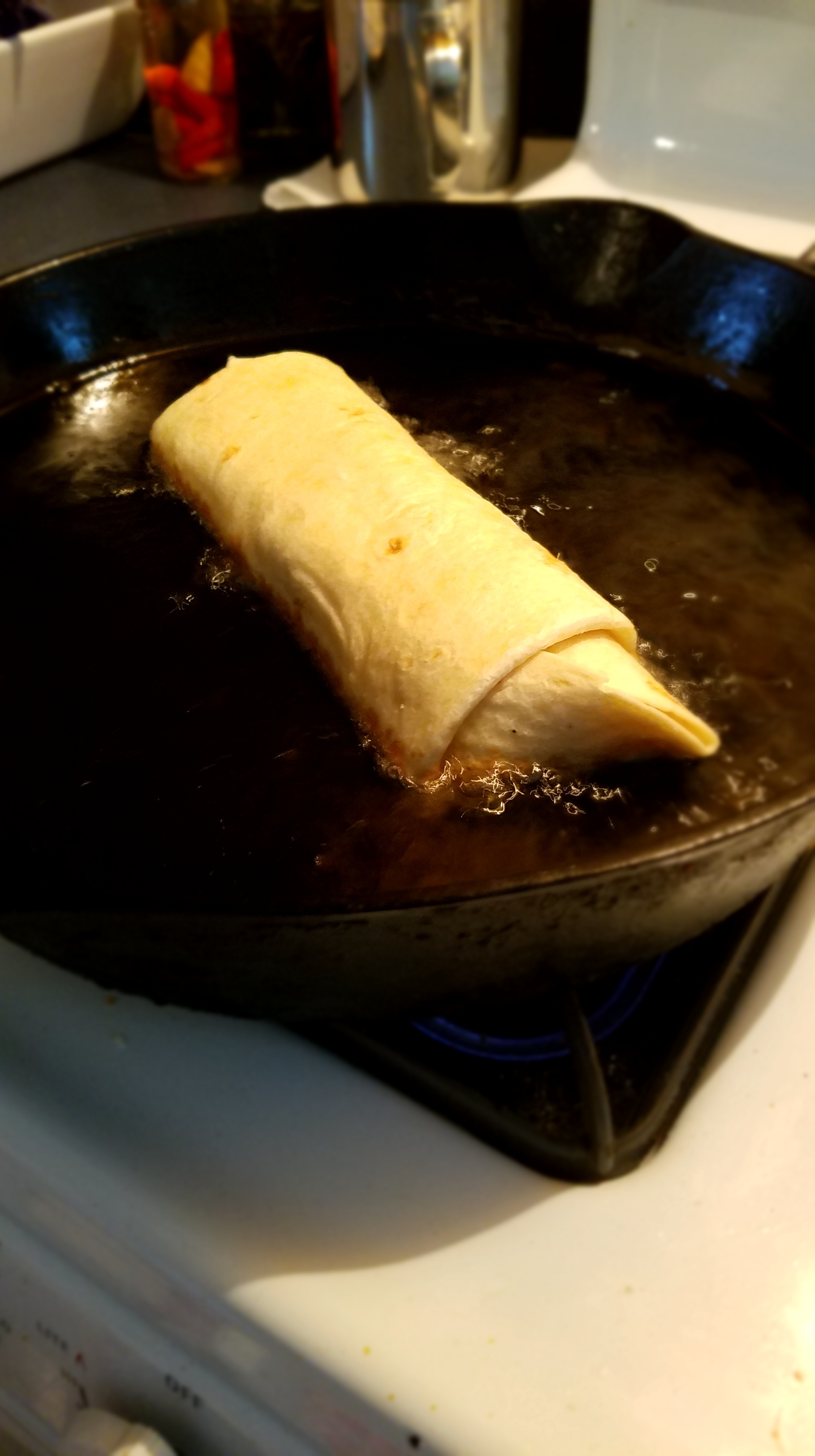
Fill a skillet (I used cast iron) with about 2 inches of cooking oil and set the heat to medium. 

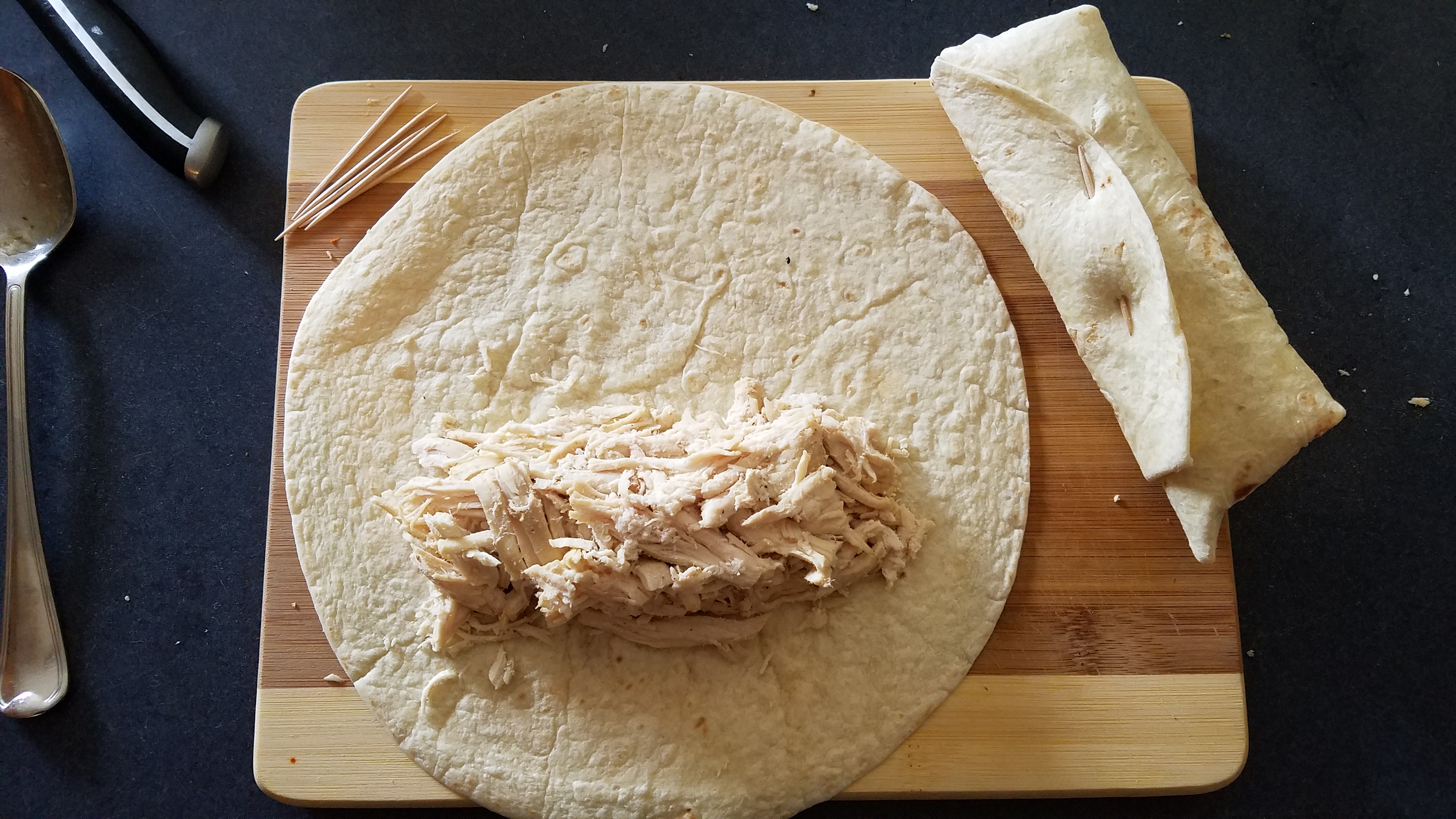
Lay a large tortilla on a clean work surface.  Put about 1 cup of the shredded chicken on the bottom third of the tortilla.  Fold the sides over and roll the tortilla from the bottom to the top.  Secure with a toothpick.  – Yes, my stalwart kitchen friend, the toothpick.

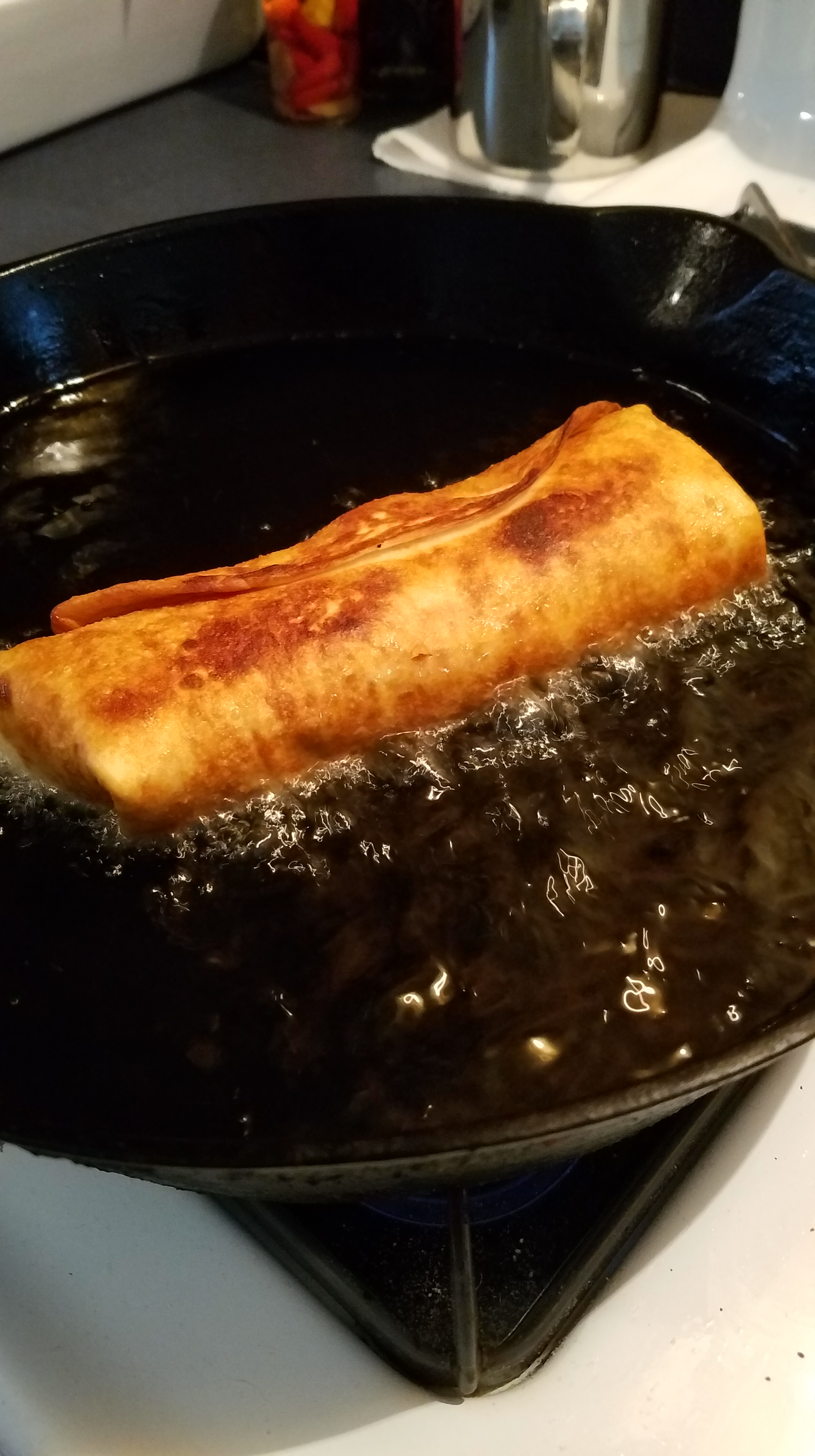
Once the oil is hot, carefully lay a chimichanga in the pan.  After about a minute, turn the chimichanga over with tongs.  Keep turning the chimichanga until it is golden brown.  Remove chimichangas to a warm area while the other ones cook.  You should be able to cook two chimichangas at a time without crowding in the skillet.
Remove toothpicks from the chimichanga.  Please don’t forget this VERY important step.  Your guests will thank you.  Actually, they may never know you used a toothpick but they will surely know you used one when they swallow it!

And now…the white cheese sauce, or as I like to call it, my weekly confession

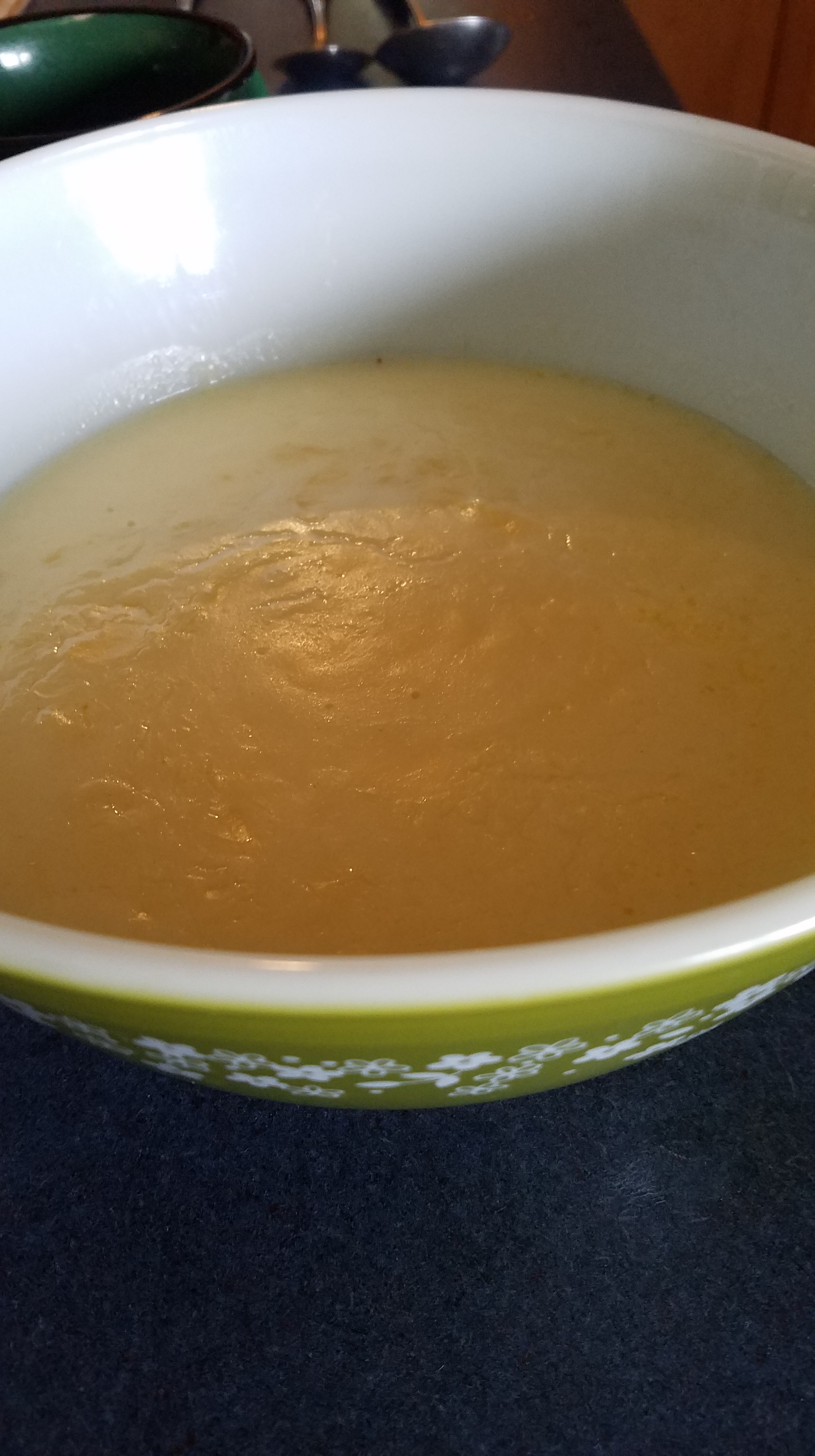
I was a fool to think that I could whip up a white cheese sauce without a roux.  What was I thinking?!  Well, I’ll tell you what I was thinking.  The meal was nearly ready to eat and all that remained was a simple cheese sauce.  I didn’t want to make a big production out of it and I knew that I could just heat some milk and slowly introduce cubes of white cheddar and stir until everything became creamy.  But, I over heated the milk and once that happened, there was no going back.  The sauce separated.  In an act of desperation, I continued stirring the sauce.  The result was a big wad of string cheese sitting in milky water.

I pulled the pan off the stove and stared at the disaster.  Starting over was out of the question.  I didn’t have more cheese and I would have rather admitted defeat than go back to the store to get more cheese so, I decided to attempt to revive the existing mess.  I laid the ball of cheese on a cutting board and cut it into small cubes.  Then, I prepared a roux.  I added a healthy splash of chicken stock and slowly added some of the milky liquid and little bits of the cheese, alternately, all the while keeping the heat very low.  I mixed for about 10 minutes and turned the heat off.  The resulting sauce turned out pretty good.  It had some clumps of cheese in it but it tasted good.  I was lucky.

Beloved, Broken Sauce – Rejuvenated!

Think of a roux as a safety net.  Sauces are  tricky business and peril awaits at every turn.  Too much heat or adding components too quickly can lead to a broken sauce.  If you’re a thrill seeker and like to live your life on the edge, go ahead, skip the roux, but don’t say I didn’t warn you as you’re crying over your beloved, broken sauce!  I won’t go into the science behind sauces and roux because whenever I hear about emulsifiers and viscosity I grow weary and all I hear is, “blah, blah, blah, emulsifier…”

Just remember that good sauces start with a roux and good cooks aren’t thrill-seeking trapeze artists.  A safety net, such as a roux, is not the same thing as training wheels on a bicycle.

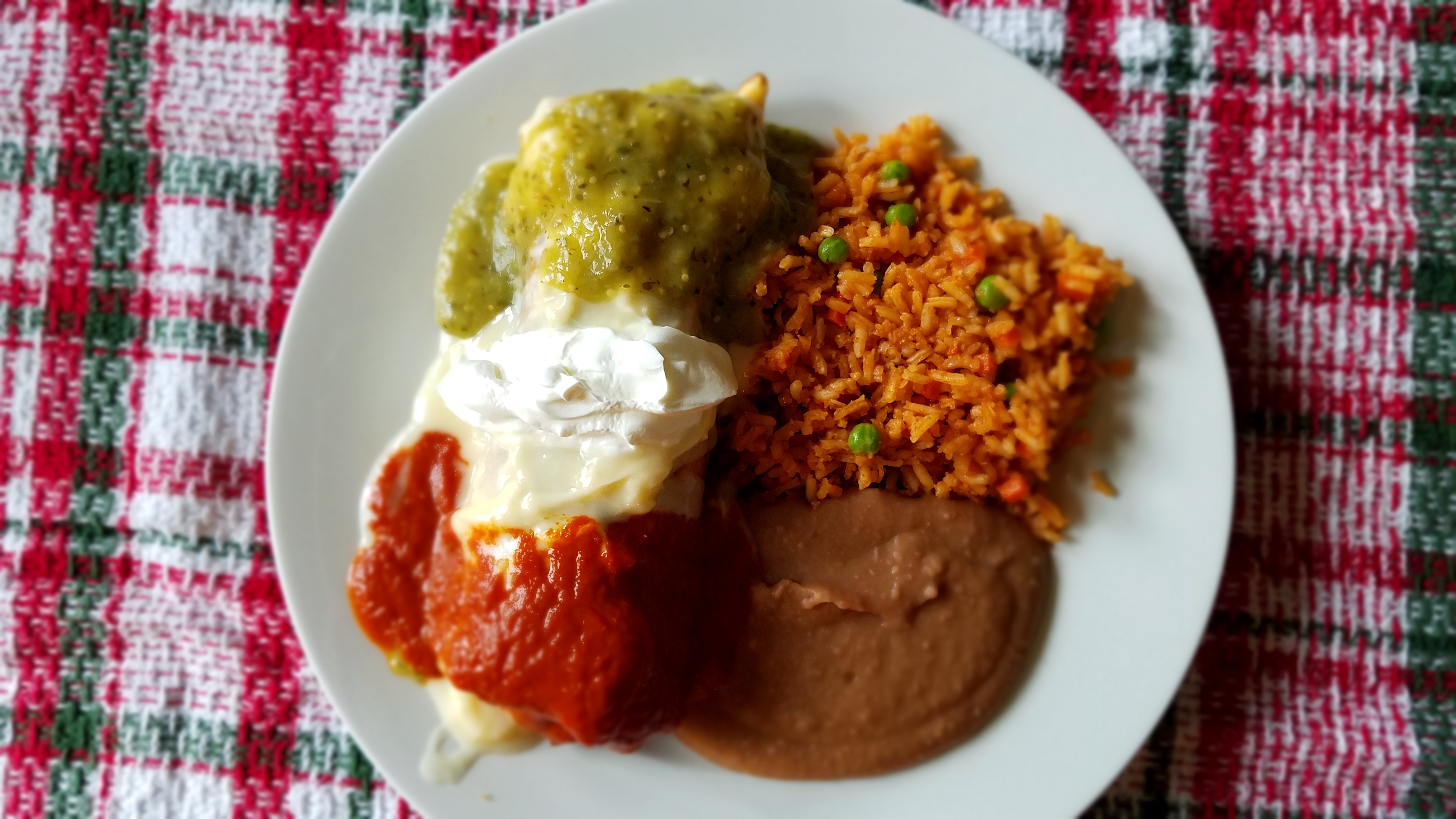
Smother the chimichanga with cheese sauce.  Cover one end of the chimichanga with red sauce and the other end with the green sauce.  Add a big dollop of sour cream in the center. 

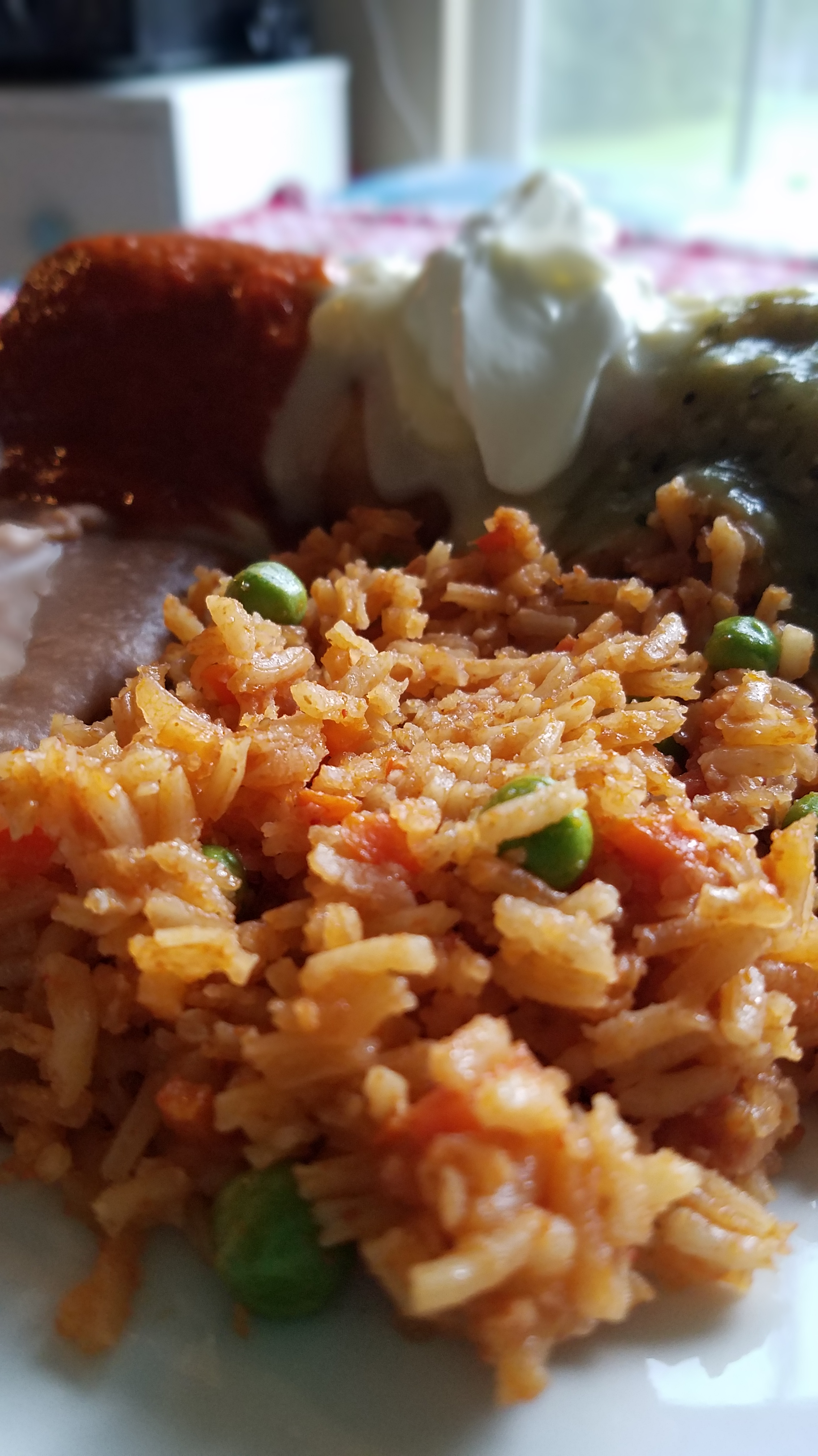
Serve with Mexican rice and refried beans.

Salsa Roja

This red sauce works well with lots of Mexican dishes. It’s rich, smooth and mild. It should provide a nice counterbalance to the chunky,spicy green sauce.

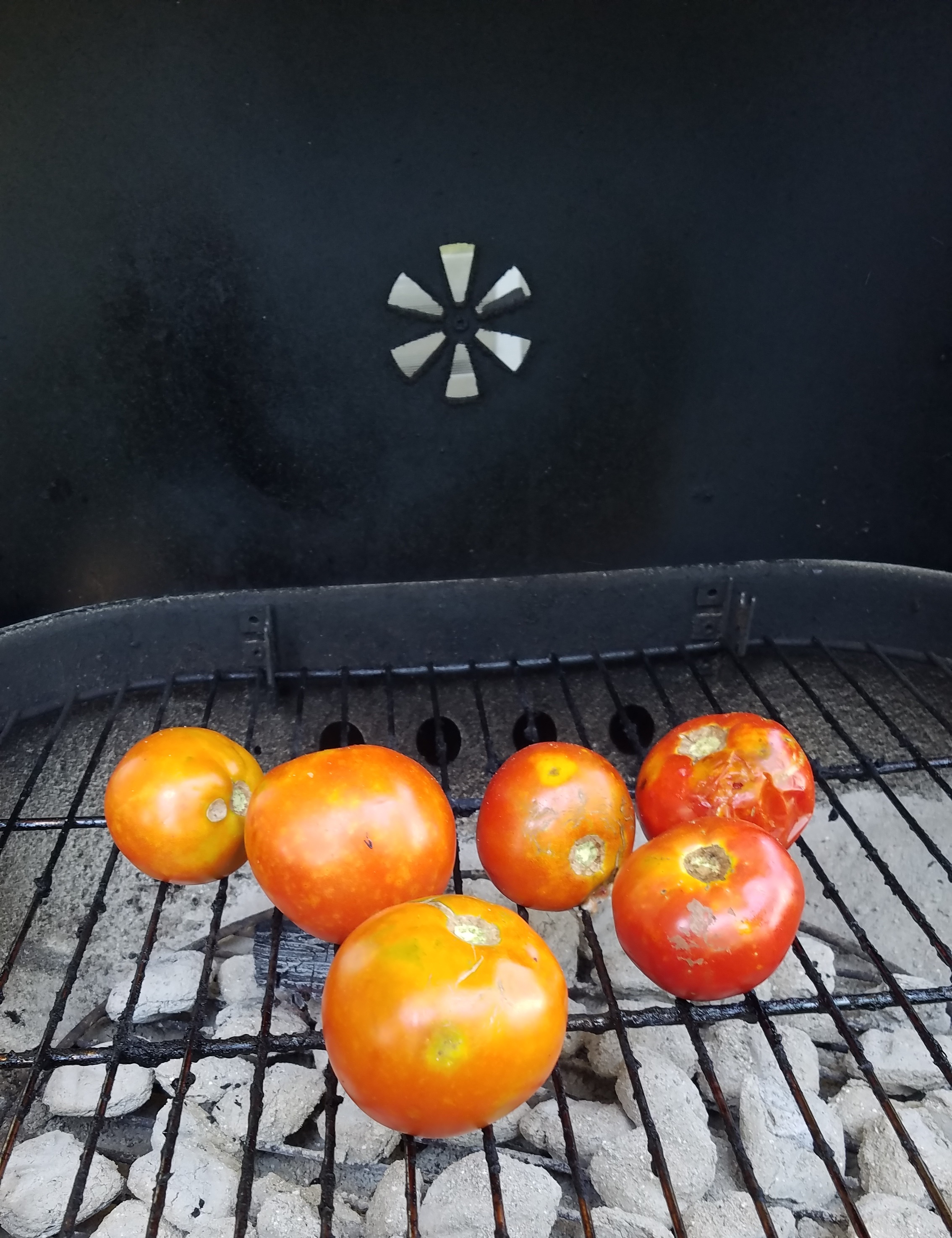
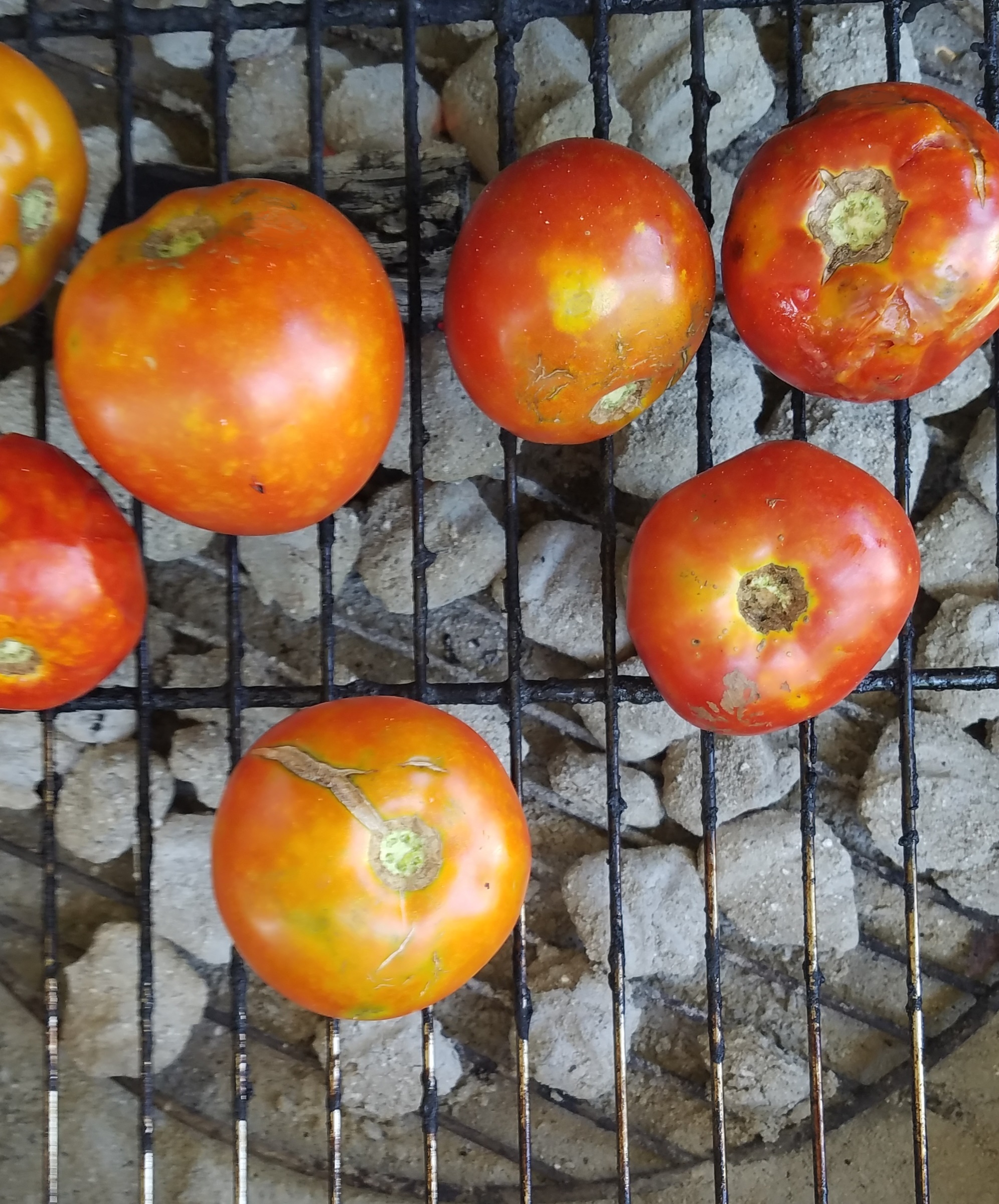
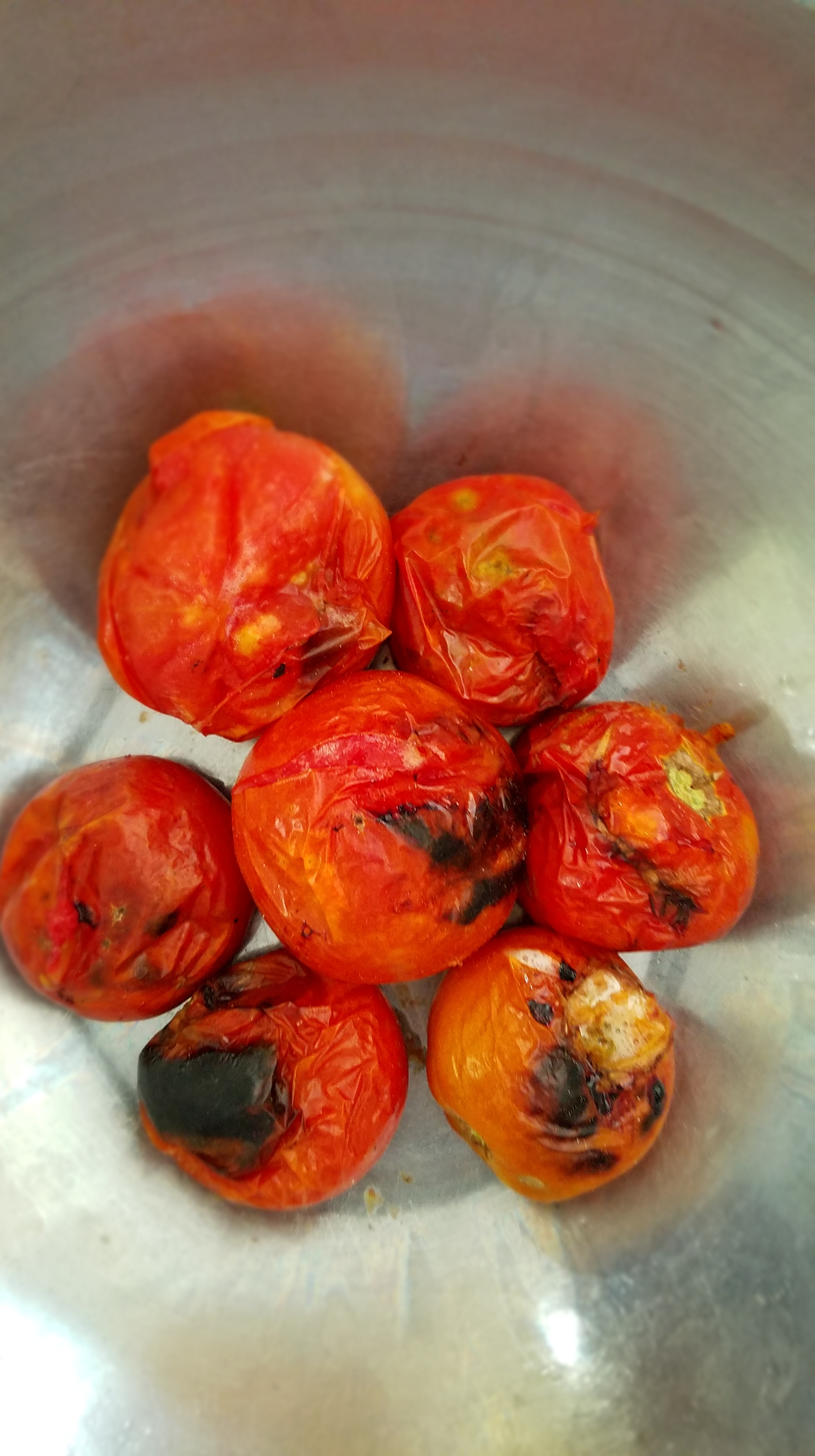
Since the grill is still hot, I am going to put a char on the tomatoes. This can be done in the oven at 400° but, like I said, my grill is ready and waiting and, since it’s summertime, I don’t want to heat the house up if I can avoid it.

This recipe calls for chiles en adobo, which are smoked, dried jalapeños (chipotles) that are packed in a sort of barbecue sauce, called adobo.  I prefer to buy chiles in adobo in little 8 oz cans.  One can carry me through several recipes and they last a long time, in the refrigerator.

Ingredients:

6 dried guajillo chiles

6 small to medium tomatoes

1 Tbs olive oil

½ onion, diced

3 garlic cloves, smashed

1 cup water

1 chipotle jalapeño in adobo sauce

1 tsp adobo sauce

½ teaspoon Mexican oregano

1 teaspoon salt

A pinch of freshly cracked black pepper

Directions:

Cut the ends off of the chiles and slice them lengthwise.  Remove and discard the seeds and fibers.  Chop the chiles a little and set them aside. 

Roast the tomatoes on a hot grill.  When the tomatoes start to char, remove them. 

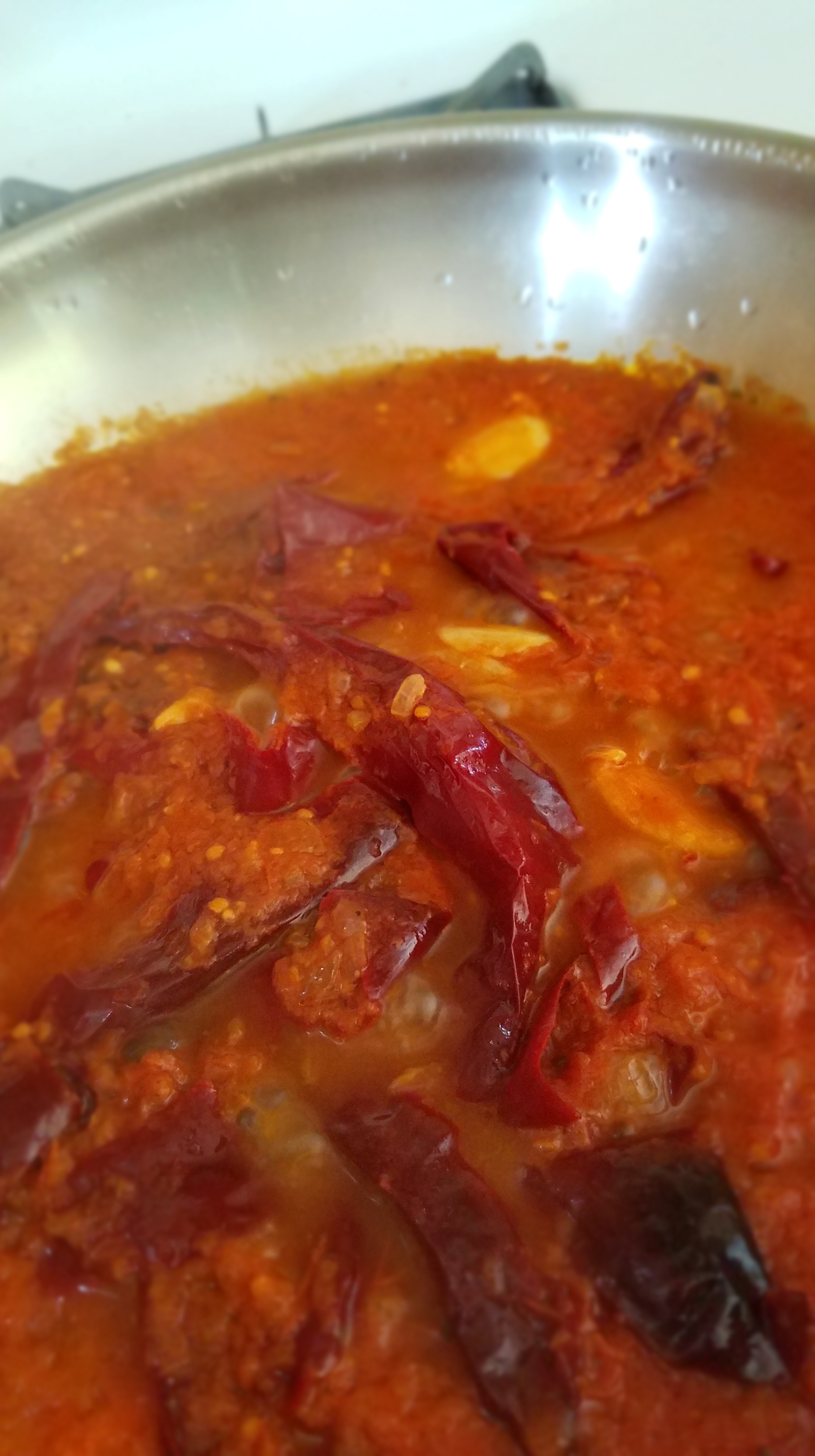
In a large skillet, sauté the onions and garlic in olive oil on very low heat.  Once the onions have softened, add the water, chipotle jalapeño, adobo sauce, guajillo chiles, oregano, salt and black pepper.  Cover and simmer for a few minutes.  Chop the tomatoes roughly and add to the pan.  Simmer for 10 minutes and then turn the heat off.  Leave the sauce alone for 10 more minutes, which should be long enough for the chiles to soften. 

Pour the contents into a blender and puree.  Strain the solids and discard.  You may need to scrape the strainer with a flexible spatula.  Pour the sauce into a jar and allow it to cool.  Refrigerate until needed.

Salsa Verde

I like all kinds of food, but I turn to Mexican cuisine more often than not.  Mexican cuisine can be simple or complex.  As a home cook, I often head down the simple path…tacos, enchiladas, fajitas…   But, there are times that I want to go “all out” and make something special. 

Salsa verde is one of those special things that I can’t resist.  It is an essential component in my Mexican Flag Chimichangas, which I will share with you soon.   

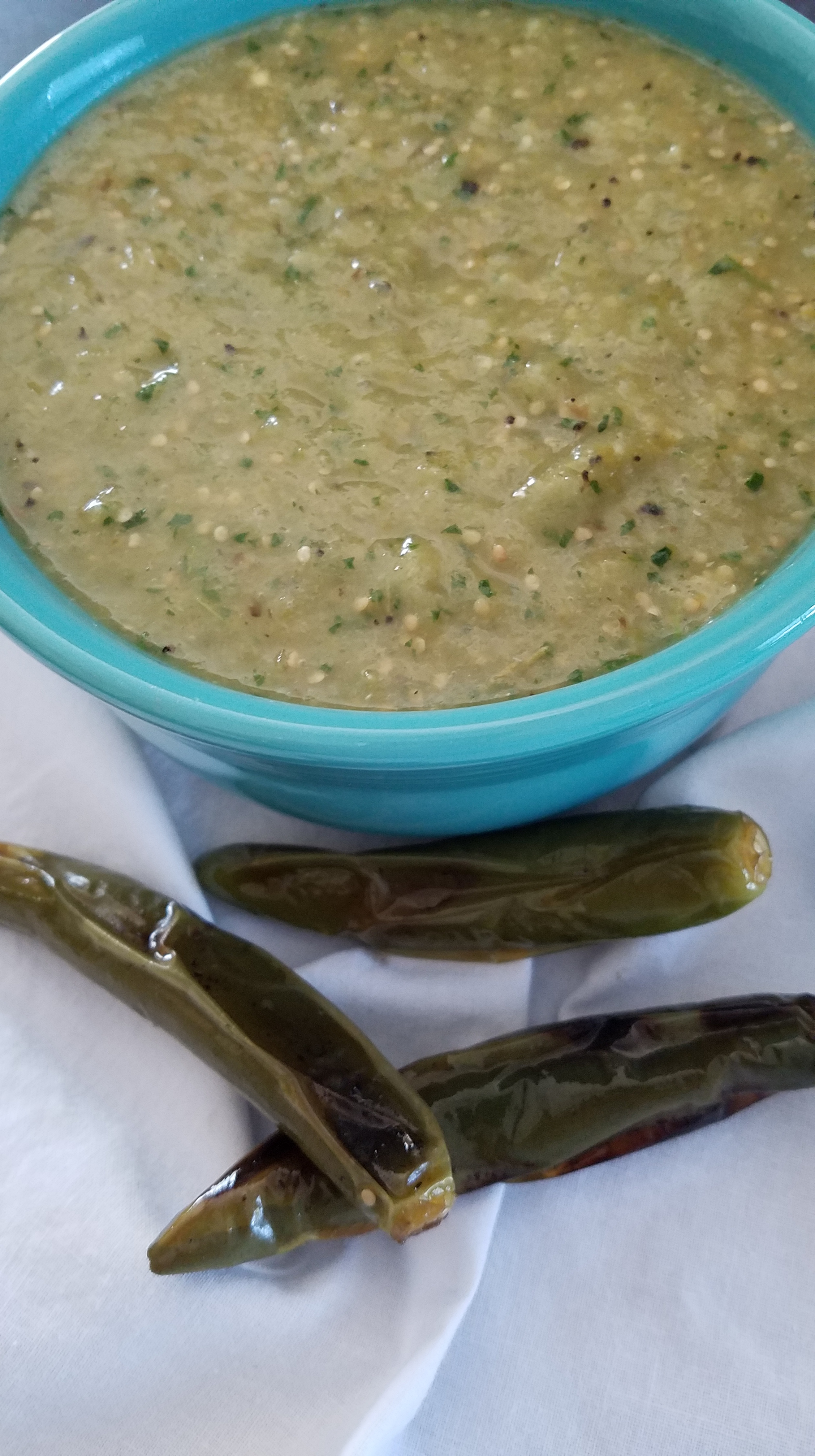
The salsa verde that I am making is comprised mainly of tomatillos and serrano chiles.  There are many types of Mexican green salsas but this particular one is common to many dishes.  The thing that I find funny about making salsa verde is that it can be prepared simply and quickly, or it can be a time consuming project.  I have chosen the time consuming variation, because I am poco loco, which is to say, a little bit crazy. 

First, let’s get something straight.  Tomatillos are not green tomatoes.  Although the tomatillo is in the same family as tomatoes, they are not the same thing.  Tomatillos can be found in grocery stores all over the U.S., due to an ever-growing population of Latinos.  And to that, I say gracias!  You can buy salsa verde in a jar, but homemade salsa verde is mas sabroso (tastier.)

Smoking tomatillos on the grill makes it even better!  So, lets grill some tomatillos.

This recipe will yield about one quart of salsa. 

Ingredients:

12 tomatillos

5 serrano chiles

1 Tbs coarse salt

1 Tbs olive oil

3 garlic cloves

1 small onion

¼ cup chopped cilantro

1 tsp salt

1 tsp sugar

Directions:

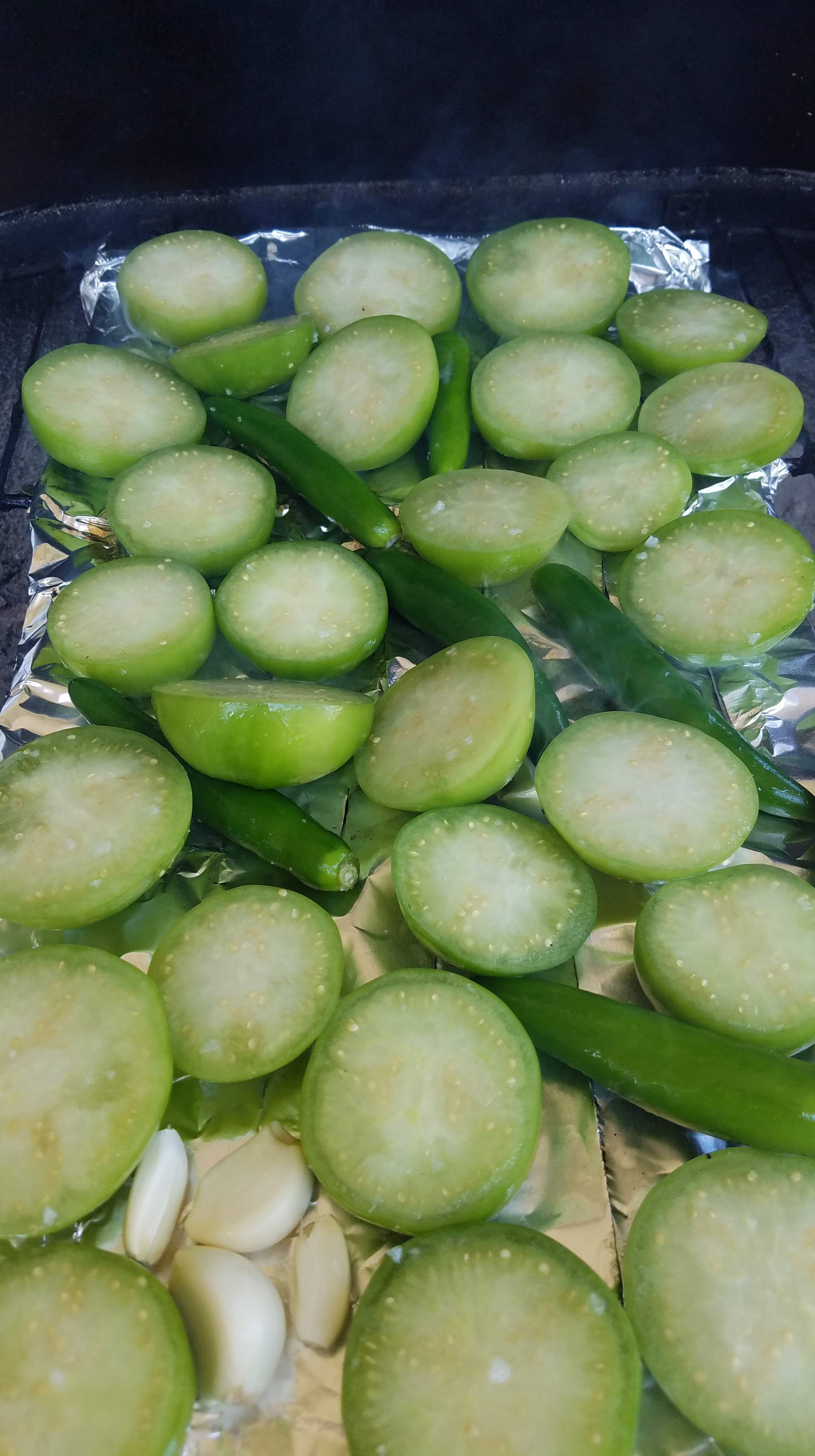
Peel the stems and husks off of the tomatillos and pull the stems off of the serranos.  Slice the tomatillos in half (along the equator, if you know what I mean).  Toss the tomatillos, serranos and garlic cloves in a bowl with the coarse salt and olive oil.  Set aside.

Directions for grilling:

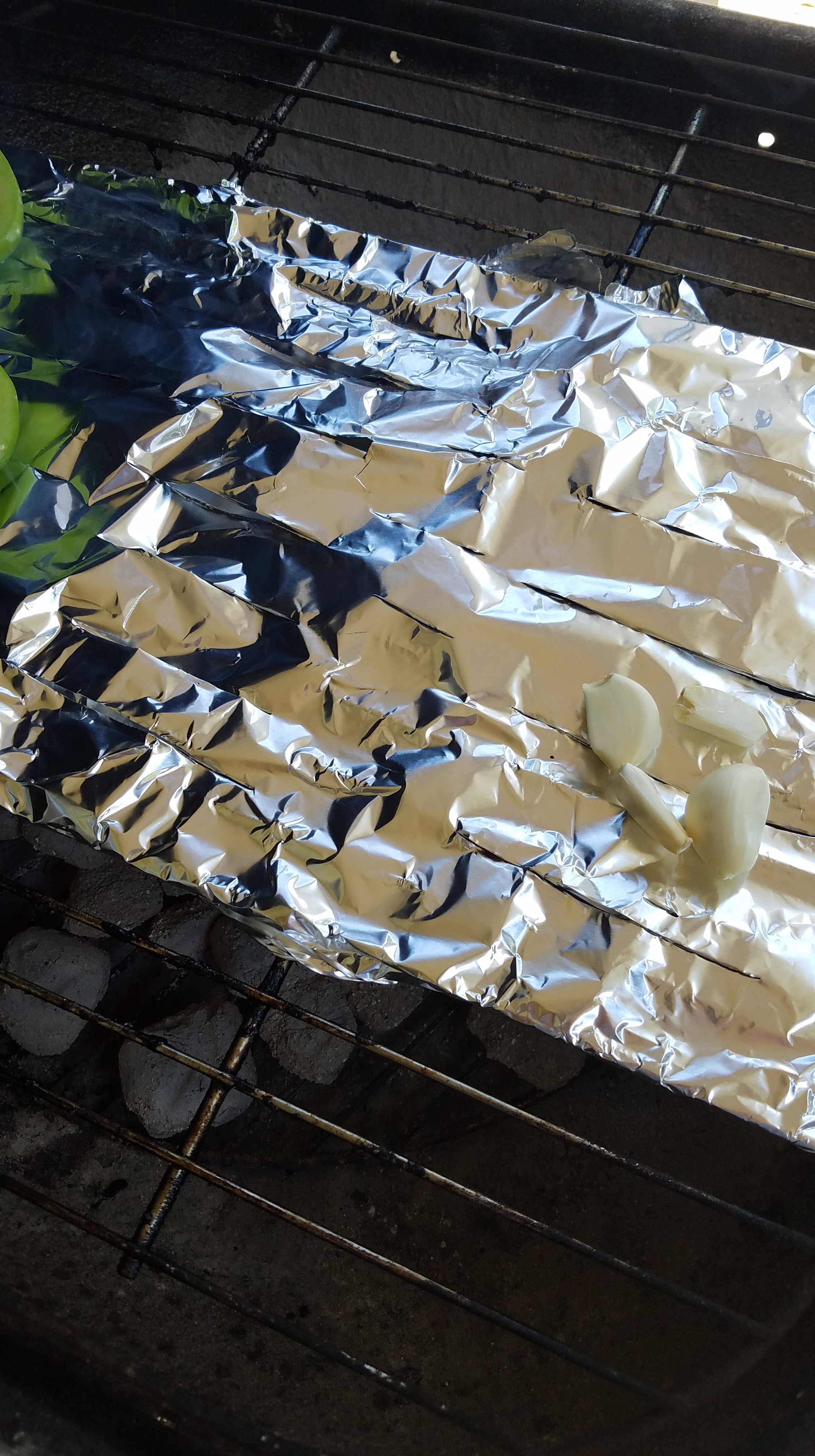
Wrap the grate with heavy duty aluminum foil, covering about ¾ of the grill.  Cut slits in the foil to facilitate air flow.  You can skip this if you feel lucky but, I know from past experience that little things, like peppers and garlic, can find a way to slip through grating before you know it!

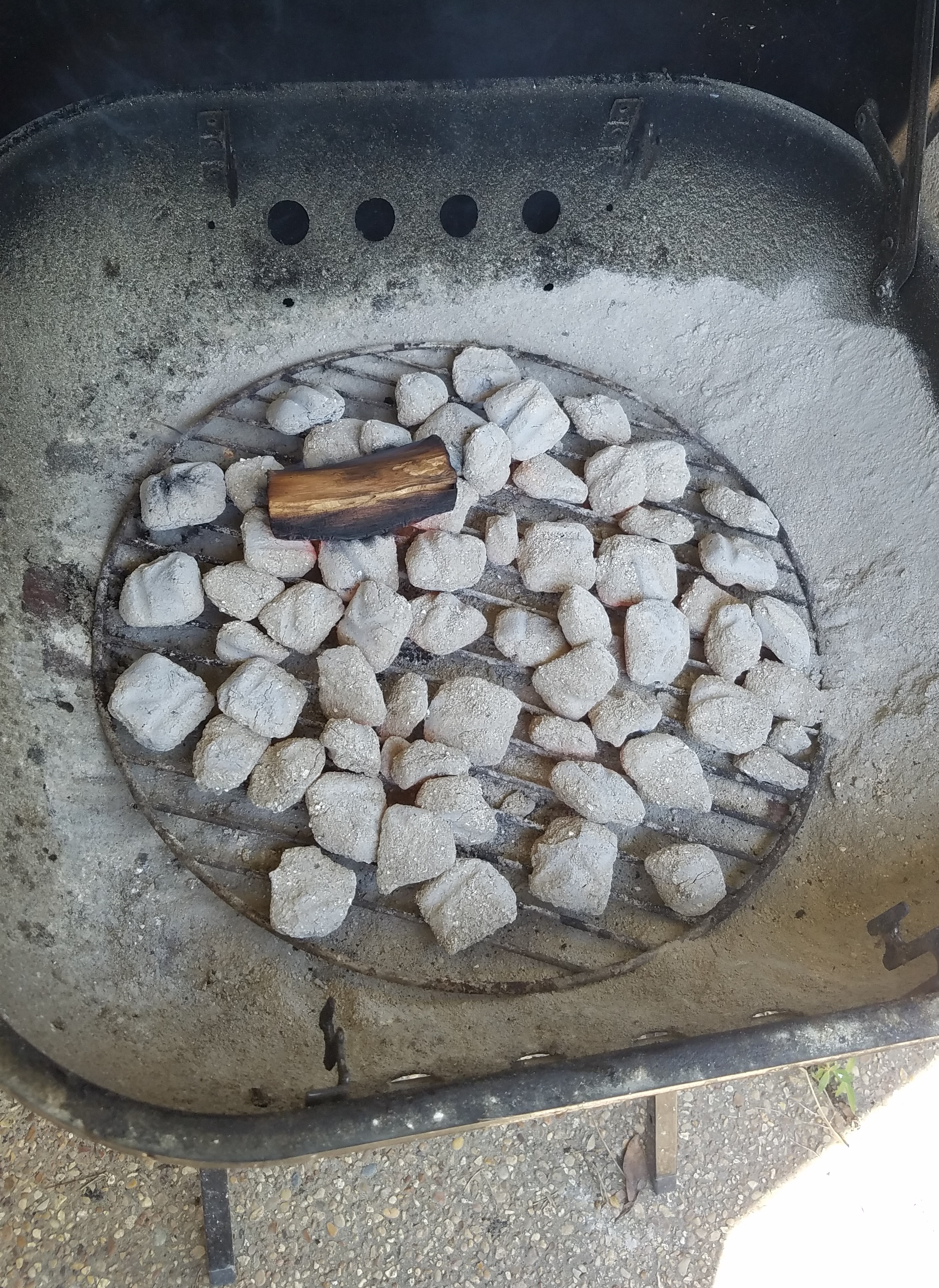
Heat charcoal briquettes and place them in the grill.  Lay a piece of piece of wood on top of the coals.  I used mesquite wood but hickory or oak is fine.  It’s all about your flavor preference.

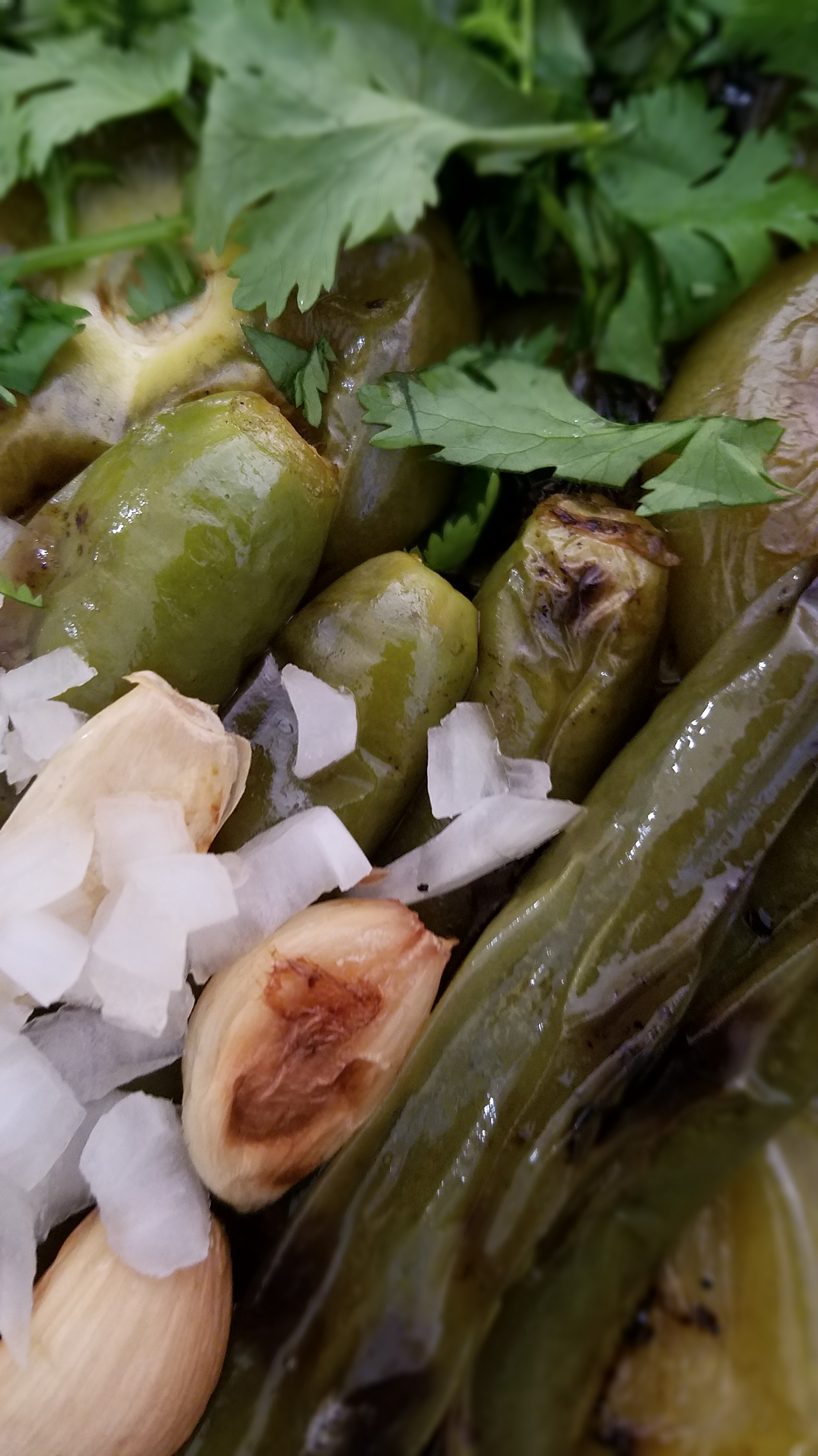
Place the foil-covered grate on the grill and then place the tomatillos, serranos and garlic on the grate.  Close the lid of the grill and wait several minutes.   Open the grill and inspect the everything.  Once the bottoms have blackened, pull them off. 

Purée

Drop the smoked tomatillos, chiles, garlic, the teaspoon of salt and the tablespoon of sugar in a blender.  Add the diced onion, cilantro and a splash of water.  Purée for several seconds.  That’s it.  You have made salsa verde!  Store in a mason jar and allow to cool before refrigerating.  The salsa will last about a week.  If you want to extend the life of your salsa add about 2 Tbs vinegar.

¡Salsa Picante!

My garden is at its zenith.  This summer has provided a rare, but welcomed, balance of sunshine, heat  and rain.  I haven’t watered the garden in over two months and I haven’t used any pesticides or fertilizer.  Nature has been kind to me, this season!

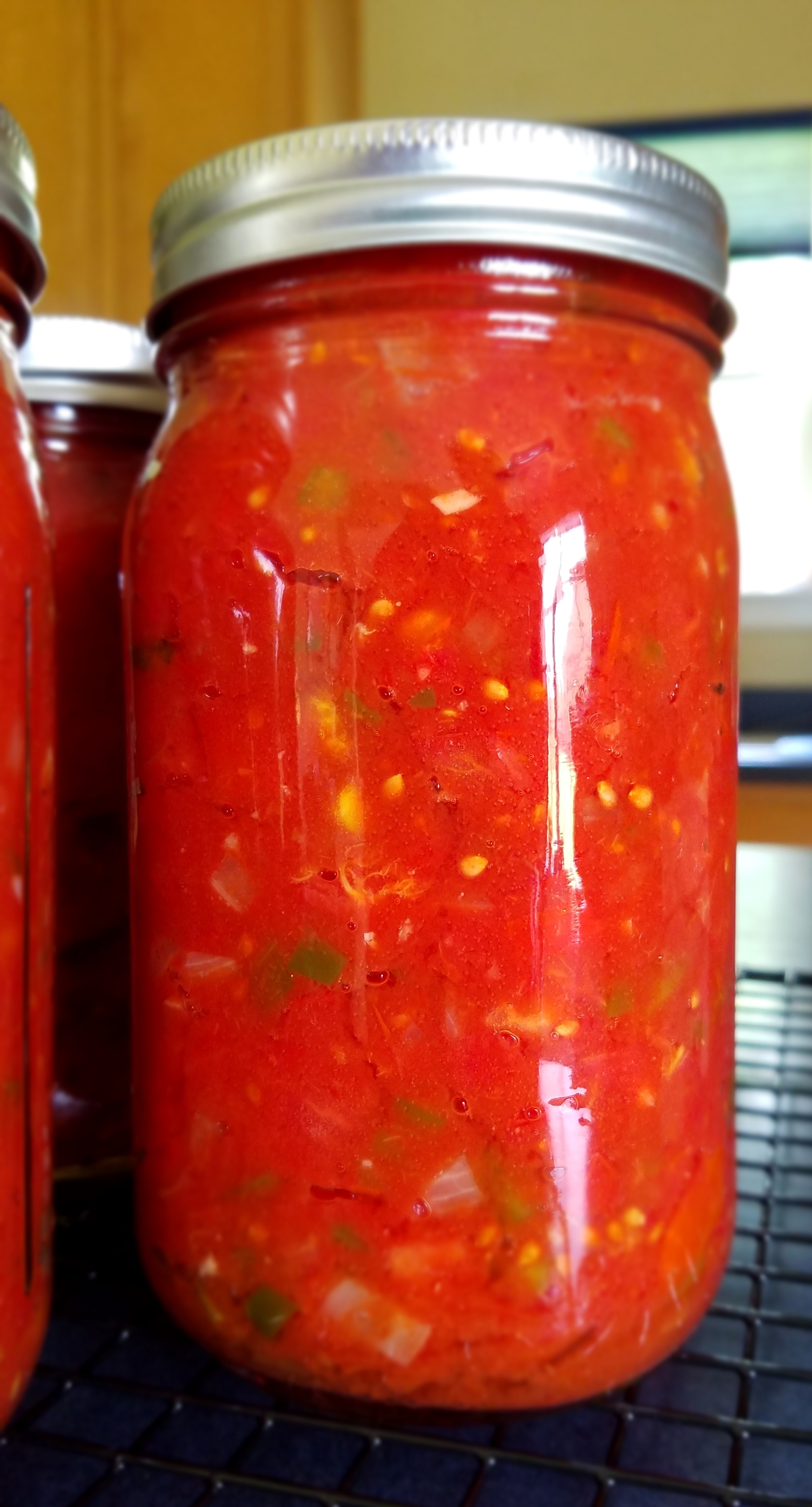
This week’s harvest provided four gallons of tomatoes and lots of different varieties of peppers.  That means it’s time to make salsa!   This recipe will make 4 quarts of salsa and, now that I have made it, I wish I would have doubled or tripled the batch.  This is not a quick process…be prepared to spend a more than a couple of hours prepping the vegetables and cooking sauces.  The end result is definitely worth the work.  I plan on giving one or two quarts away to friends and keeping the others for my family.  I don’t know why I even bother canning the stuff, since my family and I can gobble down a quart in a day or two.  But, I will try to hide a quart and bring it out as a surprise, long after summer has gone. 

Aside from the optional habanero and tabasco chiles, I consider this to be a basic salsa.  The proportions listed in the recipe should produce a “medium” heat salsa.  If you want to tweak this recipe, I suggest roasting or smoking one or more of the items.  For example, you could put the jalapeños on the grill and smoke with some mesquite wood, or you could char the onion and tomato over hot coals, or wrap the head of garlic in aluminum foil and bake for 15 minutes.  Any of these things will add a new, distinct profile to your salsa. 

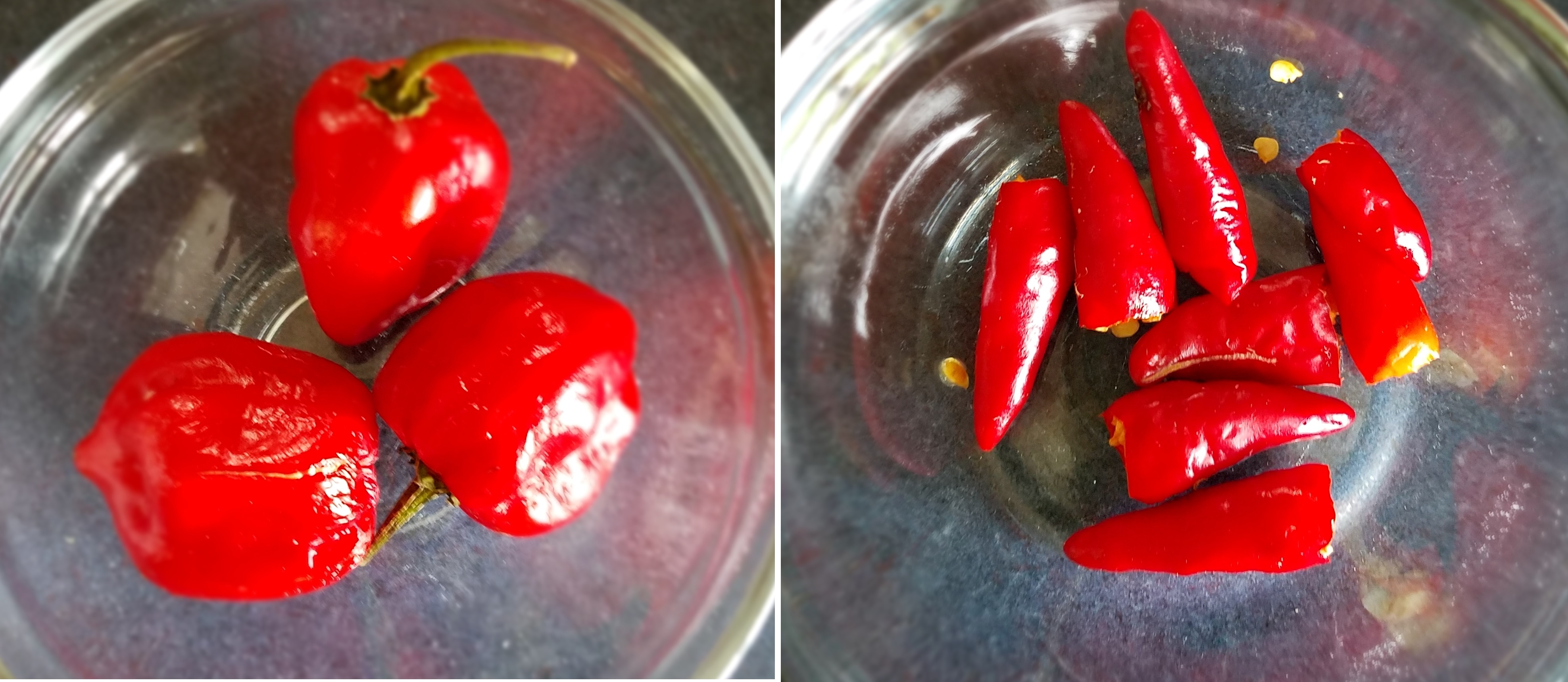
I stared at the habaneros and tabascos for a long time and finally decided to pass on them.  I would love to include them but I believe the end result would have been too spicy for some folks.  I will dice them and sauté them in a little tomato sauce and add it to my private reserve!

For this recipe, I made the tomato sauce from fresh tomatoes.  If you don’t have access to fresh tomatoes, canned tomato sauce will work just fine. 

Ingredients:

1 gallon diced tomatoes

2 cups diced onion

2 cups diced bell pepper

1 ½ cups diced jalapeño

Juice of 2 limes

1 head of garlic (about ¼ cup) minced garlic

3 habanero chiles (optional)

8 tabasco chiles peppers (optional)

½ gallon tomato sauce

2 cups vegetable stock (reduced to sauce)

Directions:

See my previous post to make the vegetable stock reduction: https://toothpicktales.com/2019/08/11/a-conversation-on-conservation-and-consideration/

Heat the tomato sauce in a large uncovered pot on the stove.  If you are using the vegetable stock, add it now.  Simmer at low heat while vegetables are prepared.

Chop vegetables into small pieces.  Tomatoes should be about ½” pieces and the onions and chiles should be cut into ¼” pieces.  Strain the juice from the tomatoes and set aside. 

Add all ingredients to the sauce.  Cook uncovered for one hour.  Turn the heat off and add the lime juice and stir to incorporate. 

I have to confess, I did not cook the salsa long enough and I forgot to add the lime juice when I made this.  Within a day after canning, juice started creeping out of the jars.  When I unscrewed the ring the lid popped off, from the pressure inside.  I dumped the salsa back into a pot and cooked it at a low boil for 30 minutes and then added the lime juice.  I have canned it again and I hope that does the trick.  If not, I will come clean and relay the sordid details!

Sanitize canning jars.  I use a bleach and water solution.  The bleach to water ratio should be 2 teaspoons of bleach to 1 gallon of water.

Lay empty canning jars, lids and rings in the kitchen sink, after plugging the drain.  Fill the sink with 3 gallons of boiling water.  Add 6 teaspoons of liquid bleach.  Remove the jars after two minutes and allow them to air dry. 

Fill the jars with salsa and leave about ½” air space at the top.  Cover the jar with the lid and secure by gently tightening the ring with your fingertips. 

Immerse the jars in boiling water and pull them out after 15 minutes and allow them to cool on a cooling rack. 

Homemade flour tortillas

Today’s words of encouragement are, “If at first you don’t succeed, try, try again.”  I did not adhere to that wise old adage many years ago when I first attempted to make homemade flour tortillas.  After two or three failed attempts, I gave up.  Twenty years later, I tried again and produced some of the best tortillas I have ever had.  Now, I consistently prepare quality tortillas.

What was the difference between then and now?  Well, there were some key differences:  Ingredients, Process and State of Mind.

On my first attempt at making tortillas I used solid vegetable shortening.  I am sure that vegetable shortening can produce good tortillas but if you want REALLY good tortillas, nothing compares to good ol’ lard.  Another key to making good tortillas is keeping the dough warm throughout the entire process of mixing, kneading and resting.  Warm water and warm air facilitates gluten production.  Yes, I want that gluten!  A good flour tortilla should be pliable and soft.  You should be able to grip the tortilla with both hands and pull it gently without tearing it apart.  The only way to get there is by kneading the dough.  When making the dough, add the flour, a little bit at a time, to warm water.  By adding flour to the water you have better control over achieving the proper consistency of the dough.  The finished dough ball should be soft and malleable, not dense and difficult to work with. 

Another key to successful tortillas is using an appropriate pan.  When I first attempted to make tortillas I used a non-stick pan that did not retain heat well.  The sad thing was, I had a cast iron skillet and I did not even think about using it.  What a shame!  A cast iron skillet, or a cast iron comal, which is what I use now, or even a good, dense stainless steel pan will give you the necessary, sustainable heat to produce tortillas quickly, and that is essential.  Tortillas need to cook quickly.  Once you lay the uncooked tortilla on the pan, give it about thirty seconds and then flip to the other side for another fifteen seconds, or so.  If you maintain heat high, the tortilla will puff up and you will get wonderful, slightly browned spots on the tortilla. 

Finally, you need to cook with confidence.  Your state of mind will affect the outcome just as much as proper ingredients and technique.  Listen to your inner self throughout the entire process.  If you feel that the dough is not coming together the way you want, you’re right.  Fix the problem by relying on your intuition and be confident with your decision.  If you think that the tortillas are cooking too quickly and they smell burnt, you’re right…fix that problem.  Turn down the heat on the stove to achieve a better result on the next tortillas. 

And remember, if at first you don’t succeed, try, try again.  If it worked for me, it will surely work for you!

Tortillas Casersas (Homemade Tortillas)

Ingredients:

4 cups all-purpose flour

1 tsp salt

2 tsp baking powder

2 Tbs lard

1 ½ cup warm water

Directions:

Whisk the flour, baking powder and salt together in a bowl.  Add the lard and pinch apart the flour covered lard with your fingers.  Continue pinching apart the clumps of lard, bit by bit, and avoid the temptation to smear the lard together with the flour.  Once you have broken down the clumps of lard, scoop up some of the mixture in both hands and gently rub your hands together.  Continue gently rubbing the mixture together until it is crumbly.   

In a separate mixing bowl, add the warm water.  Introduce some of the flour mixture.  Mix with a sturdy spatula.  Add more flour and continue mixing.  Repeat until the mixture becomes thick, like cake batter.  At this point you will mix by hand.  Keep adding flour and mix by hand until the dough begins to form a ball.  It’s ok to leave the dough a little sticky.  You can always add more flour later, if you wish.  Knead the dough in the bowl and then turn it out to a lightly floured surface and knead for a few minutes.  As you knead, you will feel the dough becoming more stretchy.  Put the ball of dough back into the mixing bowl and cover tightly with aluminum foil or a warm, wet towel. 

Let the dough rest for at least a half hour.  In warm weather, I will take the bowl out to my truck and let it rest on the seat.  The heat of the sun keeps the interior of the truck nice and warm…perfect for the dough.  In colder weather, I will let the dough rest on top of the oven, with the oven set to 250°F. 

While the dough rests, preheat your skillet or comal on the stove.  Clean your work surface and make sure that it is completely dry.  Sprinkle some all-purpose flour on the work surface and rub some flour on your rolling pin.  Turn the dough onto the work surface and knead a few times.  If the dough is too sticky to work with, add a little more flour and knead, to incorporate the flour.  Once you are happy with the dough, pinch off a piece and roll it in your hands.  You’ll want a golf ball sized dough ball.  Place the ball of dough on the floured surface and press it with your hand.  Shape it into circle and then use the rolling pin to flatten it out.  I have found that rolling it out very thinly makes the best tortillas.  Roll it out to about eight inches in diameter. 

Place the tortilla on the skillet for about thirty seconds.  You might see air pockets pop up…this is a good thing!  Turn the tortilla over for another fifteen seconds and then move the finished tortilla to a plate, in a warm area.  Continue in this fashion until you have made all of the tortillas.  If you have a tortilla warmer, place the tortillas in it.  If you don’t have a tortilla warmer, place another plate on top of the tortillas to keep them warm.

Serve warm. 

Cucumber Salsa

The summer heat has taken a slight break in my neck of the woods and I couldn’t be happier. It’s actually been cool enough for me to sit and relax on the patio during the last few evenings and listen to the hypnotic drone of the cicadas and watch the fireflies flickering through the trees. This is the sort of weather that begs for margaritas with chips and salsa. When it’s hot outside, I like to prepare this salsa. It starts out slightly spicy and finishes with a cool, refreshing bite.

Ingredients:
2 medium cucumbers, peeled, seeded and chopped
2 medium tomatoes, chopped
1⁄2 cup green bell pepper, chopped
1 jalapeno, seeded and minced
1 small onion, chopped
1 clove garlic, minced
3 Tbs fresh lime juice
1 tsp fresh parsley, chopped
2 tsp fresh cilantro, chopped
1 tsp dried dill weed
1⁄2 tsp salt

Directions:
Combine all ingredients and refrigerate for about one hour. Serve with sturdy, salty tortilla chips and margaritas!