My Rules, My Tools! (part one)

Greetings and salutations my friends!

Time marches on and I, true to my nature, march to my own non-syncopated drummer, which is to say that nobody really knows when I will find the right groove to harmonize with the rest of humanity.

It’s not like I don’t love you all…I do. It’s just that some things have been weighing heavily on my mind and, those things have made me despondent, listless and distant.

I don’t like feeling this way.

So, I have gathered my resolve and decided to push forward.

The events of this year have been disturbing and have filled me with sorrow.

This pervasive feeling of sadness and anger has made me consider changing the theme of this blog to be a full-on rage, aimed at showing anyone who happens to read, how I feel about the current state of my beloved country, and the rest of the world.

But you all have your own opinions and beliefs, and I have to remind myself that you don’t need me to tell you what I think is right or wrong.

(Please be kind to one another. Choose peace at every turn.)

So, on with the show!

I’ve decided to post this without editing, mainly because of the reasons I spoke about earlier. I have been so reticent to write that I feel the need to let the words fly freely. I’m usually a stickler for correct spelling and grammar, but I’m throwing caution to the wind.

My Rules, My Tools!

I’m sure that I speak for anyone that cooks, and certainly for chefs that face a time when we are expected to cook for a group of people on a moment’s notice. At the best of times, this can be perceived as an honor, but at other times, it can feel like an inconvenience.

Now, if I am hosting, I will cook anything. No restrictions. Ask me to cook something I’ve never attempted before and I won’t balk. Sure, I might be a bit reticent, but when I’m at home and I have time to prepare, I’m going to be on top of my game.

However, when I’m visiting friends or family and they expect me to cook, I lose my bravado, and my skills are shaky.

First of all, how dare you put me on the spot?! Secondly, don’t you realize that I’m out of my comfort zone? Thirdly, have you ever considered that maybe I want to enjoy a vacation? I mean, c’mon, I enjoy cooking but that doesn’t mean I don’t need a break every now and then. And maybe I just want to enjoy the taste of someone else’s cooking for a change.

I feel like a trapeze artist treading on a greased wire when I’m asked to cook in another person’s house, especially if it is an impromptu request.

It’s not so bad when I’m at a house that I’m familiar with, like a family member. I know the layout of the kitchen already and I’m already familiar with the tools available…pots and pans, knives, bowls, etcetera. But when I’m asked to cook in a totally unfamiliar kitchen, I feel like I have two left hands.

I offer these examples, with sincere apologies to anyone who I may offend.

A HOMECOMMING

I love visiting my folks in Pennsylvania. It’s where I was born and I still consider it my home, despite being a transplanted Texan in my early years and adopting Texas as my home state, even though I’ve lived in Mississippi for the last twenty-five years.

Yes, I know that sounds strange, but it’s not such a strange concept to anyone that has moved around several times during their lives.

Anyway, like I said, I love visiting my folks in Pennsylvania.

I remember watching my dad make eggs and bacon on the weekends. He only seemed to cook on the weekends when I was young, and it was usually breakfast. He is fastidious in everything he does, which is probably why he had such a prestigious career as an aerospace engineer. His attention to detail can be confounding at times, especially to someone like me, who capriciously dances through life, but his approach to cooking pancakes, bacon, and eggs are forever saved in my mind.

The careful crack of the egg. The calculated tip of the spatula to check the doneness of a pancake. The determination of the condition of bacon as it cooks…is it “flubby” or burnt? Or is it somewhere in between?

And then there is my stepmother, who REALLY knows how to cook. She has been an endless source of inspiration and knowledge to me. Her roots are nestled in American/Italian cuisine, but she has a gravitas that transcends all cultures. She is truly a lover of food and the cultures behind the cuisines.

My parents have made several trips to visit me and my family over the years, and they know that I know my way around my kitchen, which is to say they know I can cook. It makes me proud to cook for my family and I’m glad to do it.

But when it comes time for me to cook in their house, I find it challenging. I’m out of my element. Everything, from the layout of the kitchen to the choice of cooking tools is different from what I am accustomed to. I find myself spending most of my time adapting to the new environment and having less time creating a wonderful meal.

Maybe I’m a creature of habit, or I’m just someone that has to have things “just so”. It makes sense, knowing that I’m genetically tied to a rigorously minded engineer. I don’t know. I always find a way to interpret my ideas, when it comes to cooking at my parent’s house, but it takes more effort than I’m used to.

A VACATION

Let’s stay at an Airbnb in lovely Portland, Oregon, in Spring. Sounds delightful, right?

Yes, it was. The house was gorgeous. Lots of booming flowers and sunshine. Quiet, peaceful, serene. Nothing but good company and light-hearted fun.

But imagine my surprise when I was asked to grill a three-pound salmon fillet on an outdoor grill that I had never used before.

I’d never grilled salmon before, but everyone knew I liked to cook, and I suppose they thought I would be a cinch for the job. I didn’t protest because they had already bought the salmon. I guess I could have confessed that I was out of my comfort zone, but I didn’t.

I cranked up the gas grill and gathered my tools, which of course, were not tools that I had take from home. So, armed with two flimsy plastic spatulas and a set of oversized tongs, I set out to grill the heck out of that salmon.

I placed the salmon on the grill and closed the cover, hoping to steam the fish quickly. In less than a minute, I could see fames bursting to life through the side vents of the grill. The flames grew quickly and I sensed impending disaster.

When I raised the lid of the grill, the flames leapt up like Satan being unleashed from the pits of Hell.

I took a moment to assess the situation and quickly decided to attempt to pull the salmon off the grill and onto the platter that I had readied. I tried to be as careful as possible, because I wanted to maintain the integrity of the beautiful salmon fillet, but I knew that if push came to shove, I was going to do whatever it took to get that fish out of the fire. I would finish it in the oven, if necessary.

I managed to pull the salmon off the grill without burning off all of my arm hairs, and I felt a feeling of accomplishment.

After bringing the fish indoors, I inspected it. The flesh flaked as I prodded it with a fork, and I realized that it might have actually cooked sufficiently, but I didn’t know for sure.

As it turns out, when I served the fish, it was a big hit. Everyone said it was cooked perfectly.

Eh, what do people know?

A CATASROPHY

Twenty years ago, hurricane Katrina blossomed from a Category 3 hurricane to a Category 5 in just 9 hours. The hurricane churned its way through the Gulf of Mexico and made landfall on August 29, 2005. It devastated much of southern Louisiana and Mississippi

I remember tracking the storm on the internet during the morning that it made landfall and feeling so lucky that my family was 300 miles north of the storm. I was fortunate, but everyone on the coast was in peril. Many people lost their houses. Many people lost their jobs. And some lost their lives.

During the ensuing months, north Mississippi saw an influx of people fleeing the destruction on the coast. One of those people fleeing was a man who I only knew as “Skip”.

Skip relocated his family to northern Mississippi. He and his wife enrolled their kids in the same school that my kids went to, and within a short time, he had not only assimilated into a new culture but also became a valuable member of the community.

Skip joined the PTO (parent teacher organization) of our small school and was quick to offer his services when we reached out for someone who would be willing to help with our annual fundraiser dinner.

Skip was a real character. He promised that he would give us a fundraiser dinner that would blow our previous fundraisers out of the water. He asked us to promote the dinner with all of the local Catholic churches in the area and promised us that he would not disappoint. He was confident that his New Orleans style cuisine would be memorable. A Spring dinner replete with gently baked catfish, savory seafood gumbo, Cajun coleslaw, with a crisp salad and fresh garlic bread. As I was about to find out, this was right in Skip’s wheelhouse. I witnessed his masterful meal and was honored to be his sous chef. It was almost surreal, and it pulled in lots of cash for the school.

This is where the rubber meets the road! Here was a man that not only was in an unfamiliar kitchen, with unfamiliar people, but had lost all of his personal belongings to a devastating storm and had to relocate his family to another city, only to be faced with the challenge of preparing a meal for hundreds of people, with the risk of failing and, thereby causing the school to lose its reputation and fail to meet its financial goals.

As I alluded to, I took on the role of sous chef to Skip. He was clearly in control, and I was happy to assist. I learned a great deal about adapting to situations during the experience. And I learned a heck of a lot about Cajun cooking!

Here’s just a few of the challenges we faced when we started cooking:

  • small, dull knives
  • confusing commercial stoves and ovens
  • giant ladles, but no large stirring utensils
  • one large whisk, but no small whisks
  • chipped spatulas

I could go on, but I’ve forgotten most of the hardships. We were both working in an unfamiliar space with awkward tools. Skip seemed unfazed, but I was tasked to make coleslaw with a six-inch knife! Imagine…chopping down a head of cabbage with a small, flimsy knife and then trying to mince onions with the same small knife. What should have taken twenty minutes lasted almost two hours. I’m glad we both started working early!

At one point, Skip started a roux for the gumbo. He poured a large amount of cooking oil into a 5-gallon pot and set it to boil. When the oil was hot, he added the flour and began stirring. He made sure to tell me that the most important part of making a roux is to have a drink in arms reach. By this, he meant bourbon. Making a big pot of roux requires constant stirring and careful attention. It also helps to use a pot and stove that you are familiar with.

At one point, Skip called to me and asked me to taste the roux. He thought it might have over cooked. I wanted to tell him that it was fine, because it was a huge roux, and I didn’t want to concede that the roux had started to burn, but he already knew it had, and he just needed me to confirm his suspicion.

It broke my heart to tell him that it had gone too far. There’s no fixing a roux that has even the faintest hint of a burnt flavor or odor.

We were about 1 1/2 hours away from dinner time and we had to act fast. We didn’t have enough flour on hand to start another roux, so I had to make a run to the grocery store to buy more flour. Skip was visibly nervous when I came back, but he managed to whip up another roux within 20 minutes and pulled off one of the best gumbos I’ve ever had.

The catfish was a true delicacy. The gumbo was silky smooth. The slaw was crunchy and had just the right amount of fresh jalapeño, mayonnaise and seasoning. Skip had fresh French breach shipped from the coast and he toasted it and slathered it with butter and garlic. Skip’s attention to detail was remarkable, despite all of the hardships he faced, (including a novice sous chef, like me.)

All throughout our experience that day, Skip kept saying how he wished his other friends could be with him to help. I helped Skip all day and poured myself into the job. I felt hurt and offended for a little while until Skip confided that he considered himself a junior to his friends, when it came to cooking. He missed his home. He missed his friends. He missed a lot of things.

Skip shined as brilliant as the sun that day, and after some time, he was able to relocate his family back to Gulfport. Skip taught me a lot about adapting to difficult situations and now, I don’t complain too loudly about cooking in other people’s kitchens.

Learn your lessons whenever and wherever you can.

Thai Basil

It occurs to me that some recipe ingredients are simply not replaceable.  Oh sure, shallots might be substituted with some white onion and a sliver of fresh garlic, or a splash of ketchup might suffice in a pinch, instead of a dollop of tomato paste, but some food items are so unique that I just can’t make an exception.  Cilantro is one of those, and habanero chile is another.  Their flavors are so unmistakable that their omission, or substitution is noticeable.  I’m adding another item to the list: Thai basil. 

If I had to describe Thai basil, I would say that it is a bit like a combination of regular basil and mint, but that falls short of the full range of flavor.  There is also a hint of anise, and the leaves and stems are bigger and sturdier than regular mint. 

Food memories are some of my most indelible memories and I can easily recall the first time I had Thai basil.  It was 1987, in Dallas, Texas, at a neat little restaurant called Thai Soon.  The owner, “Soon,” ran the restaurant on trendy Lower Greenville Avenue.  (Last time I checked, she’s still in the restaurant business, but has moved to nearby Richardson, Texas.)

I experienced a few “firsts” at Thai Soon.  First time to have Thai chilis, first time to walk into a restaurant kitchen, uninvited, just so I could salute the chefs.  But my favorite first was my introduction to Thai basil. 

Thai Basil played a reoccurring role in many of Soon’s recipes.  Pungent and pervasive, and often playing second fiddle to delicious soups and spicy chilis, Thai basil was subtly woven into many delicious recipes, like threads of wool, woven into a comfortable, warm sweater.

Fresh Thai basil can be found in many international markets.  Use the leaves to liven up a soup or salad, or add them to a stir-fry dish, or add them to a pita wrap, burrito, or a spring roll rice paper wrap. 

Caldo de Pescado (Fish Soup)

Special thanks to Janet Kushner at Jauja Cocina Mexicana for this recipe, which I have unabashedly stolen!

My wife was raised in the Catholic faith, which came with all manners of rituals, rites and traditions.  One of these is avoiding meat during the Lenten season, which is the 40-day period that begins on Ash Wednesday and ends at sundown, Holy Thursday.  Eating meat from warm blooded animals is forbidden, but fish, and other seafood, is permitted because they are cold blooded.  There’s a lot to unwrap there, but suffice it to say, Lent is something I can get behind, especially since I love seafood.

I come from a Protestant background, specifically an evangelical, Pentecostal, fire-and-brimstone sort of sect that has its own dos and don’ts, which include things like prohibiting alcohol, dancing, and gambling.  Eat anything you want, but don’t dare have any fun while doing it!

Over the years I’ve realized that living a good life requires nothing more than treating people with decency and respect.  It seems to me that religion can muddy the water, making it difficult to see the important things in life.  Be kind. Be generous.  Be sincere.

All that said, I still enjoy Lent when it rolls around each year!  Let’s have some fish!

Note: The sauce from this recipe is a very versatile soup base.  You could substitute the fish with meatballs, rice, lentils, or anything else that strikes your fancy.  Control the spiciness of the sauce by adding or subtracting the chile de arbol.

Caldo de Pescado

Ingredients:

1 ½ lbs Tilapia filets, sliced into large pieces

1 oz. dried shrimp (eyes removed)

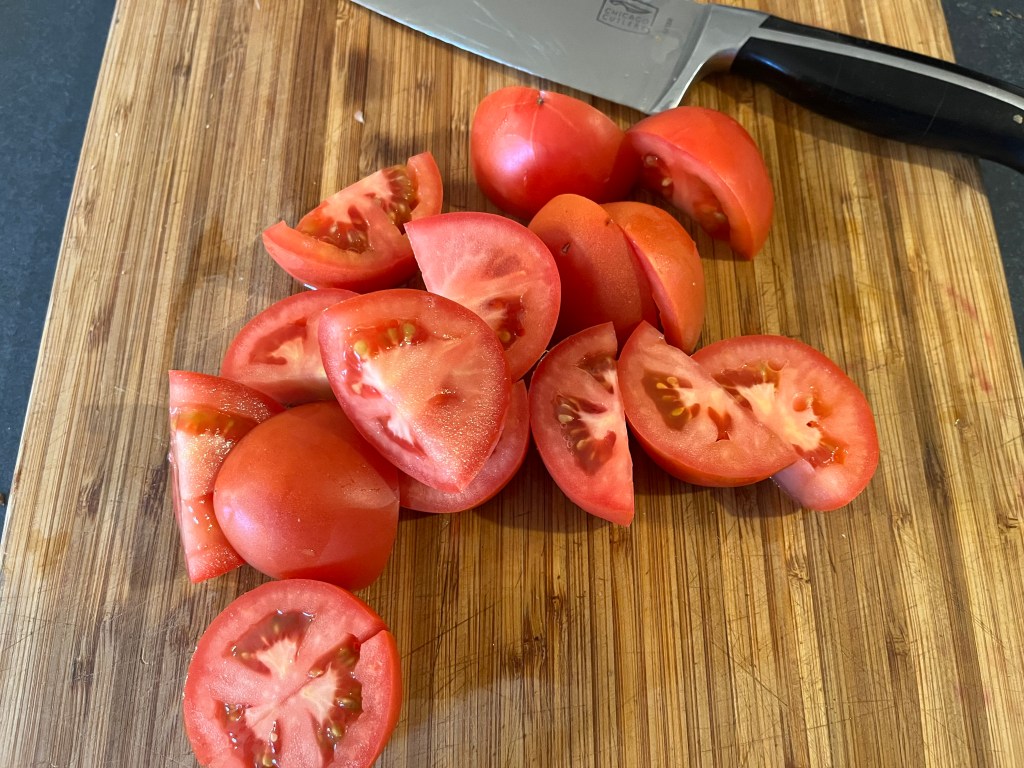
4 Roma tomatoes (quartered)

2 chile guajillo

1 chile ancho

A few chile de arbol, optional

½ onion, sliced

3 cloves garlic, peeled.

1 large leek, thinly sliced

1 bay leaf

1 Tbs oregano, crushed

Salt to taste

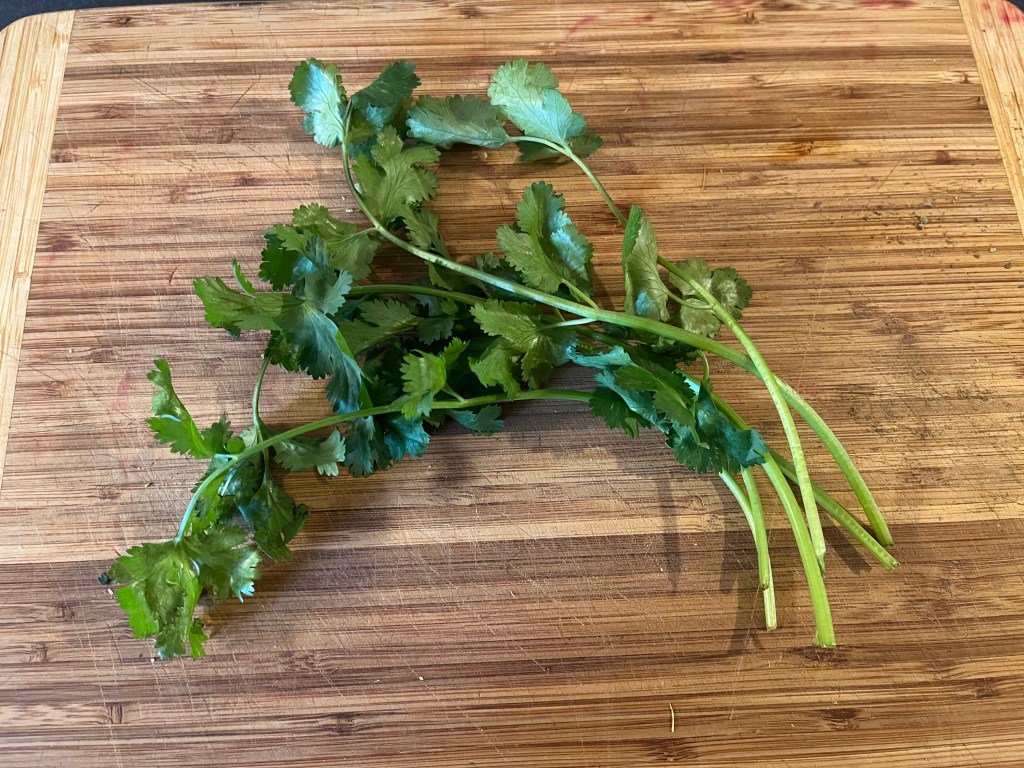
1 small handful cilantro leaves

3 carrots, peeled and cut into ½” pieces

2 medium potatoes, peeled and cut into ½” pieces

Directions:

Cover cut potatoes in water and soak until needed.

Sauté onion, leek, and garlic for 5 to 6 minutes.  Set aside.

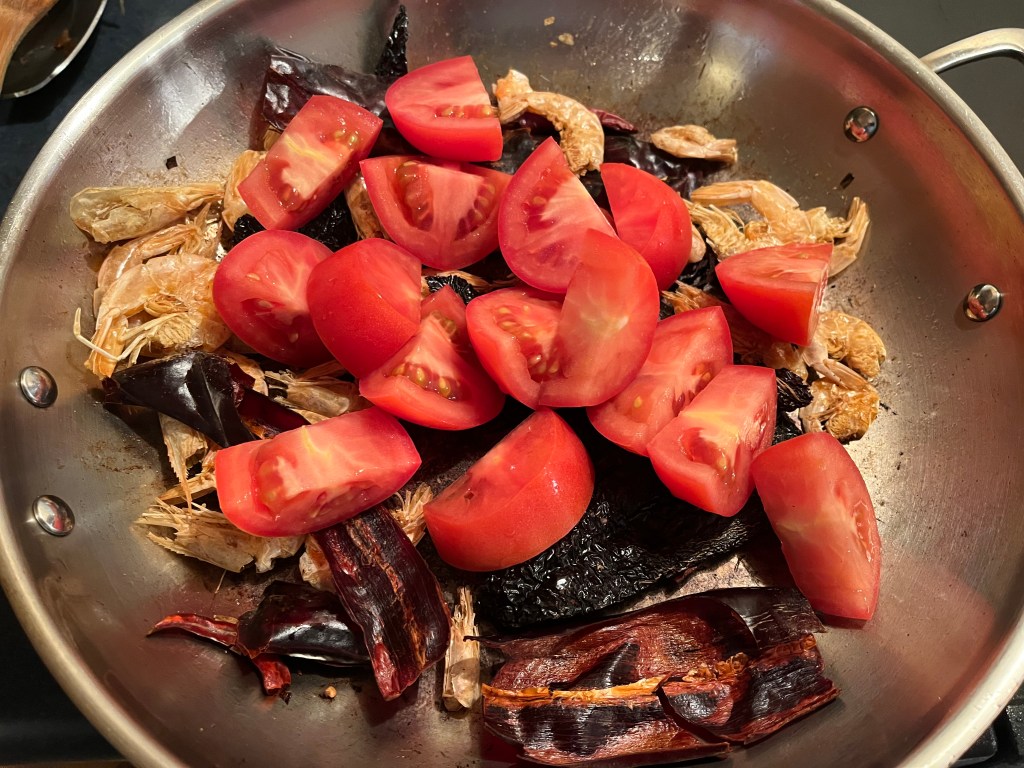
Sauté dried shrimp for 1 minute.

Add chiles.  Sauté for 2 minutes.

Add tomatoes.  Sauté for 2 minutes.

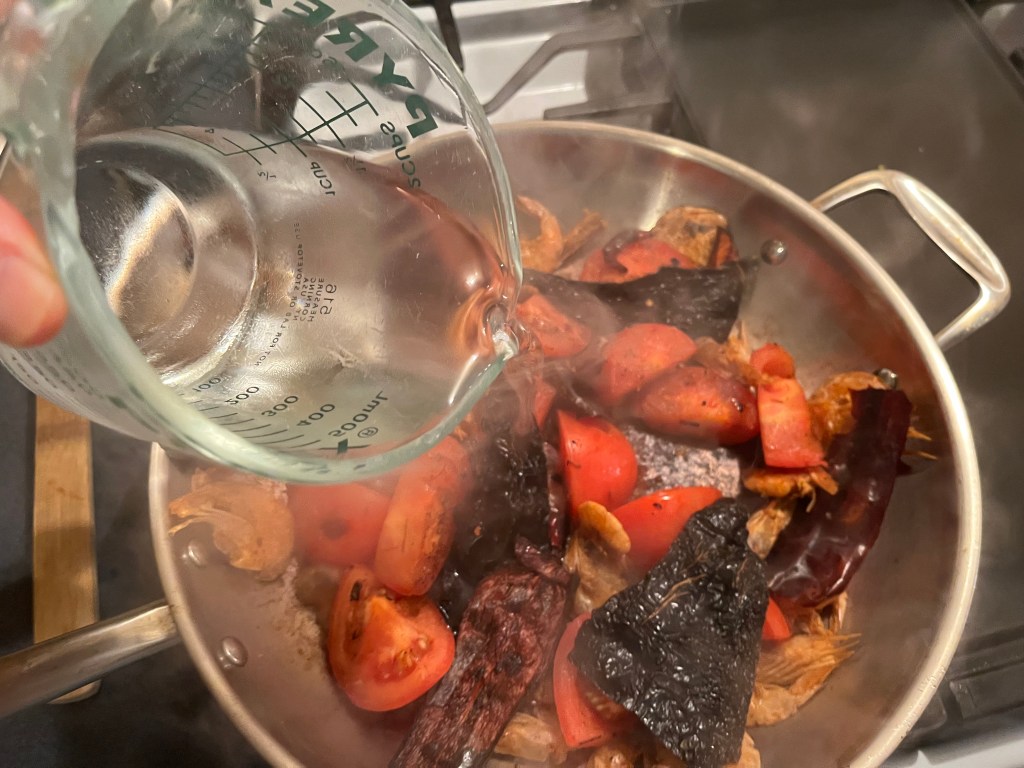
Add 1 ½ cup water.  Cover and simmer for 10 minutes.

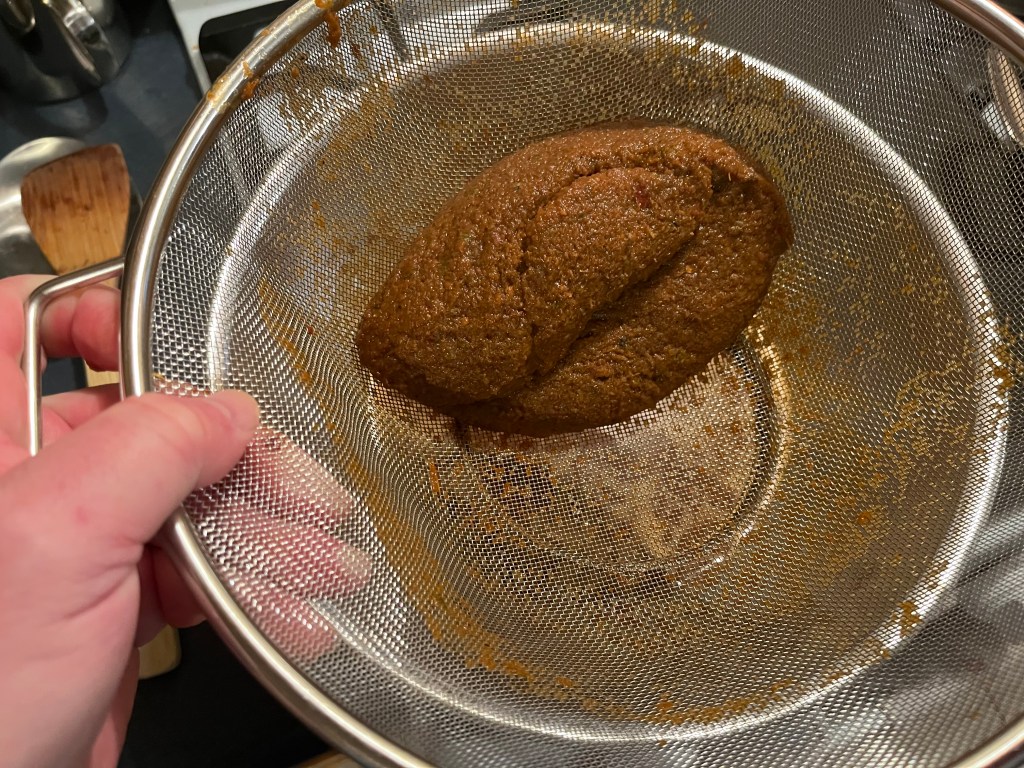
Add cooked salsa to blender.  Add onion, leek, and garlic.  Add 1 ½ cup water.  Puree and strain into large bowl.

Add pureed salsa to a large pot. 

Add bay leaf and oregano.

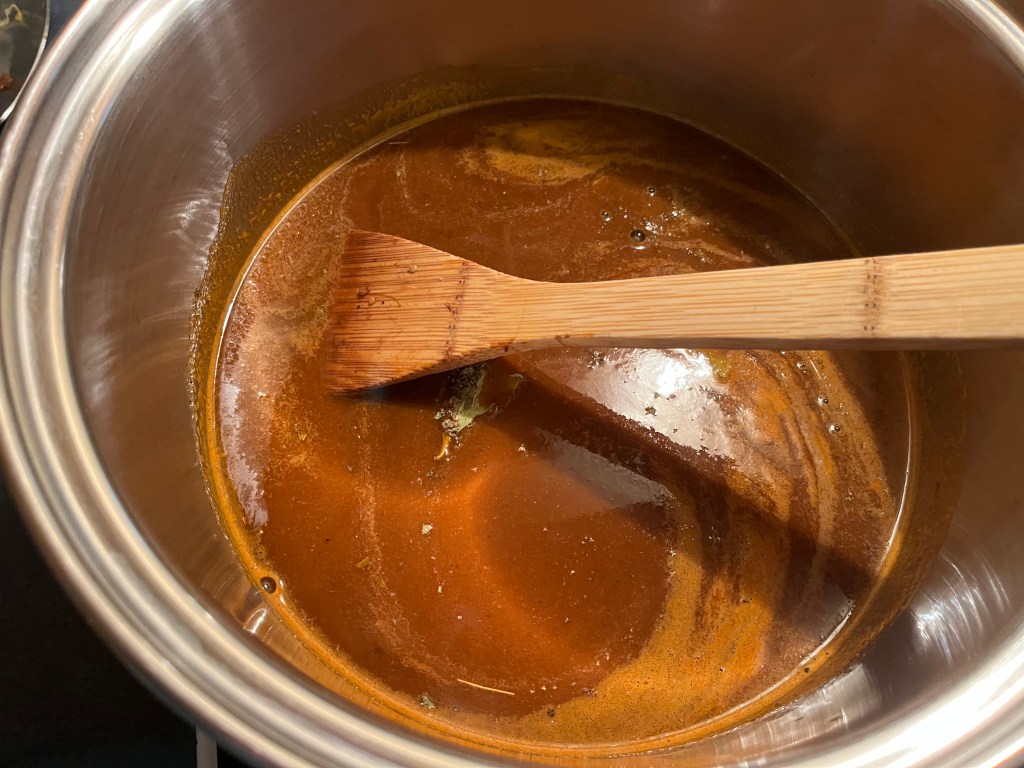
Cook uncovered over medium heat for 10 minutes.  Stir frequently.

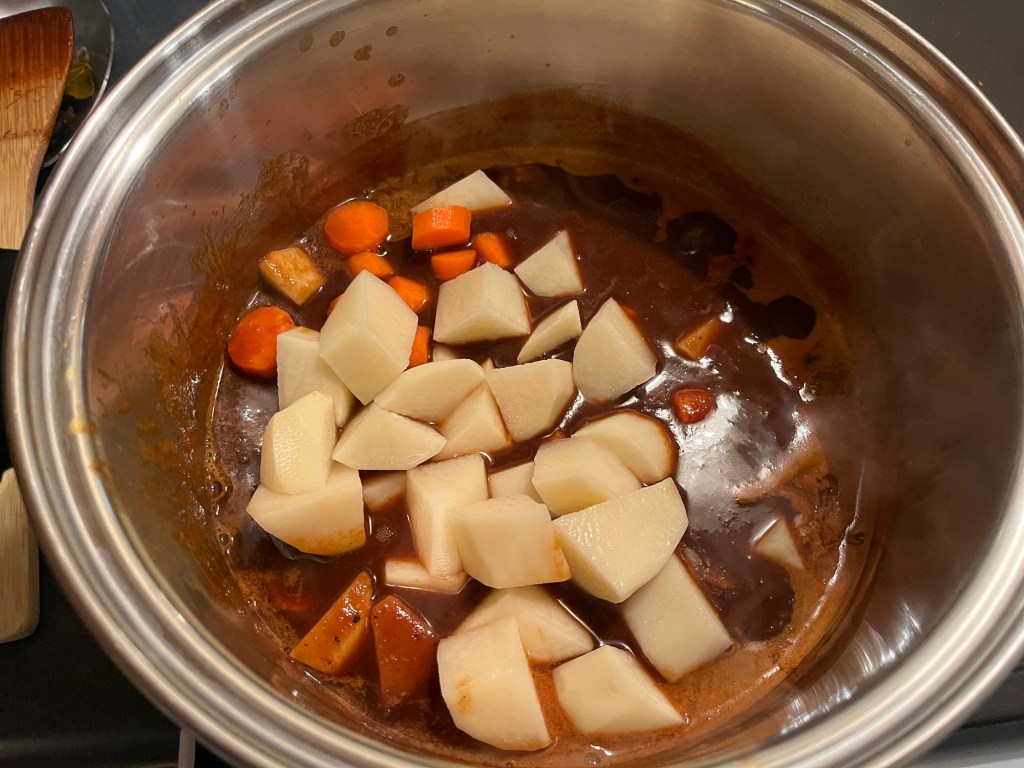
Add potatoes and carrots.

Add 5 cups water and salt to taste.

Cook uncovered over medium heat for 20 minutes.

Add tilapia and cilantro.

Cook for 5 minutes and serve.

Top bowls with minced onion and jalapeño.

Serve with warm corn tortillas.

Enjoy good food with friends! 

I Can and so Can You

Our tomato plants have done well this summer, despite the insane heat that we have been experiencing, and that means we have buckets and buckets of tomatoes to deal with. 

There’s nothing that refreshes the soul like a vine-ripened tomato!  For me, it is the quintessential taste of summer.

We have 24 tomato plants in the garden this year, which is way more than we need for a supply of fresh tomatoes, so we are canning the rest.

Roma tomatoes are perfect for making tomato sauce.  I’ve spent the last five weekends making a variety of Italian-style marinara, as well as barbecue sauce, and spicy chili sauce. 

All in all, I’ve made 40 quarts of 43 pints of sauces.  It takes about 45 gallons of tomatoes to make that much sauce, so it requires a lot standing and stirring to complete the job!

The result is a year’s worth of delicious homemade sauce. 

There’s lots of books and plenty of online resources for anyone interested in canning.  Who knows, maybe I’ll post a recipe or two and offer some advice on canning someday!

Amplified Garnish

Tired of humdrum pico de gallo, laying listlessly in bowl? Rearrange and redefine the elements.

The possibilities are myriad. A little creativity goes a long way when making something visually appealing, as well as delicious.

Case in point, is this mosaic of tomato and jalapeño. I started with the idea of making pico de gallo and, just before I diced the thin strips of jalapeño, I looked at the chopped tomato and thought it would be more interesting to arrange the pieces together to resemble a pineapple.

Ingredients:

Seeded and sliced jalapeño

Chopped tomato

Pinch of oregano

Pinch of garlic salt

A slight squeeze of fresh lime juice

Go ahead…change your world. By doing so, you change our world.

By special request: Mac and Cheese

My good friend, Graham and I met through WordPress waaaaaay back in 2019.  He was a veteran web poster when I first stumbled upon his food blog and I remember reading his “About Me” page for the first time and thinking, “Wow, there’s another dad in the world who likes to cook for his family!”  I started following his blog and commenting on his posts and, not so long after that, he started following my blog.

It didn’t take long for me to get the hang of posting recipes and visiting other sites to see what others were up to, and before I knew it, I was following lots of people and people even started following me. 

I have to say that Graham has always graciously posted comments about the things I post, and his commentary contains colorful prose like:

“You have exactly the same recipe as I do, which is strange or maybe normal.”

and…

“Great recipe and one I would totally enjoy eating but can never make, my wife hates olives. Will remember to eat the next time I am eating alone.”

and…

“That really looks good even given it’s chicken.  I prefer Kung Pao beef.”

Graham and I trade good-natured barbs as well as good advice in equal proportions, which, in my opinion, makes us good friends.

By now, even Graham is probably thinking, “What does any of this have to do with Mac and Cheese?”

Well, here are the last two comments I received from Graham:

So now, without further ado, I present a link to a Mac and Cheese recipe that I posted waaaaaay back in 2020.

Easter – Mac and Cheese

I recreated this recipe a few days ago, but as anyone who knows me, I had to change it up a bit.  I used equal parts Cheddar and Gruyere cheese.

Here’s a picture of the finished product.

.

So, there you go, Graham.  Are you happy now?!

I’ll end with what might be my favorite comment from Graham…

“LOL!  I think it’s just because you’re a want-a-be Canadian. You’re too much like me sometimes, just grab what’s in the fridge and make something out of it that ends up tasting good.”

Indeed! Good night all, and good night, Graham.

Day 4 Mushrooms

People use all sorts of things to measure time.  The obvious choice, of course, is a clock, but when you think about it, there are other more subtle ways to measure time.

Your newborn baby sleeps through the entire night.  Congratulations, you just made it to six months, or has it been a year?  Your neighbors have their trash cans lined up on the street.  Oh, it’s weekly trash pickup day.  You see Christmas decorations pop up at local stores when there wasn’t any the day before.  It must be September already. 

The kitchen is full of time measuring devices, aside from a clock on the stove or microwave oven.  The refrigerator and pantry are full of time reminders.  Expiration dates and “best sold by” dates are on just about everything.  They tell you the necessary information, which is, “use this item before this time, or you will risk making everyone sick”.  What they don’t tell you is when you bought the item.  All you care about is the expiration date, and that’s OK.

Some food items are like time bombs.  Their life clock starts ticking from the moment you put them in your shopping basket until the moment you eat them.  King among those sort of items is common, white button mushrooms.

I look at mushrooms like this…

Day 1 – The mushrooms are nearly perfect.  Rinse off the dirt, pat them dry and you can use them in fresh salads or any other purpose.

Day 2 – The mushrooms have barely changed.  You might want to trim off the bottoms of the stems because they have turned a little brown, otherwise they are still good for any use.

Day 3 – Why haven’t I used these yet?  If I use them now, I will need to pluck the stems out of the mushroom caps.  They’re still fresh enough for salads, but just barely.

Day 4 and 5 – Critical warning!  Mushrooms look a little smaller and browner than they did a few days ago.  They also feel wet, in a not-so-good way.   Use them now, or risk the death throes of Day 6, or dare I mention, Day 7!

Day 6 and 7 – Well, I really screwed up!  I knew this was coming.  I open the package and inspect the mushrooms.  They have big, soft brown spots on them, and they aren’t white anymore, and wow, what’s that awful smell?

Fortunately, I’m only on Day 4 with my mushrooms.  They aren’t salad worthy, and I need to find a way to disguise them and showcase them at the same time.  Sauces are great solutions for vegetables and fungi as they enter their “autumn years”.

Let’s make some jägerschnitzel!

First of all, if your menu choice contains an umlaut in its name, you earn bonus points, and possibly a James Beard award!  Secondly, if it is a compound German word, you receive the smug satisfaction of knowing a compound word when you see one. 

Jägerschnitzel is a hunter’s schnitzel with mushroom gravy.  Jäger means “hunter” and schnitzel means…well, schnitzel means schnitzel.  Schnitzel refers to the pounding and breading method used when preparing the meat.

I made a few substitutions along the way, like sake instead of white wine and panko breadcrumbs instead of traditional breadcrumbs and I’m happier for it!  I only took a few photos, but trust me, this is fairly easy to make and is very satisfying. 

Mushroom Gravy Ingredients:

2 tablespoons olive oil

2 tablespoons butter

½ onion, chopped

2 garlic cloves, minced

8 ounces mushrooms, sliced

¼ cup flour

½ cup white wine (I used saké)

2 cups beef stock

2 teaspoons Dijon mustard, or whole grain mustard

1 tablespoon Worcestershire sauce

Salt and pepper, to taste

Mushroom Gravy Directions:

Heat the olive oil in skillet.  Add butter and chopped onion.  Stir for two minutes. 

Add garlic and continue stirring for another two minutes.

Add mushrooms and stir for three minutes.

Add flour and mix to combine.

Add wine and cook for three minutes.

Add beef stock and stir sauce for about five minutes, until thickened.

Add mustard and Worcestershire sauce. 

Add salt and pepper, to taste.

Schnitzel Ingredients:

1 cup cooking oil

4 boneless, center cut pork chops, pounded to about 1/8” thick

2 eggs

2 teaspoons water

1 ½ cup breadcrumbs (I used panko)

1 teaspoon salt

1 ½ teaspoon black pepper

2 teaspoon smoked paprika

½ teaspoon caraway seeds, crushed

Schnitzel Directions:

Pound the pork chops until they are very thin, about 1/8” thick.  I like to lay the chops on wax paper and add another piece of wax paper on top and then pound the chops with the flat side of a meat cleaver.

Mix the eggs in a large bowl with water.

Spread the flour across a large plate.

Spread the breadcrumbs across a large plate.

Dredge the pork in the flour, dip in egg wash, and dredge in the breadcrumbs.

Fry the thin pork chops in hot oil for about three minutes and turn them over.  Continue frying for another three minutes, or until golden brown, and remove them to warm place.

I serve the schnitzel with fried potatoes on a platter with the mushroom gravy on the side.  This allows each person the option to add as much gravy as they like to the schnitzel.  I like to pour the gravy over everything!

And a little sauerkraut seals the deal!

Wu Mu Noodles with Tofu

Just about every Chinese New Year I get the urge to make Chinese food.  Sometimes I keep things simple and at other times, I go all out and make a feast, and when I don’t have the urge (or the time) to cook, I just go out for Chinese food. 

This year I wanted to cook, so I went to my favorite little Asian market to look for ingredients, including Chinese long noodles.  After searching the aisles for several minutes all I could find were clear rice noodles and curly egg noodles.  I was left with two options: 1) Admit defeat and forget about the noodles, or 2)  go to the front of the store and ask the woman at the check-out counter for help.  I know from previous experience that the woman at the counter, who might be the proprietor, spends much of her time barking out commands, in Chinese, to other store employees, sticking price tags on items, and working the cash register.  She also understands very little English, and I don’t speak even the tiniest bit of Mandarin or Cantonese.  So, my choice was clear. 

I navigated my way through the narrow aisles up to the register counter to have a chat with the Asian woman. 

I feel like I should, at this point, paint a picture of the scene.

The register counter is elevated above the rest of the store floor and is enclosed by wooden panels and a clear, protective plastic curtain, installed at the onset of the Covid-19 pandemic.  Every place in the store feels tight and claustrophobic and the front counter is certainly no exception.  There, raised above the store patrons, behind the hanging plastic curtain, that had become blurred by grime during the last few years, sits the middle-aged Asian lady, wearing a surgical mask, covering her mouth and nose.  It is reminiscent of a dystopian Terry Gilliam movie, but it also reminds me of Danny DeVito, from the TV series, Taxi.

“Do you have Wu Mu noodles?”, I asked, with my best, clear and precise diction, hoping that would help her understand me.  Her response was not in English, and it sounded to me like she said, “I take jaguar.” She shook her head as if to signify that she didn’t understand my question.  I rephrased my question a few more times to see if she could latch onto something I was saying.  I eventually stripped it down to “Chinese noodles.”, and she perked up a little and climbed down from her perch and waved at me to follow her. 

We went down one of the aisles that I had already visited and she began pointing to different kinds of noodles as I shook my head at each of her suggestions.  I sensed that she was getting tired of this little game as much as I was, so I decided to try pantomime.  I pretended to make noodles, by stretching my arms and hands outward and slapping imaginary noodles down on an imaginary table.  She gave me a knowing look and guided me to the end of the aisle and pointed to a large box of noodles.

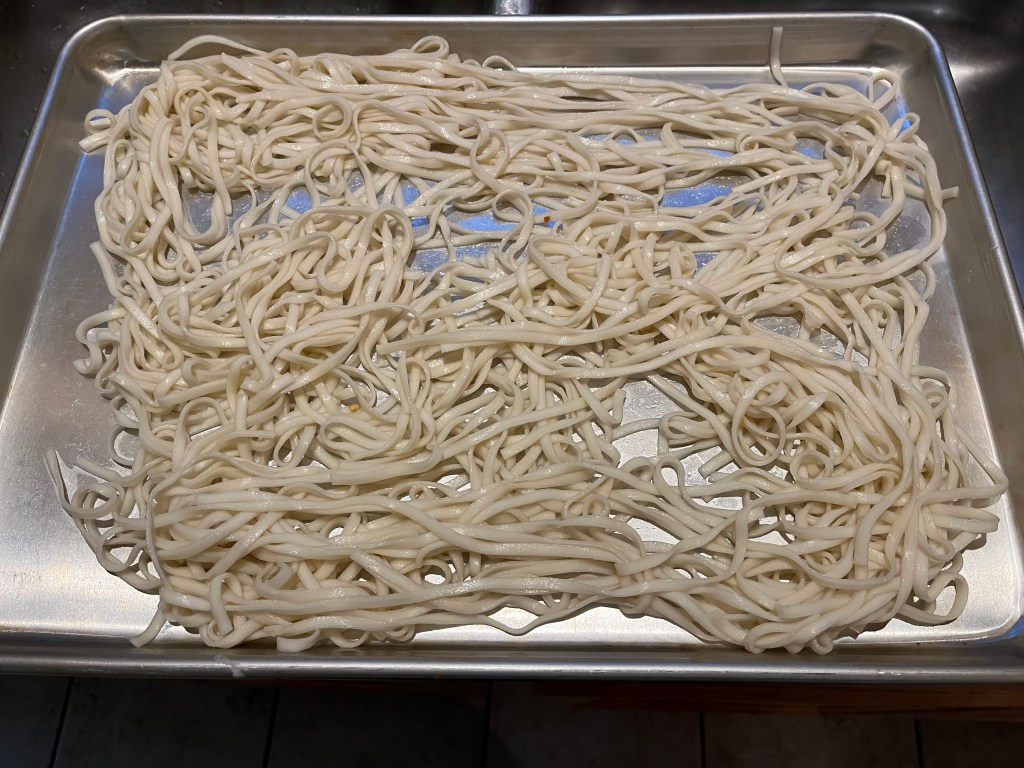
The box reminded me of a boxed set of record albums, big and squarish.  I purchased the four-pound box of Chinese Wu Mu noodles, and I left the store feeling accomplished and satisfied. 

Four pounds of dry noodles is a lot of noodles!  You can expect several future posts that feature them.

Wu Mu noodles, also known as Wu Long noodles are one of the most common types of noodles in China and they are exported throughout the world.  All you need to do to find them is gesticulate wildly with your hands until some kind soul guides you to them.

Wu Mu noodles are steeped in tradition.  They represent good fortune and long life, and it is bad luck to break them during the cooking process or to cut them while eating them.  This can lead to a lot of slurping at the table, and that’s quite alright.

This recipe only calls for a few ingredients.  I made my own sauce for the stir-fry but that could easily be replaced by a store-bought sauce of your choice. 

The noodles and tofu are simple vehicles for the sauce.  Make your sauce sweeter by adding more Hoisin sauce, make it saltier by adding more soy, or make it spicier by adding hot sauce, or chili paste. 

Ingredients for the sauce:

½ cup soy sauce

½ cup water

1 teaspoon sesame oil

1 teaspoon black soy sauce (sweet soy)

2 teaspoons rice wine vinegar

3 garlic cloves, mashed and minced

1 Tablespoon brown sugar

1 Tablespoon cornstarch (or another type of starch)

1 teaspoon garlic chili paste

Ingredients for the stir-fry

12 ounces dry Wu Mu noodles (parboiled to al dente)

1 16-ounce block of firm tofu, pressed and drained, cut into 1 inch cubes,

1/4 cup cornstarch

1 tablespoon fresh ginger, thinly sliced

3 small bok choy – about 1 pound (or any other Asian cabbage), chopped

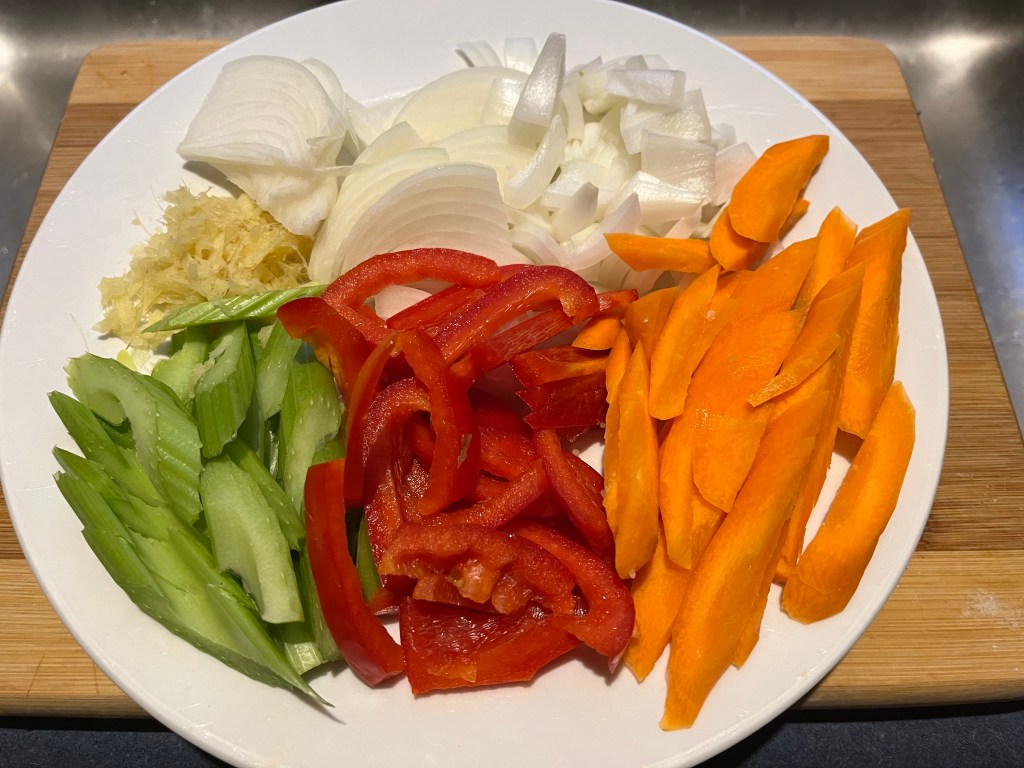
1 large carrot (or 2 medium carrots), sliced

½ onion, thinly sliced

1 large celery stalk, sliced

½ bell pepper, thinly sliced

Directions:

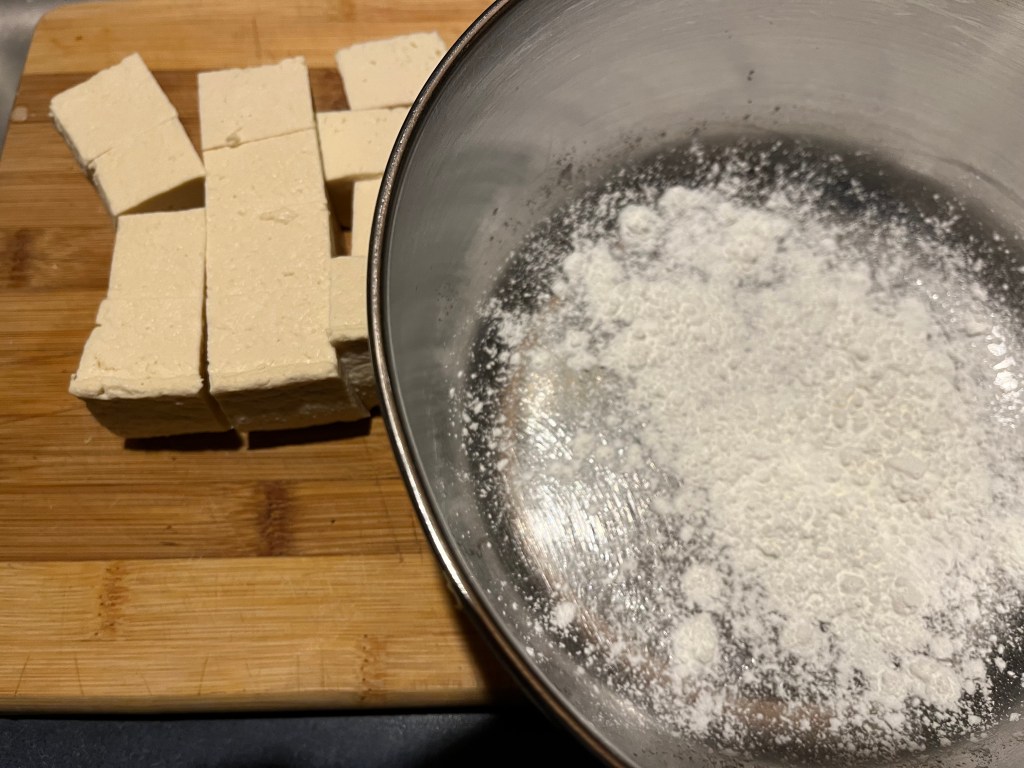
Press the tofu to remove excess moisture by placing the tofu between paper towels and laying a heavy object on top of the top.  Allow the tofu to dry for an hour, replacing wet paper towels as needed.

Dust the tofu cubes with the cornstarch.

In a large frying pan, add a little oil and set heat to high.  Sear all sides of the tofu pieces until they are lightly browned.  Remove from the pan and set aside.  Searing the tofu is optional.  I wanted the tofu to have a bit of crispy texture.

Prepare the sauce by mixing all of the ingredients.  Set aside.

Boil the noodles in a large pot until they are al dente.  Strain the noodles and set aside.

Prepare the vegetables by chopping and slicing and set them aside.

Heat a few tablespoons of oil in a large wok.

Add the ginger and remove after a minute or two.  Discard the ginger.

Add the carrot to the wok and stir for a few minutes.  Add the bok choy and toss.  Add the onion, celery and bell pepper.  Stir until the vegetables are tender, but not overcooked.

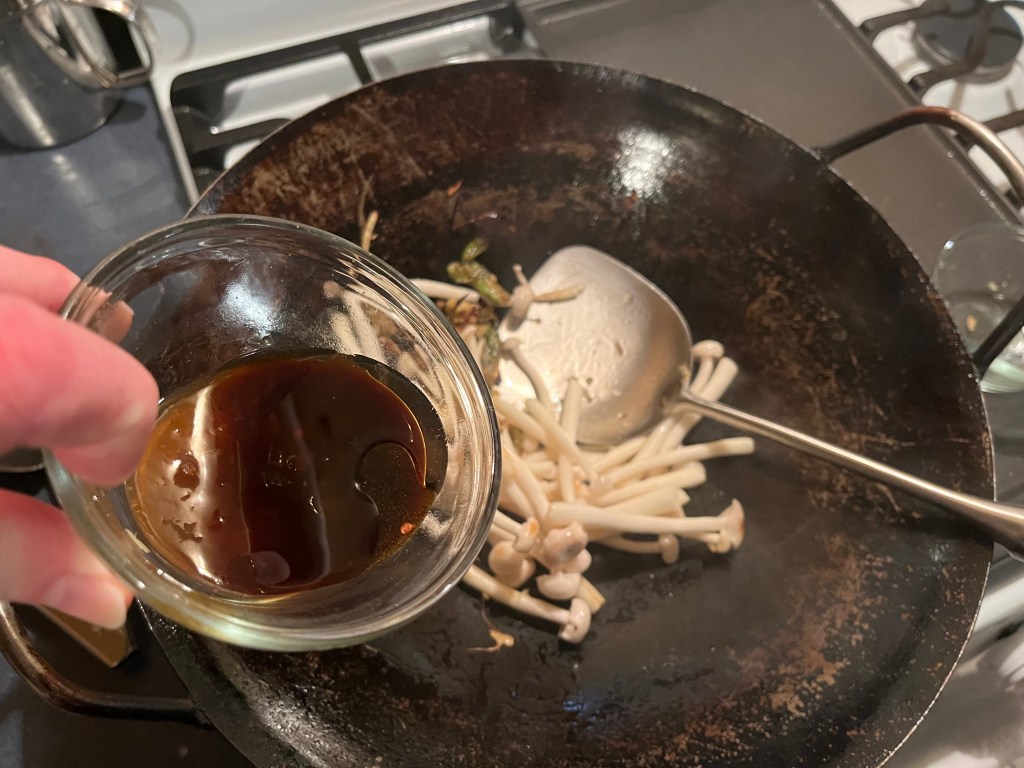
Add the sauce and stir.  Add the tofu and continue to toss for another minute.

Add the noodles and toss to coat the noodles with the sauce.

Remove everything to a large serving bowl and serve warm.

Seafood Mushrooms

For me, a trip to a farmers’ market is like a holiday.  Going to an international farmers’ market is like a romp through Disney World’s Magic Kingdom!  I run from one produce aisle to another, like a kid on a sugar rush, gawking at all of the wonderful, magnificent fruits and vegetables.  “Oooh, they have Sumo oranges!  Wow, durian fruit…that’s scary!  Hey, look at all the types of bok choy…which kind should I choose?” 

The “thinky” part of my brain, that causes me to come to the market in the first place, just to buy a thing, gives way to the impulsive, spastic part of my brain that screams, “Grab everything…you’ll figure out what to do with it when you get home!”

On this particular trip to the international farmers’ market, after making the rounds through the produce aisles twice, I found my way back to the refrigerated display case that houses the fungi, you know, all the different kinds of mushrooms.   I was drawn to a small package of slender, white mushrooms that were labeled, “Seafood Mushrooms”.  I had no idea what seafood mushrooms were, which is ultimately what compelled me to buy them.  I guess I’m a sucker for a good mystery!

When I returned home, I consulted the all-knowing internet to see what seafood mushrooms were and how they are used in recipes. 

Here’s what I found:

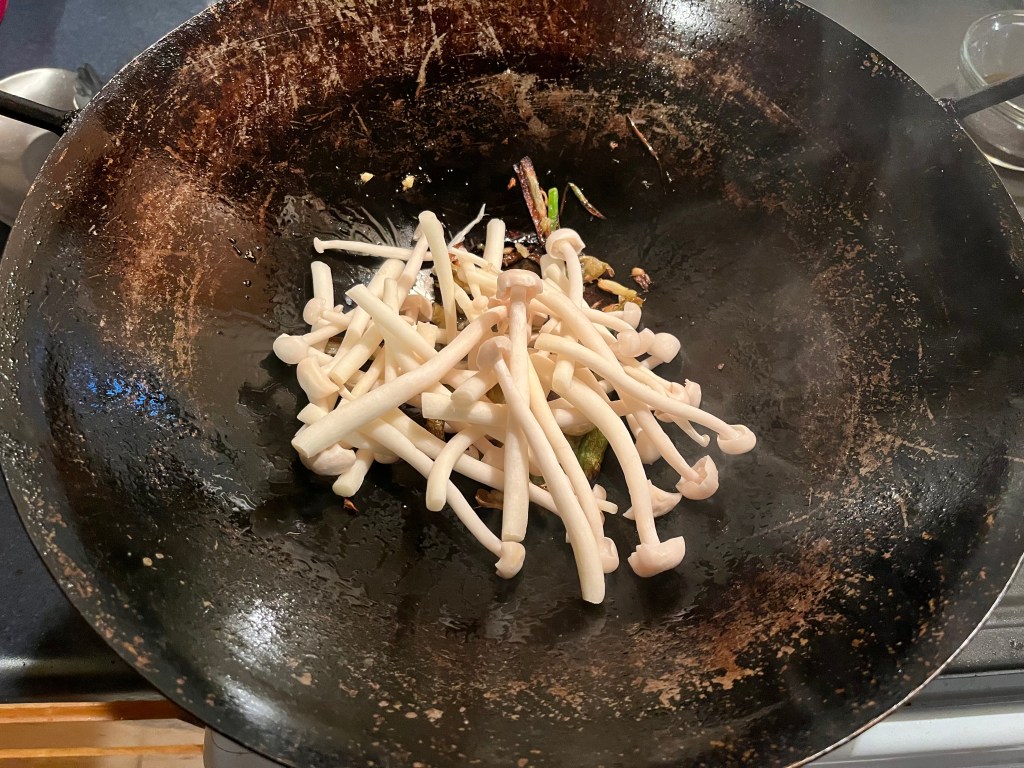
Seafood mushrooms are a smaller version of Enoki mushrooms.  They are white mushrooms with long, white stems and mushroom caps. The mushrooms have a mild, earthy, slightly sweet flavor and they taste a little like seafood when cooked, with a subtle flavor of lobster or shrimp.  They are crunchy when raw and become chewier, the longer they are cooked.

Since I only bought a small, five-ounce package of mushrooms, I decided to make an appetizer that would feature the mushrooms prominently. 

Seafood Mushroom Stir-Fry

Prepare the mushrooms.  Rinse the mushrooms under cool running water.  The mushrooms are conjoined in a bundle at the base, which needs to be trimmed away to separate the mushrooms. 

Ingredients:

1 Tablespoon olive oil

3 green onions, white parts only, cut lengthwise

1 Tablespoon fresh ginger, grated

5 ounces seafood mushrooms, cleaned and separated

2 teaspoon soy sauce

1 Tablespoon Hoisin sauce

Directions:

Heat a wok to medium heat.  Add oil and green onion. 

Stir frequently for two minutes.

Add grated ginger and stir for one minute.

Add mushrooms, soy sauce and Hoisin sauce.

Stir for two to three minutes.

Remove and serve in small serving bowls.

Mediterranean Pork Chops

I didn’t intend on making Mediterranean-style pork chops but, after scanning through the pantry and refrigerator, I found several items that needed to be used before they passed their prime and spoiled.  I know this isn’t an elegant way to kick off a food blog post but, it’s the truth, and as a simple home cook, I know there’s plenty of cooks out there that have felt the painful guilt that comes when they discover that their grocery store purchases have rotted away, untouched and ignored. 

Let’s take a look at our middle-aged cast of characters, shall we?

One pound of small yellow and red potatoes, about three weeks old. 

4 small poblano chiles, fresh from my neighbor’s garden – two weeks ago!

3 tomatoes, picked pipe from my garden, a week ago.

½ red onion that must have been two weeks old.

A lemon, that held up surprisingly well for two weeks in the refrigerator.

Two pounds of bone-in pork chops, that passed the smell test after 7 days in the refrigerator.

Once I gathered the aging actors together for this ensemble, I brought in a young, vibrant supporting cast including, fresh garlic, Kalamata olives, and green and black olives.

Ingredients:

4 Tbs. olive oil, divided

4 garlic cloves

1 ½ – 2 lbs. pork chops

½ cup water

1 lemon, sliced into ¼” thick circles

¼ cup wine (red or white)

1 lb. small potatoes (mix of yellow and red)

½ red onion, chopped

4 small poblano chiles

3 medium, ripe tomatoes, chopped

1/3 cup Kalamata olives

1/3 cup black olives

1/3 cup green olives

Directions:

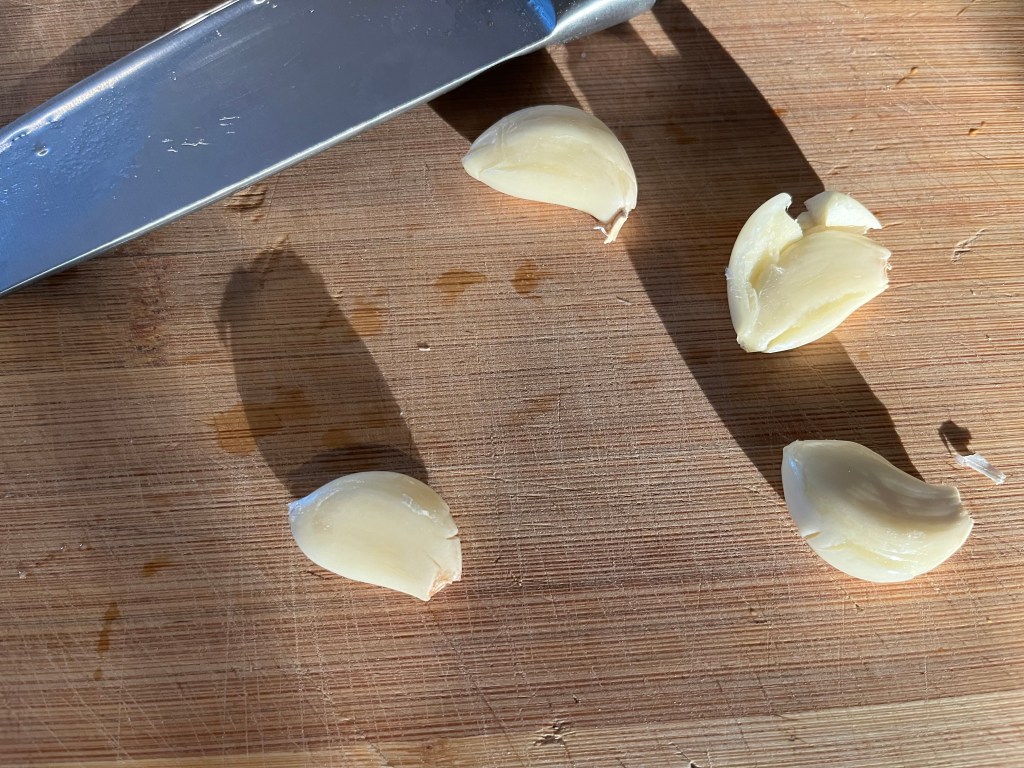
Mash the garlic cloves.

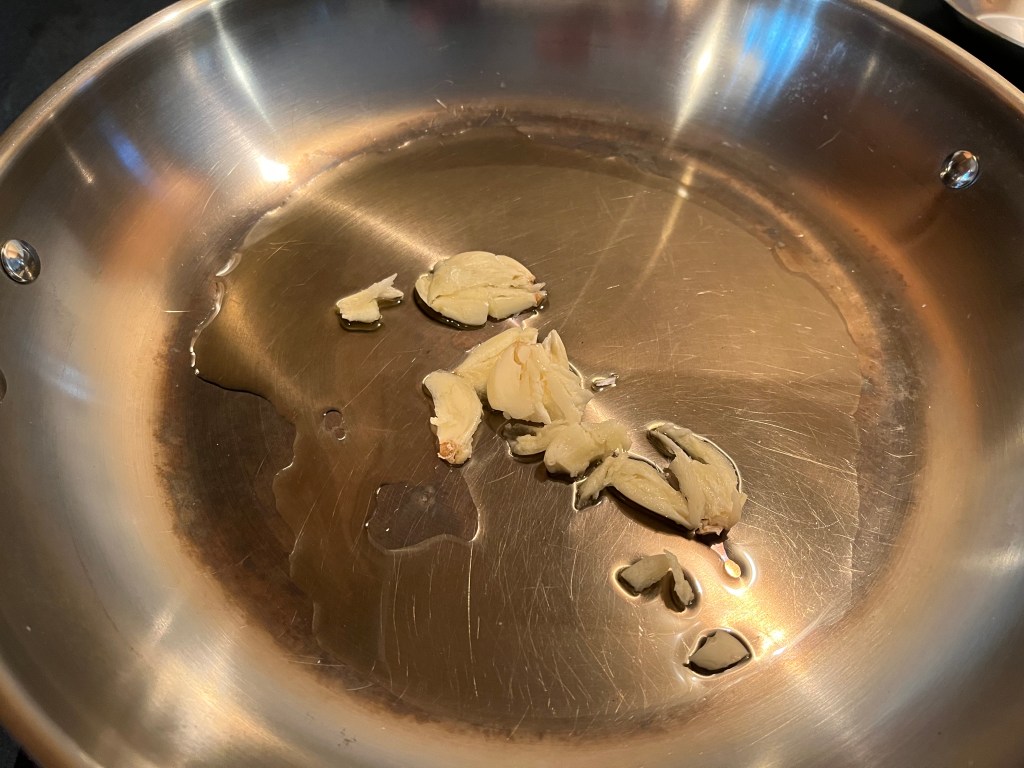
Add 3 tablespoons of olive oil to a large, oven-proof skillet.  Set heat to low. Add the garlic and simmer for a few minutes.

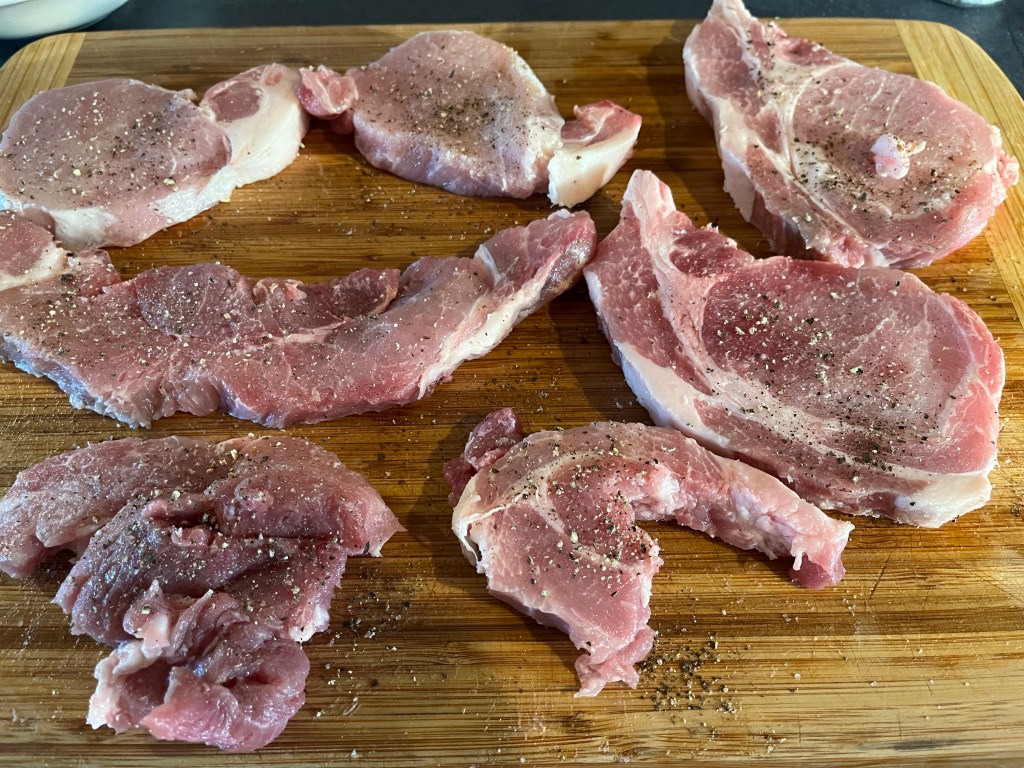
Remove the bones from the pork chops.  (I only did this because I knew that I wouldn’t be able to fit all of the pork chops in the skillet unless I removed the bones.) Sprinkle the chops with salt and pepper.

Add the pork chops to the skillet and turn heat to medium high.  Sear the pork chops for a few minutes and turn them over to sear the other side.

Remove the pork chops and garlic and set aside.

Add about ½ cup of water to the pan and deglaze by whisking.  Add wine and simmer at medium heat for two minutes. 

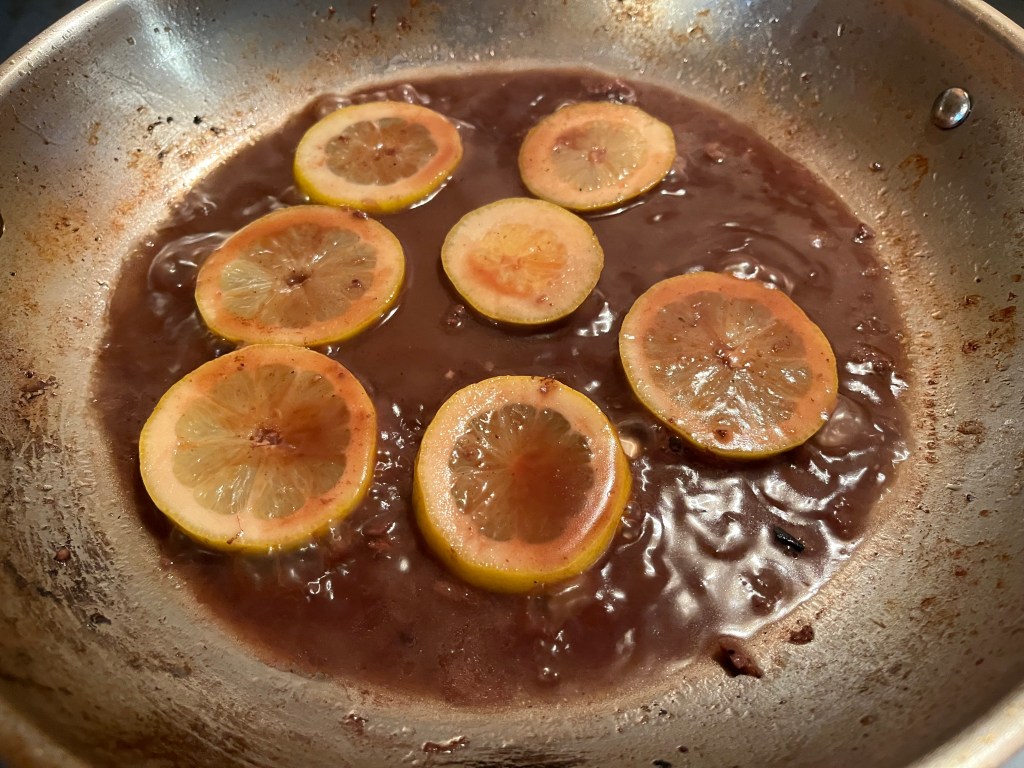
Add the lemon slices to the skillet.  Reduce the sauce, while stirring occasionally, for about 5 minutes.

Remove the sauce to a bowl and set aside.

Wipe the skillet, to remove any remaining sauce.  Add 1 tablespoon of olive oil.  Add potatoes and toss, to thoroughly coat the potatoes with oil.  Season with black pepper and salt.  Toss again and bake in the uncovered skillet in a 350° oven for 40 minutes. 

Carefully remove the skillet from the oven and pour the potatoes into a large bowl.

Add the seared pork chops and garlic back to the skillet. 

Cover the pork chops with the potatoes.

Add a pinch of oregano to the chopped tomatoes and toss gently.

Add the chopped onion, tomatoes, chiles and lemon slices.

Top with olives.

Bake 30 minutes in a 350° oven.

Carefully remove the pan from the oven and place arrange the ingredients on a large serving platter. 

One final thought: The only thing worse than throwing away perfectly good food that is reaching the end of its life expectancy is serving food that has gone bad or spoiled.  If it smells bad, looks bad, feels bad, or tastes bad, it’s bad.  Toss it and move on with your life!  Your friends and family will thank you.